
Is Competition Good for Learning?
5 min read
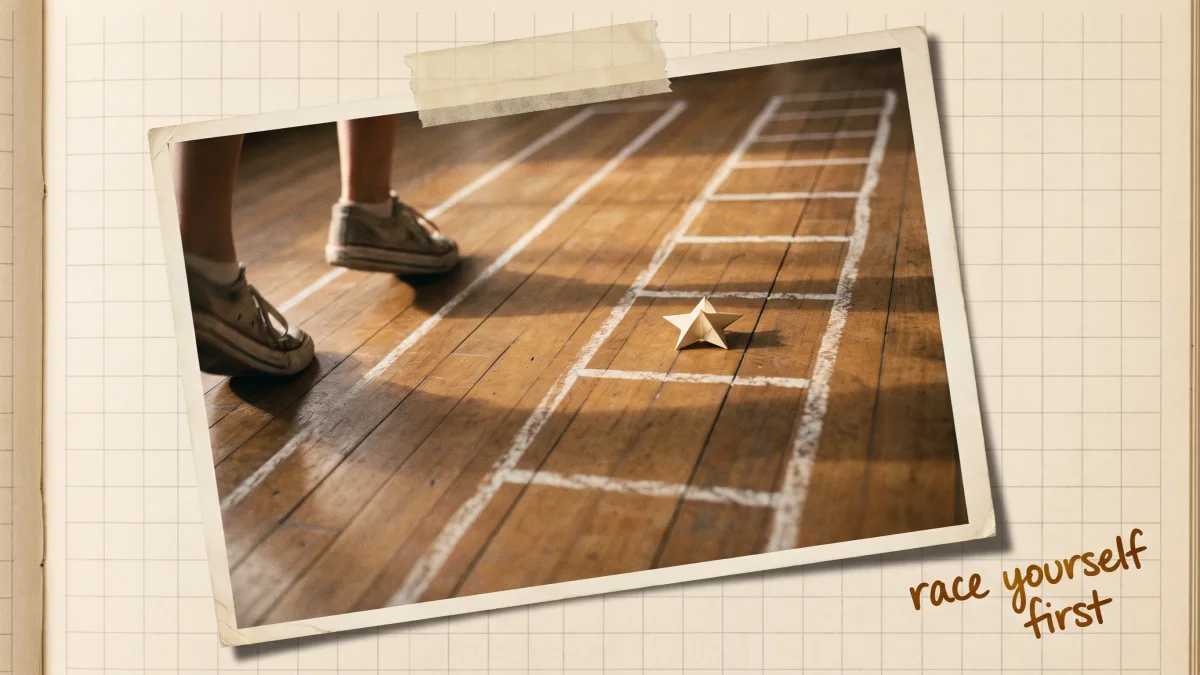
Racing a friend makes practice electric for some kids. For others, the same race is a weekly announcement of where they rank. Both things are true at once, and the research explains how.
Short answer: Competition motivates, and the evidence stops there. Studies of competitive learning find no reliable learning gain from competition itself, and classroom teachers report it can convince slower starters they're failures. The design that works keeps self-paced mastery as the spine and makes head-to-head play a choice, never the price of admission.
What does competition actually do in a classroom?
A teacher in a 2024 Tanzanian study of times-table mastery put both halves in two sentences. Competition "helps students to memorize multiplication tables quickly," she told the researchers, and it "sometimes brings the stagnation of knowledge to students who are not quick to grasp things… they consider themselves to be failures" (Ndalu & Juma, 2024). The quick memorizers get fuel. The slower ones get evidence for the worst story they tell about themselves, and a student who has decided "I'm bad at this" has a bigger problem than any single fact gap. Slow, correct work is the signature of missing fact fluency, and fluency is fixable. A settled identity as the kid who loses is much harder to fix.
Does competition improve learning results?
The evidence says treat that claim with suspicion. The 2022 meta-analysis of game-based chemistry learning (Hu et al.) looked for studies isolating individual design features and found competition tested directly only once, with no significant learning benefit; the point estimate actually leaned negative. Competition earns its place as fuel for showing up, and showing up is genuinely prerequisite to everything. What the research refuses to support is the stronger claim that racing produces more learning than practicing.
There's a better-evidenced engine for the students who most need one. A 2025 Hungarian university study (Muzsnay et al.) found that in math courses taught conventionally, students' entry scores predicted their final scores months later; in courses that ended each lesson with a short answer-from-memory test, that link dissolved, and students who started behind finished level with the rest. The equalizer was a plain memory routine, run on a schedule.
How should a learning game use competition, then?
| Signal it's helping | Signal it's hurting |
|---|---|
| The student asks for the rematch | The student avoids playing in front of others |
| Losses read as "again!" not "I'm dumb" | Losses end the session |
| Progress is measured against their own past | Progress is measured against the fastest kid |
| Head-to-head is one mode among several | Ranking is the only scoreboard that exists |
This is the design brief we build against. In Periodic Mole, the spine is a solo mastery ladder: every element is tracked as coming up, learning, or mastered, and a student climbs against their own record, at their own level. Multiplayer exists because racing a friend is a great reason to show up, and it stays optional; a match sets questions at each player's own level, so the contest is between people, never between one kid and material they haven't been taught yet. The competition sells the practice. The practice does the teaching.
Try it free. Bond Forge is free to play with a starter set of elements, no account needed. One payment of $59 unlocks every game and all 118 elements, with progress saved. No subscription.
FAQ
Is competition bad for kids who are behind? Unmanaged, it can be: teachers report slower starters reading public races as proof they're failures, and disengaging. Managed well, with self-paced material and opt-in contests, the same students get the practice benefits without the ranking costs.
Do competitive learning games teach more than solo ones? Research hasn't shown a learning advantage from competition itself; the one direct test in chemistry game studies found none. Competition's real value is motivational, bringing students back to practice they'd otherwise skip.
My kid only wants to play against friends. Is that fine? Yes, if the game sets questions at each player's level so a match is winnable by either side. That keeps the contest about play, while every answer still counts as retrieval practice.
What should replace competition for a struggling student? Short, frequent answer-from-memory practice with material at their level. In university courses, that routine erased the performance gap between well-prepared and under-prepared students within a semester.
Related
- Do Learning Games Actually Work? 34 Studies
- Element Symbols: Chemistry's Times Tables
- How to Study Chemistry With Friends
- How to Help a Teen Struggling in Chemistry
Sources
- Ndalu, D. M., & Juma, Z. R. (2024). Factors influencing mastery of multiplication tables to pupils in selected Dodoma primary schools. Journal of Research Innovation and Implications in Education, 8(3).
- Hu, Y., et al. (2022). Game-based learning has good chemistry with chemistry education: A three-level meta-analysis. Journal of Research in Science Teaching, 59(9).
- Muzsnay, A., Szabó, C., Zámbó, C., Szabó, G., & Szeibert, J. (2025). Retrieval practice — a tool to narrow the achievement gap in learning higher mathematics. International Journal of Science and Mathematics Education, 23.