Periodic Mole

What the elements really look like

Symbols and diagrams are only half the story. Here is the other half: the real substance, and where you would actually run into each element. Tap any element for the full reference.

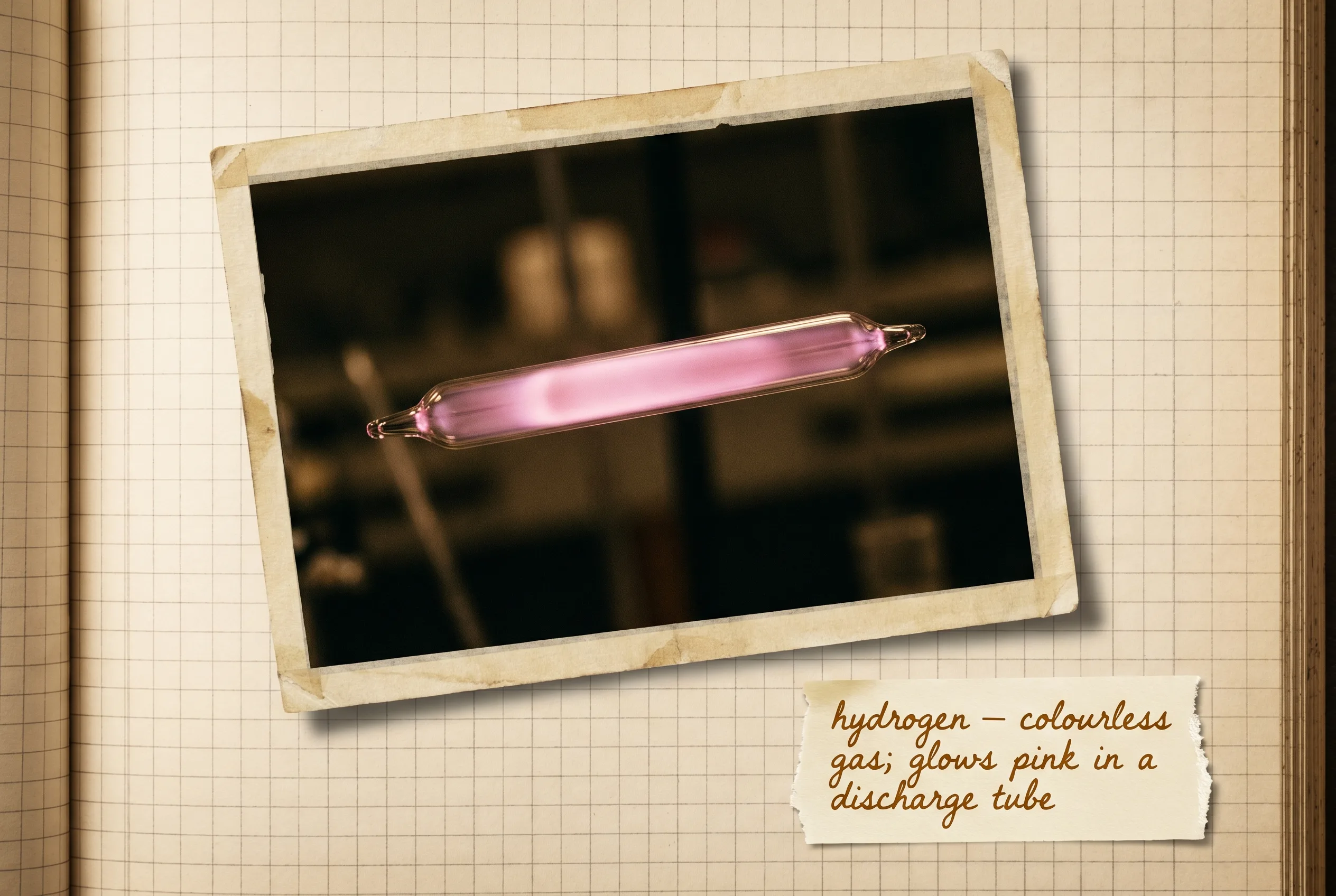
A slim glass discharge tube glowing pink against a dark background.
What it looks likeHydrogen gas is colorless. In a discharge tube the excited gas glows pink-magenta.
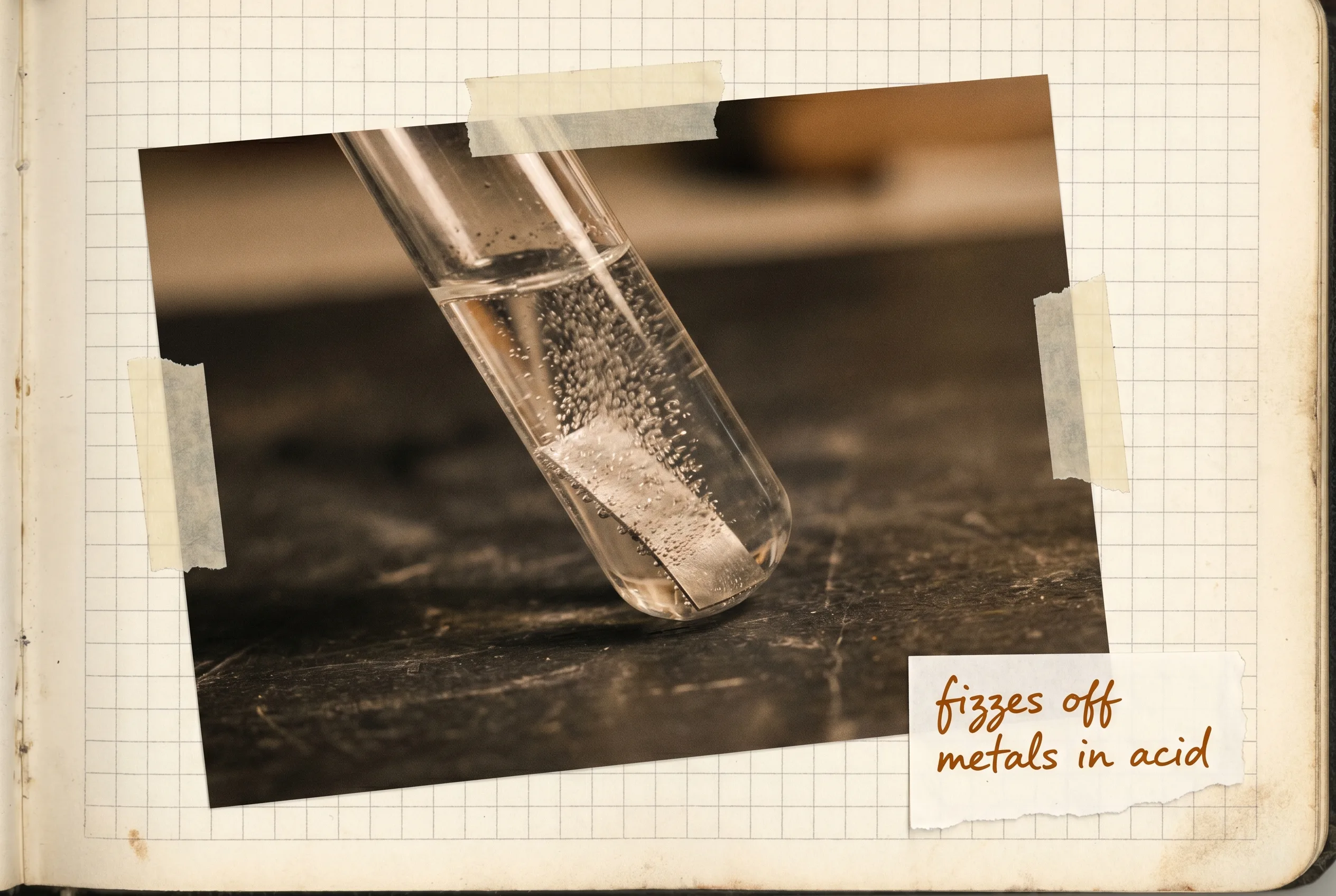
Tiny gas bubbles rising off a metal strip in a test tube of clear acid.
Where you'd see itDrop a reactive metal into acid and the bubbles streaming off are hydrogen gas.
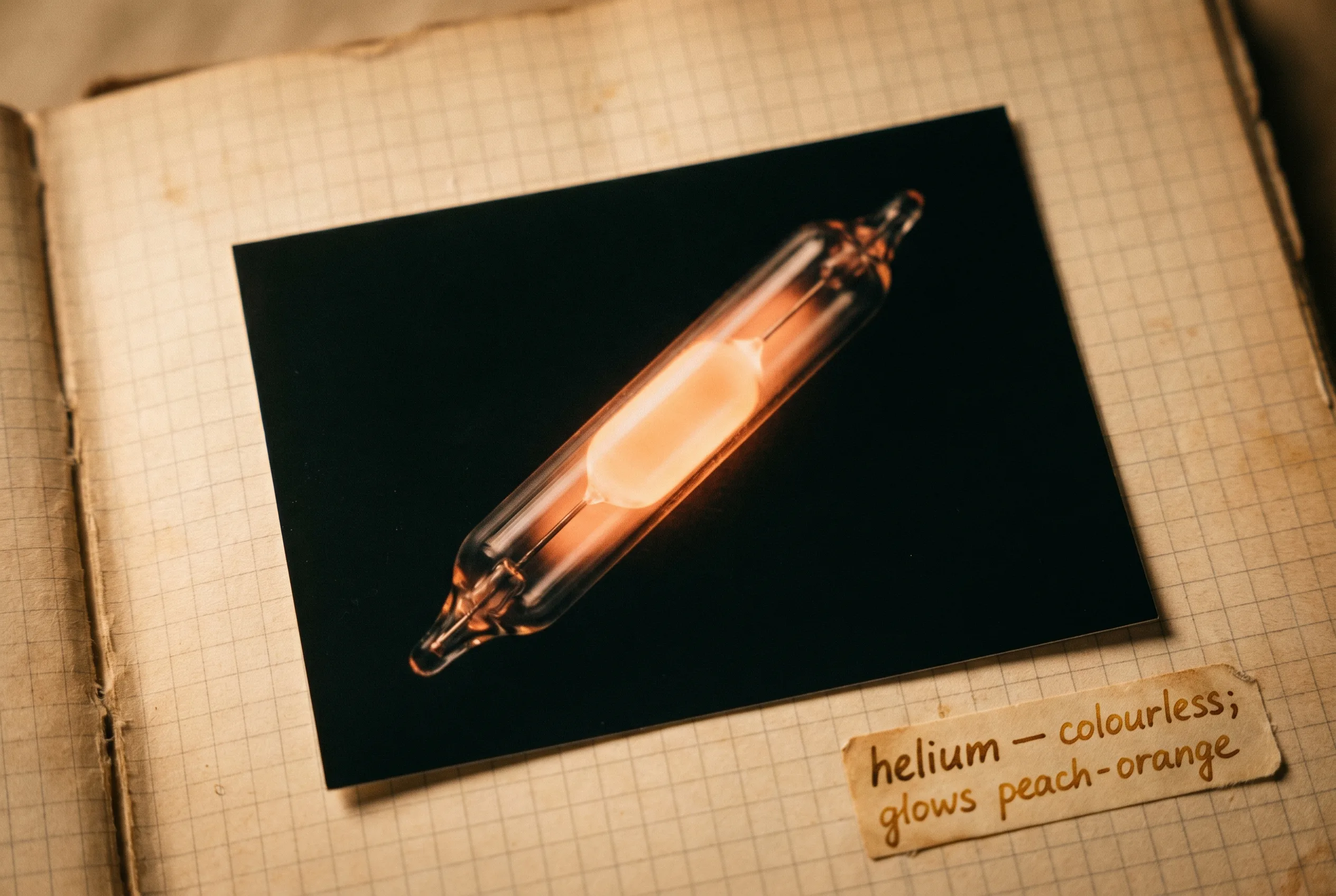
A slim glass discharge tube glowing peach-orange against a dark background.
What it looks likeHelium is a colorless gas; energized in a discharge tube it glows peach-orange.
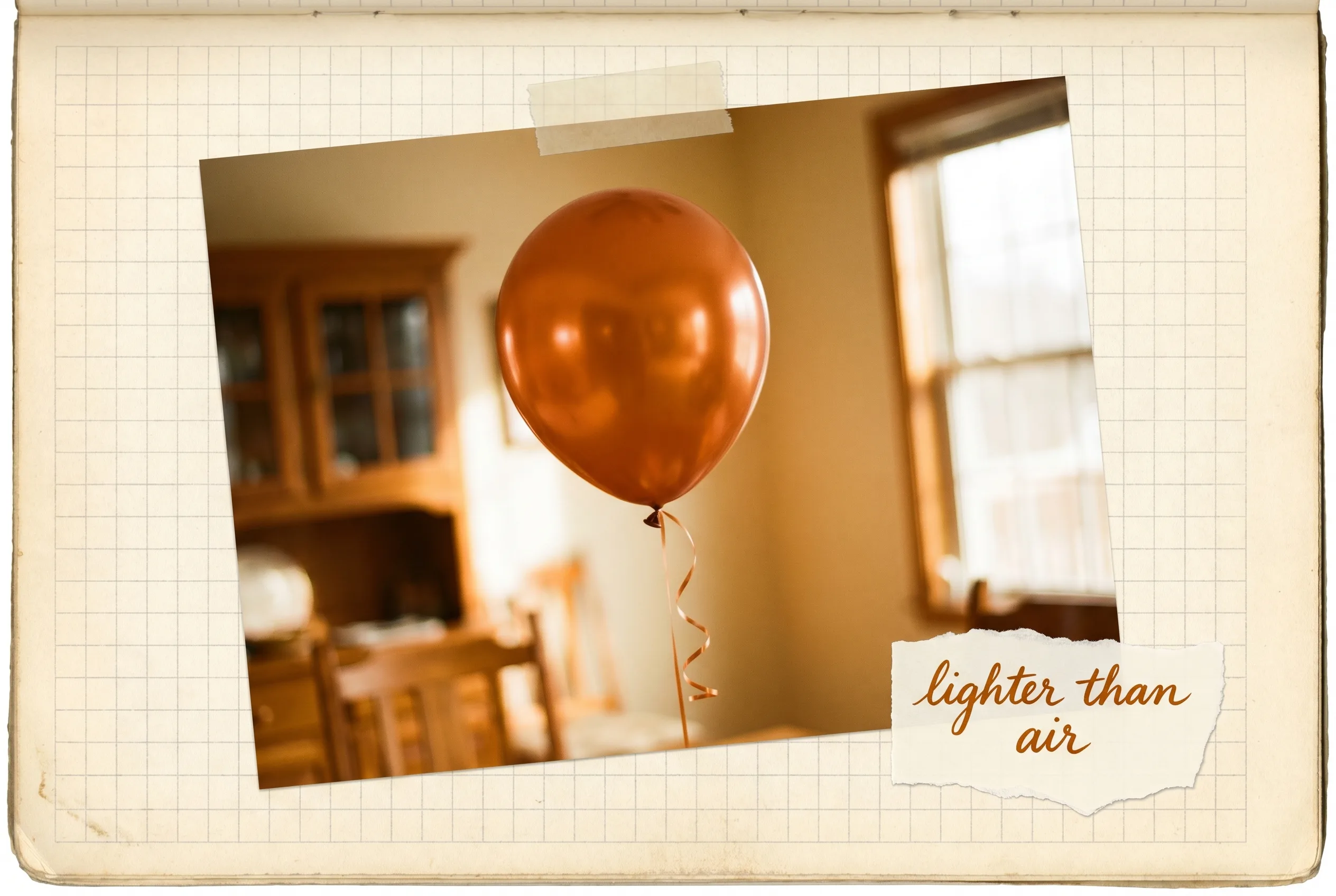
A shiny round party balloon on a ribbon floating upward indoors.
Where you'd see itLighter than air - the gas that makes party balloons float.
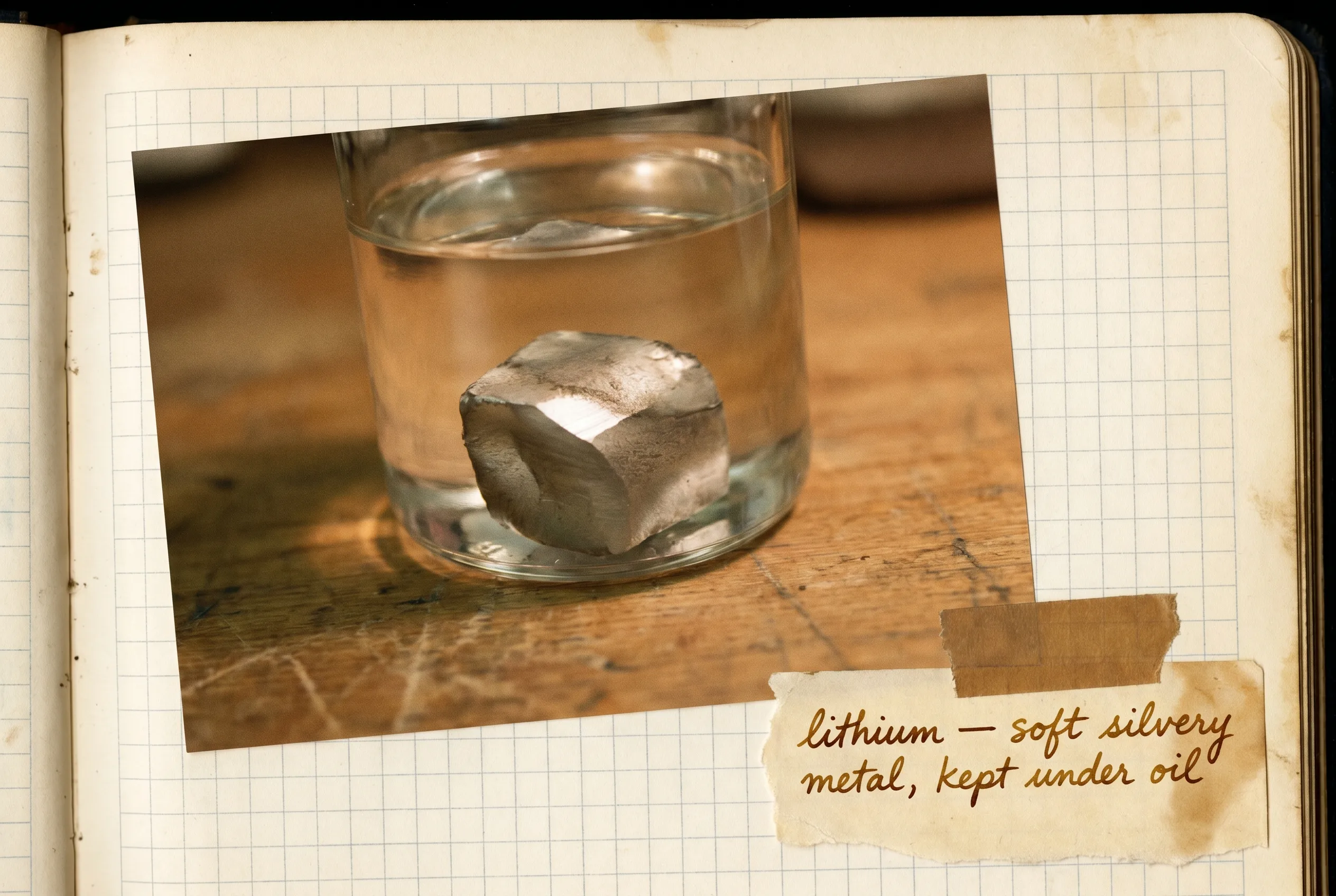
A chunk of soft silvery lithium metal half-submerged in clear oil in a glass jar.
What it looks likeLithium is a soft, silvery metal so reactive it is stored under oil to keep air and water away.
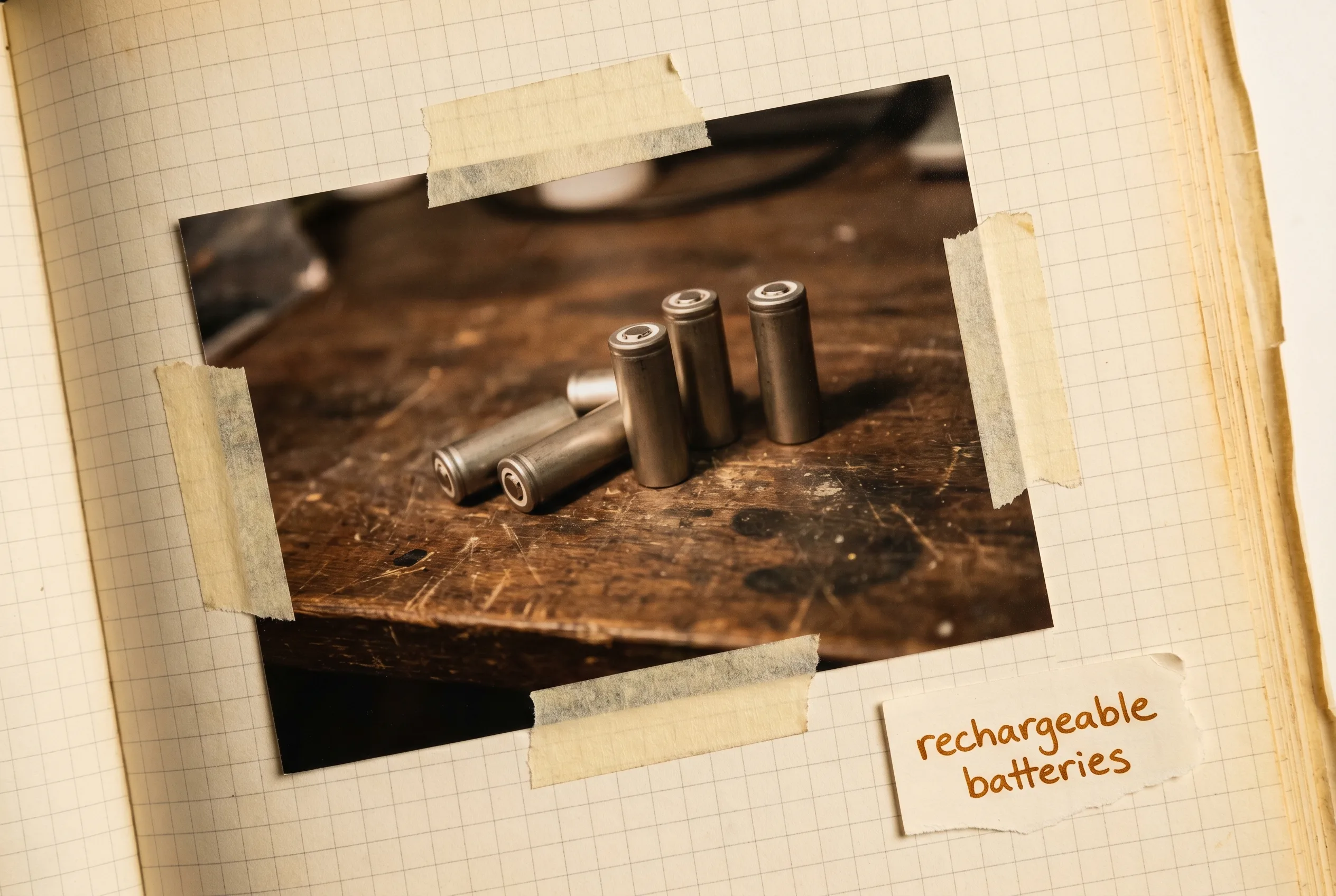
Small cylindrical rechargeable battery cells on a dark workbench.
Where you'd see itLithium powers the rechargeable batteries in phones, laptops, and electric cars.
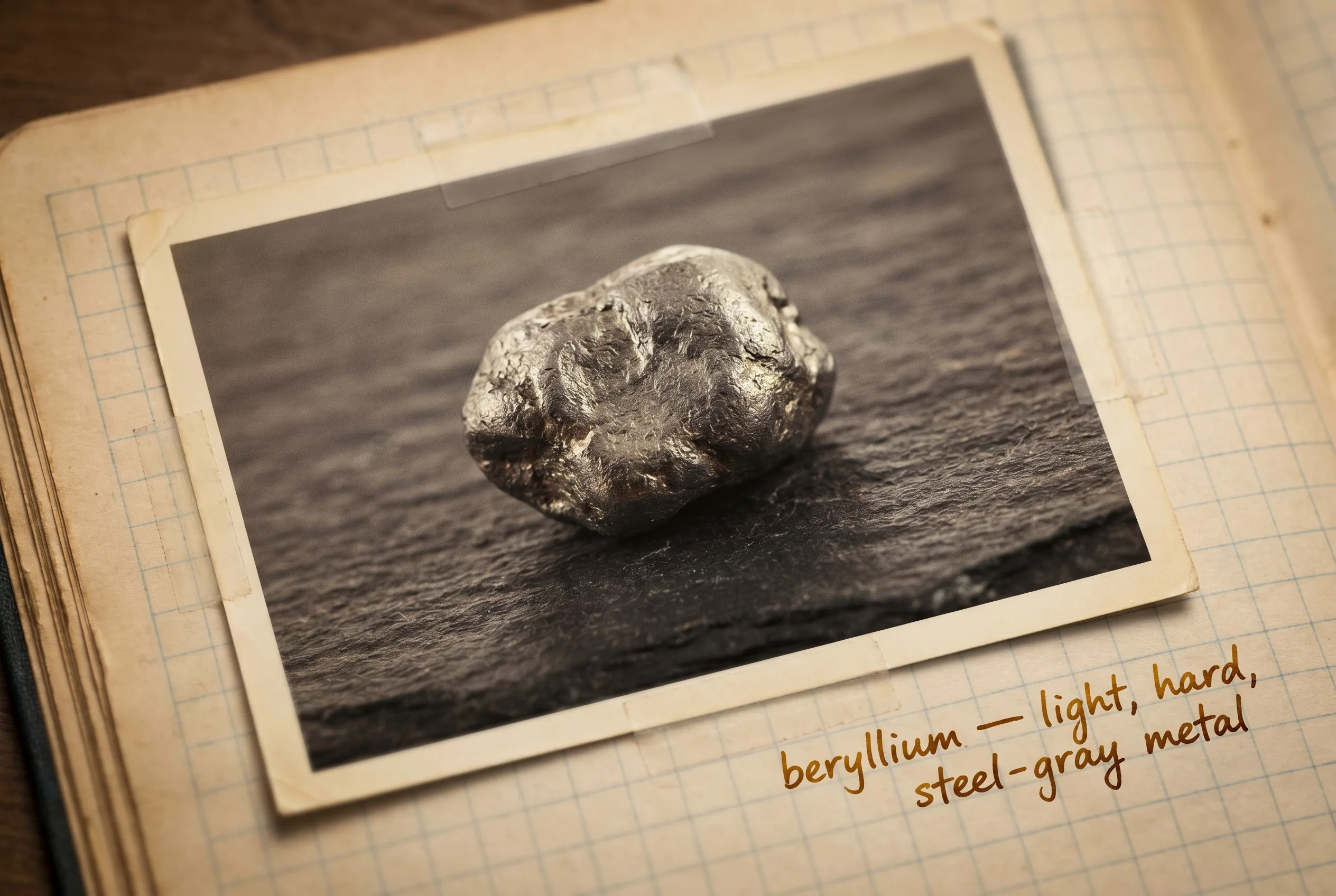
A dull steel-gray lump of beryllium metal on dark slate.
What it looks likeBeryllium is a light but very hard steel-gray metal.
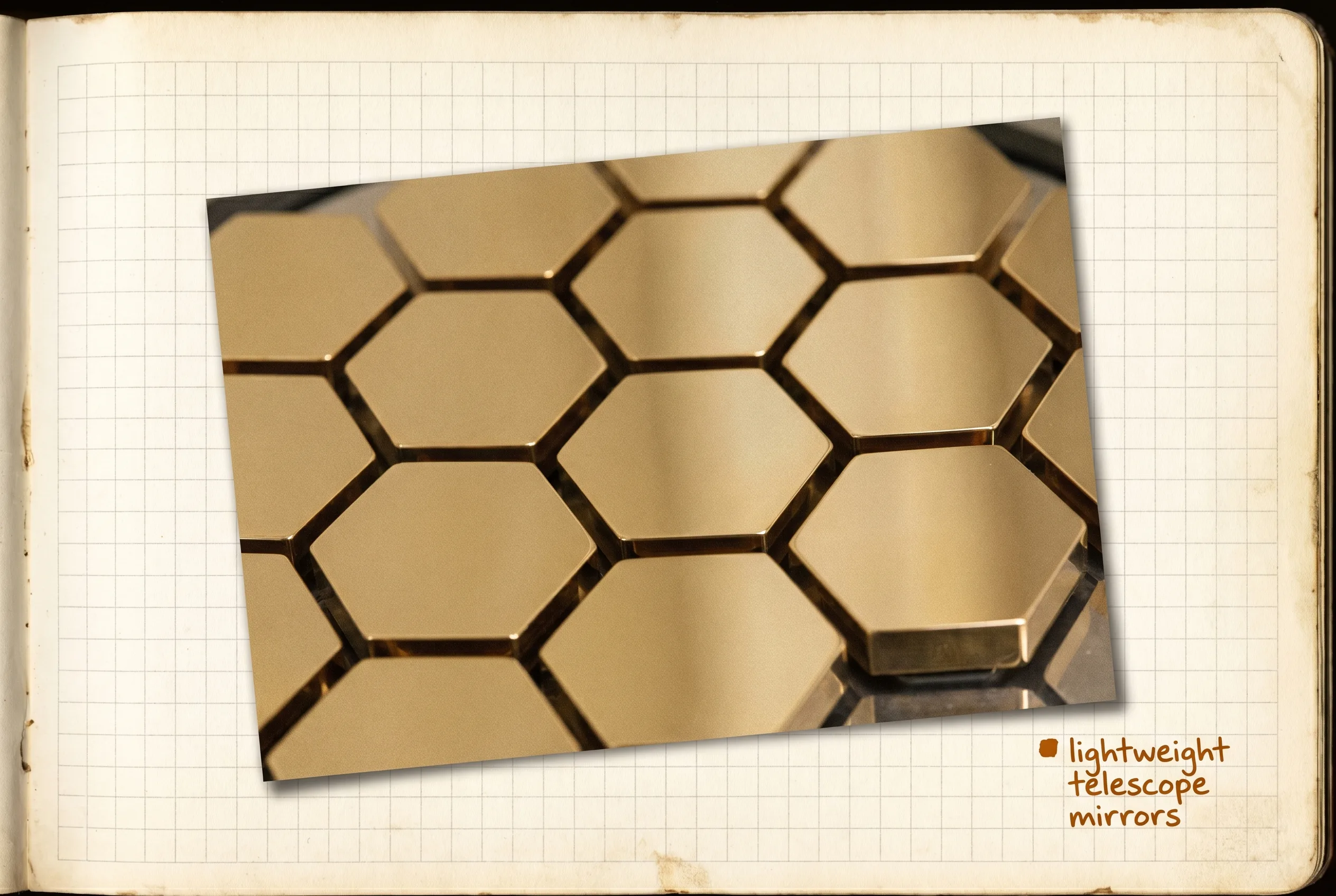
Gold-toned hexagonal space telescope mirror segments in a honeycomb pattern.
Where you'd see itBeryllium is so light and stiff it is used for space telescope mirrors and aerospace parts.
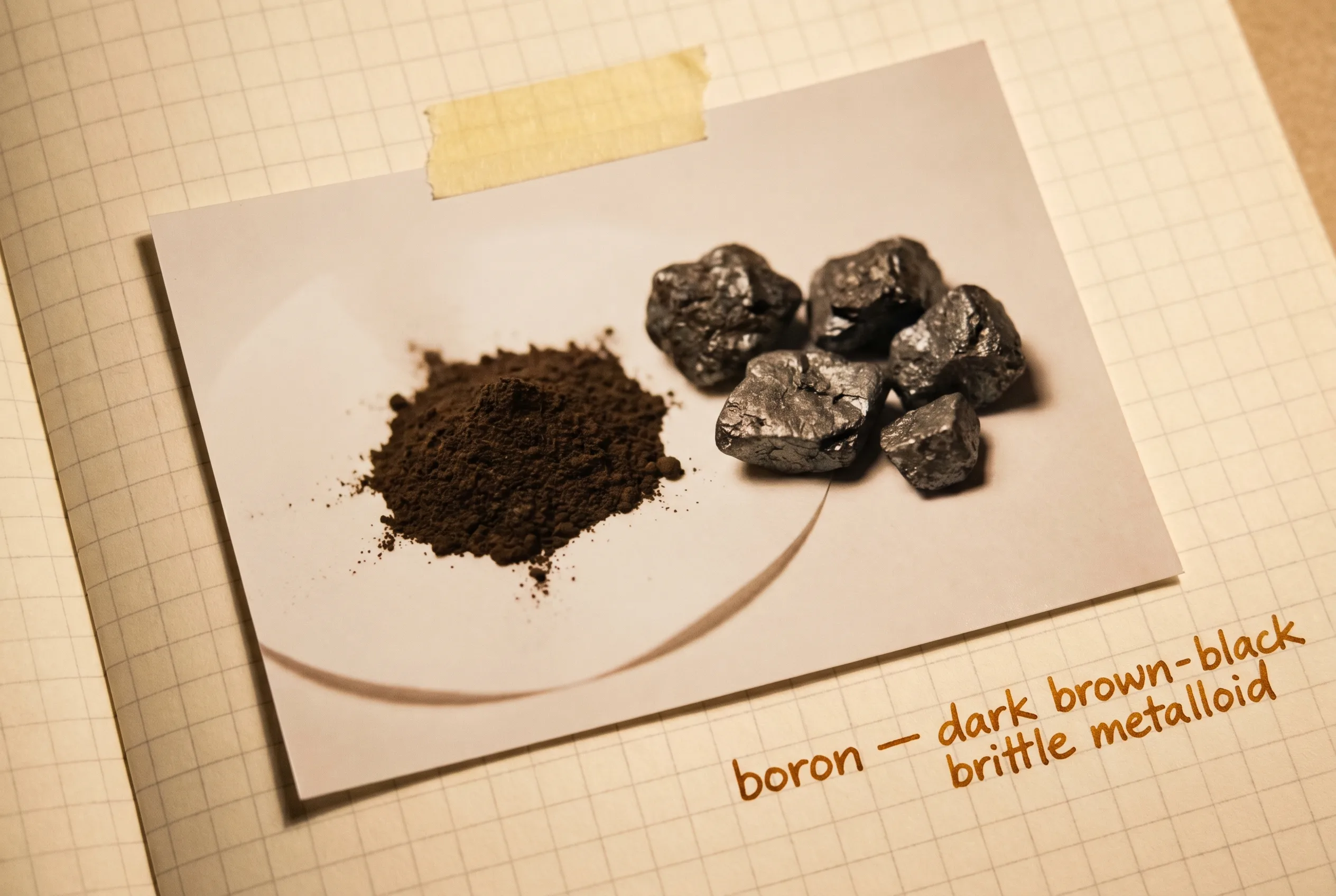
Dark brown-black boron powder beside hard dark gray boron lumps on white paper.
What it looks likeBoron is a dark brown-black metalloid: a brittle powder or hard crystals, not a shiny metal.
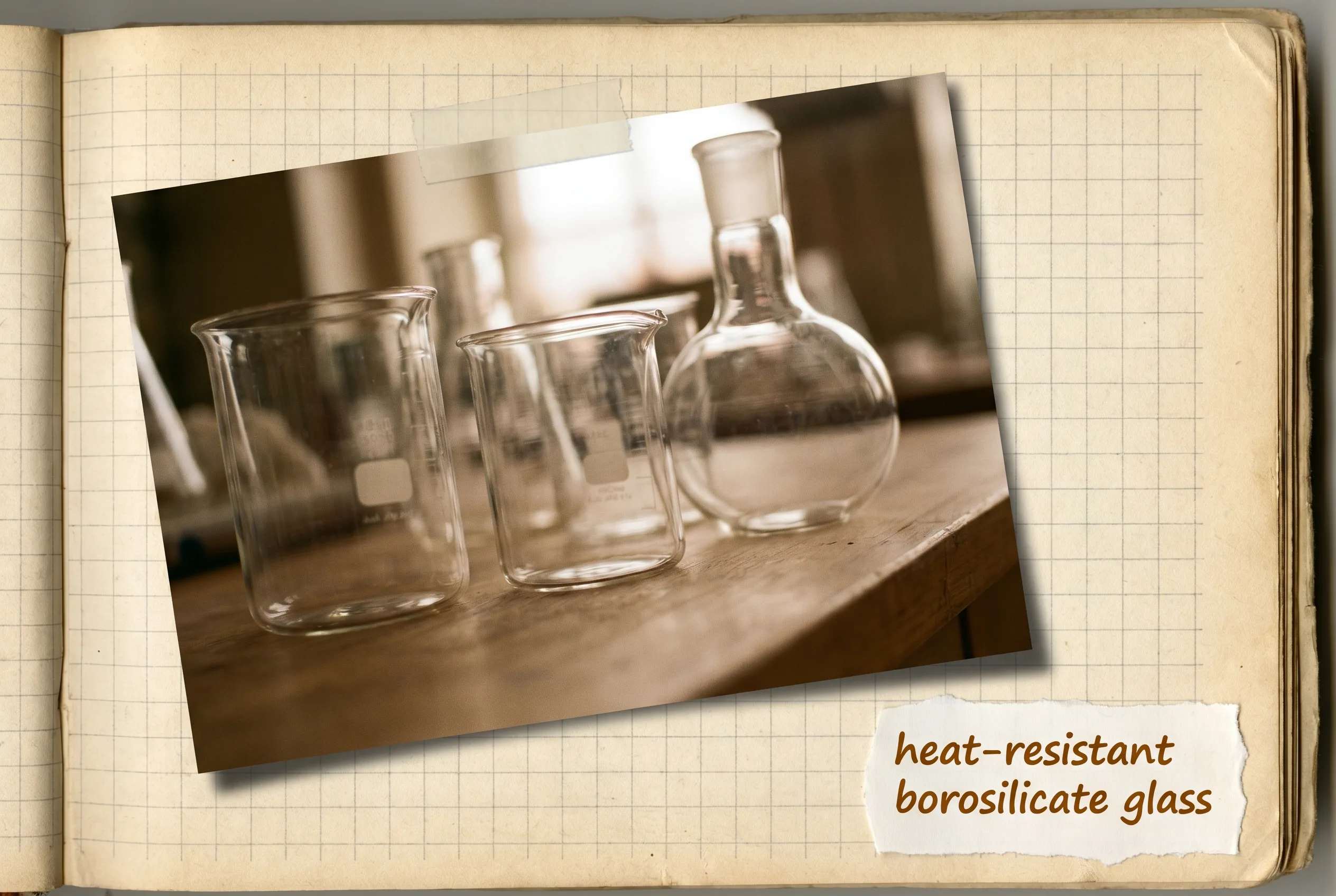
Thick-walled clear borosilicate glass beakers and a flask on a bench.
Where you'd see itBoron makes borosilicate glass that resists heat and sudden temperature changes.
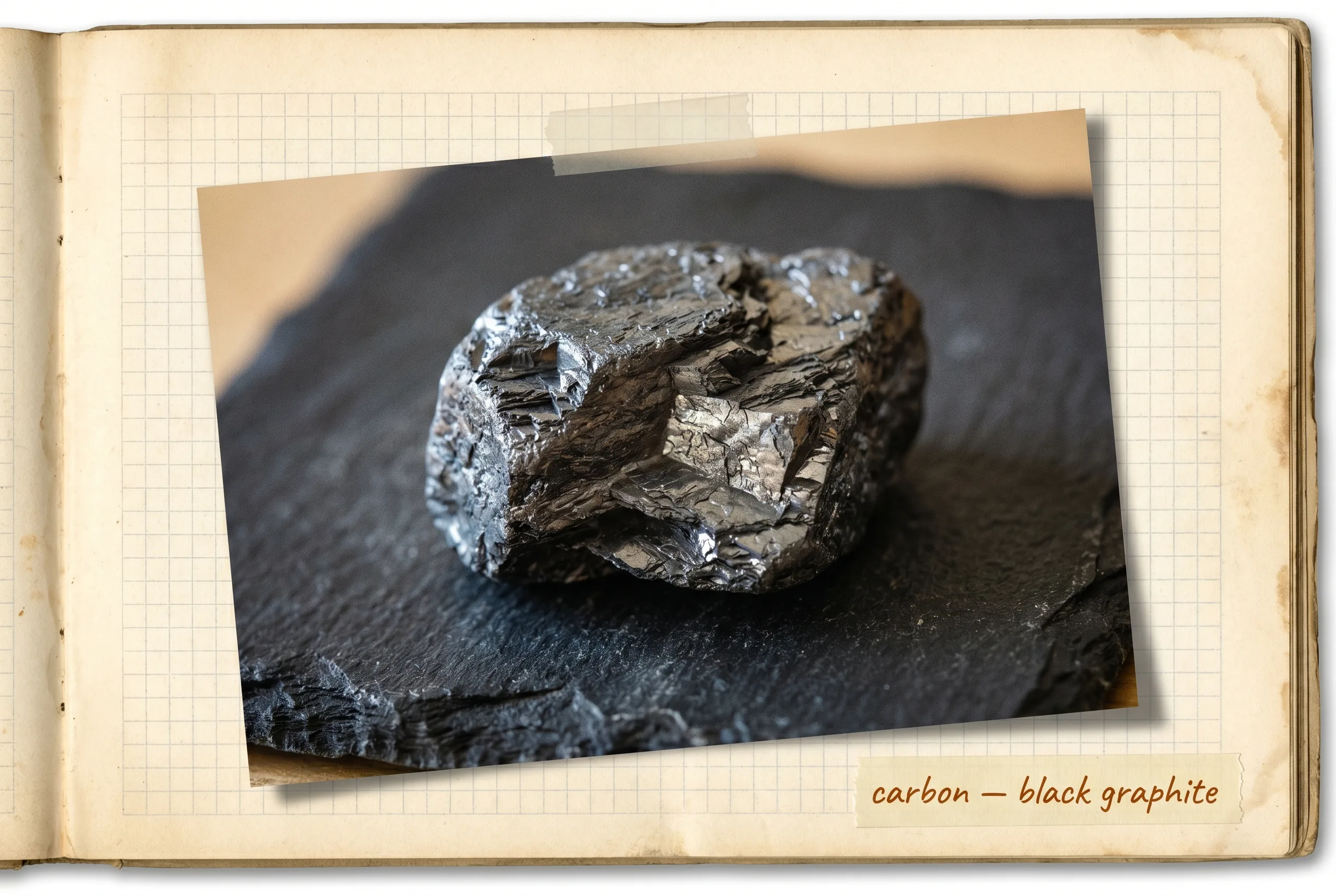
A chunk of dark grey-black graphite with a flaky layered surface on black slate.
What it looks likeGraphite: one of carbon’s everyday forms - opaque, dark grey-black, with a soft sheen.
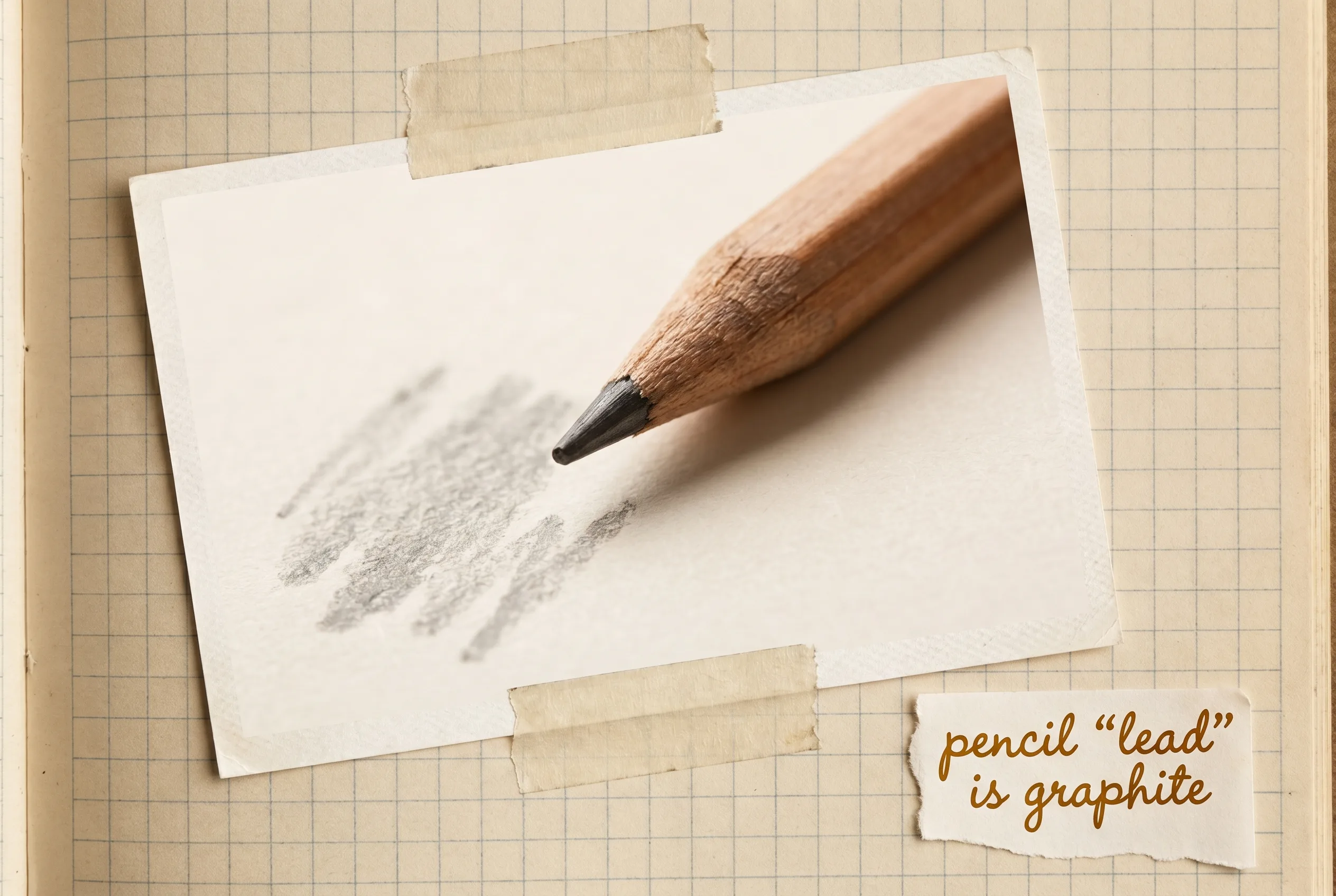
A sharpened pencil tip on white paper beside a few grey graphite strokes.
Where you'd see itA pencil’s “lead” is really graphite - pure carbon sliding off in thin layers.
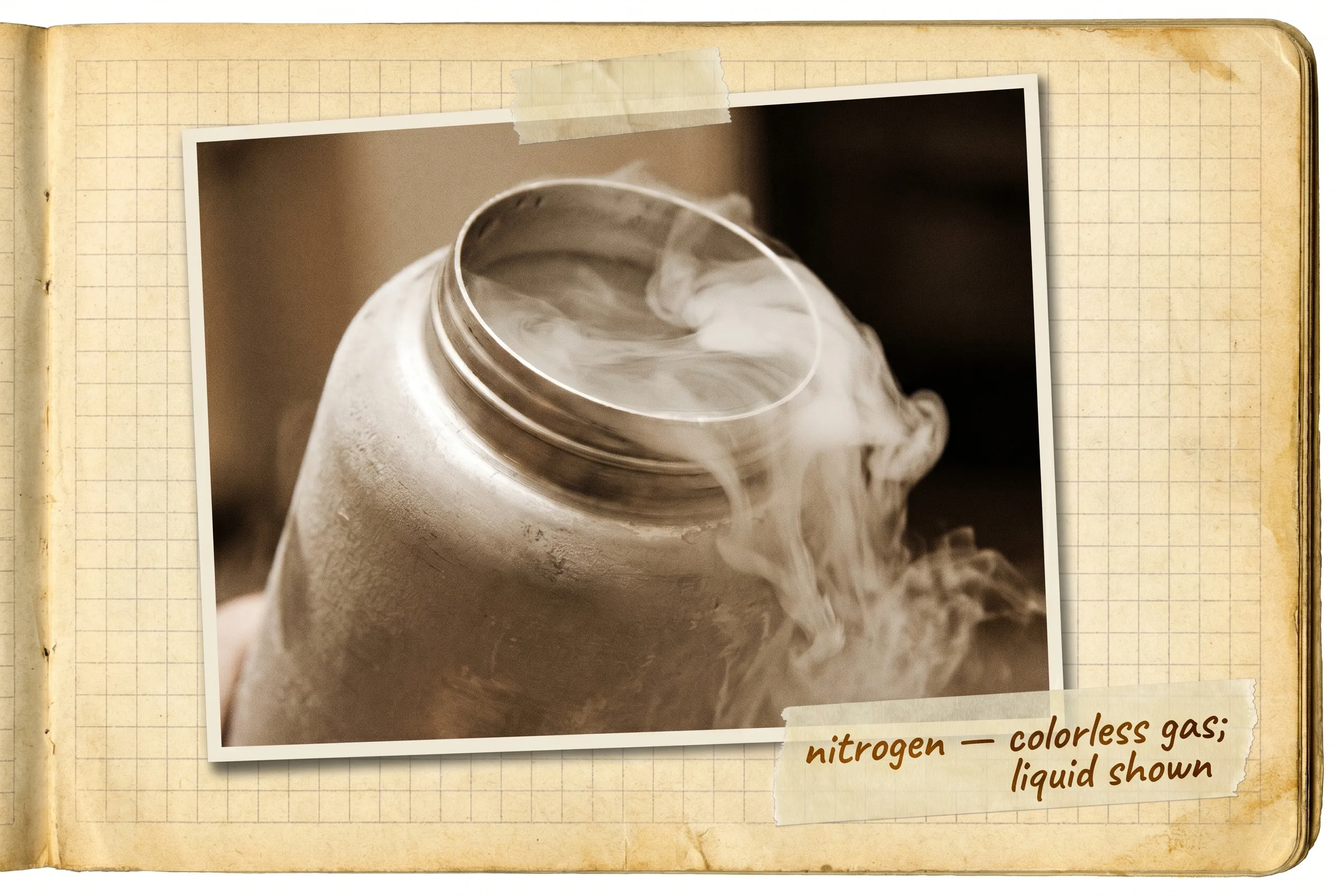
An open metal dewar of liquid nitrogen with white cold vapor pouring over the rim.
What it looks likeNitrogen is a colorless gas. As a liquid it is extremely cold and boils off in white vapor.
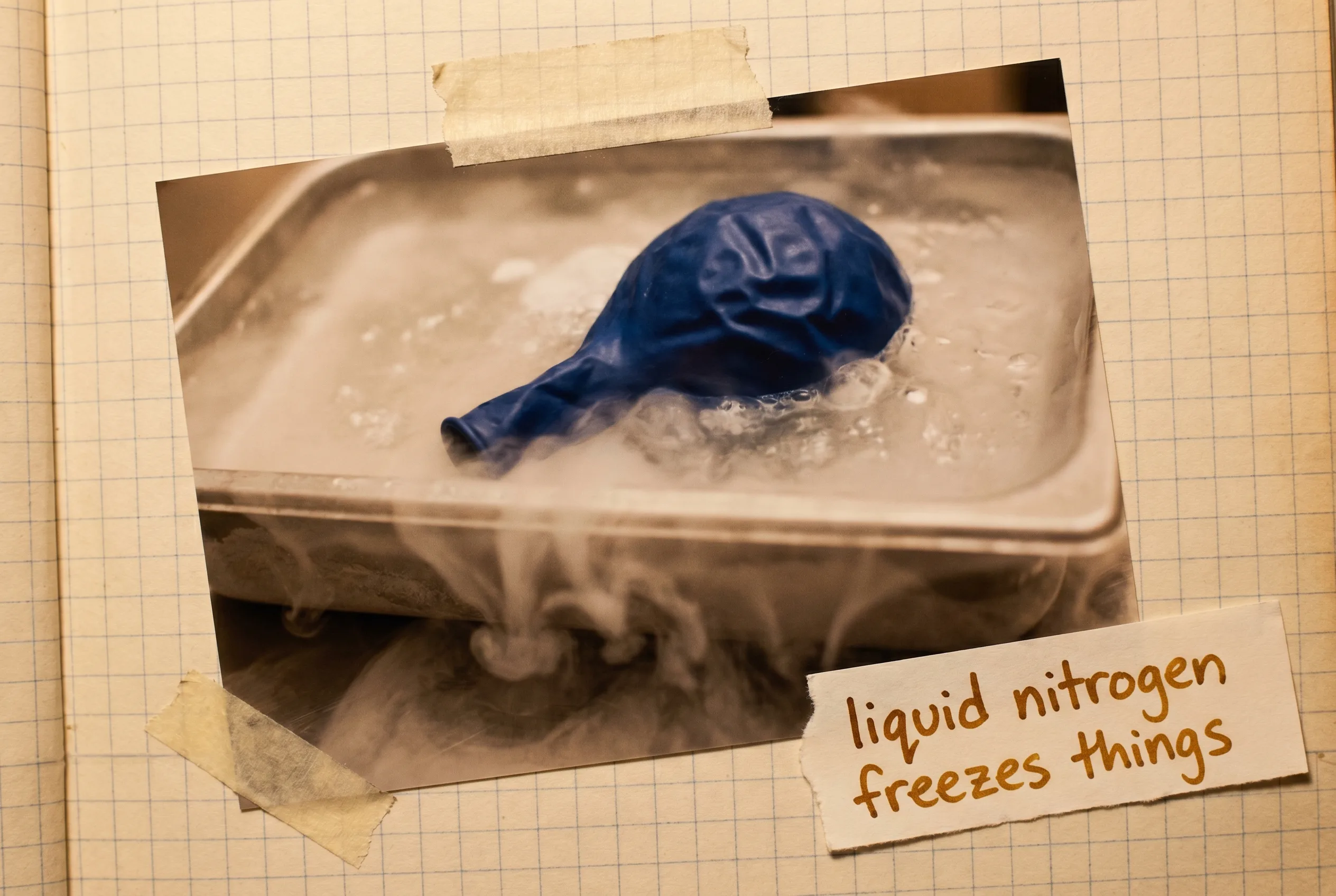
A balloon dipped toward a tray of liquid nitrogen as it shrinks in the white fog.
Where you'd see itLiquid nitrogen is so cold it instantly freezes whatever it touches, like a balloon.
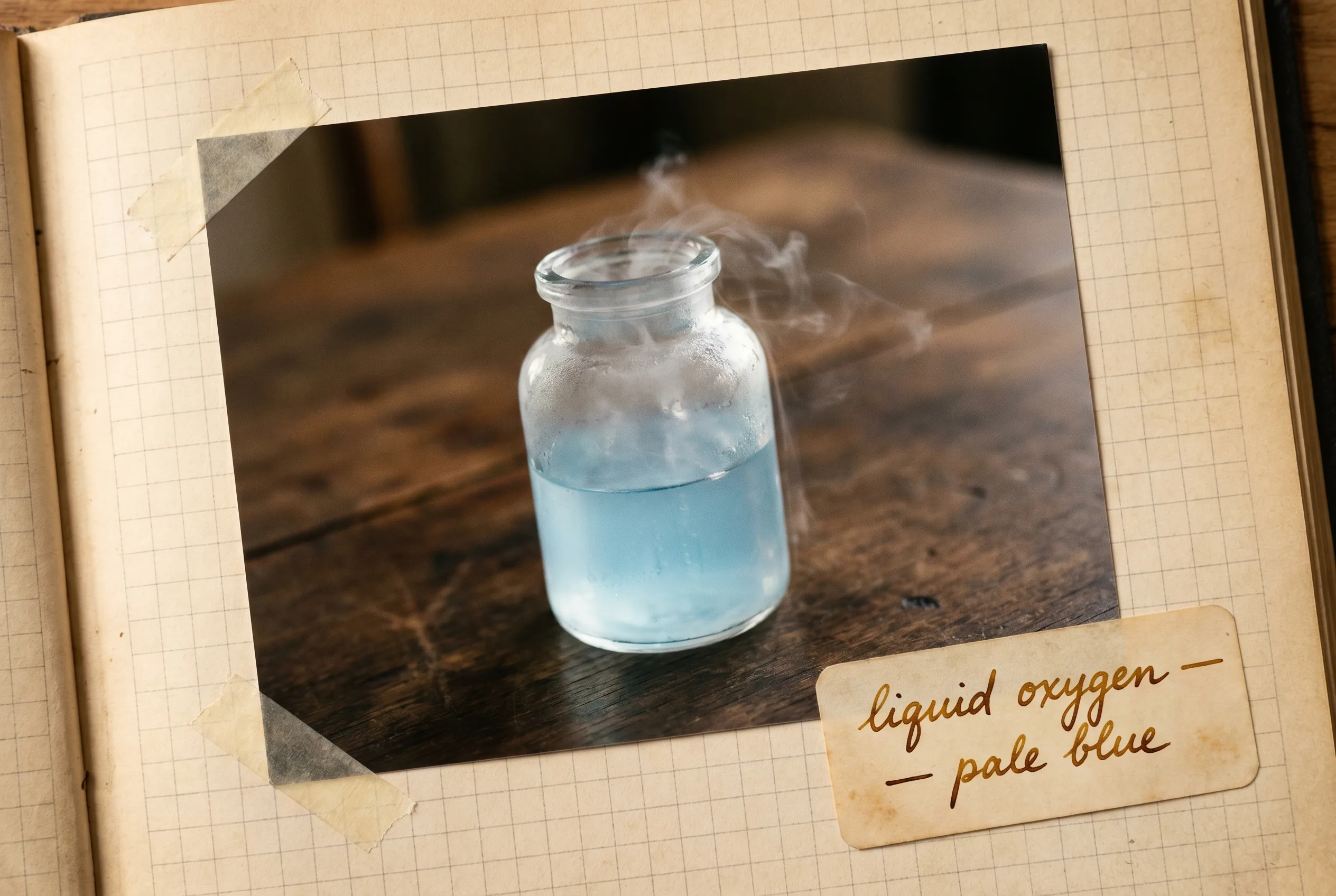
Pale blue liquid oxygen in a clear glass dewar with cold vapor drifting off.
What it looks likeChilled until it liquefies, oxygen is a genuine pale sky-blue.
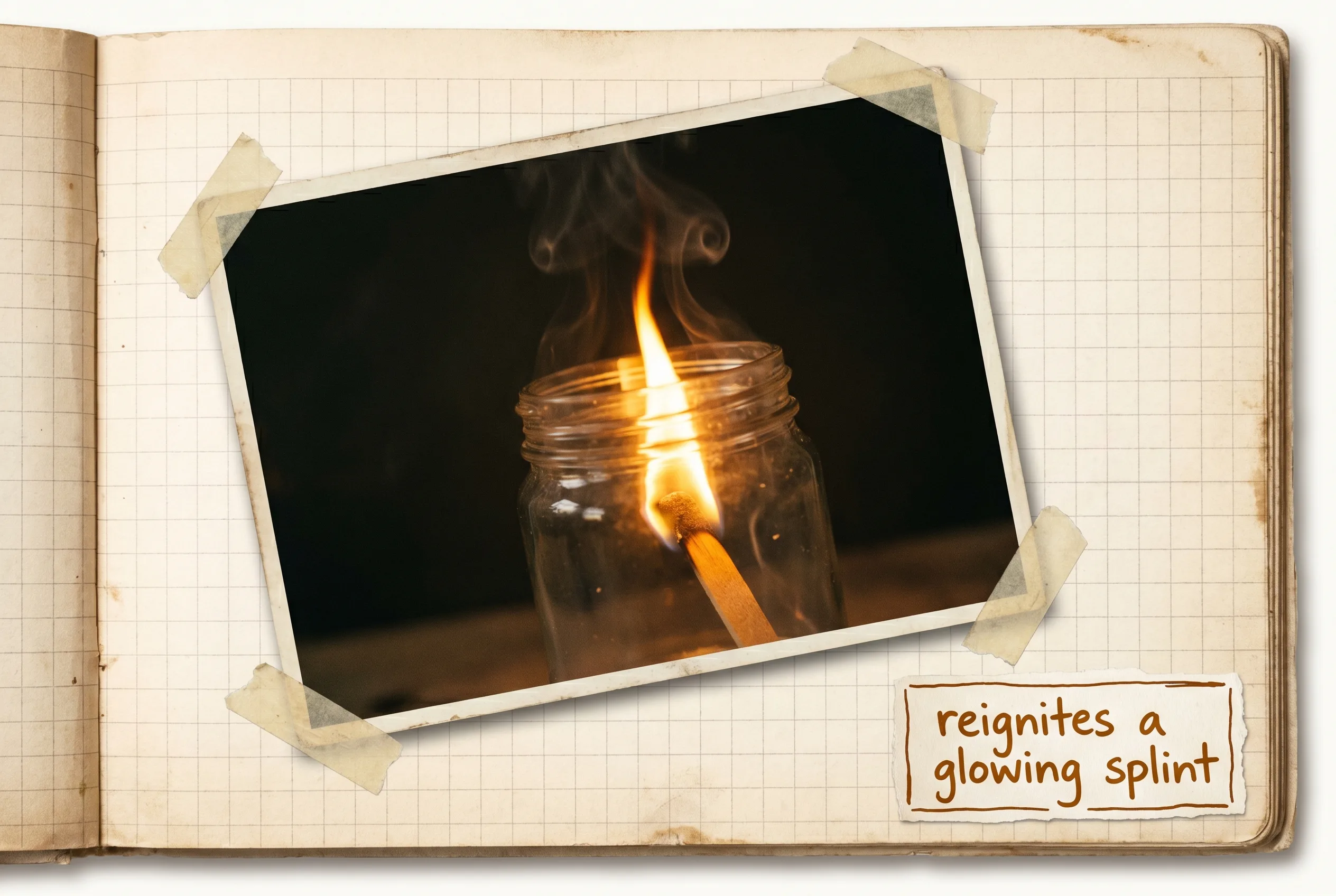
A glowing wooden splint reigniting into bright flame inside a jar.
Where you'd see itOxygen feeds fire: a glowing splint bursts back into flame in an oxygen-rich jar.
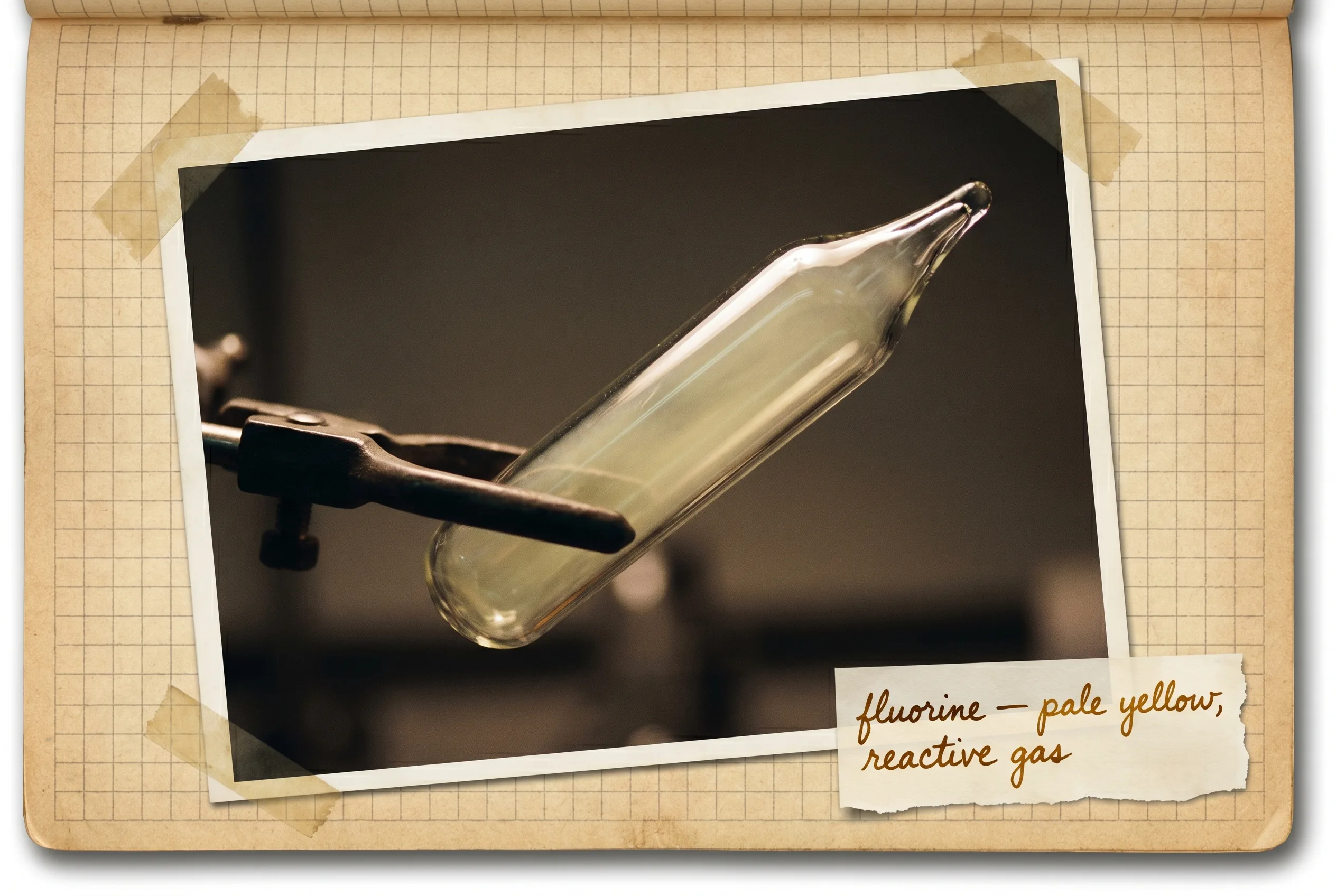
A sealed glass ampoule of pale yellow fluorine gas held in a clamp against a dark background.
What it looks likeFluorine is a pale yellow gas and the most reactive of all elements, so it is kept sealed away.
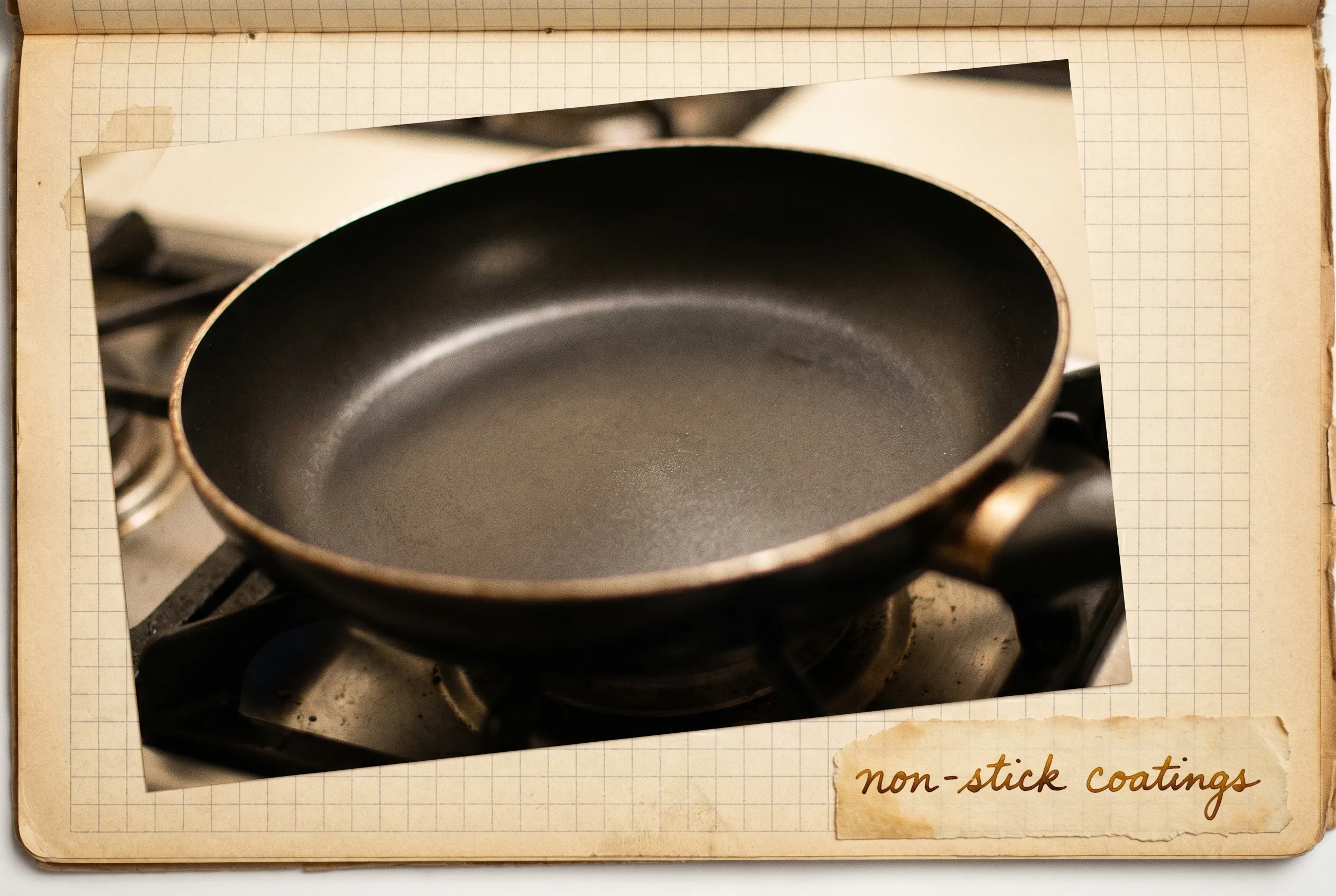
A black non-stick frying pan with a smooth matte coating, seen from above.
Where you'd see itFluorine compounds give non-stick pans their slick PTFE coating.
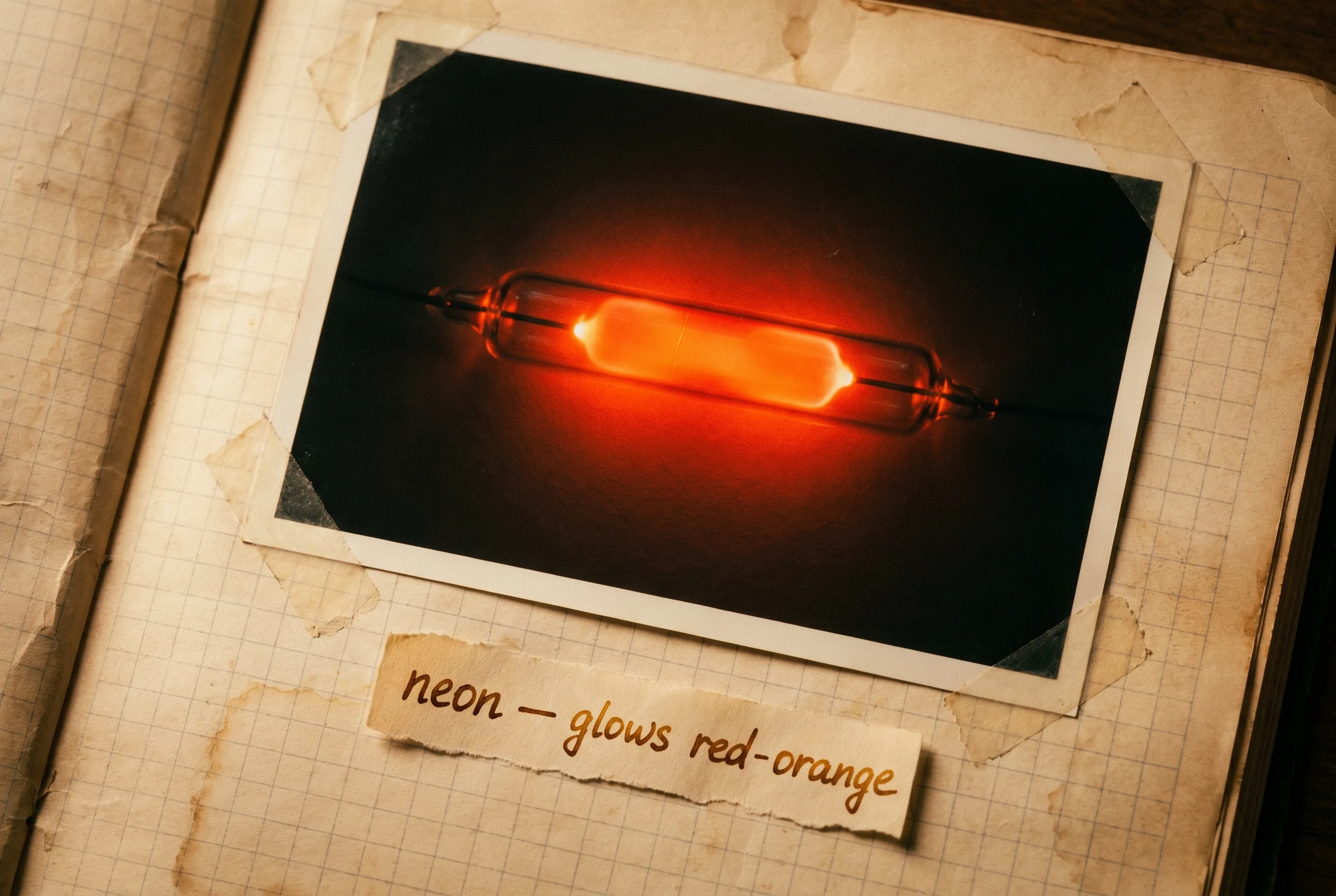
A glass discharge tube glowing brilliant red-orange against black.
What it looks likeNeon is colorless until it’s energized - then it glows its signature red-orange.
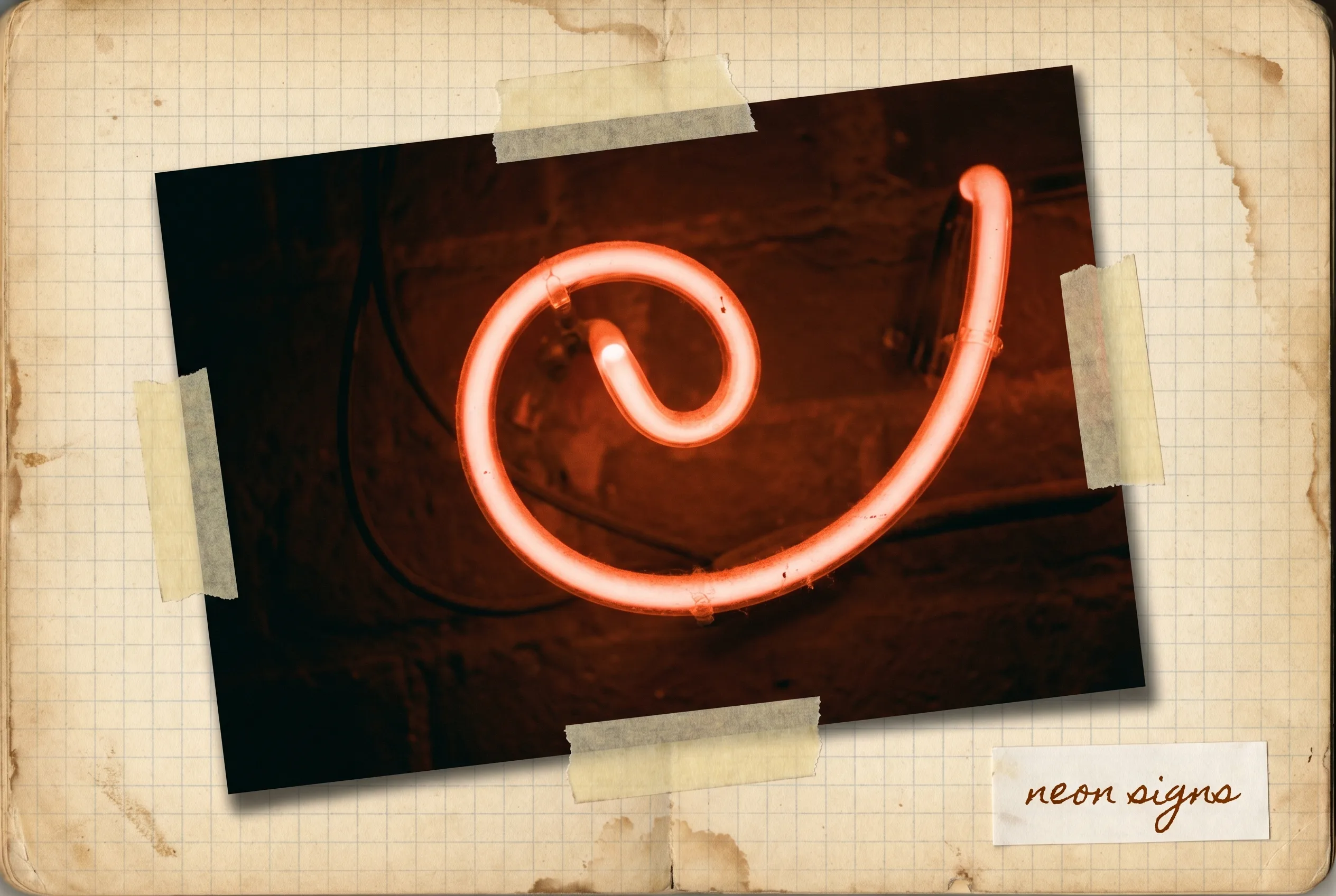
A curl of glowing red-orange neon sign tubing against a dark wall.
Where you'd see itThat red-orange glow is why “neon” signs got their name.
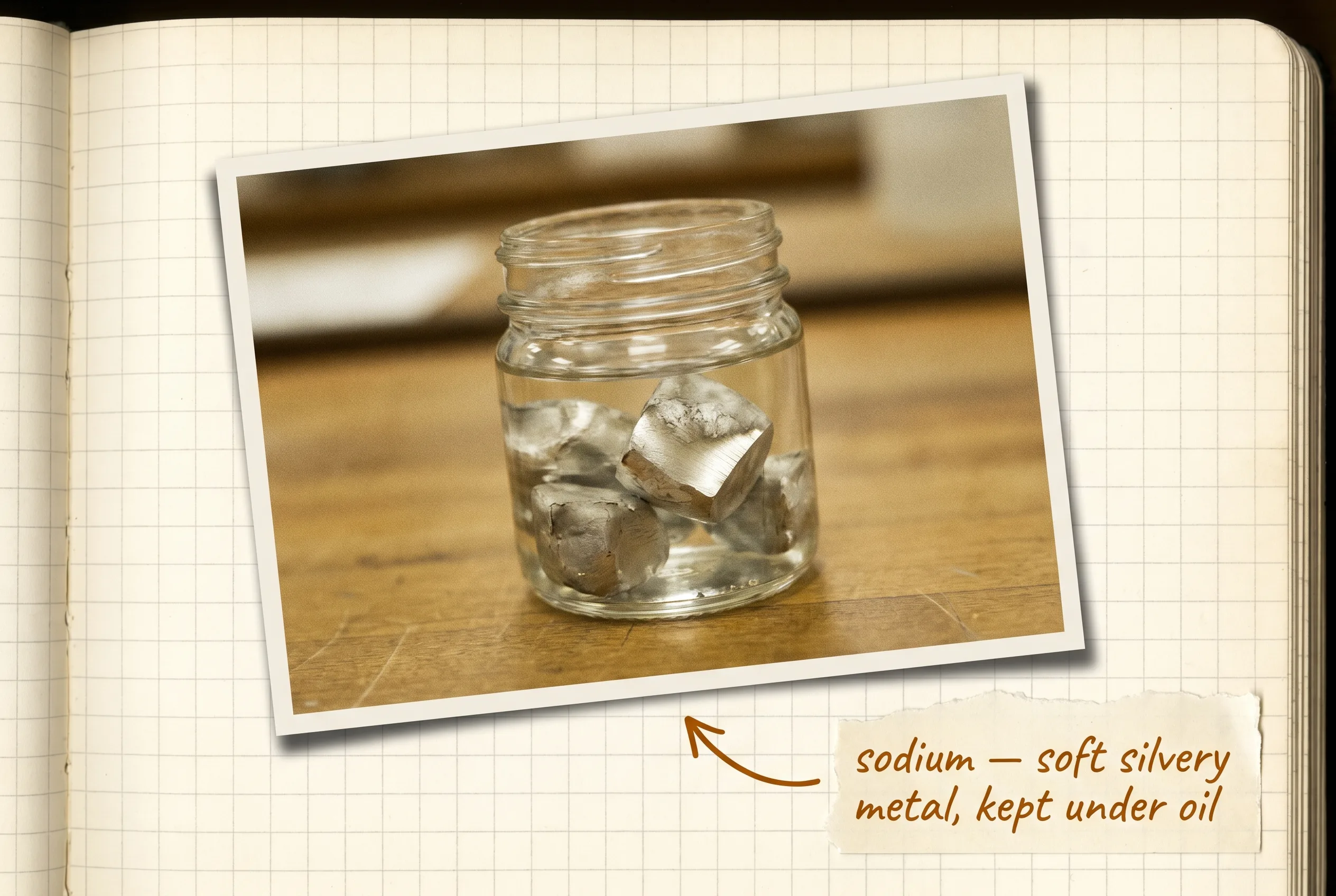
Lumps of silvery sodium metal under oil in a glass jar, one freshly cut and shiny.
What it looks likeSodium is a soft, silvery metal so reactive it’s stored under oil to keep air away.
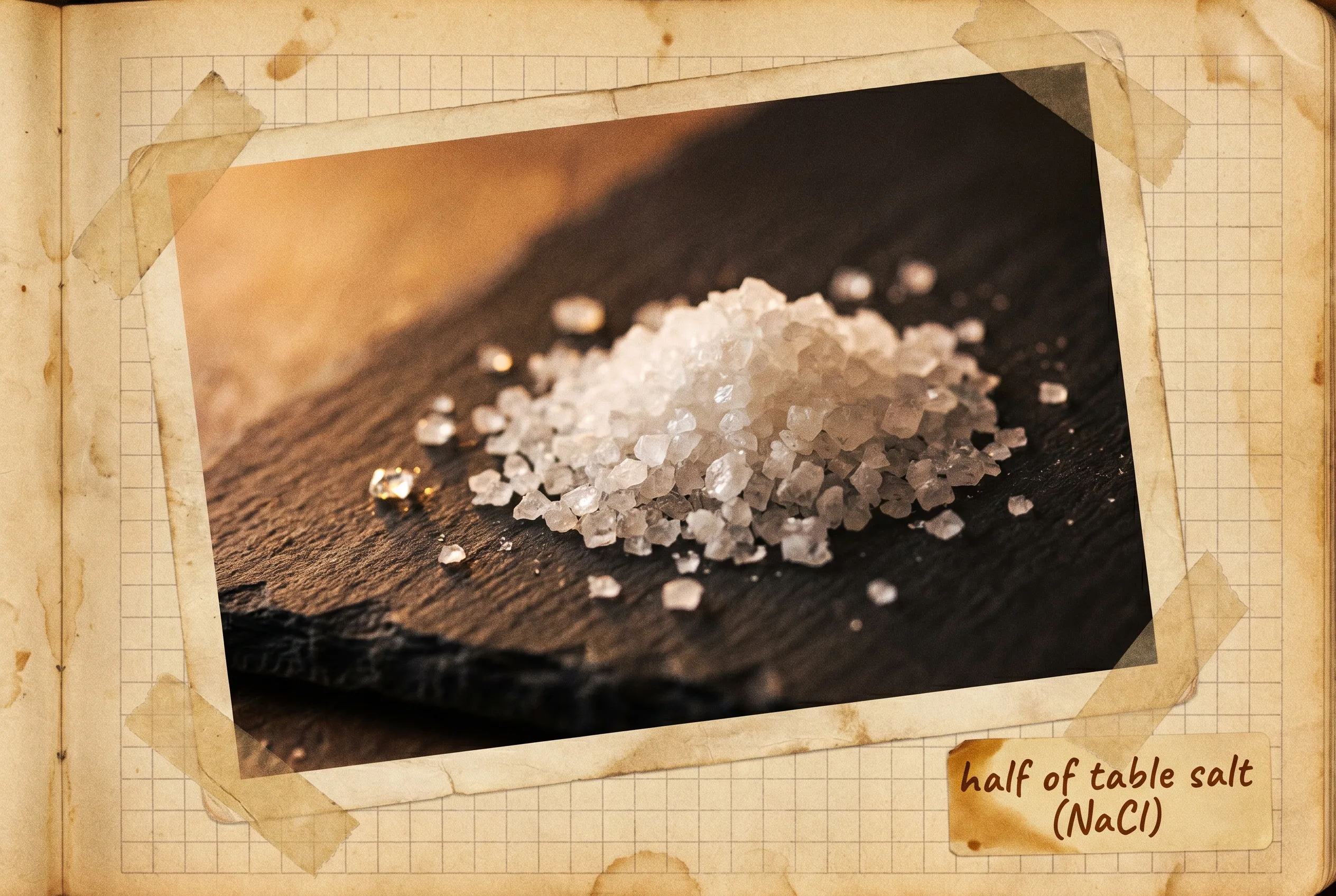
A small heap of coarse white table-salt crystals on dark slate.
Where you'd see itLocked into table salt (sodium chloride), that violent metal becomes a seasoning.
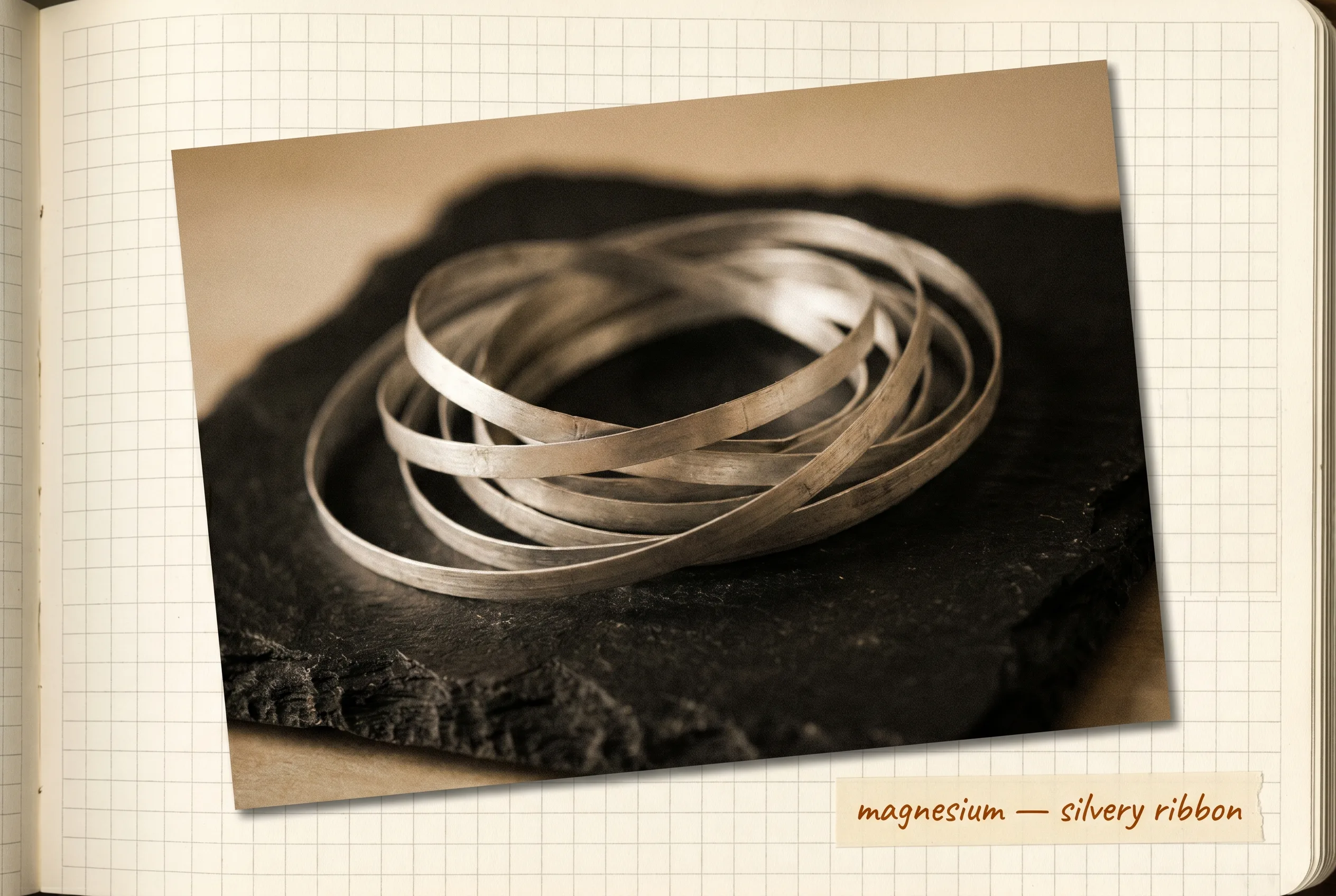
A loose coil of dull silvery magnesium ribbon on black slate.
What it looks likeMagnesium is a light, dull-silvery metal, often sold as a thin ribbon.
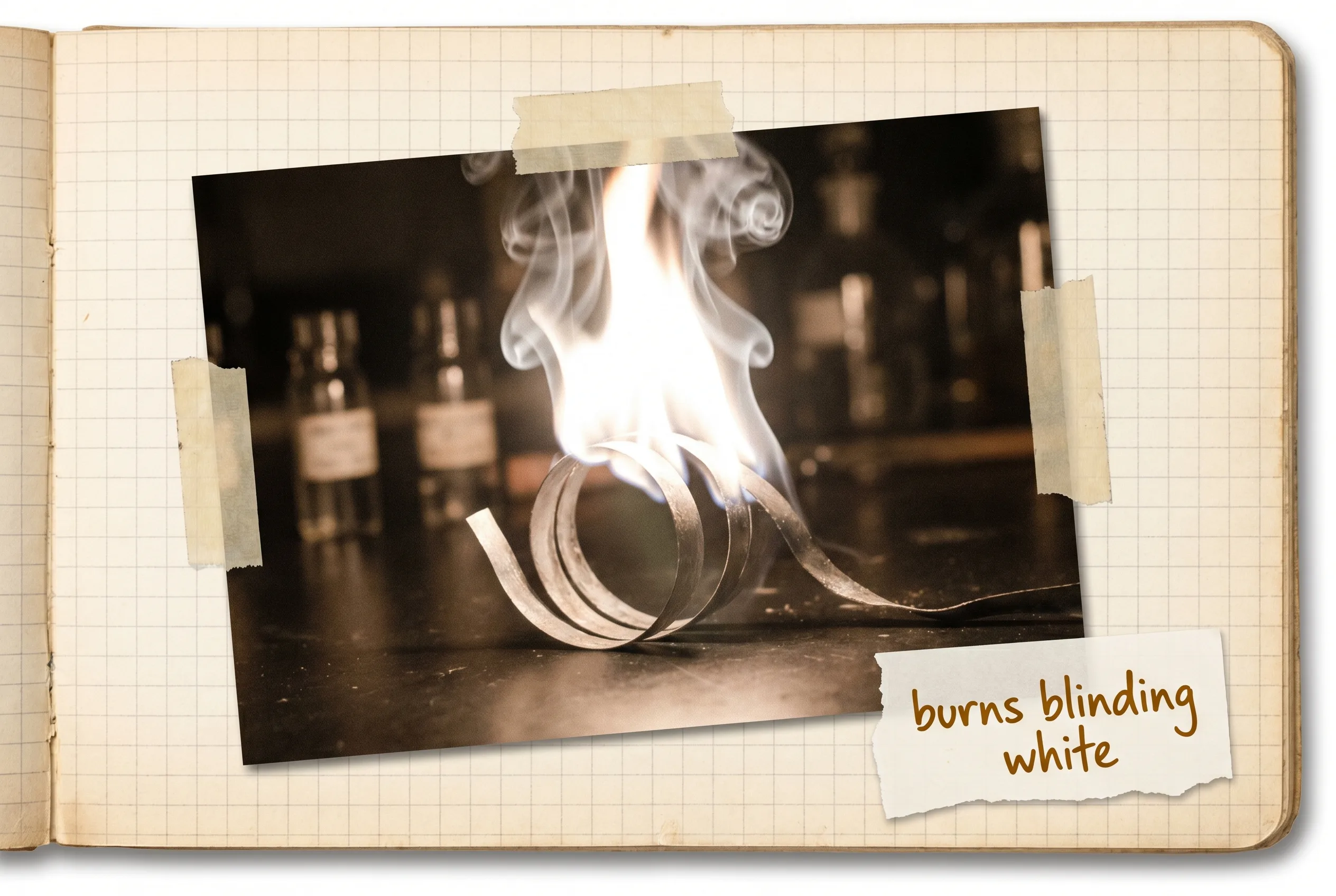
A strip of magnesium ribbon burning with an intense brilliant-white flame.
Where you'd see itSet it alight and magnesium burns with a blinding white flame - old camera flashes used it.
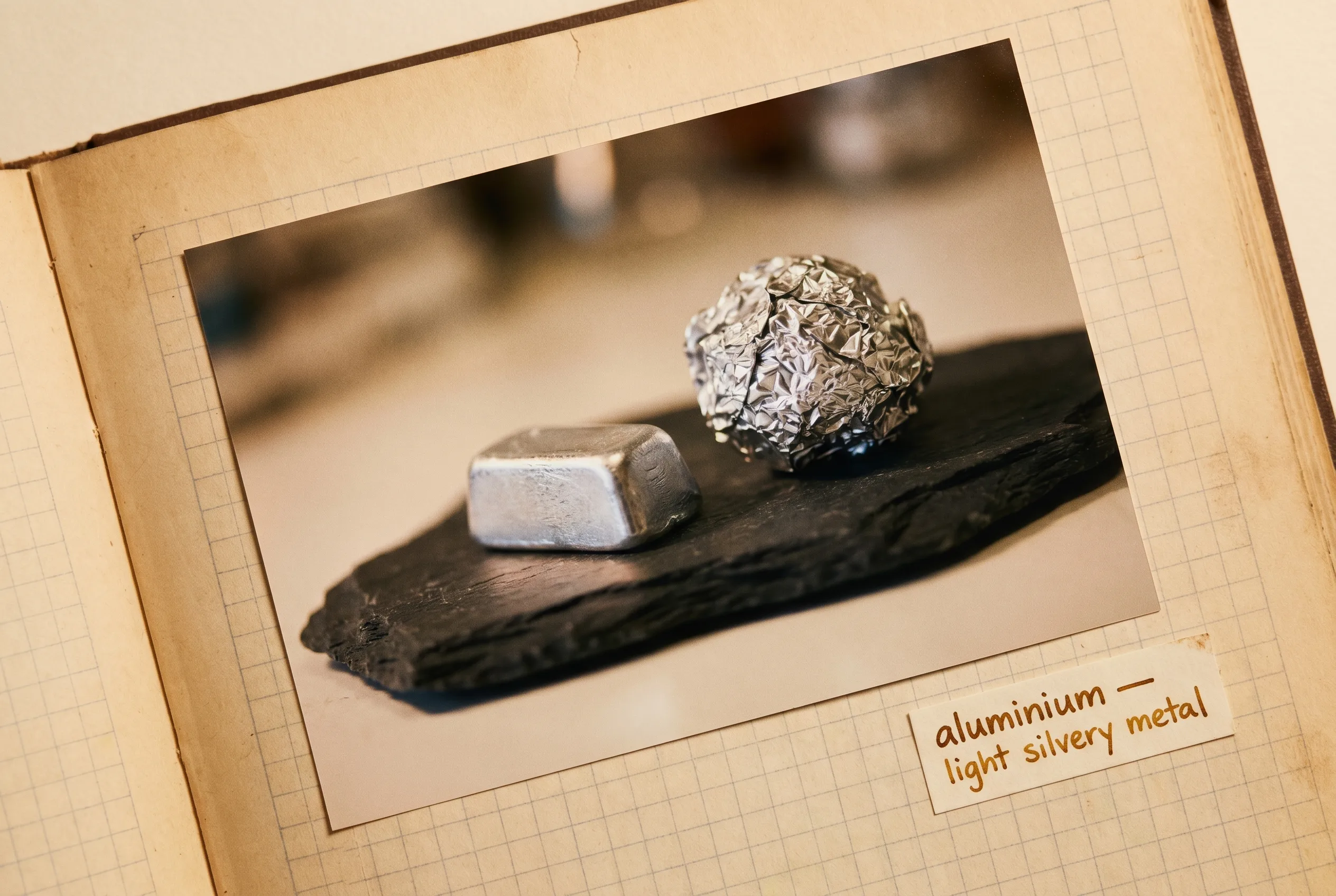
A bright silvery aluminum ingot beside a crumpled wad of foil on black slate.
What it looks likeAluminum is a light, cool-silver metal - soft enough to roll into kitchen foil.
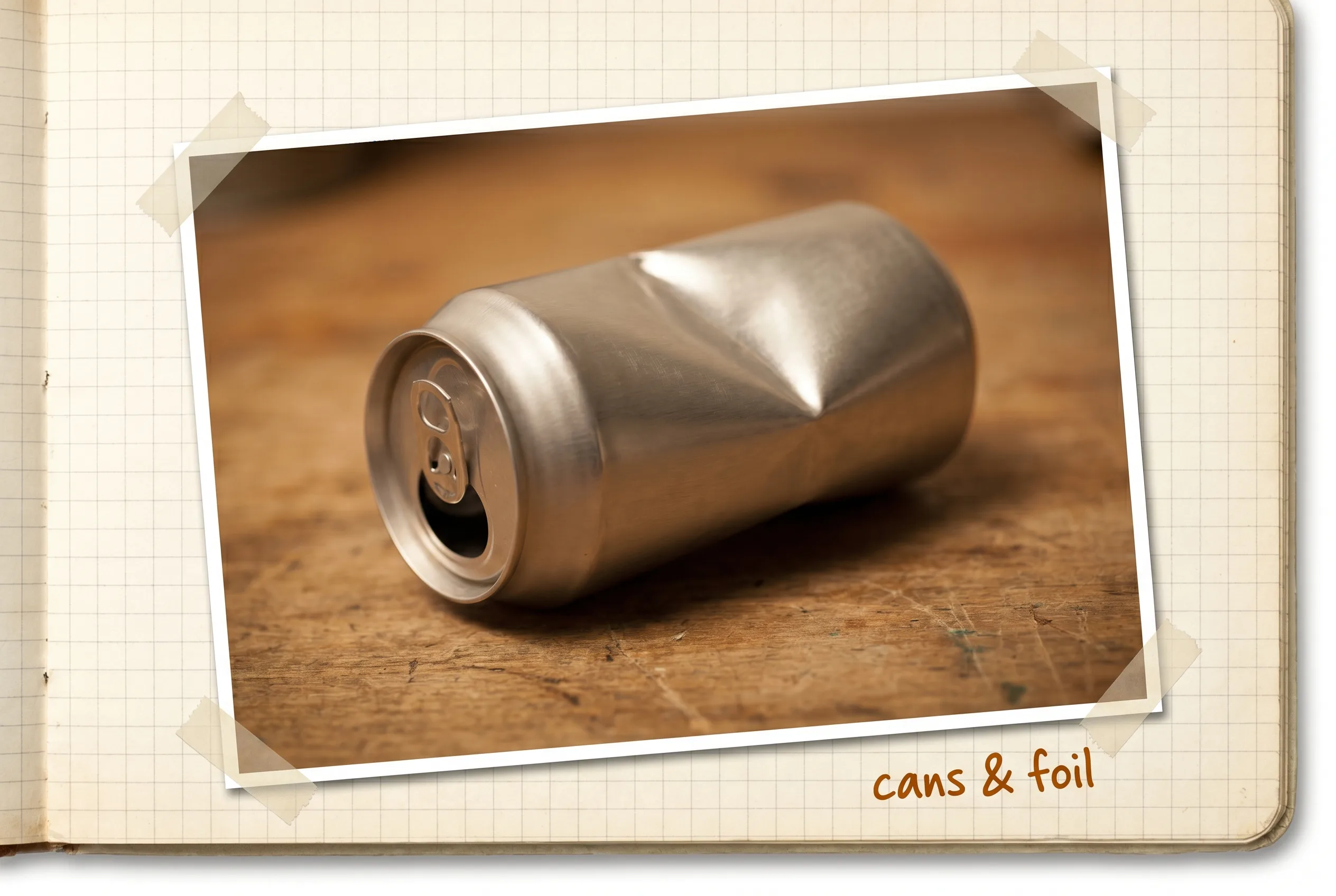
A crushed plain aluminum drinks can with bare brushed-silver metal.
Where you'd see itDrink cans and foil are nearly pure aluminum.
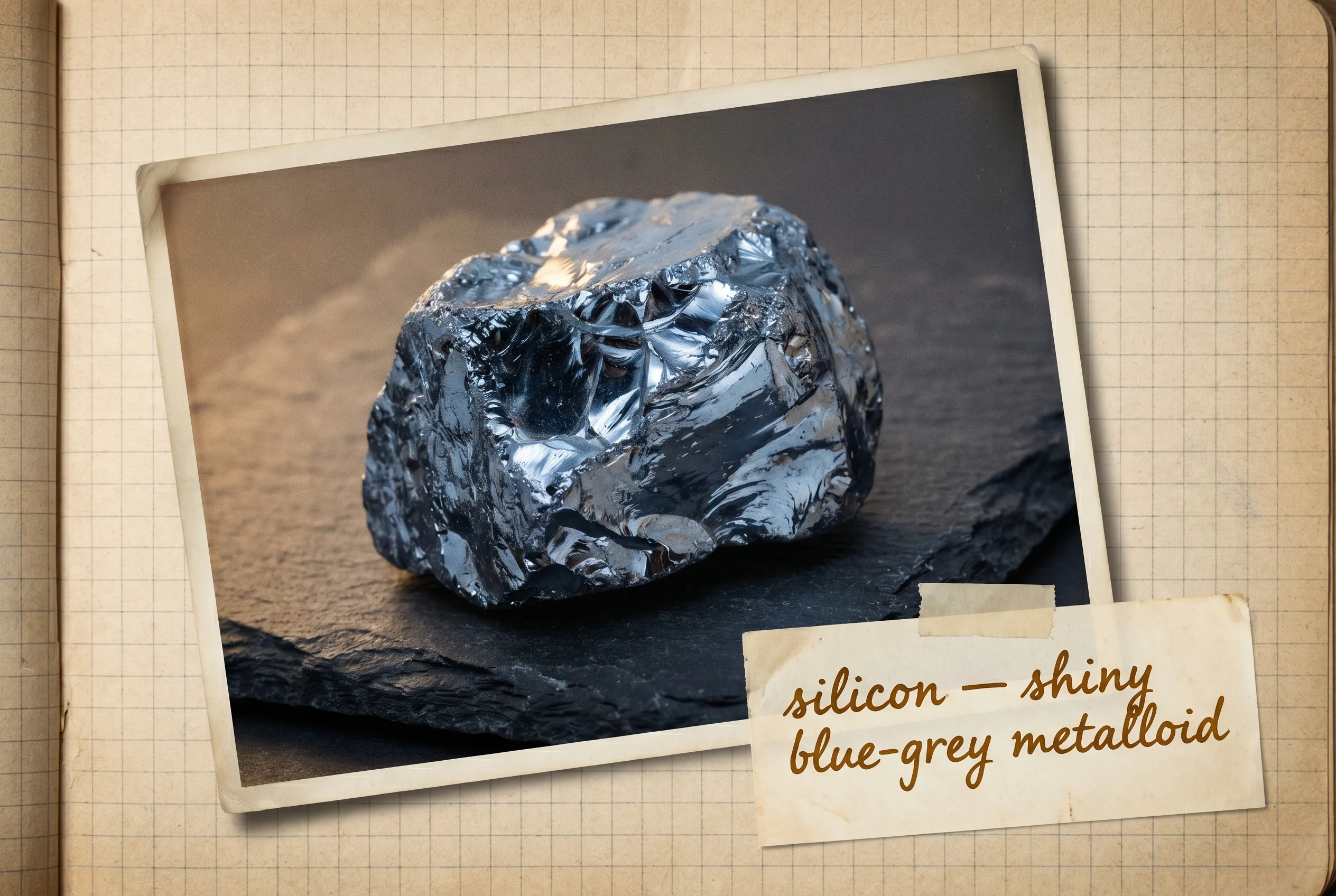
A chunk of polycrystalline silicon, shiny blue-grey with faceted surfaces, on slate.
What it looks likePure silicon is a shiny blue-grey metalloid with an almost glassy luster.
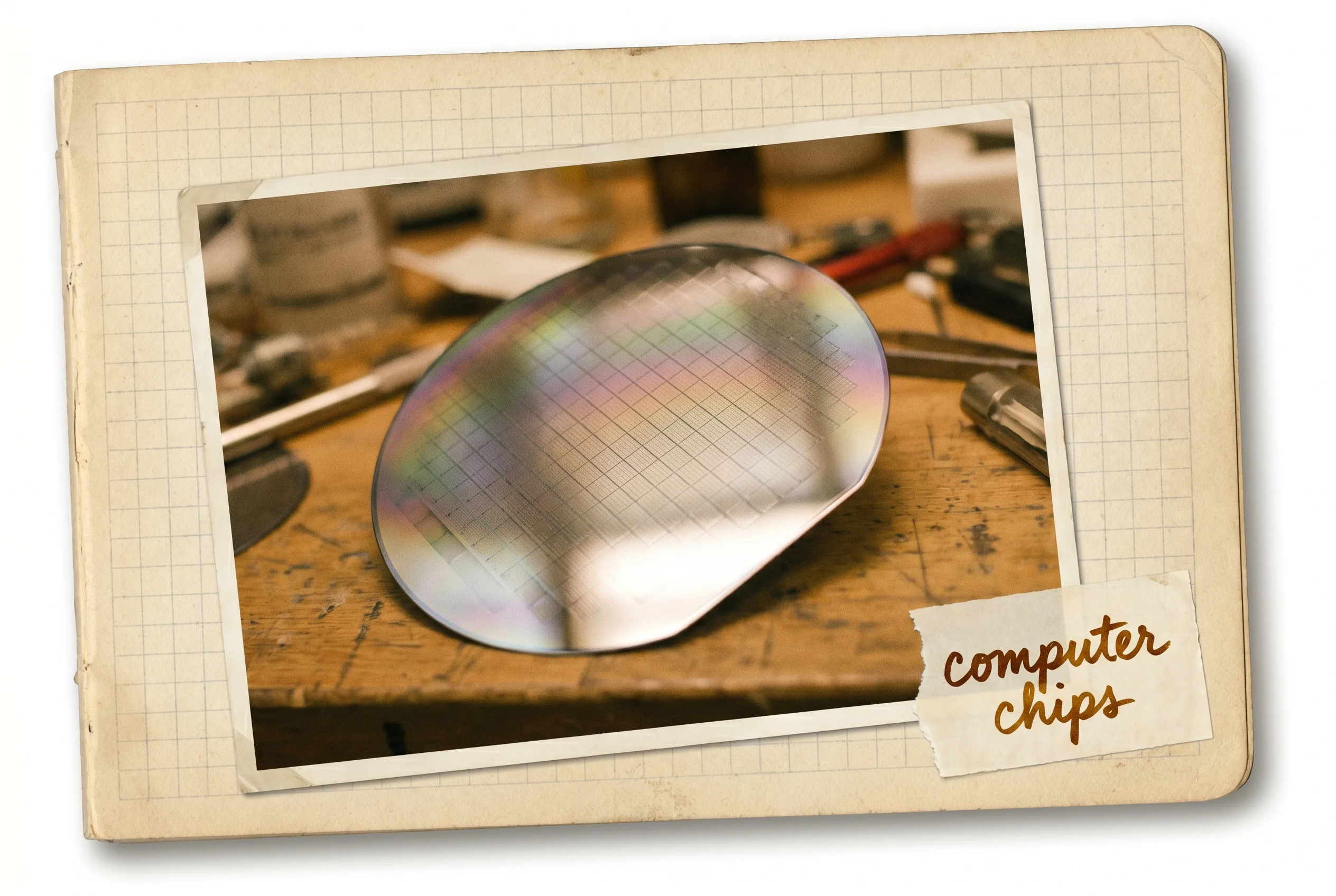
A mirror-finish silicon wafer with microchip patterns and faint rainbow sheen.
Where you'd see itSliced into wafers and etched, silicon becomes every computer chip.
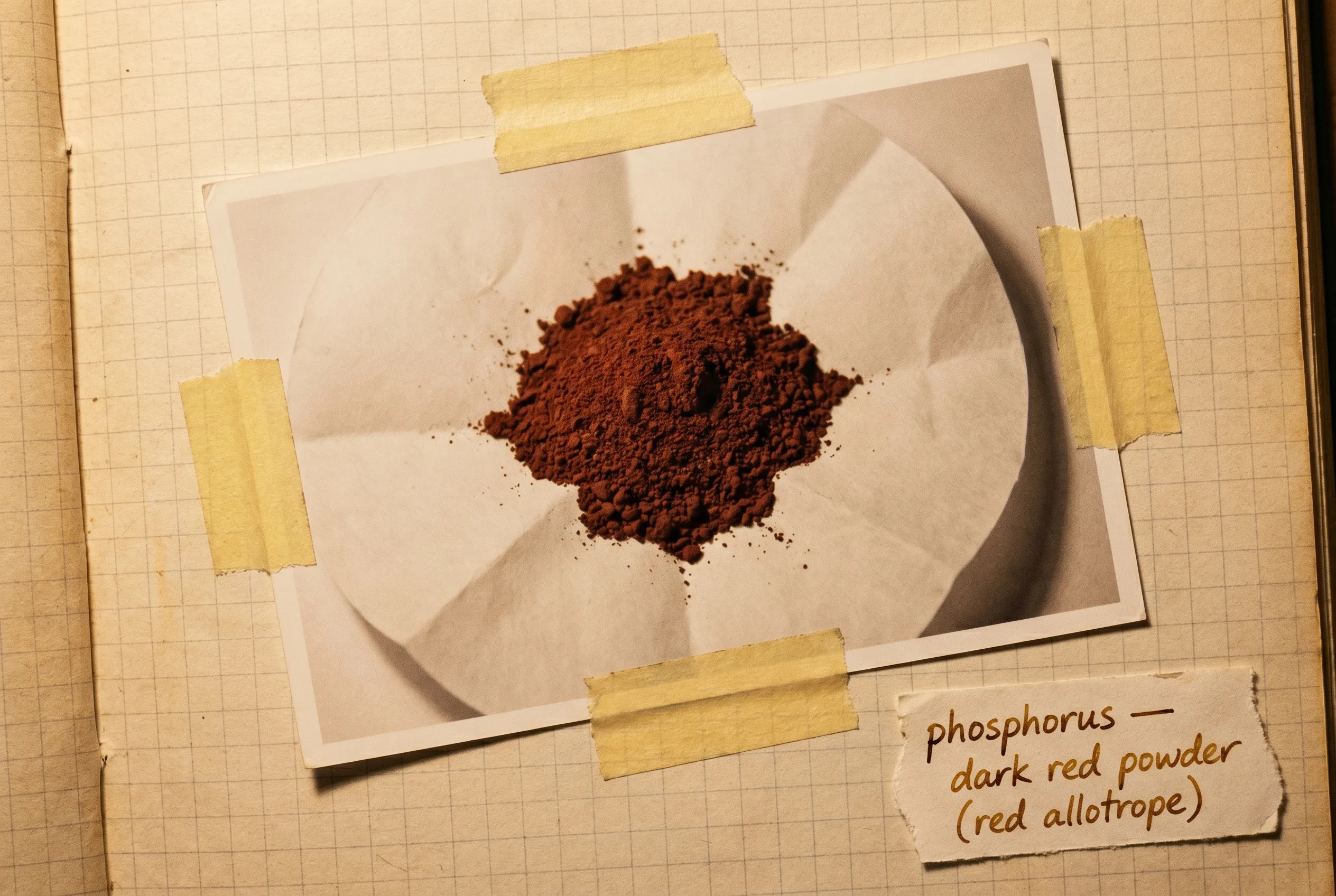
A heap of dark brick-red phosphorus powder on white paper.
What it looks likeRed phosphorus is a dark brick-red powder, the safer and more common form of the element.
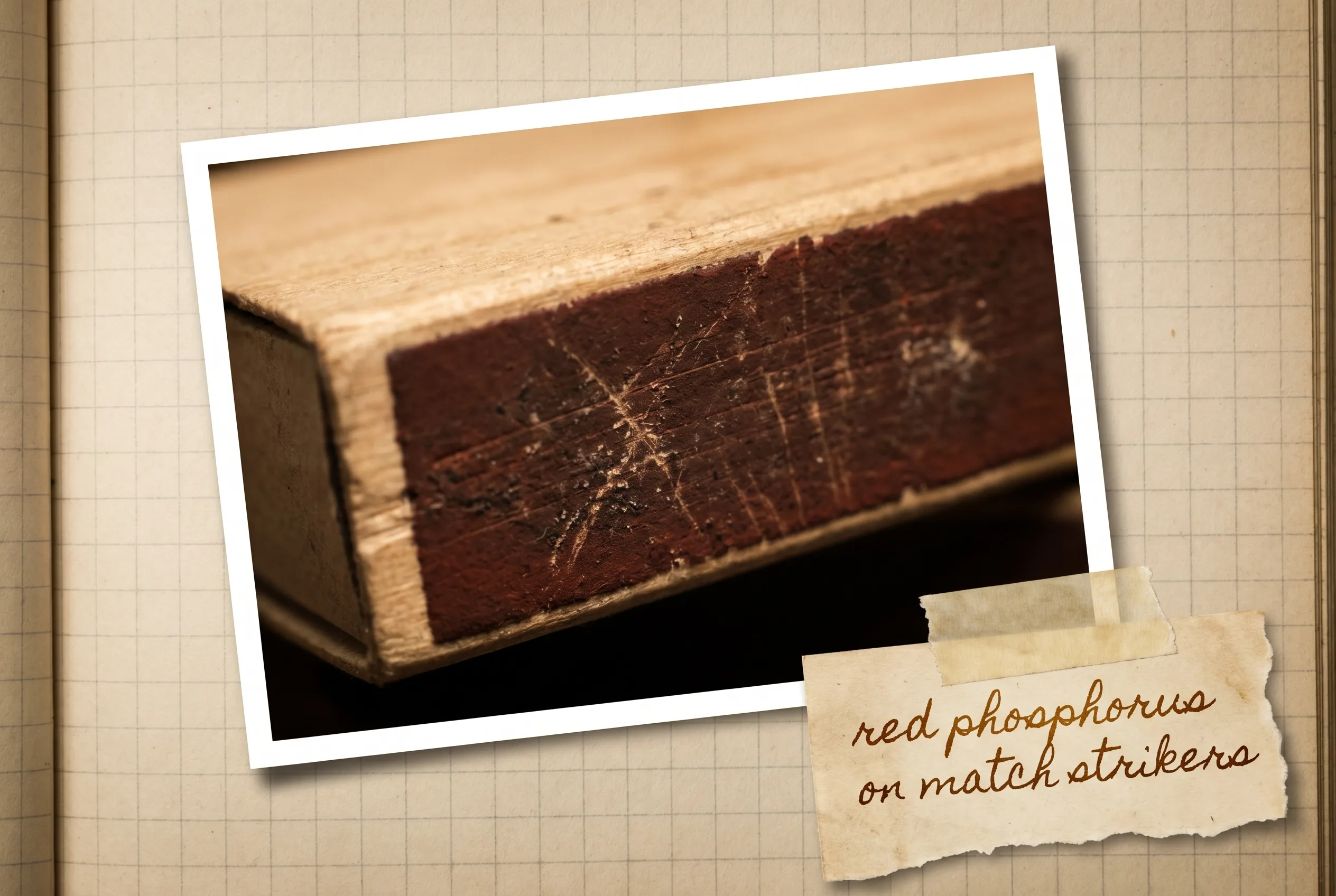
Close-up of the dark red-brown rough striking strip on the side of a matchbox.
Where you'd see itRed phosphorus coats the striking strip on a matchbox.
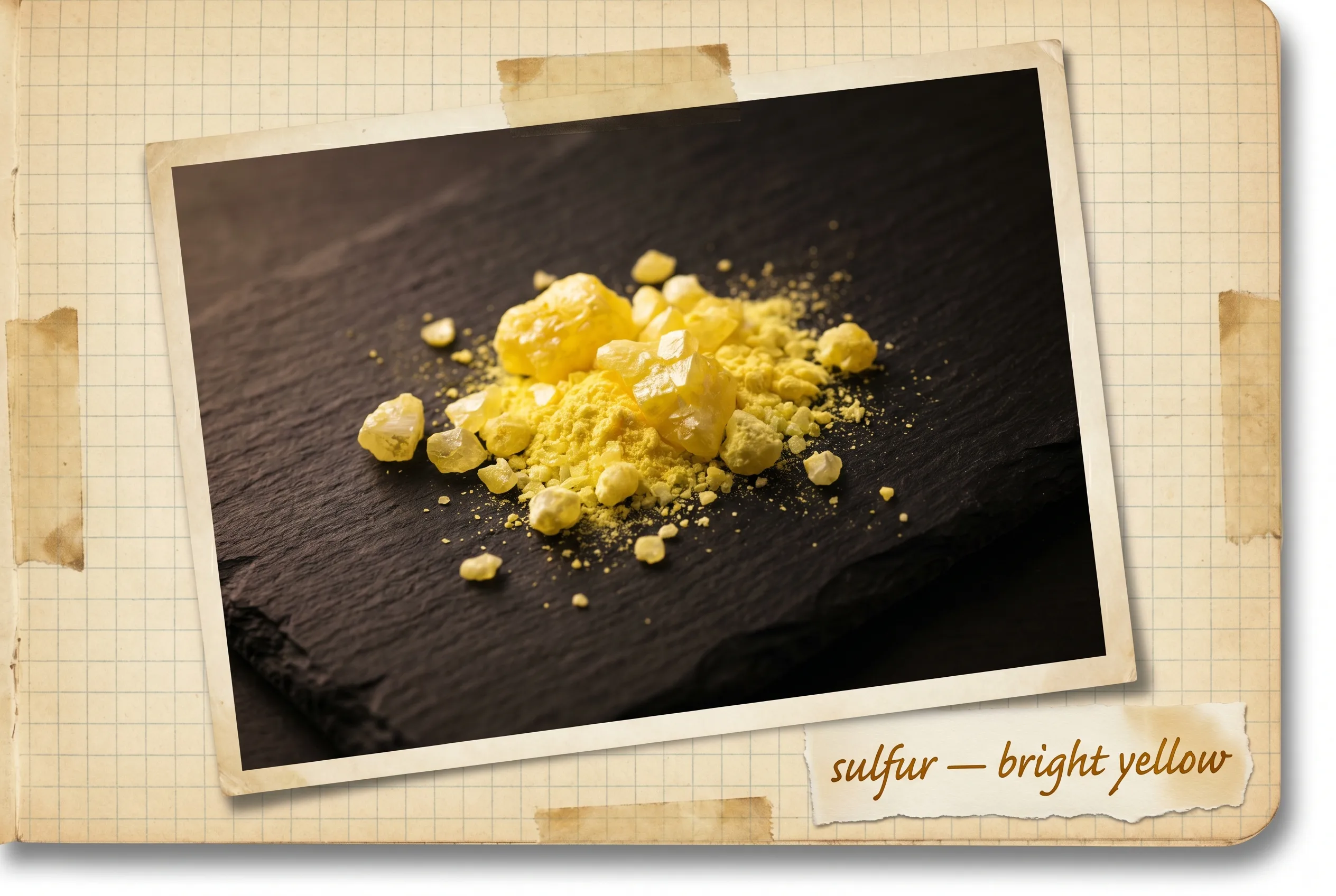
A heap of bright yellow sulfur crystals and powder on black slate.
What it looks likeSulfur is unmistakable: bright canary-yellow crystals and powder.
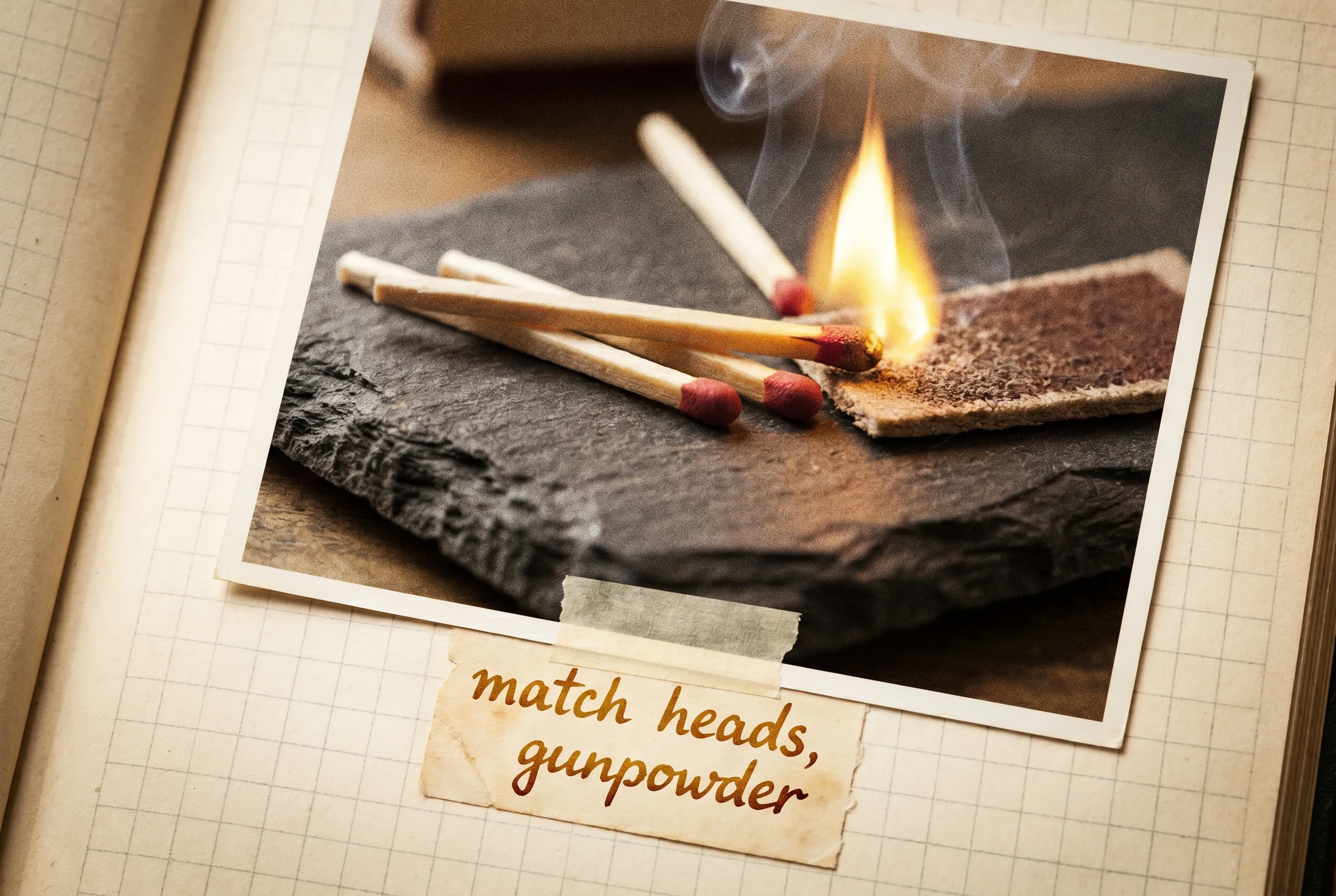
Wooden matches, one mid-strike with a small flare, on a dark surface.
Where you'd see itSulfur is packed into match heads and gunpowder.
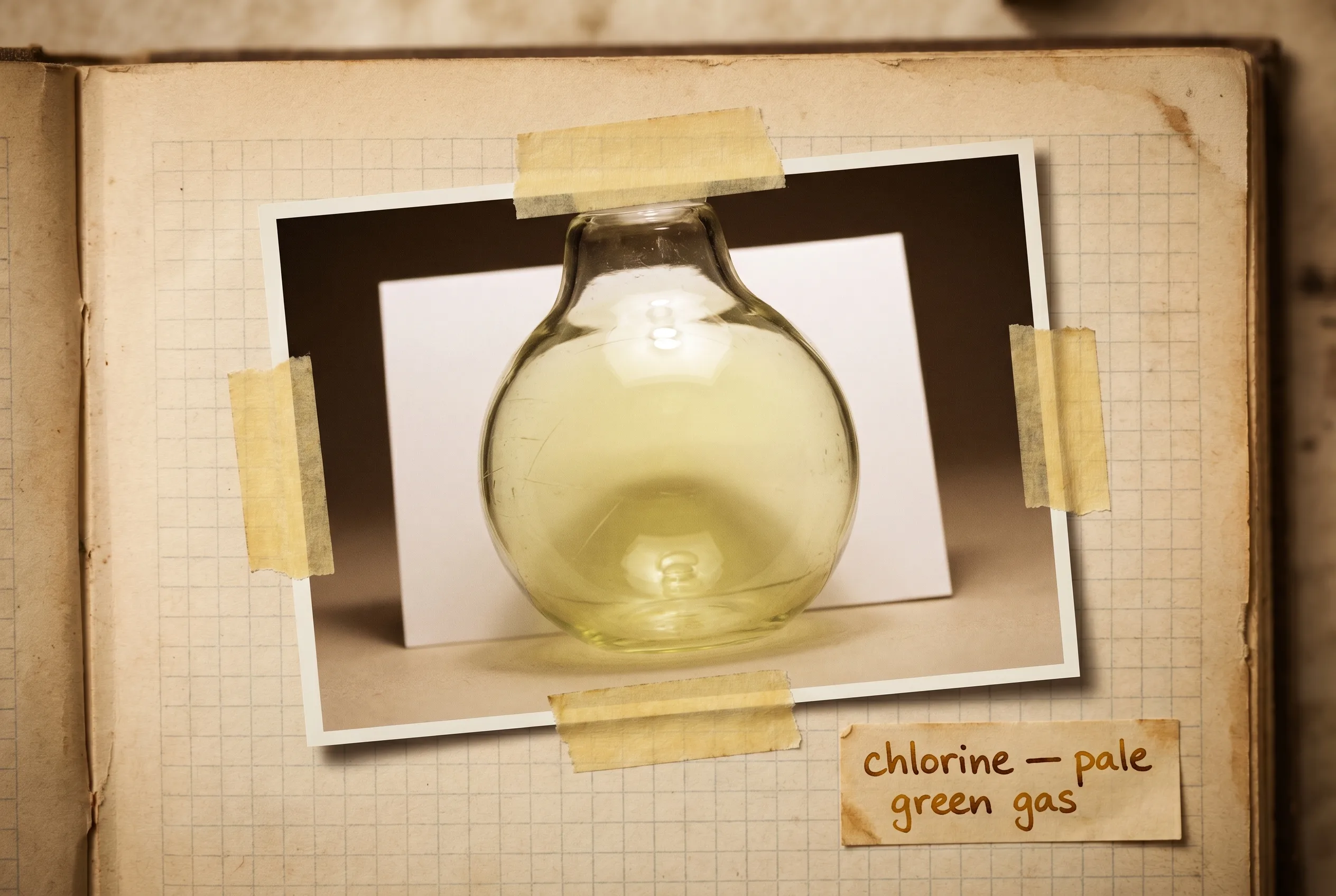
A sealed glass flask of pale yellow-green chlorine gas against a white card.
What it looks likeChlorine is a pale yellow-green gas - its color is faint but real.
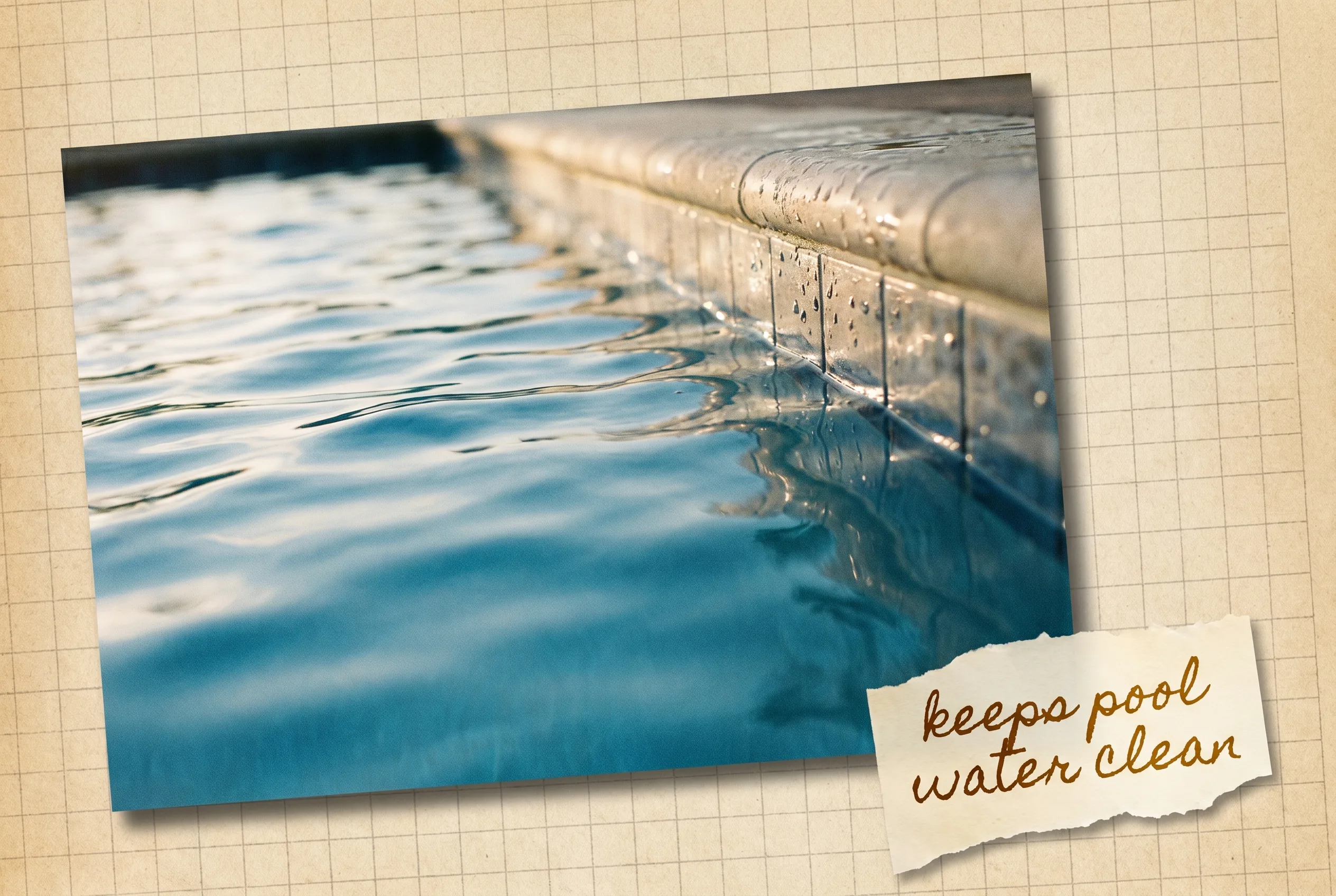
The calm blue surface of a swimming pool with sunlight rippling on it.
Where you'd see itA trace of chlorine is what keeps pool water clean.
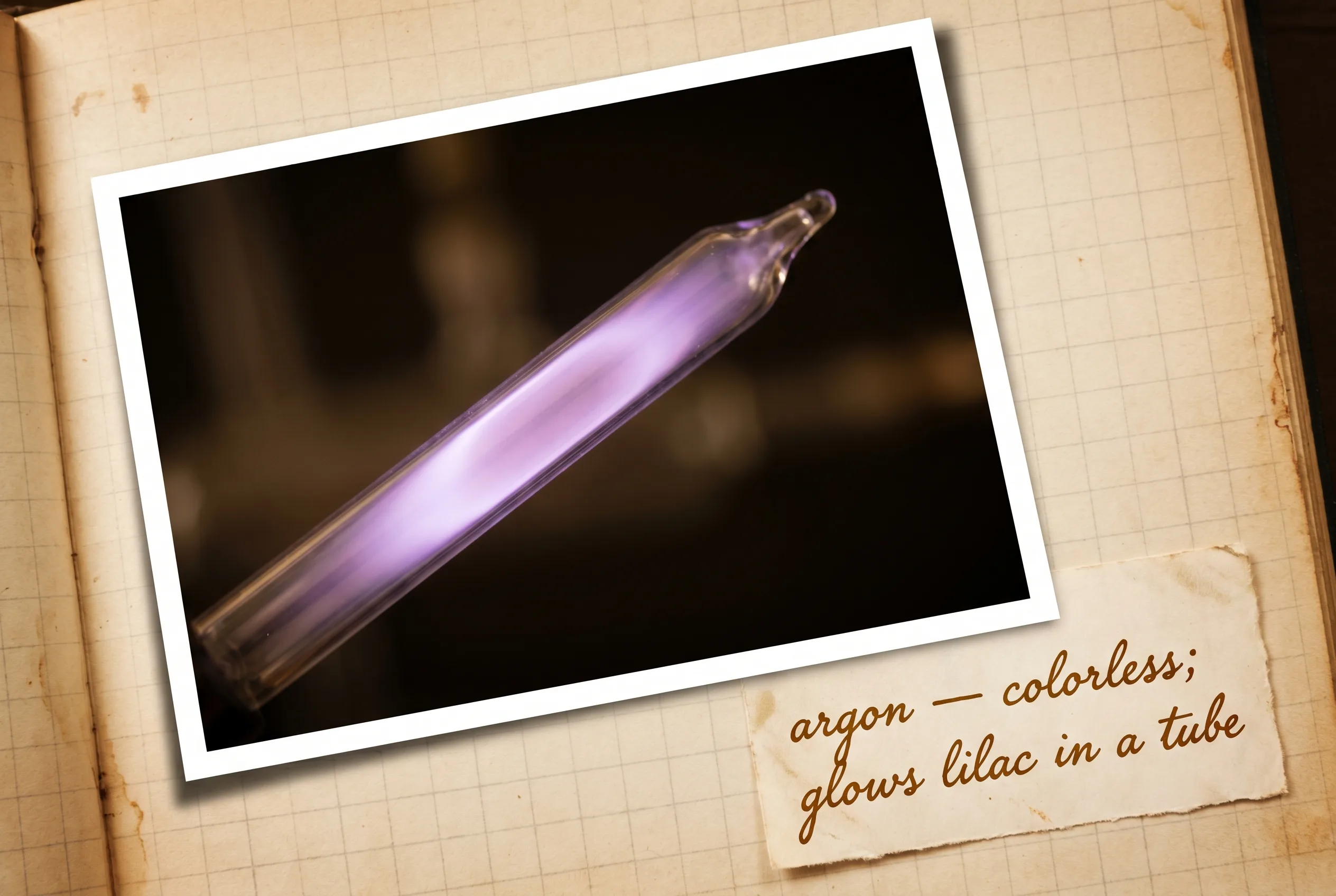
A gas discharge tube glowing soft lilac-violet against a black background.
What it looks likeArgon is a colorless, unreactive gas. Excited by electricity in a tube, it glows lilac.
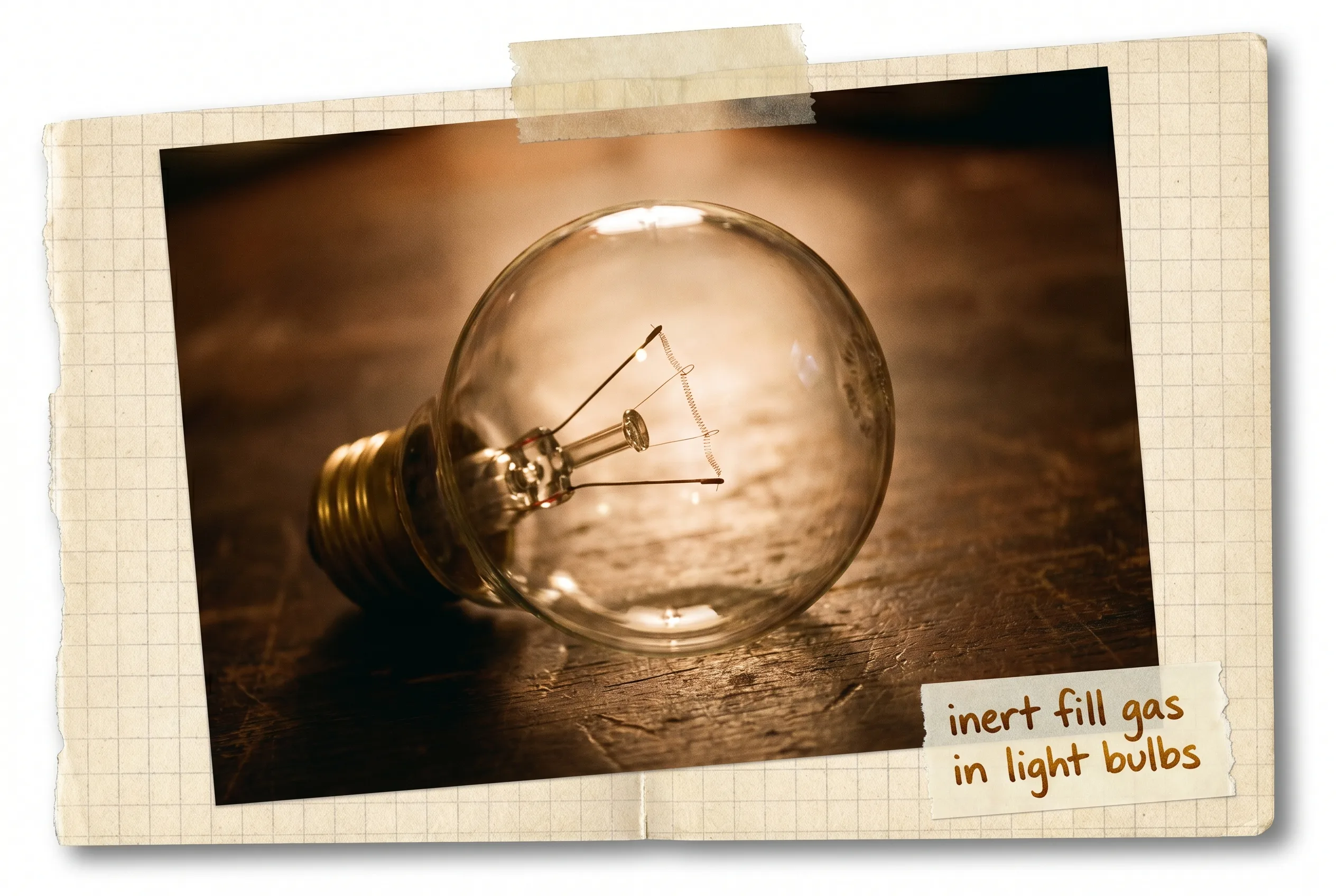
A clear glass incandescent light bulb showing the coiled tungsten filament inside.
Where you'd see itArgon fills light bulbs as an inert gas so the hot filament does not burn up.
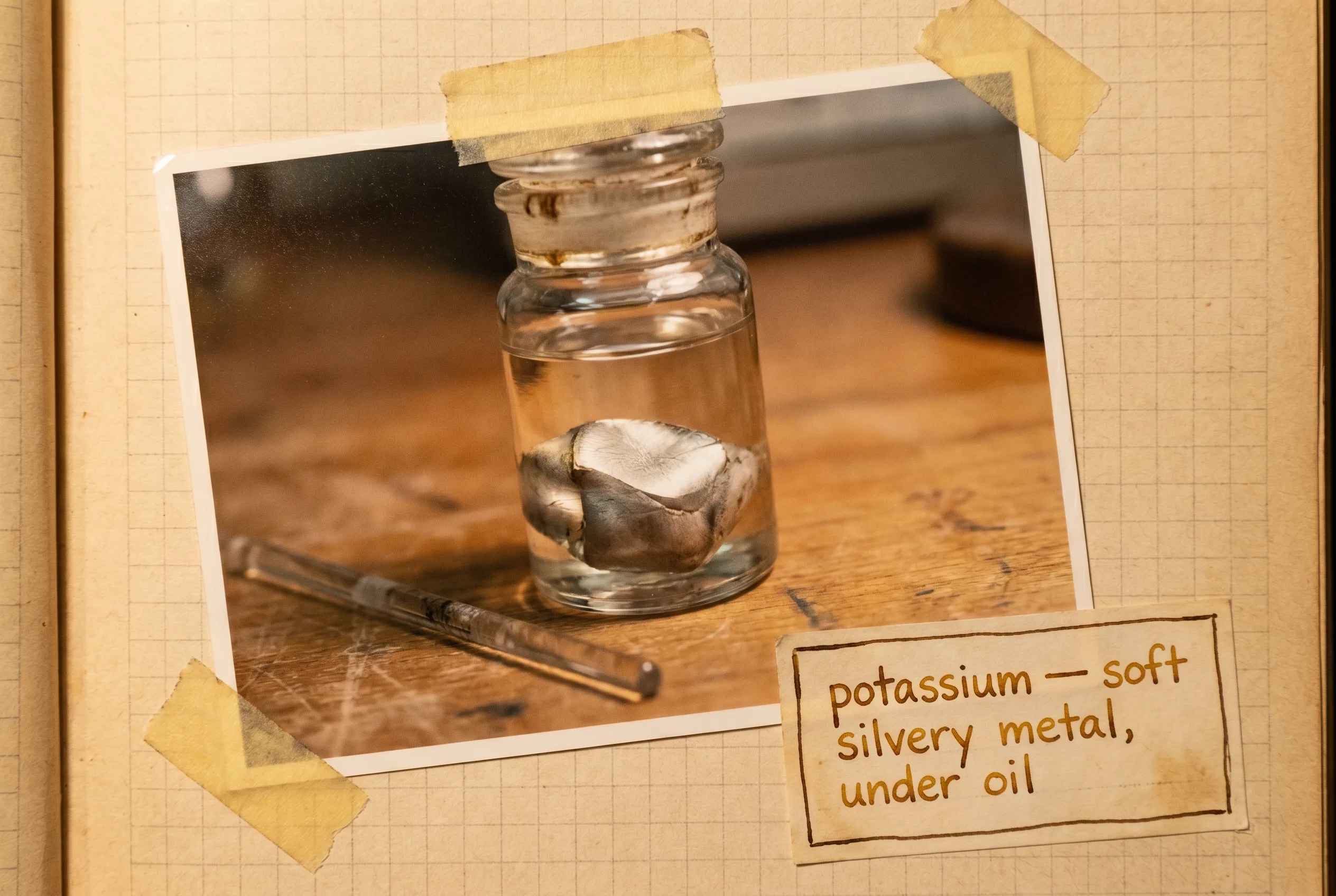
A soft silvery lump of potassium metal submerged in clear oil in a glass jar.
What it looks likePotassium is a soft, silvery metal so reactive with water that it is stored under oil.
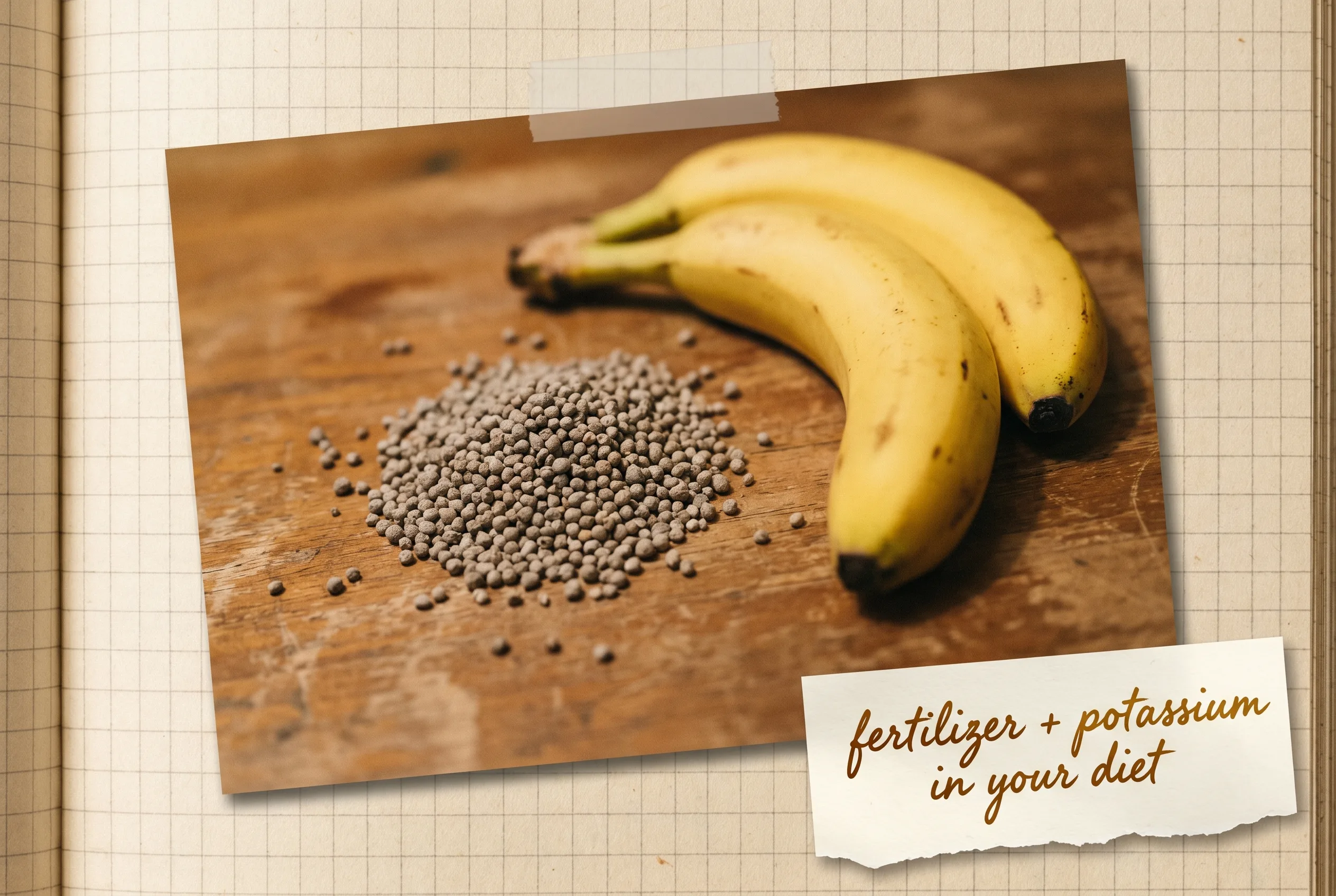
Granular fertilizer pellets and ripe bananas on a wooden surface.
Where you'd see itPotassium is vital for plants and people, found in fertilizer and in foods like bananas.
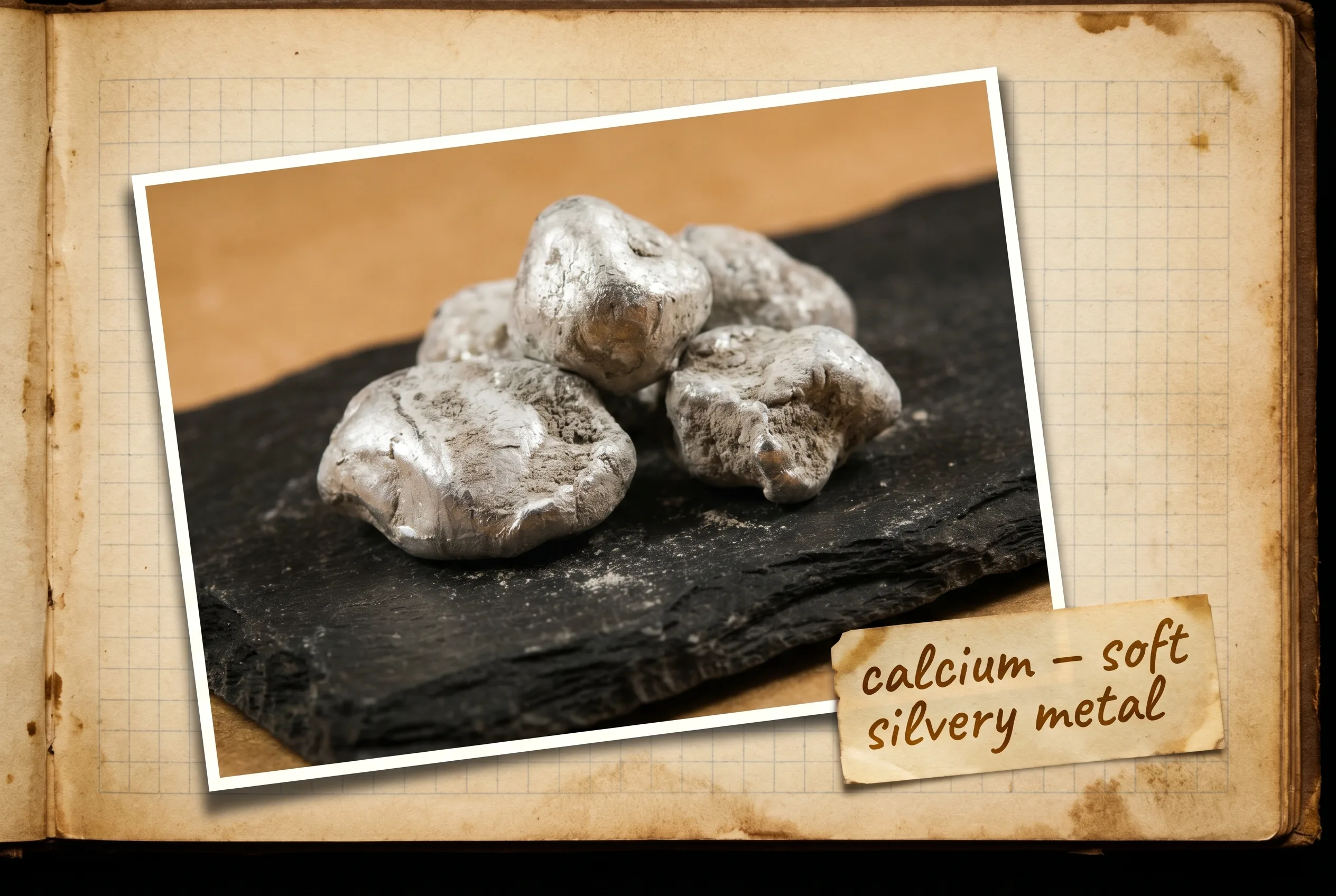
Lumps of soft silvery-white calcium metal with a dull greyish surface on slate.
What it looks likePure calcium is a soft, silvery-white metal that dulls to grey in air.
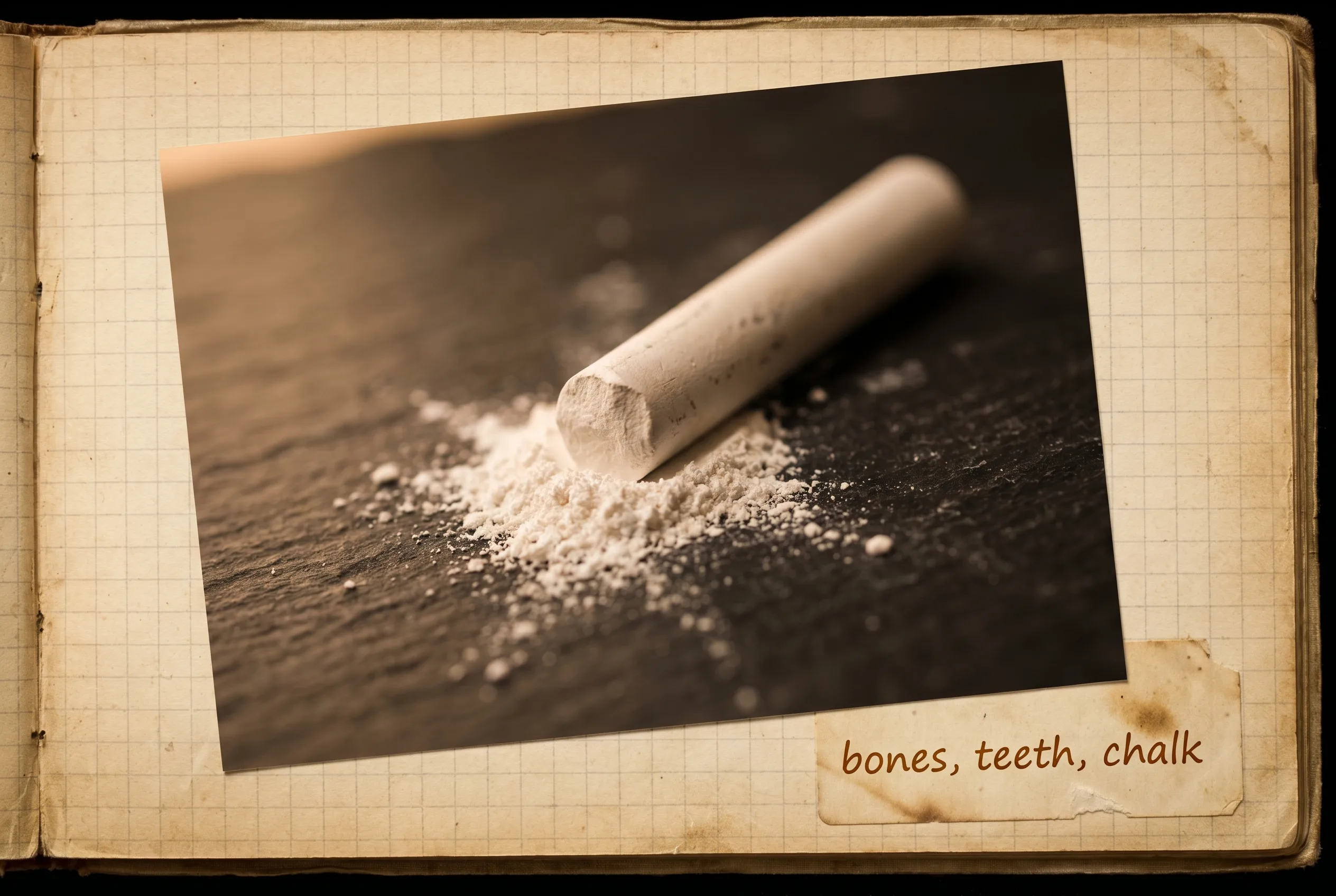
A stick of white chalk lying in a drift of its own powder on dark slate.
Where you'd see itBound up in compounds, calcium builds bones, teeth, and blackboard chalk.
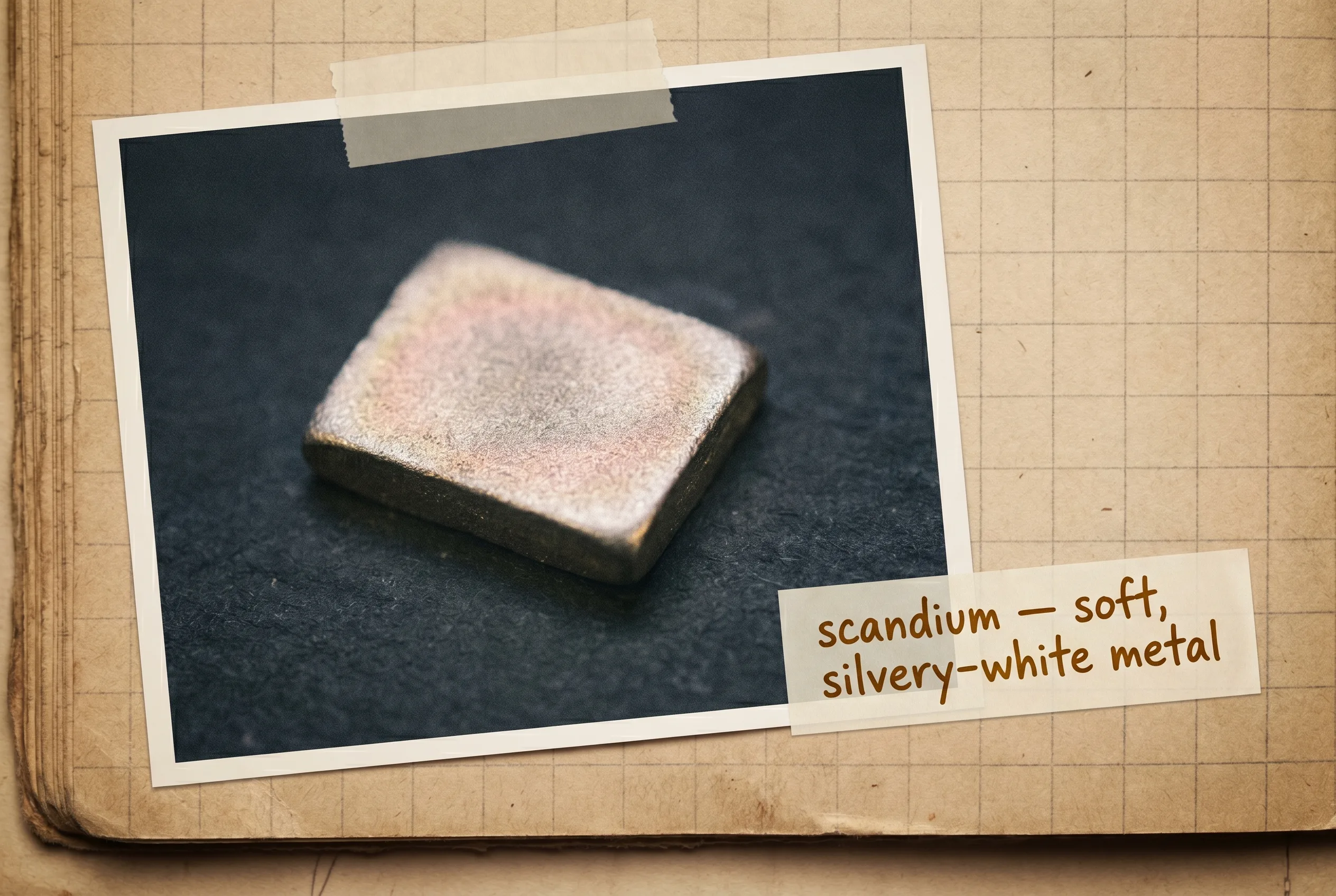
A dull silvery-white piece of scandium metal with a faint pinkish cast on dark slate.
What it looks likeScandium is a soft, silvery-white metal that tarnishes to a faint pink-yellow in air.
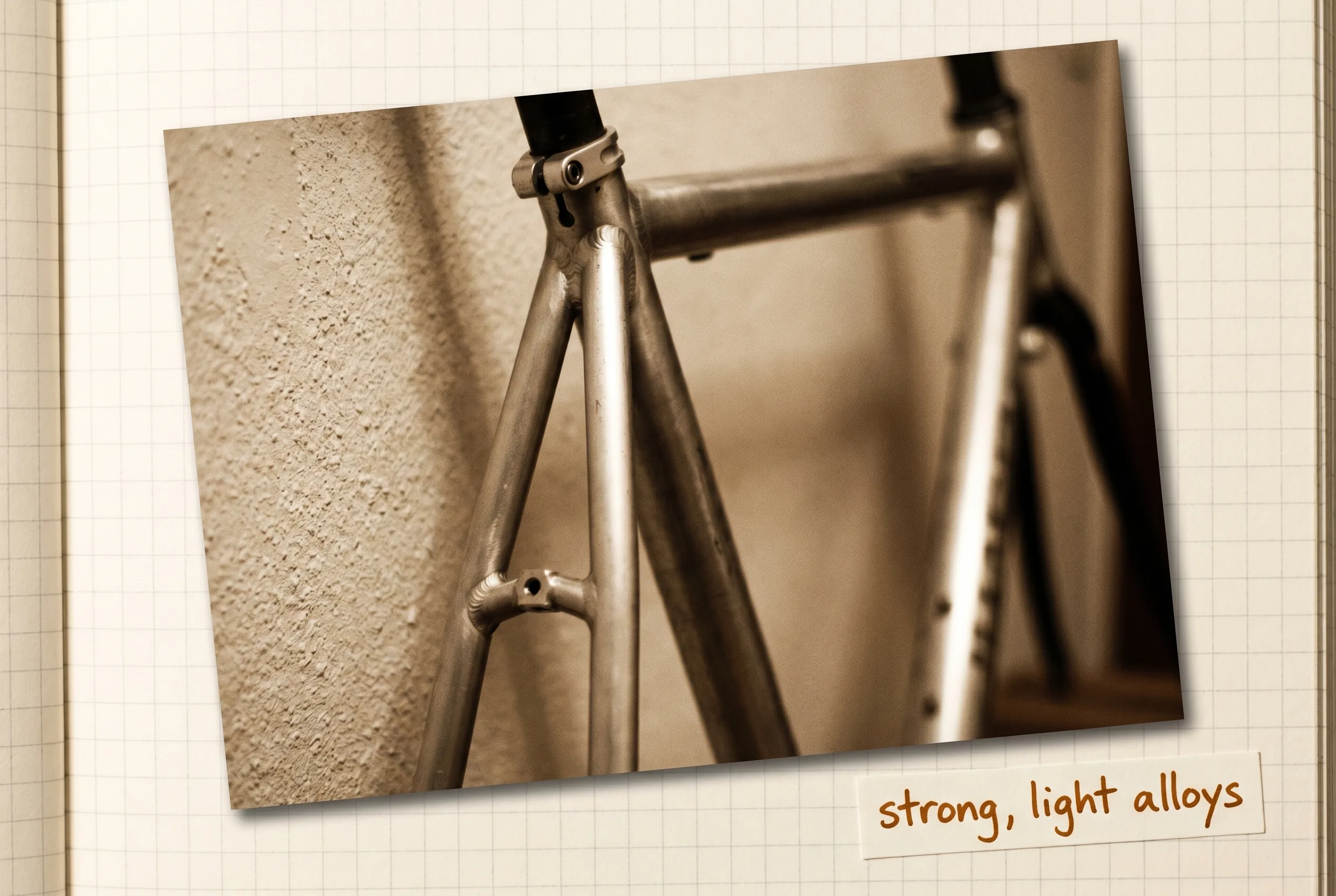
The lightweight silvery tubular frame of a high-performance bicycle against a plain wall.
Where you'd see itAdded to aluminum, scandium makes alloys strong and light for aircraft and sports gear.
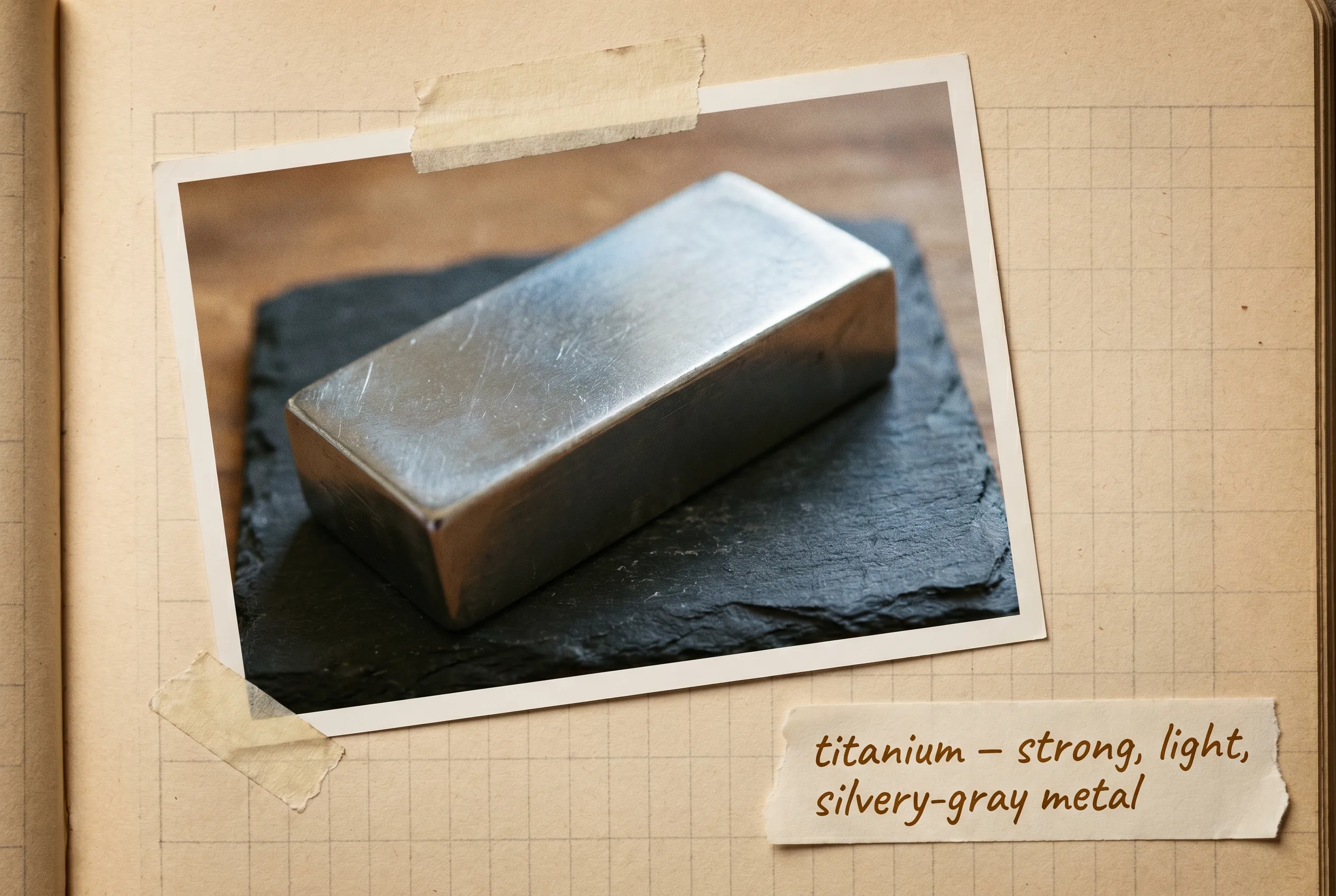
A solid bar of lustrous silvery-gray titanium metal on dark slate.
What it looks likeTitanium is a silvery-gray metal that is both strong and remarkably light.
A polished silvery titanium hip-joint implant on a clean surgical cloth.
Where you'd see itTitanium is strong, light, and body-friendly, so it is used for implants and aircraft.
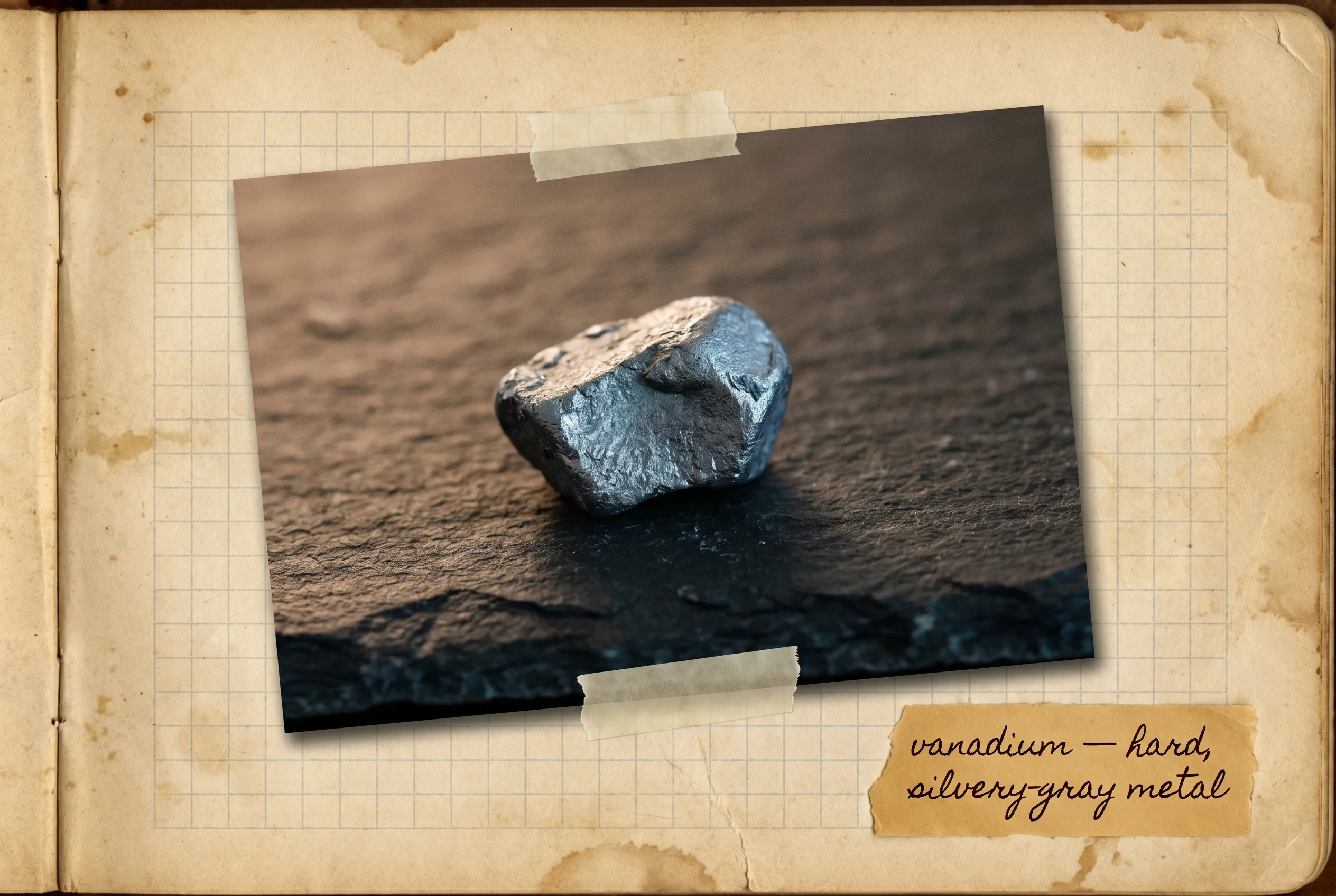
A hard silvery-gray lump of vanadium metal with a faint blue tint on dark slate.
What it looks likeVanadium metal is hard and silvery-gray with a faint bluish steel tint.
Heavy-duty silvery vanadium-steel wrenches laid out on a dark workbench.
Where you'd see itVanadium makes steel tougher, ideal for wrenches, springs, and tools.
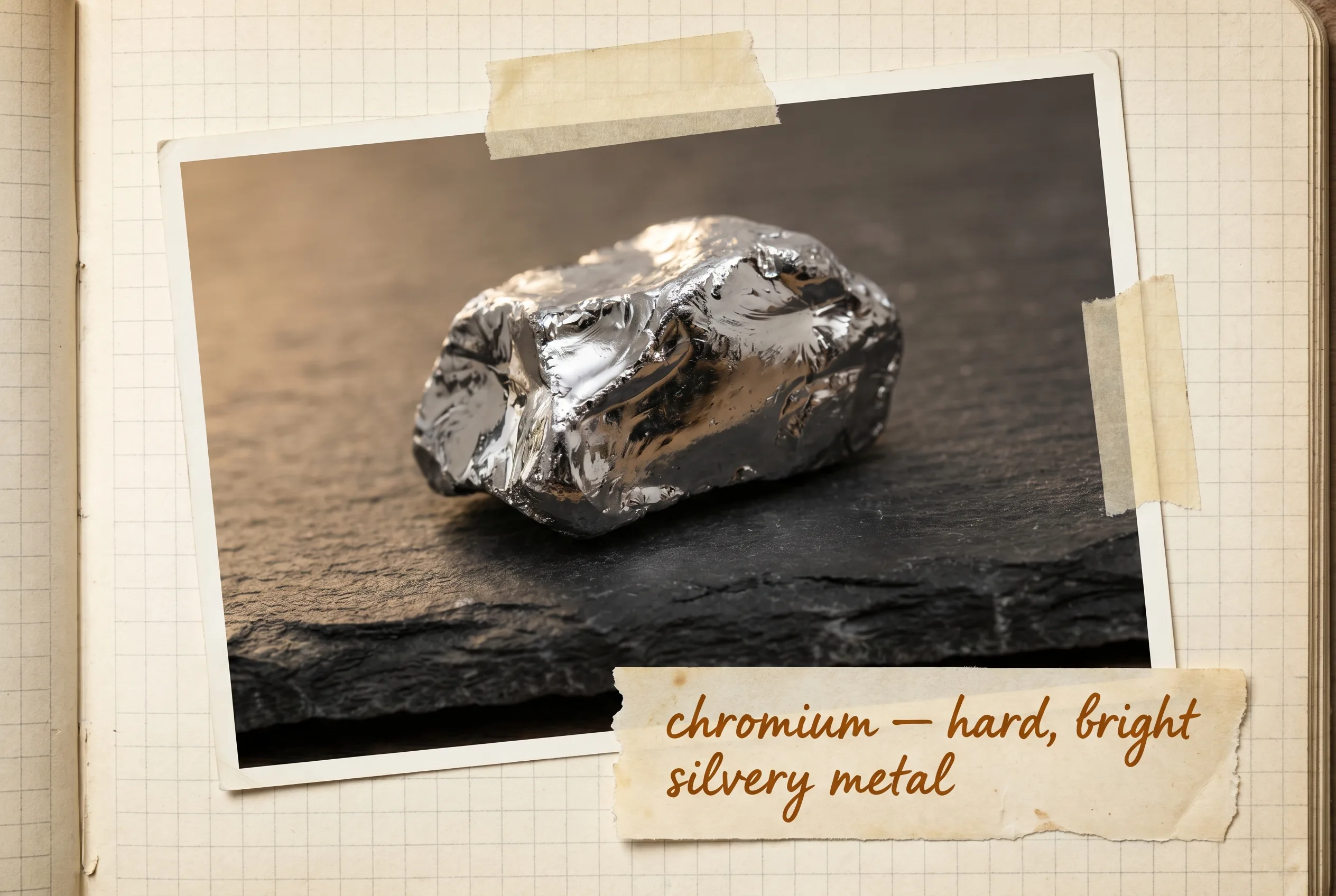
A lump of chromium metal with a bright lustrous silvery surface on dark slate.
What it looks likeChromium is a hard, brittle metal that polishes to a bright, almost mirror-like silver.
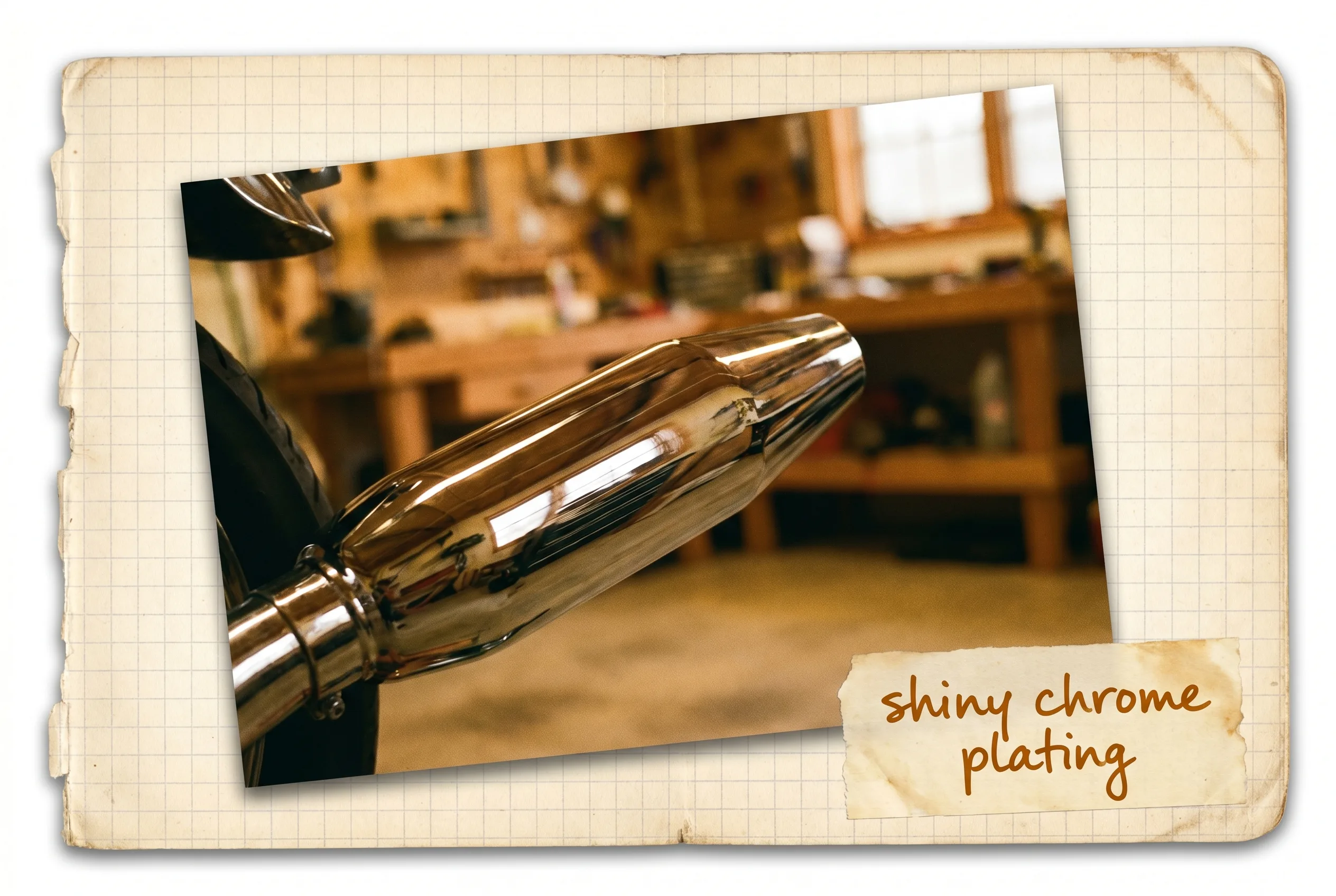
A mirror-bright chrome-plated motorcycle exhaust pipe reflecting its surroundings.
Where you'd see itChrome plating gives metal a shiny, mirror-bright, rust-resistant finish.
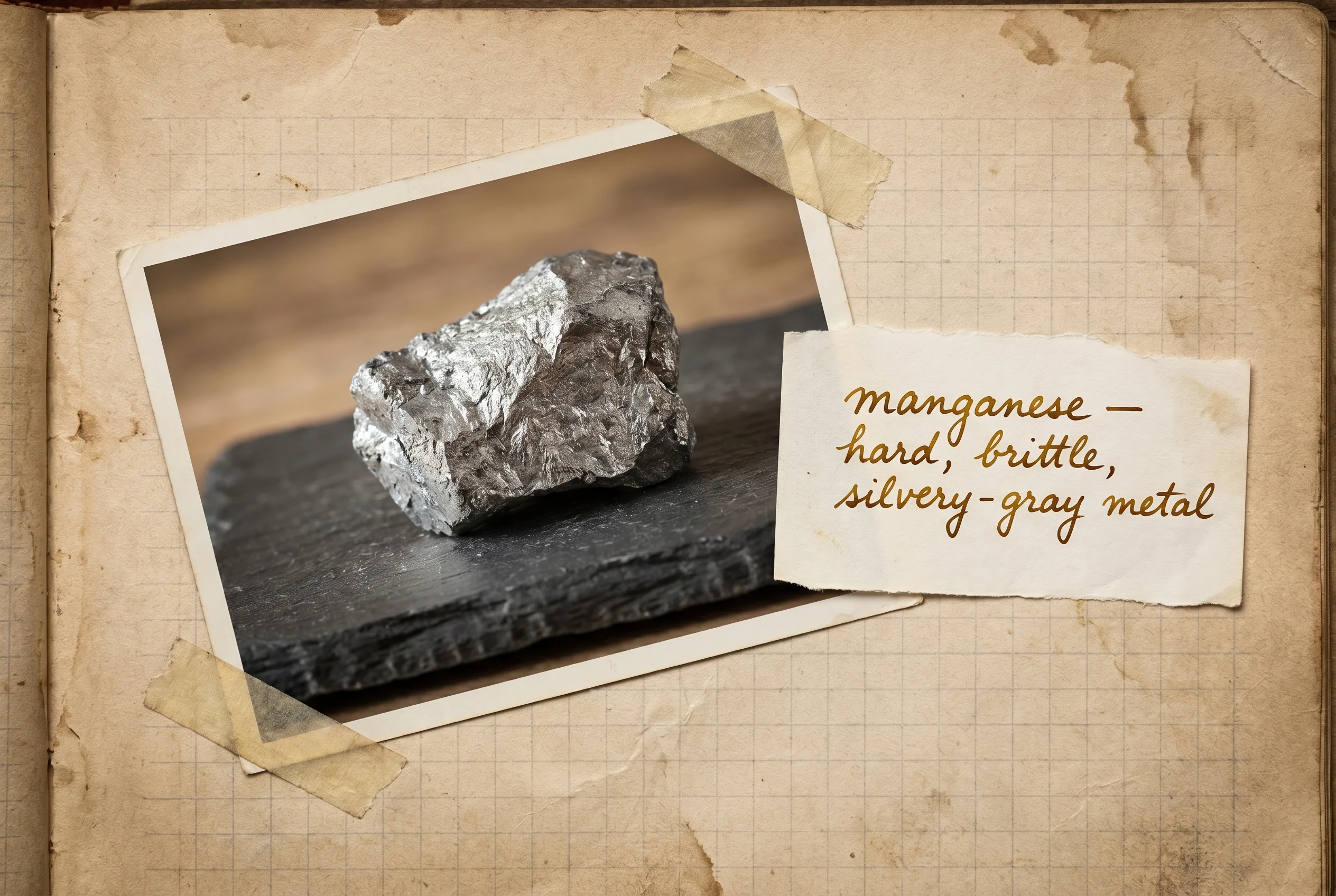
A hard, brittle chunk of silvery-gray manganese metal on dark slate.
What it looks likeManganese is a hard, brittle, silvery-gray metal.
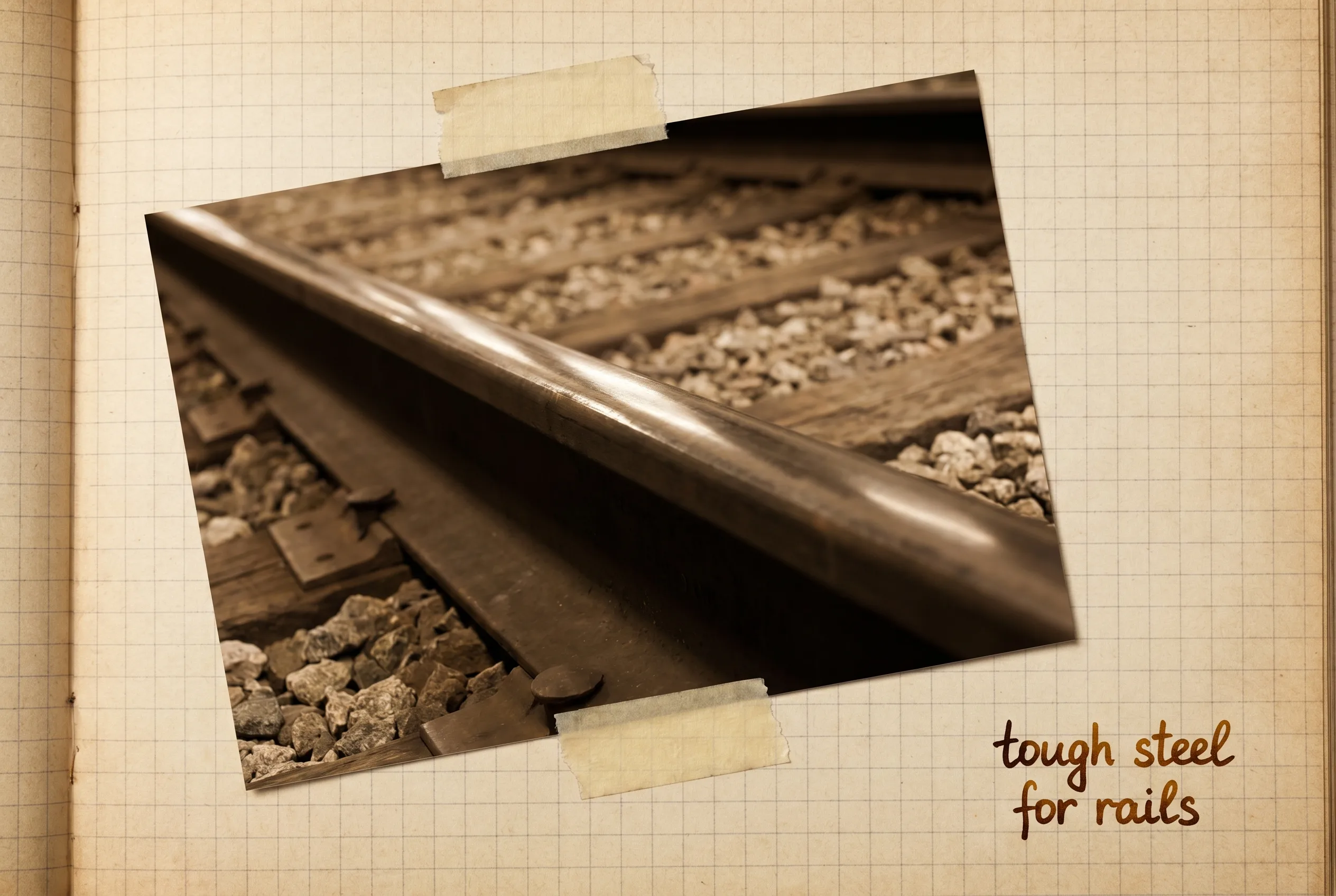
A heavy manganese-steel railroad track worn shiny on top, on gravel ballast.
Where you'd see itManganese toughens steel for hard-wearing parts like railroad tracks.
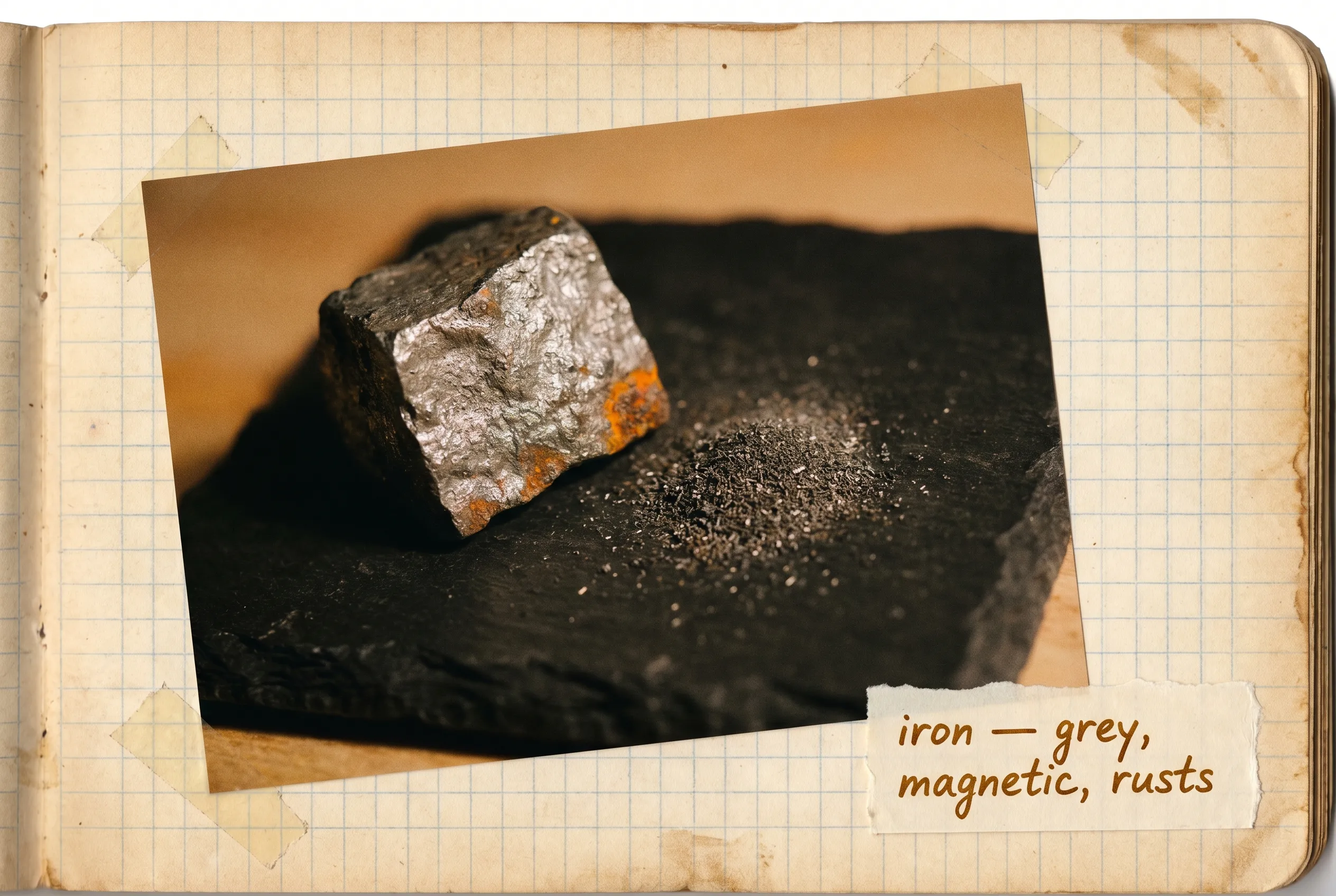
A chunk of grey iron and a heap of dark iron filings with a hint of rust, on slate.
What it looks likeIron is a grey, magnetic metal that slowly rusts orange in damp air.
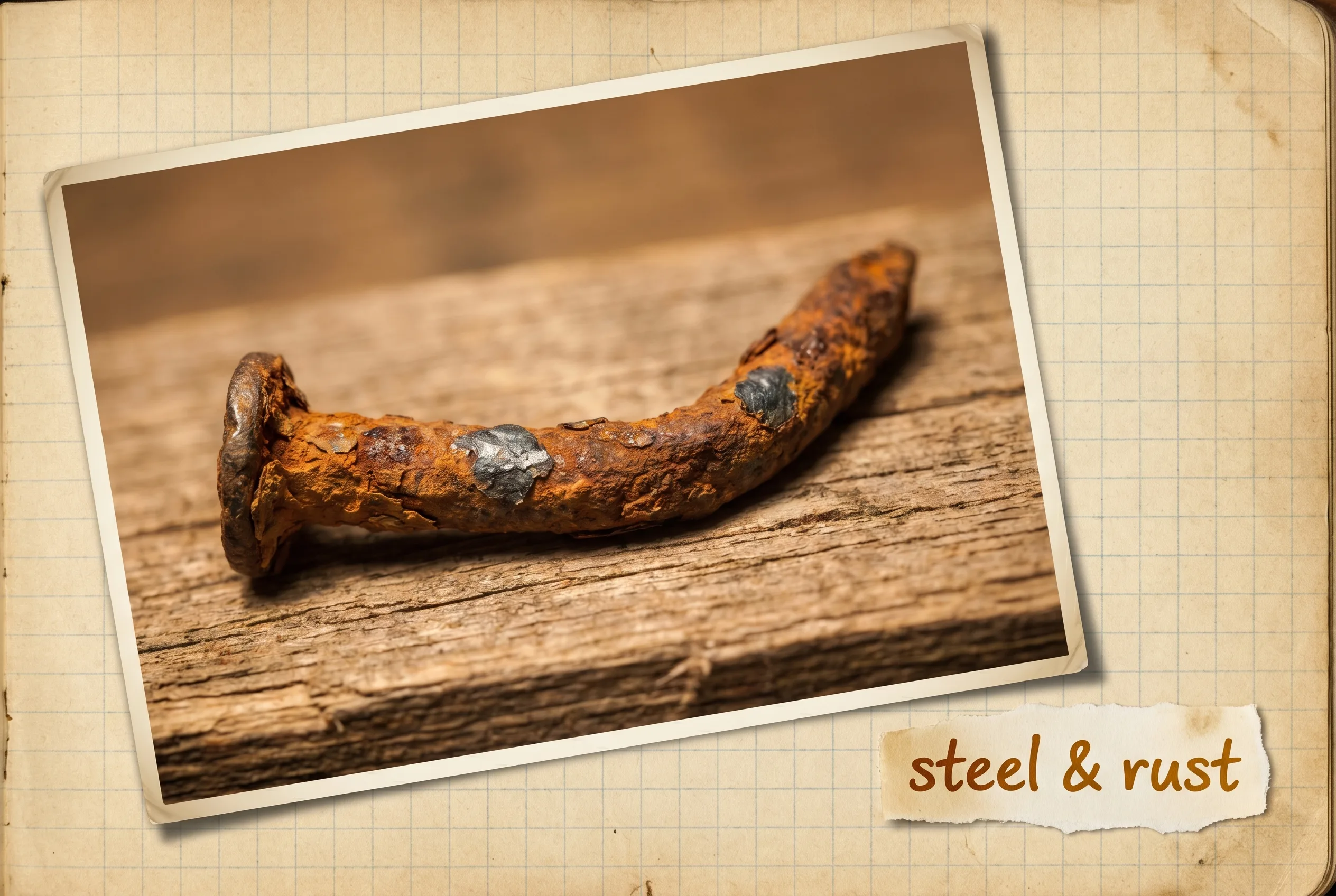
An old iron nail covered in orange-brown rust resting on weathered wood.
Where you'd see itSteel is mostly iron - and rust is iron giving itself back to the air.
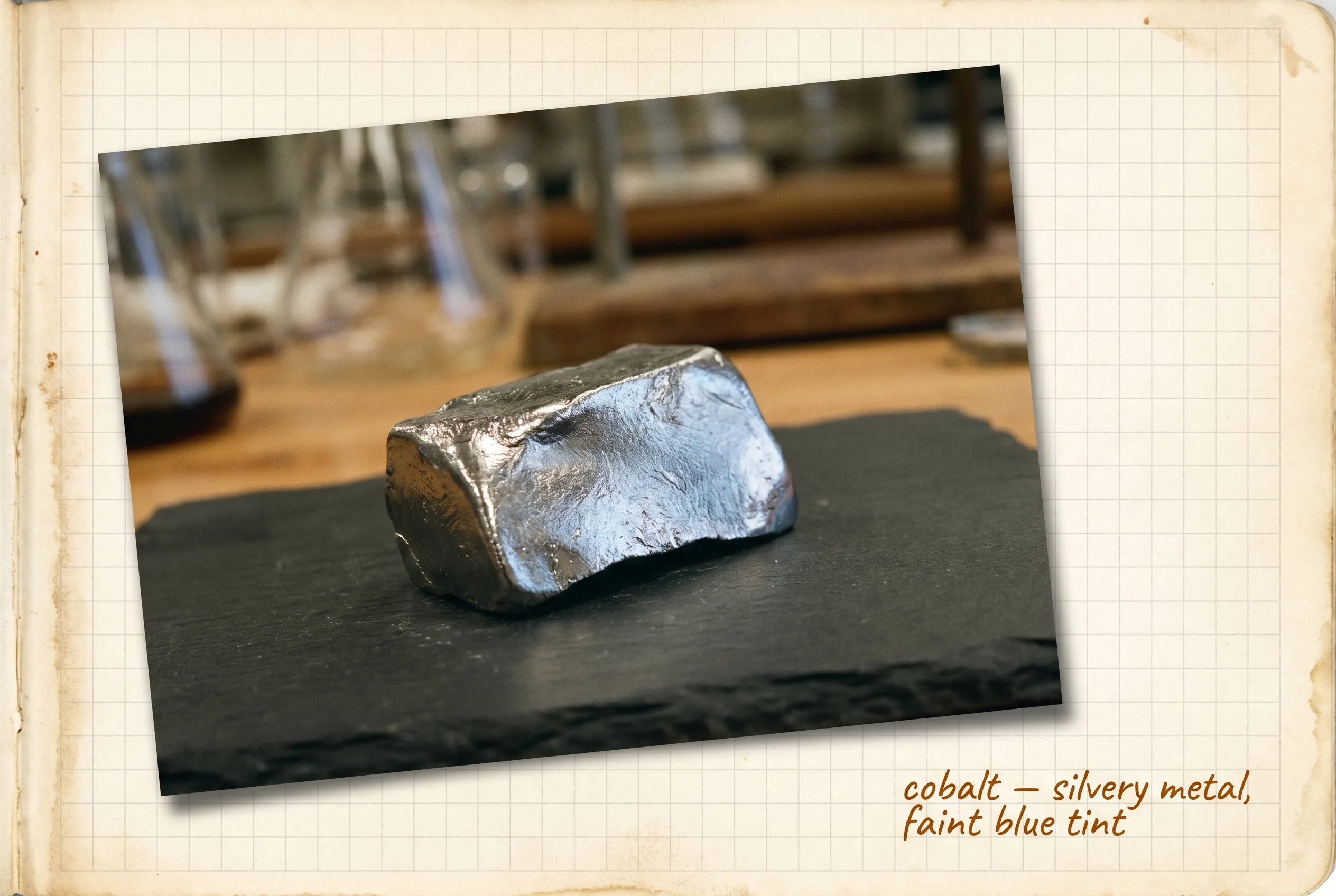
A solid piece of lustrous silvery-gray cobalt metal with a faint blue tint on dark slate.
What it looks likeCobalt is a lustrous silvery metal with a faint bluish tint.
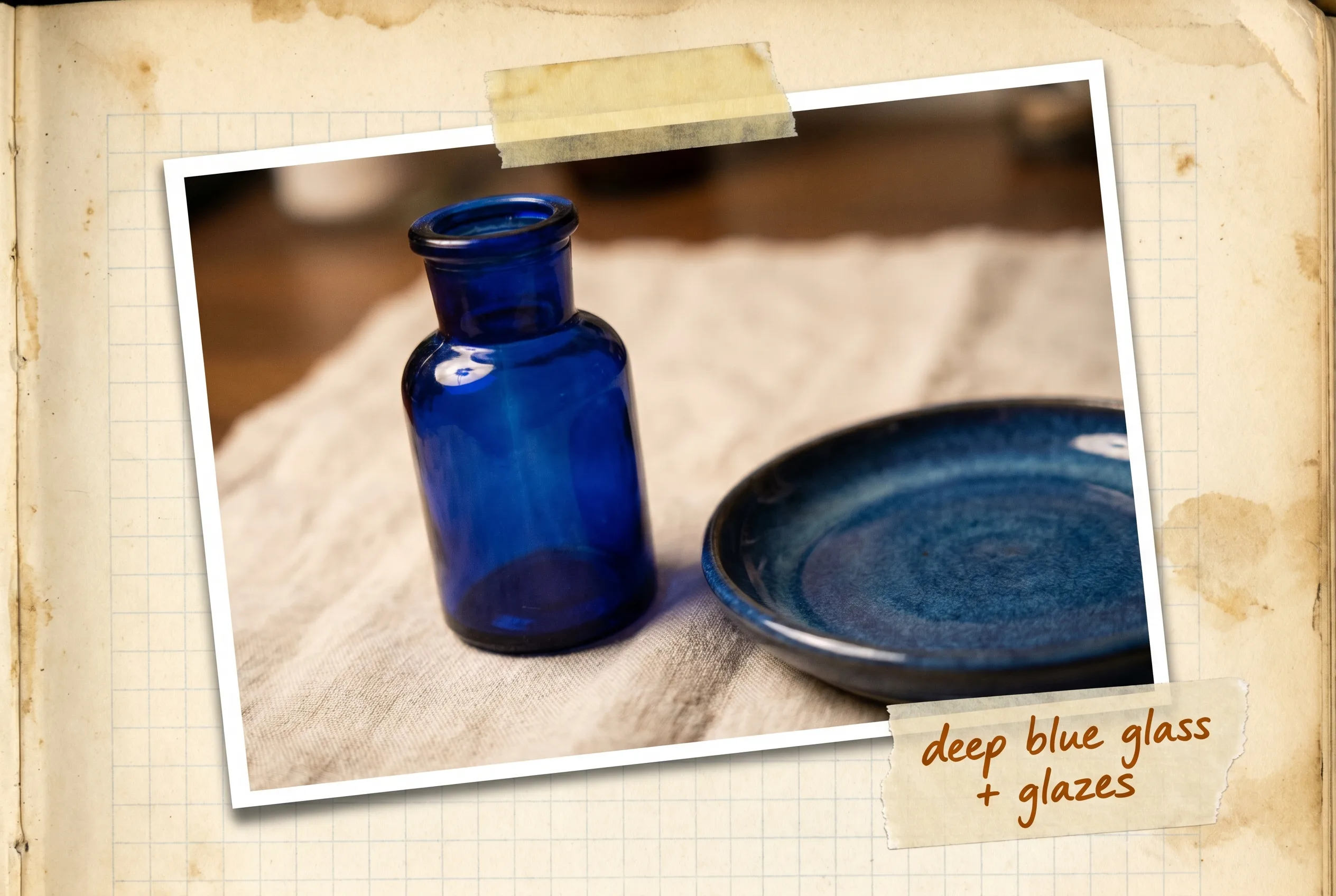
A deep cobalt-blue glass bottle and a blue-glazed ceramic dish on a pale cloth.
Where you'd see itCobalt compounds create the deep blue color in glass and ceramic glazes.
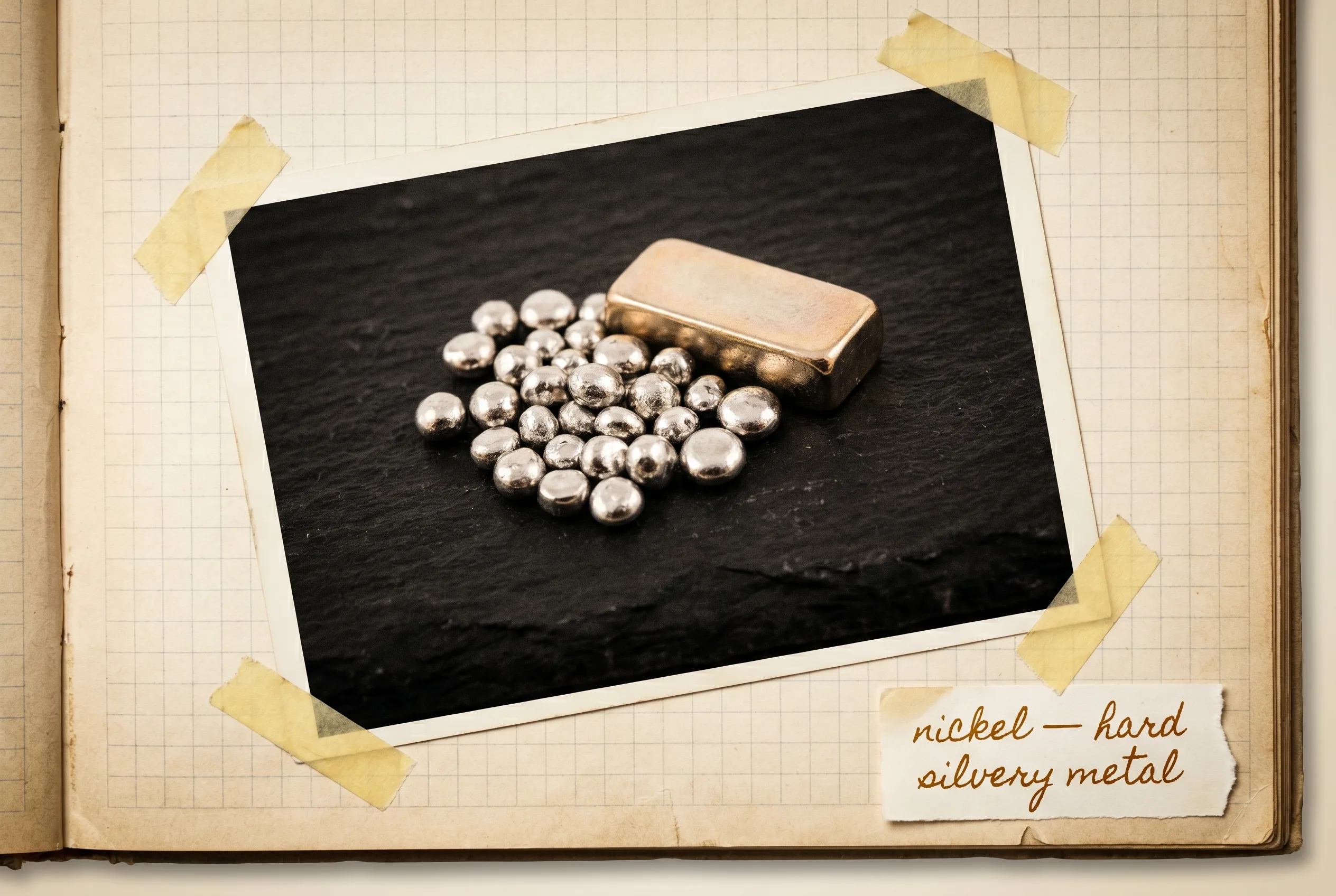
Nickel pellets and a small bar, lustrous silvery metal, on black slate.
What it looks likeNickel is a hard, lustrous silvery metal with the faintest warm cast.
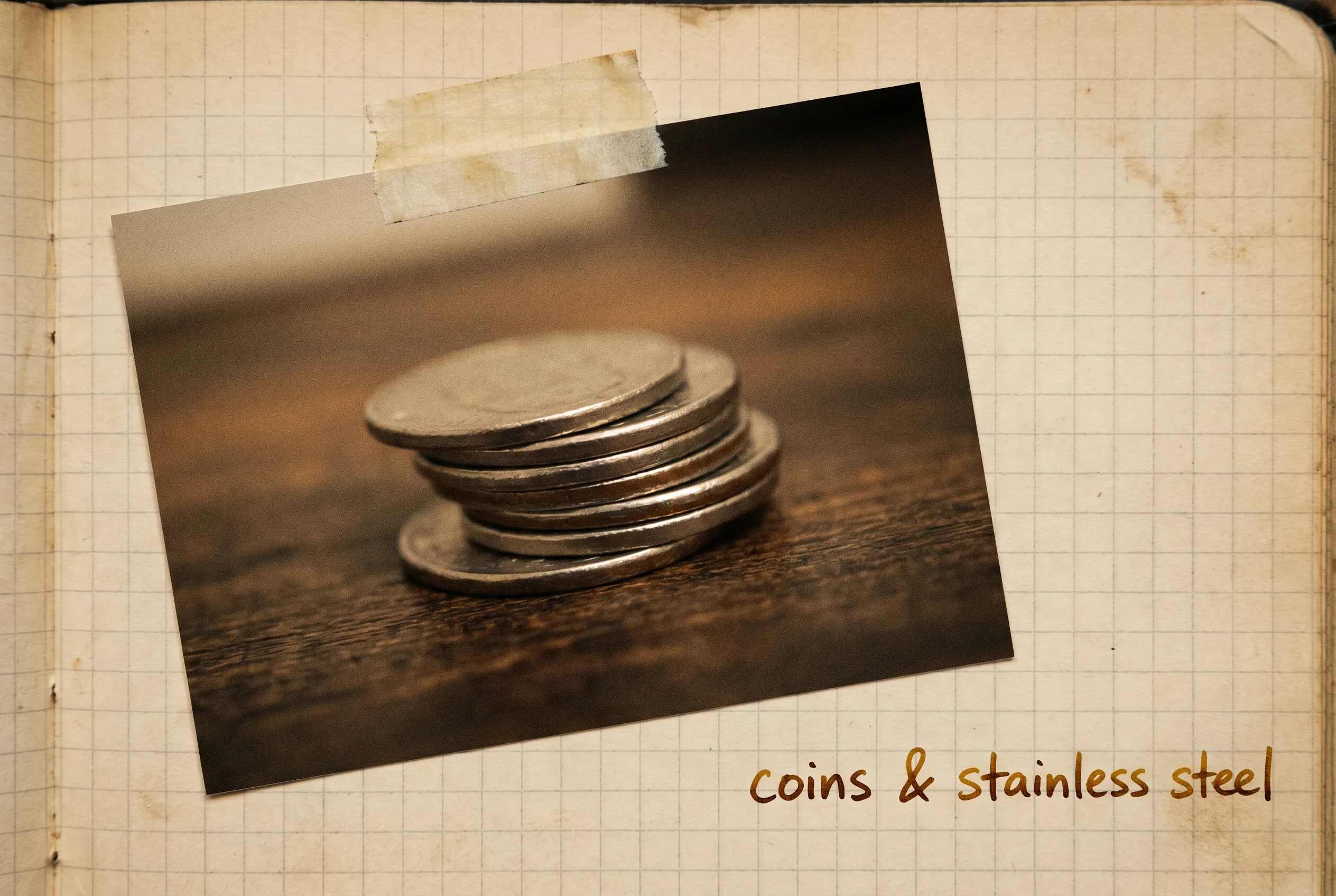
A small stack of plain silver-colored coins on a dark surface.
Where you'd see itNickel hardens coins and stainless steel.
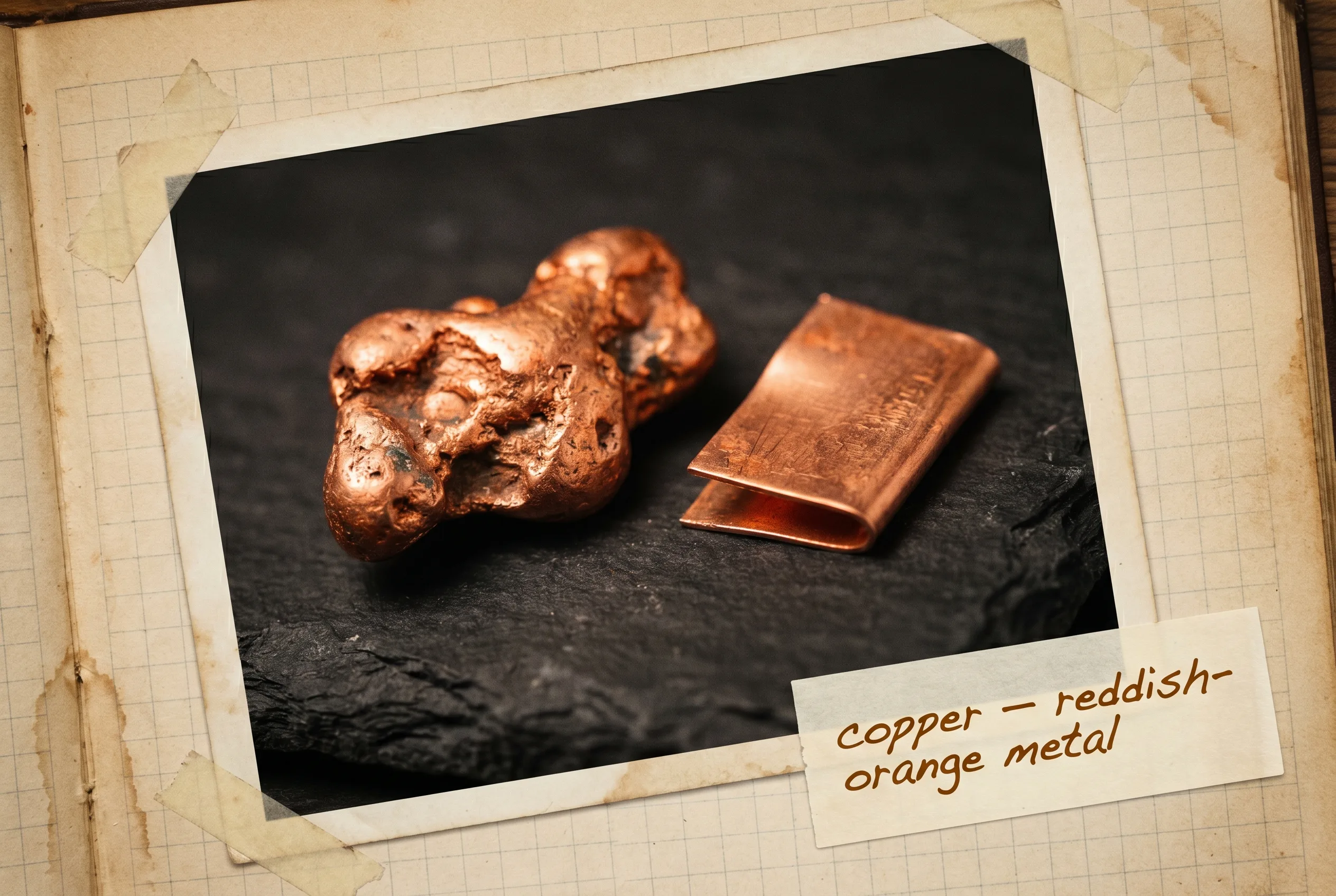
A raw copper nugget and folded sheet, reddish-orange with a bright luster, on slate.
What it looks likeCopper is one of the few colored metals - a warm reddish-orange.
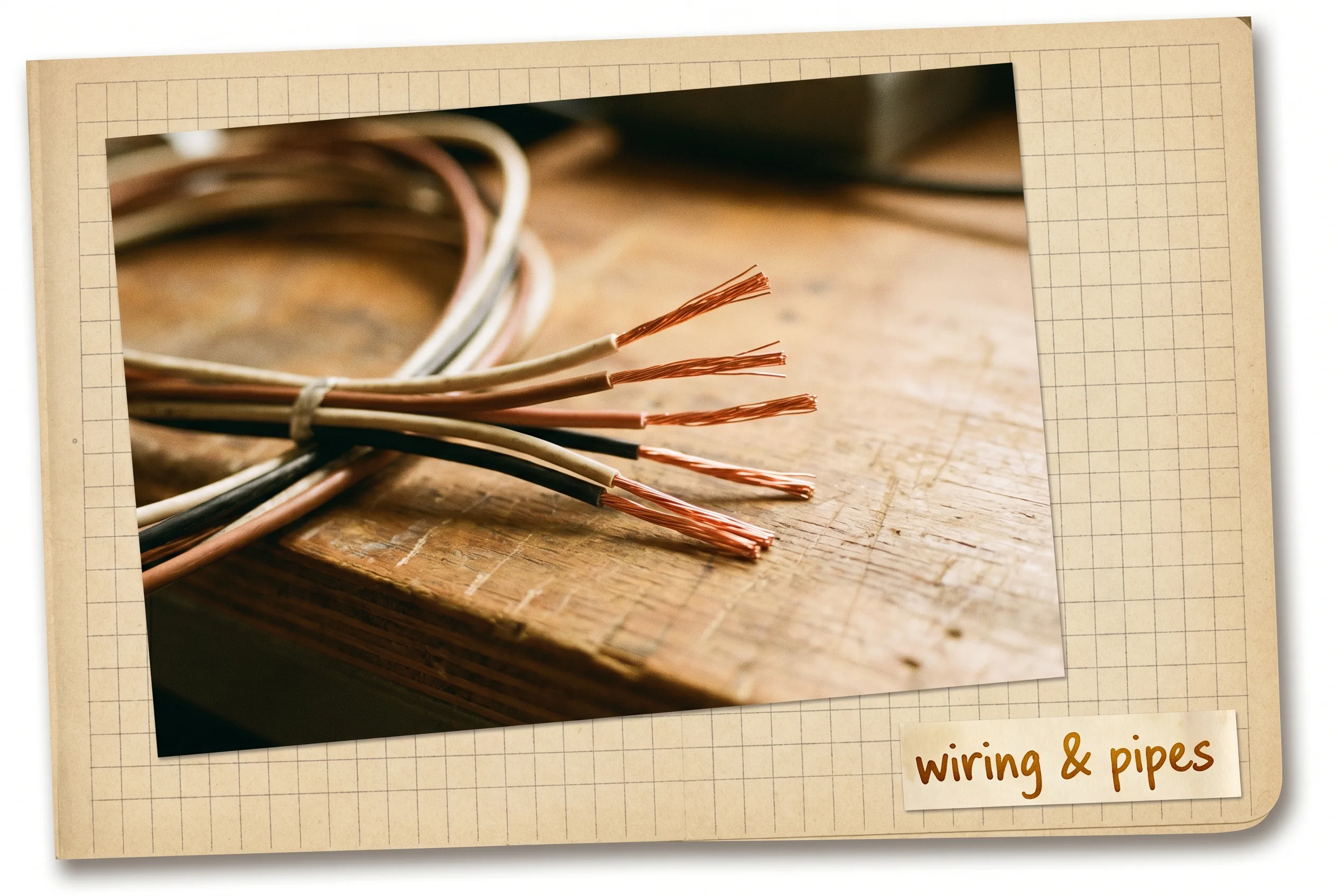
A bundle of stripped wires showing bright bare reddish copper strands.
Where you'd see itStrip an electrical cable and the bright reddish strands inside are copper.
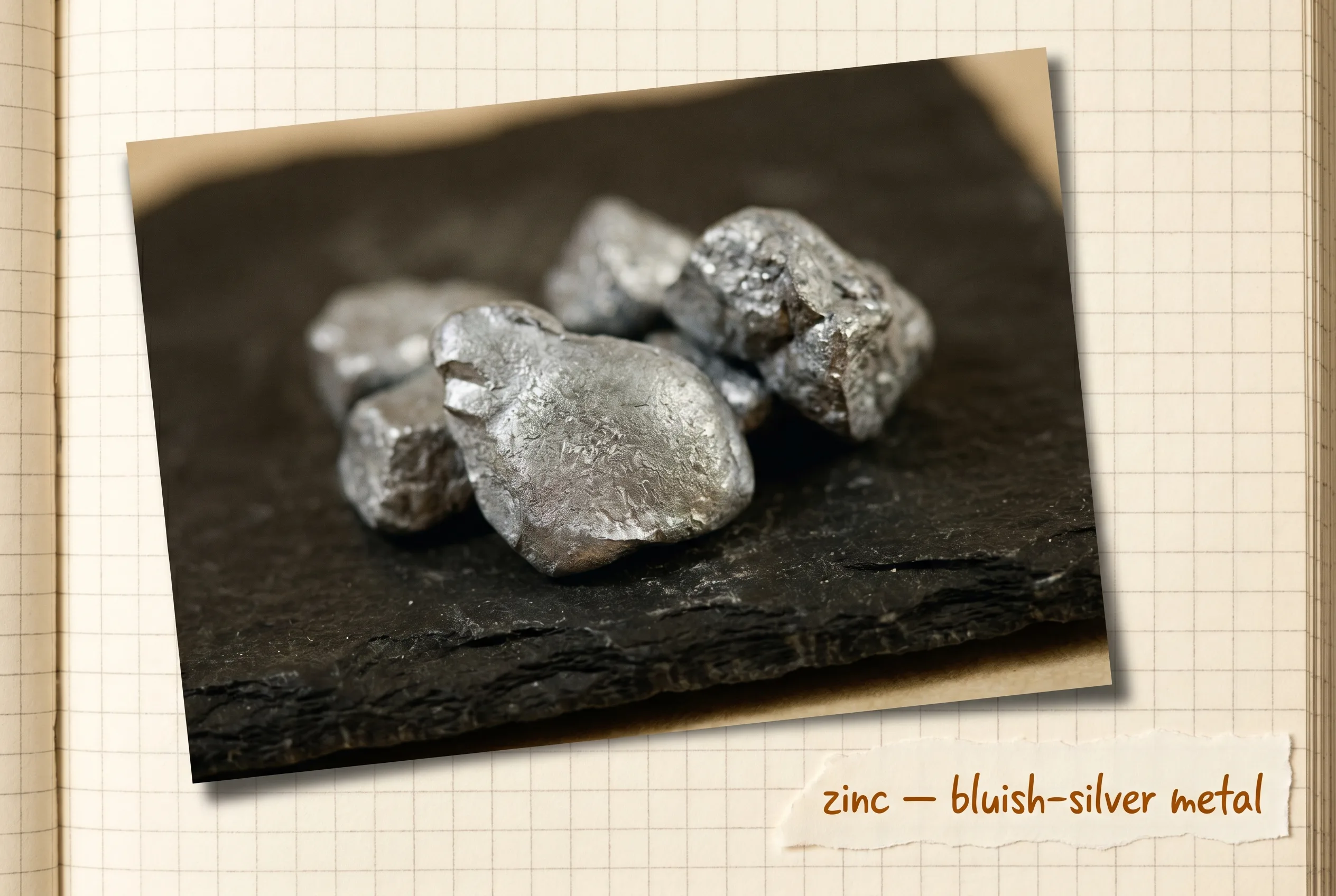
Lumps of bluish-silver-grey zinc metal with a slightly crystalline surface on slate.
What it looks likeZinc is a bluish-silver metal with a faintly crystalline surface.
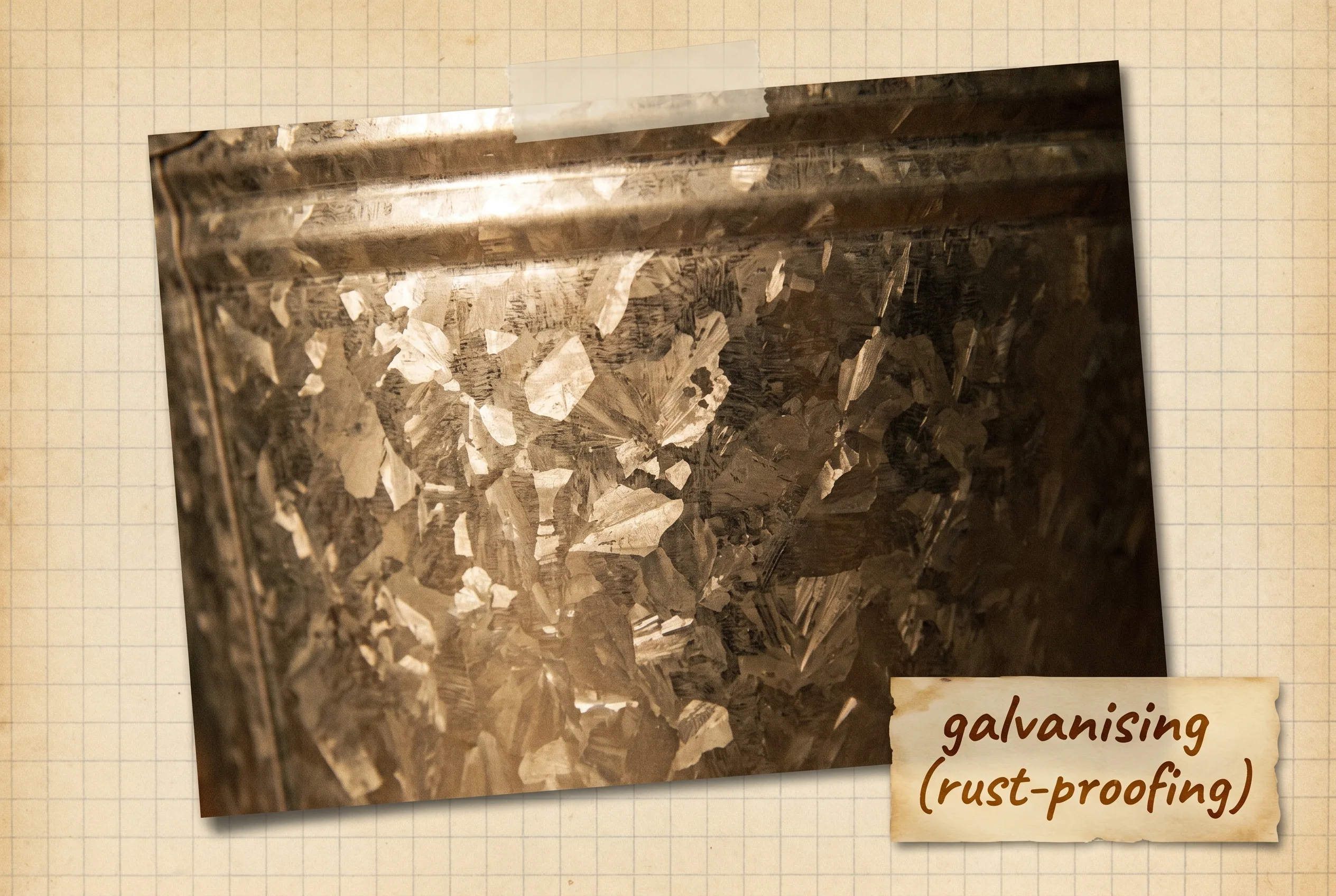
Close-up of galvanized steel showing the shiny crystalline spangle of its zinc coating.
Where you'd see itA zinc coat (galvanizing) is what stops steel buckets and nails from rusting.
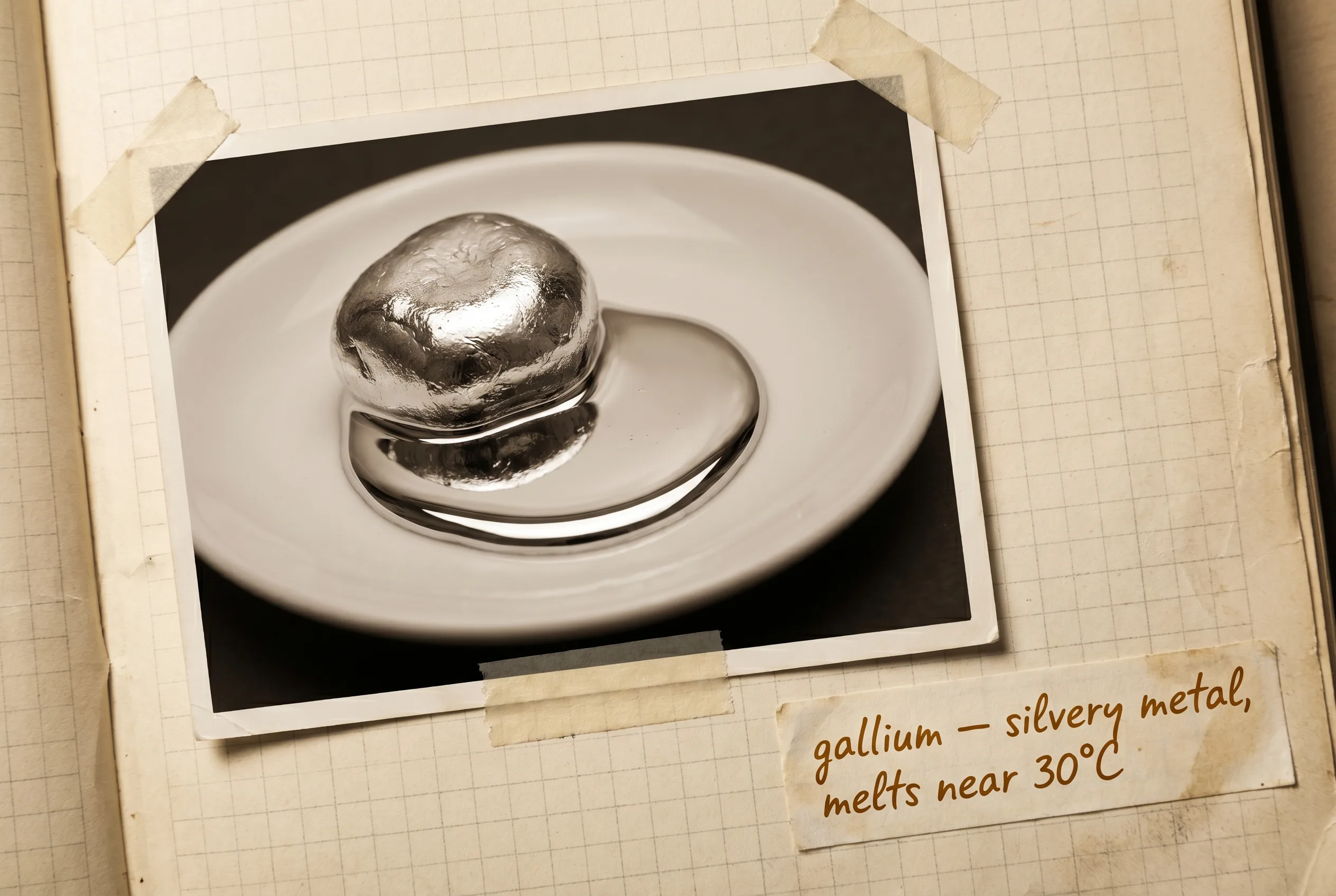
A shiny silvery gallium lump half-melted into a mirror-bright puddle on a white dish.
What it looks likeGallium is a silvery metal so low-melting it turns to liquid just above room temperature.
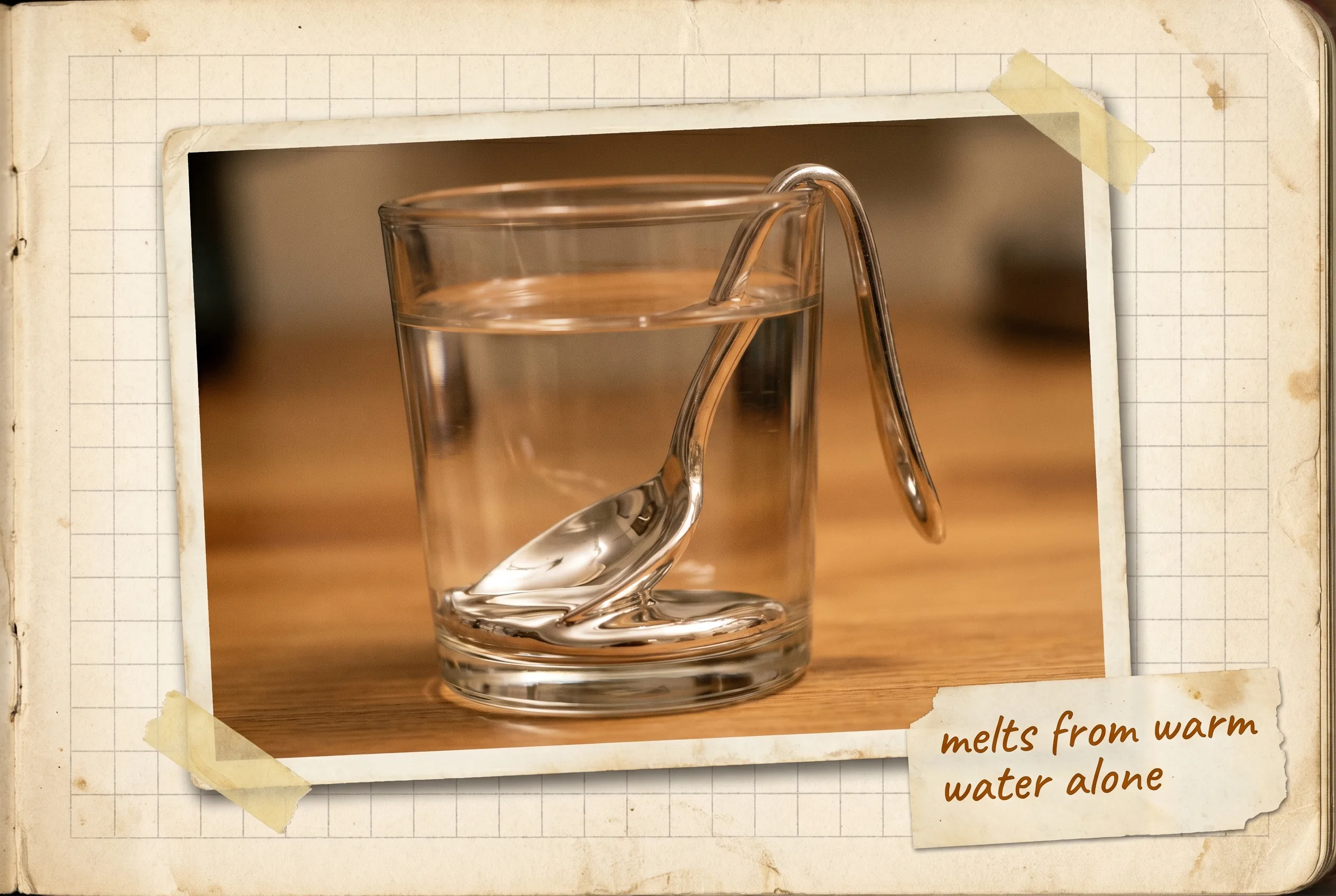
A silvery metal spoon drooping and slumping as it melts inside a glass of warm water.
Where you'd see itA gallium spoon melts in a glass of warm water - body heat alone is enough.
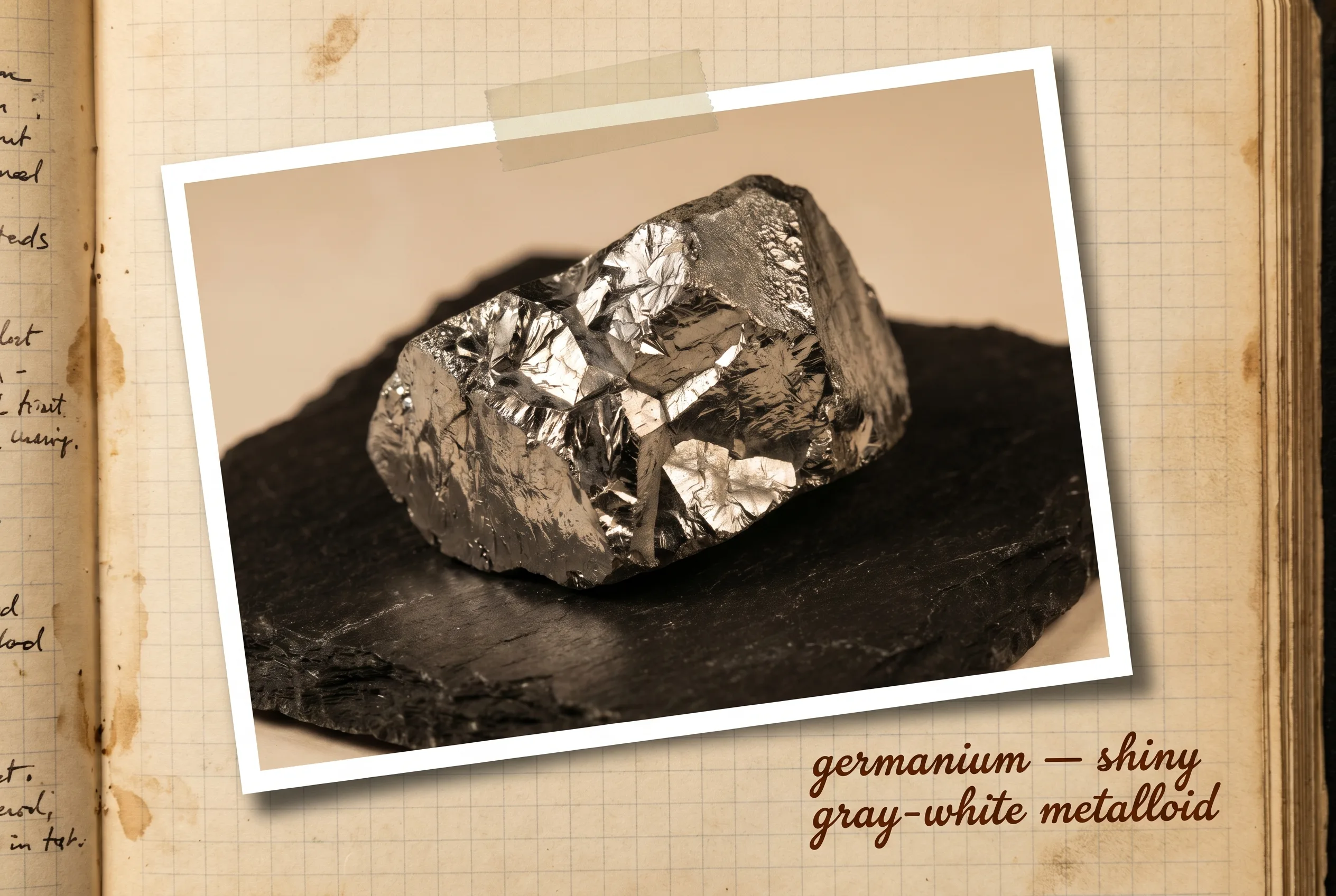
A brittle grayish-white germanium crystal chunk with a faceted fracture on black slate.
What it looks likeGermanium is a shiny gray-white metalloid - hard but brittle, halfway between metal and nonmetal.
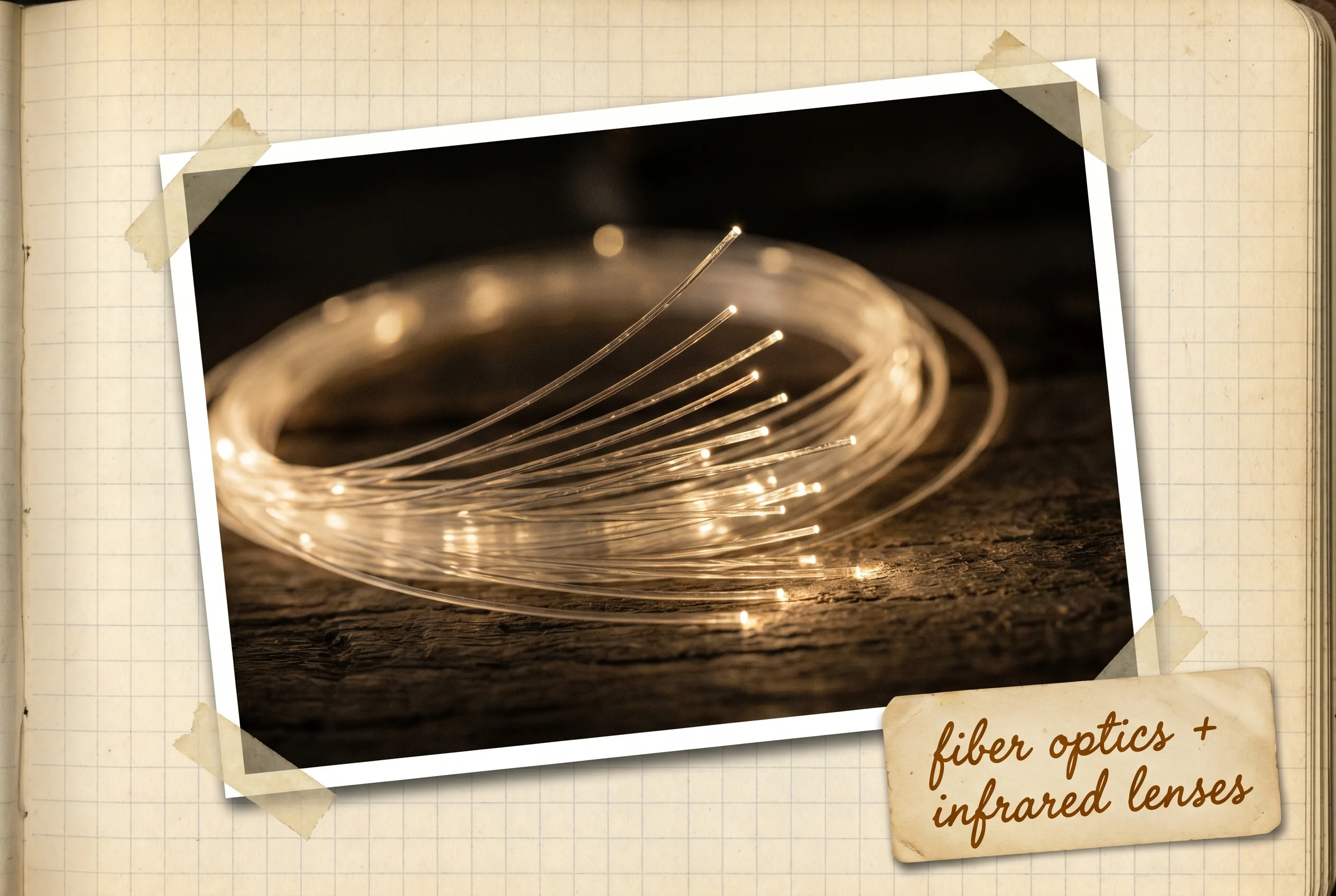
A fanned coil of fiber-optic strands each glowing with a pinpoint of light in the dark.
Where you'd see itGermanium carries light through fiber-optic cables and focuses infrared in night-vision lenses.
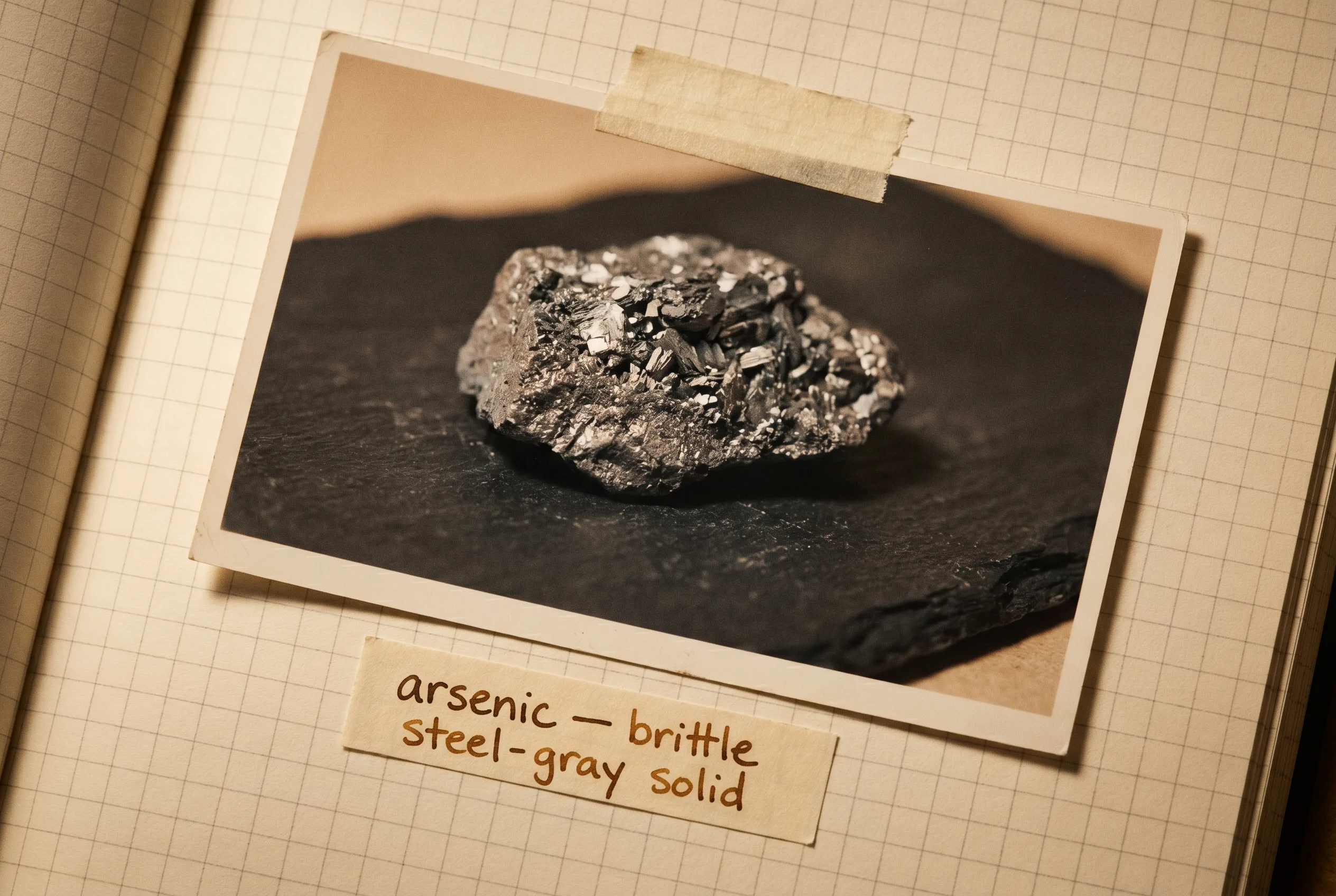
A brittle steel-gray lump of arsenic with a crystalline broken edge on black slate.
What it looks likeGray arsenic is a brittle steel-gray metalloid - and one of the most famously toxic elements.
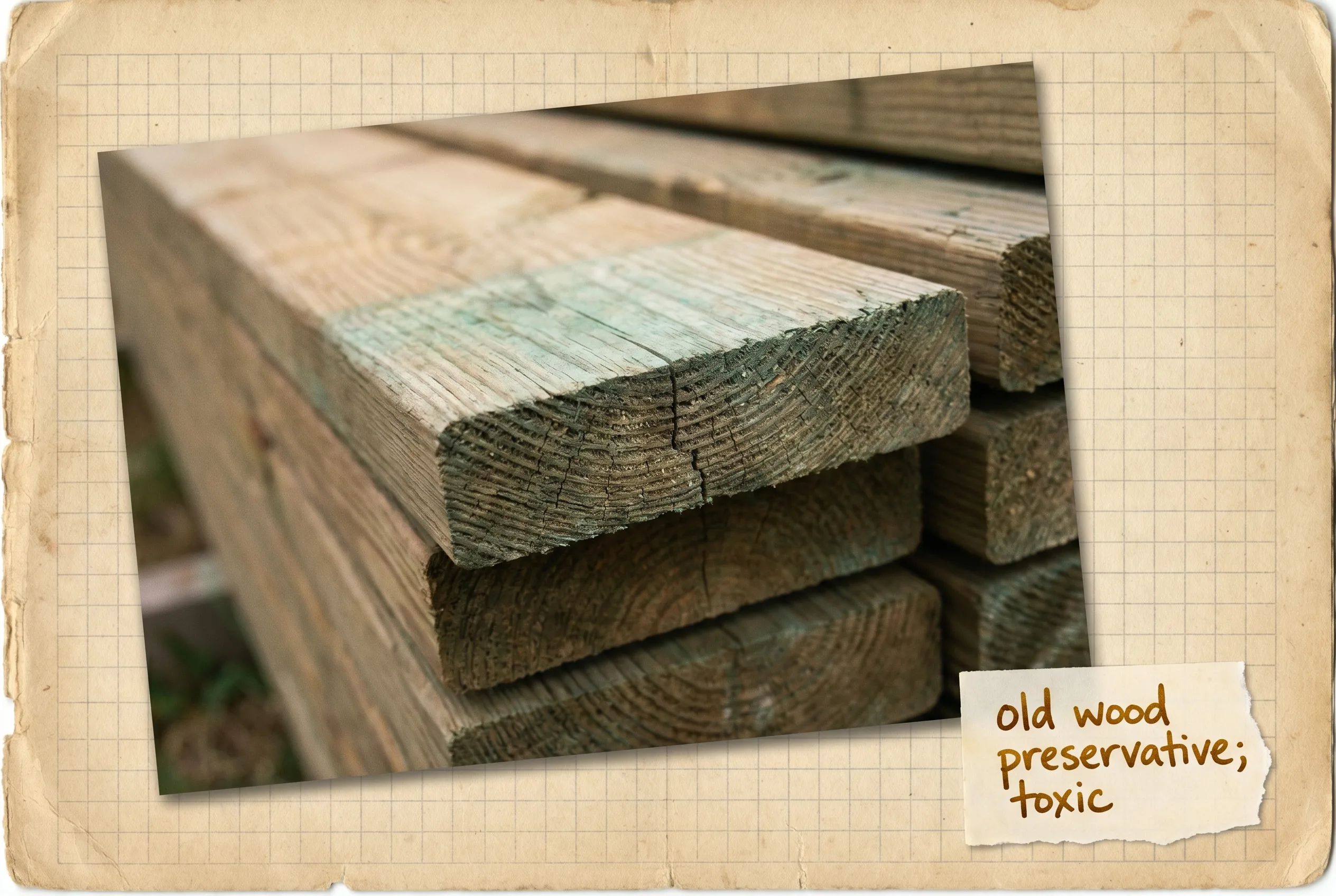
A weathered cut end of pressure-treated lumber with a faint greenish tint, stacked outside.
Where you'd see itArsenic compounds once preserved outdoor lumber against rot - its toxicity also made it a poison.
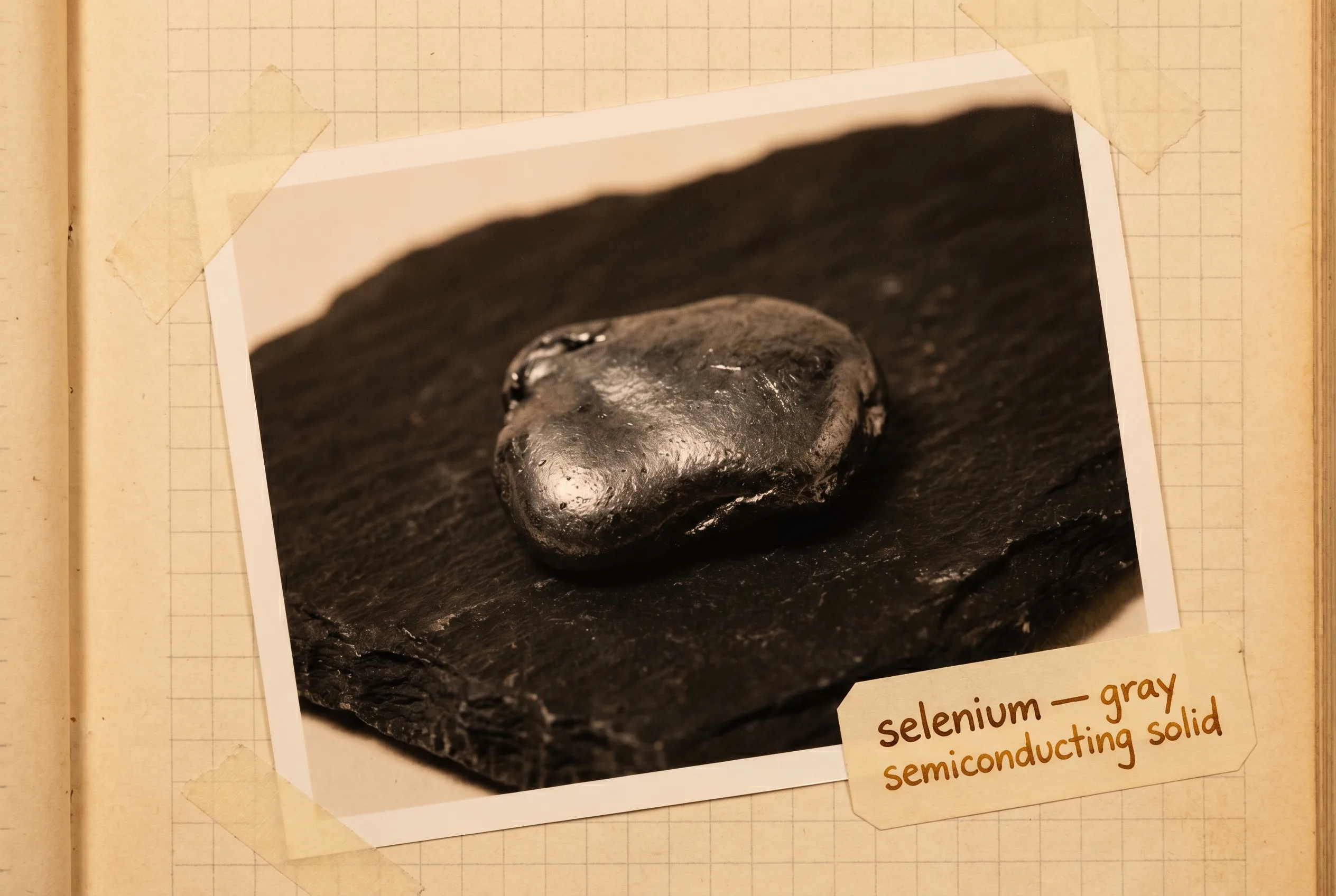
A dark gray semi-lustrous mass of selenium on black slate.
What it looks likeGray selenium is the stable form - a dull metallic solid that conducts more in light.
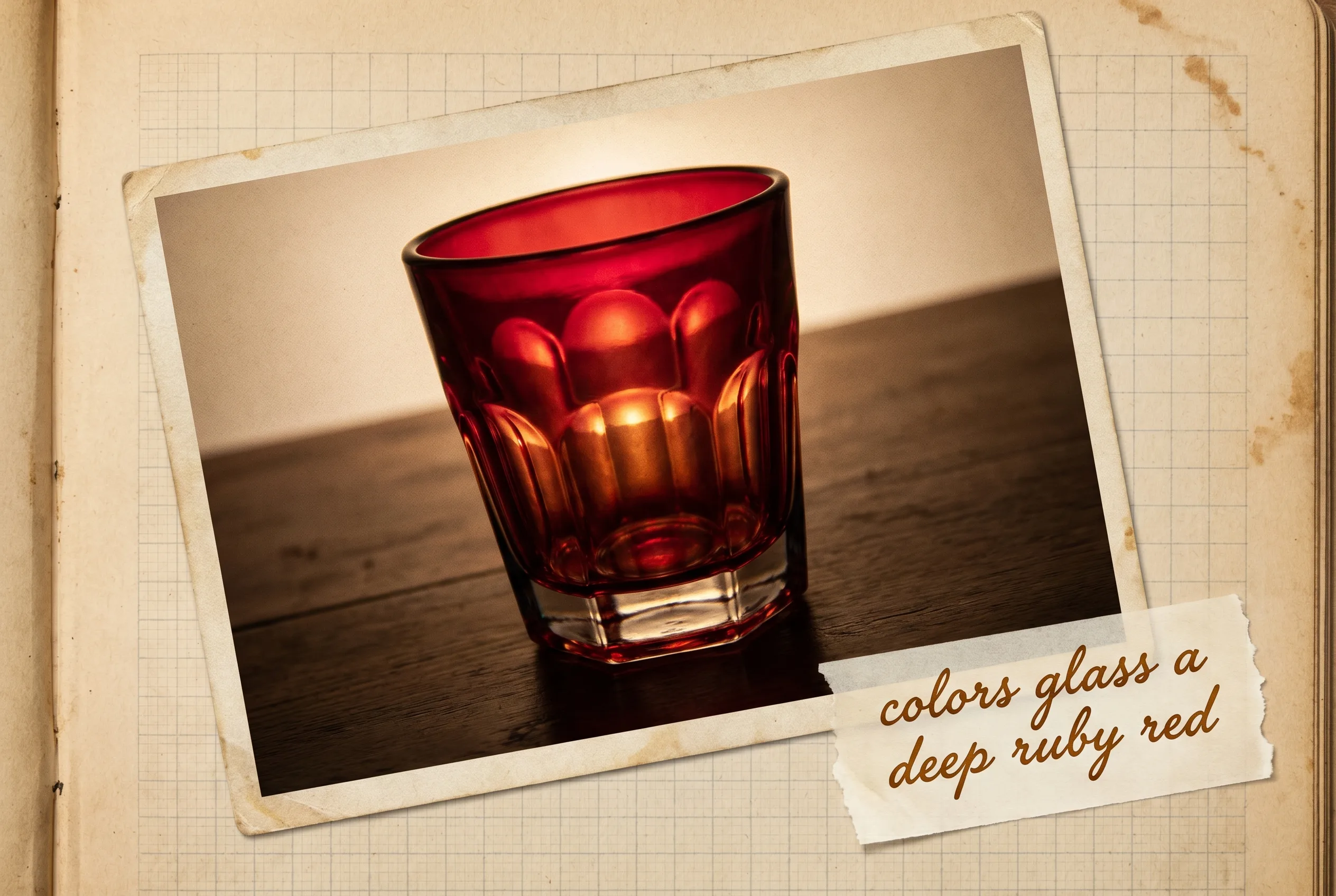
A deep ruby-red drinking glass catching light on a dark surface.
Where you'd see itSelenium gives glass a deep ruby-red color, used in art glass and signal lenses.
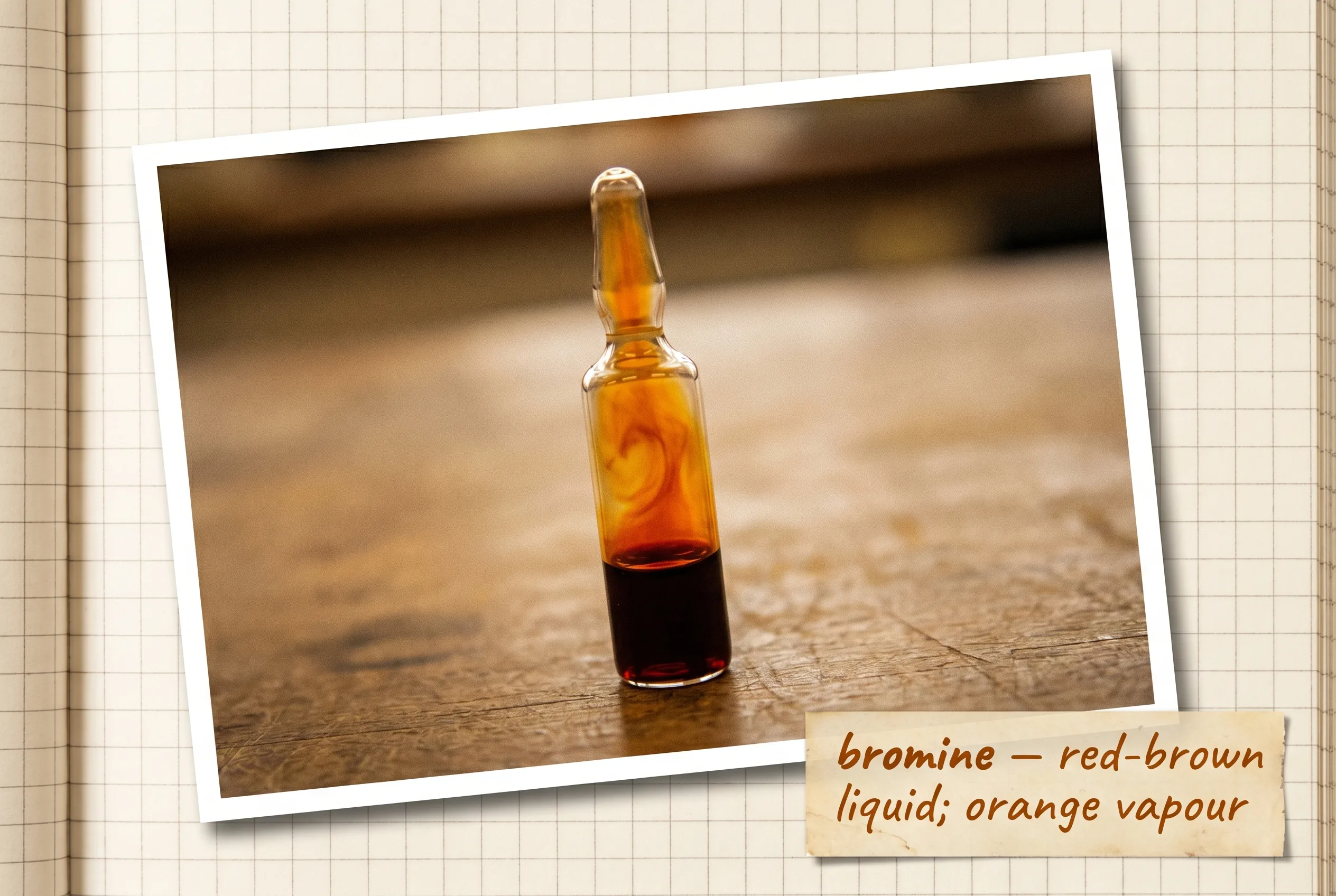
A sealed glass ampoule of dark red-brown liquid bromine with orange-brown vapor above it.
What it looks likeBromine is a dark red-brown liquid - one of only two elements liquid at room temperature.
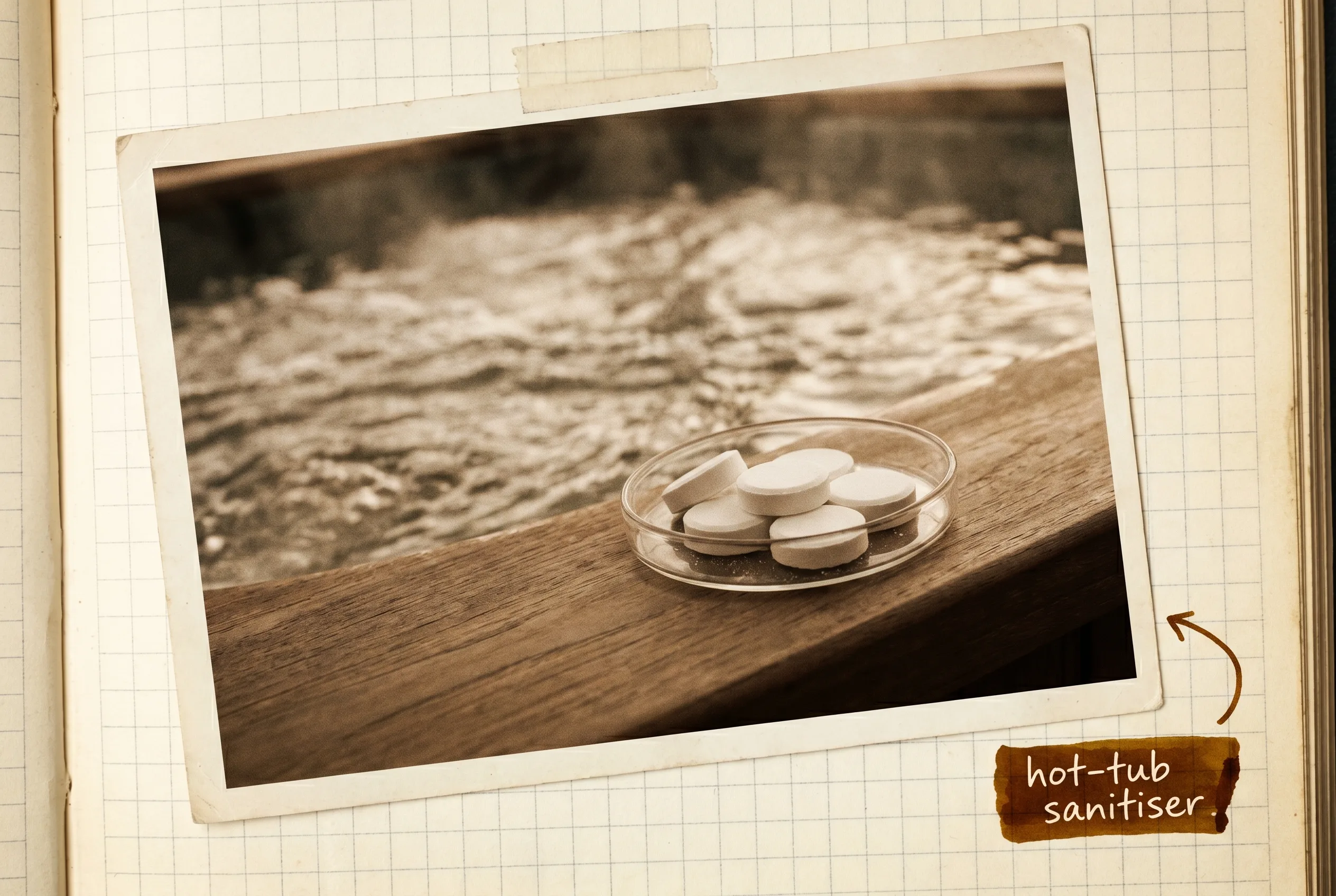
Plain white sanitizing tablets in a glass dish beside a hot tub’s rippling water.
Where you'd see itBromine compounds sanitize hot tubs much like chlorine sanitizes pools.
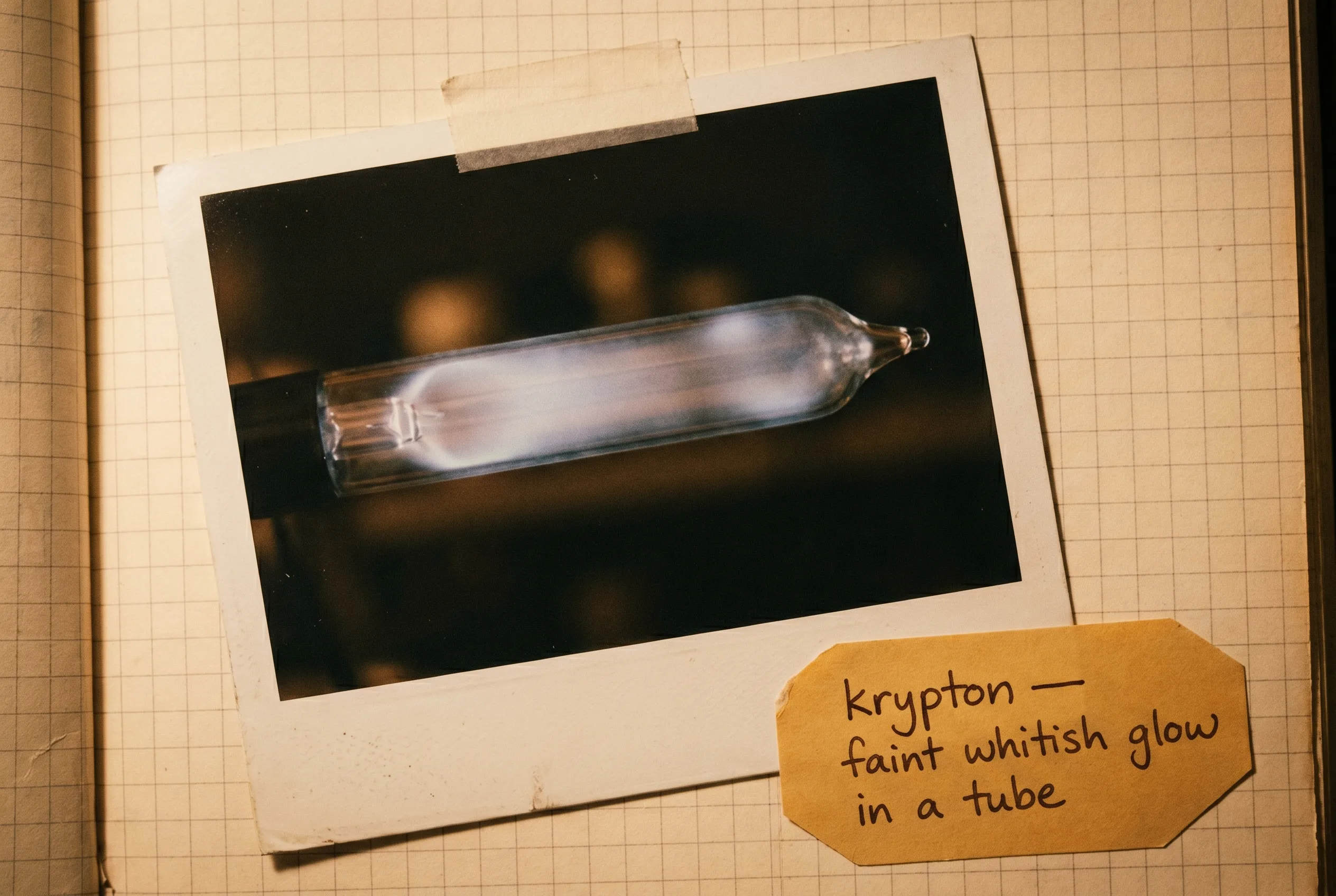
A slender glass discharge tube glowing faint whitish-blue against a black background.
What it looks likeKrypton is a colorless noble gas that glows a faint whitish-blue in a discharge tube.
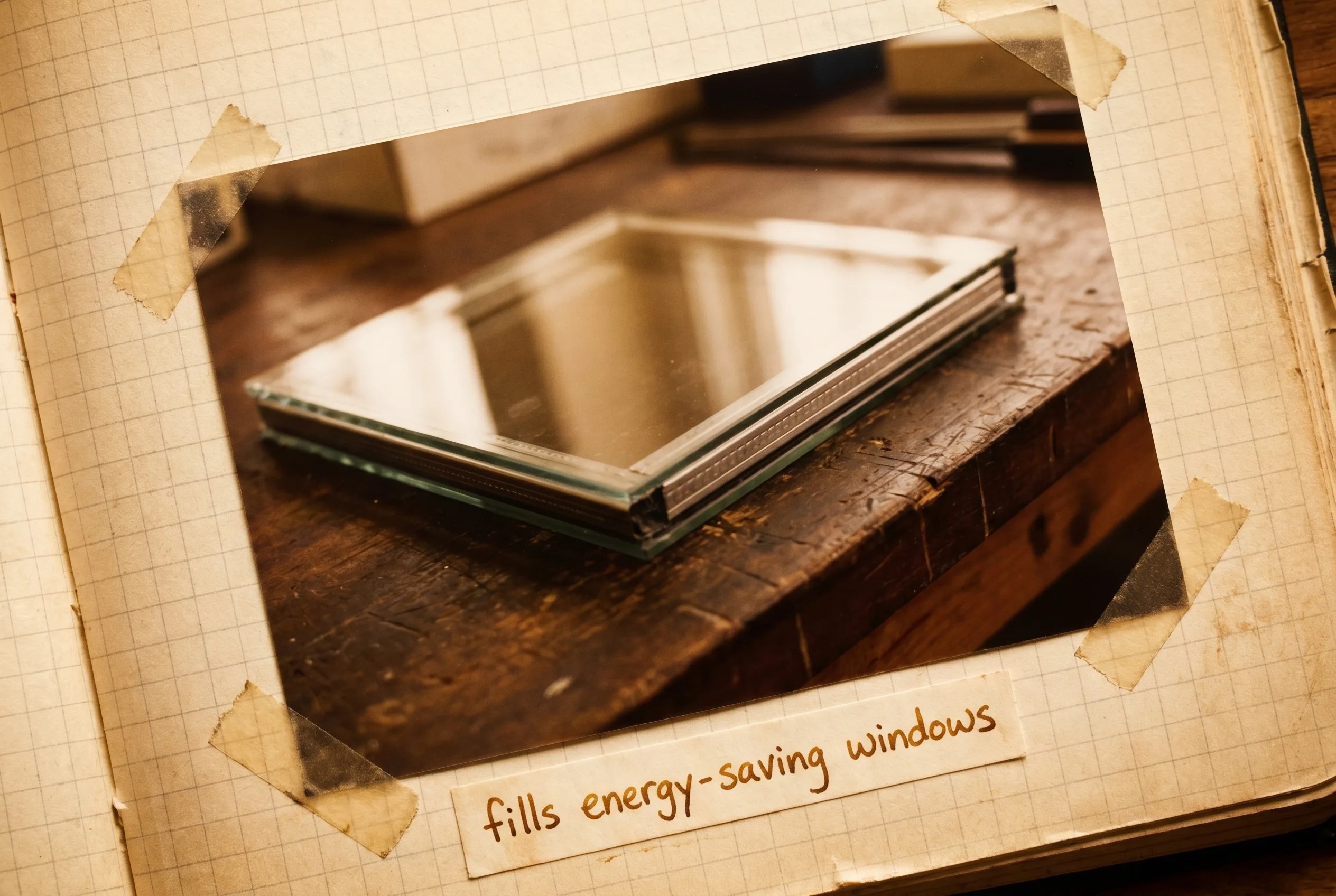
A clear sealed double-pane window unit with light glinting off its two glass panes.
Where you'd see itKrypton fills the gap in energy-saving double-pane windows to slow heat loss.
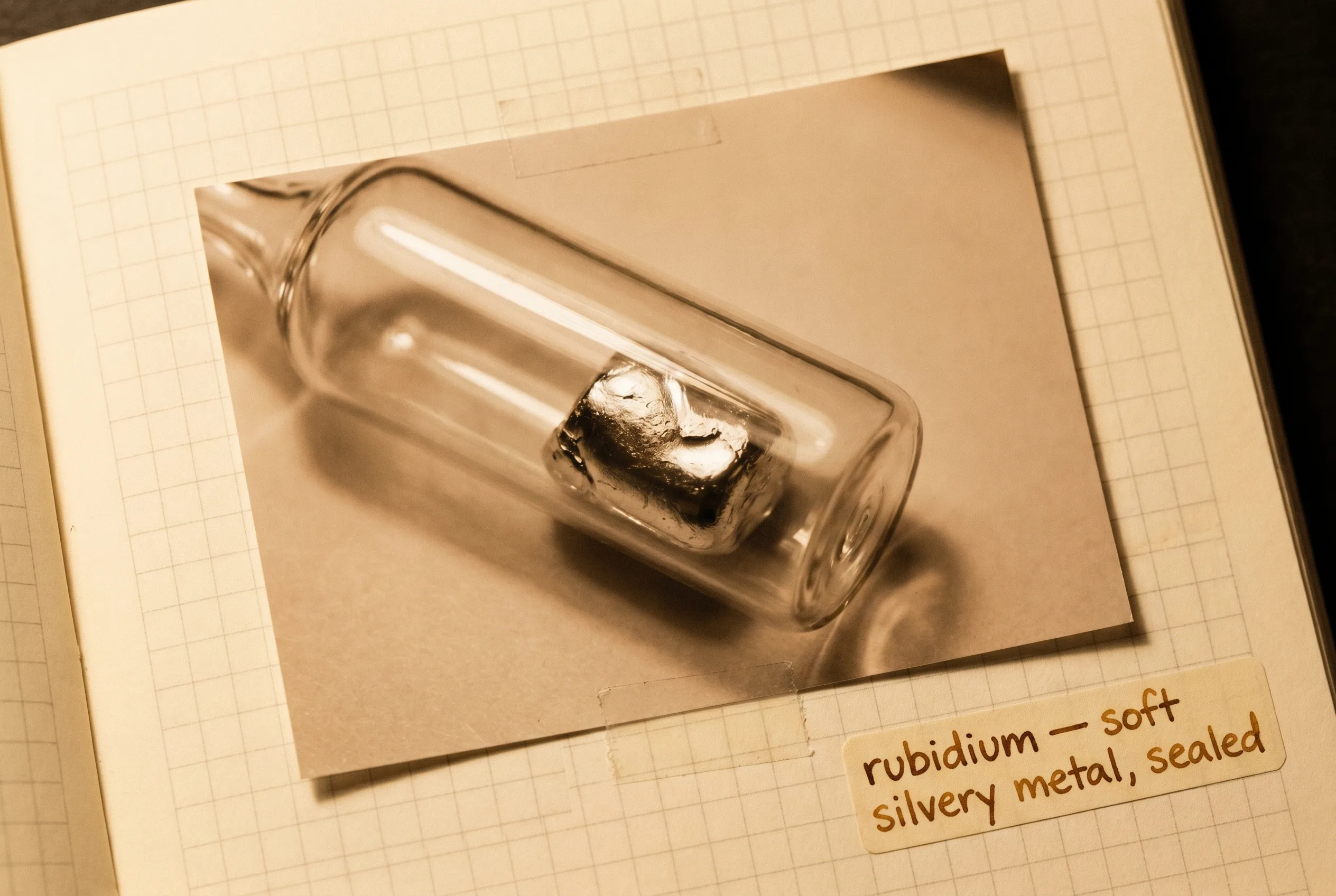
A soft silvery piece of rubidium metal sealed inside a clear glass ampoule.
What it looks likeRubidium is a soft silvery metal so reactive it must be sealed away from air in glass.
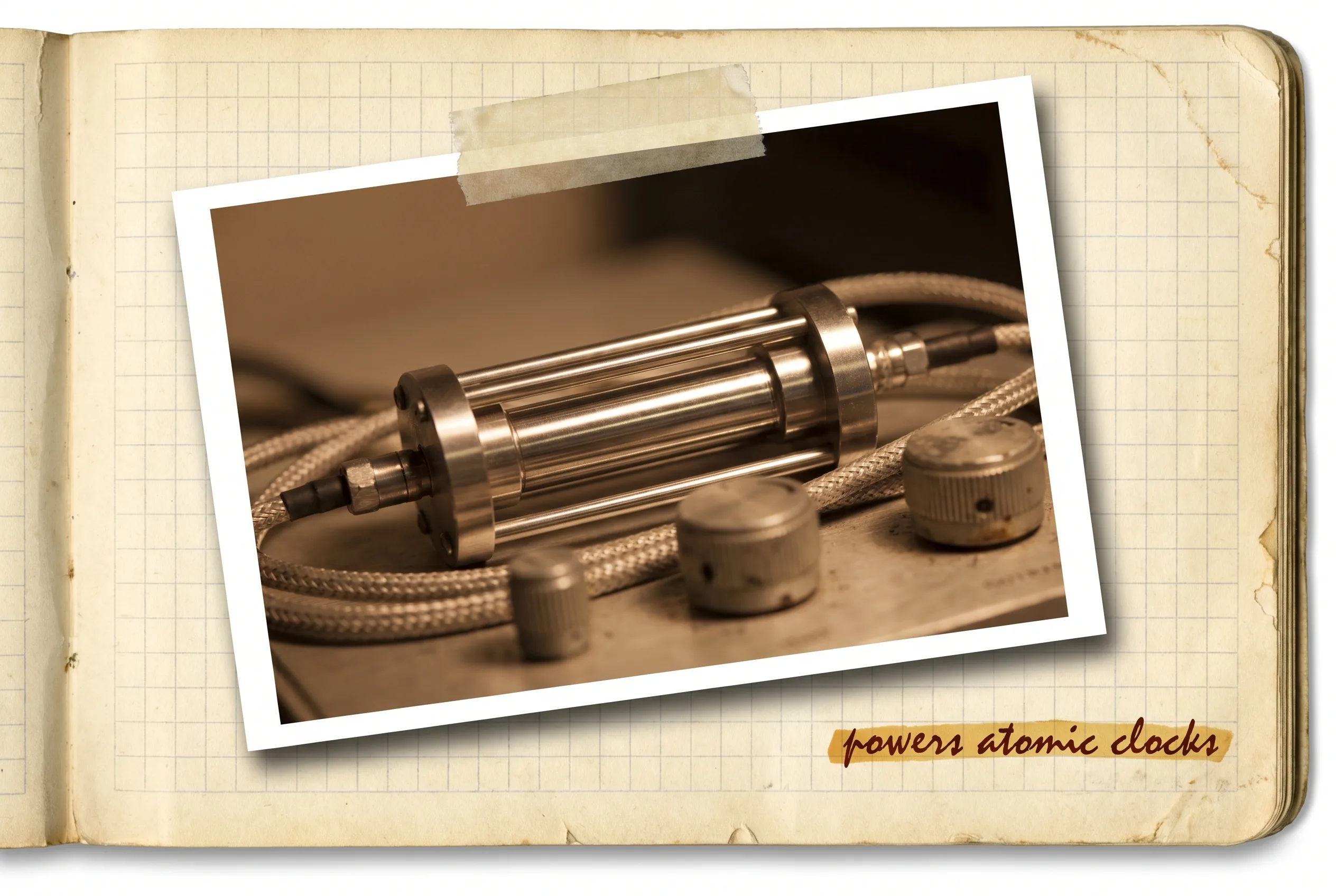
A compact metal atomic-clock instrument with a slim cylindrical physics package.
Where you'd see itRubidium keeps time in atomic clocks used for navigation and research.
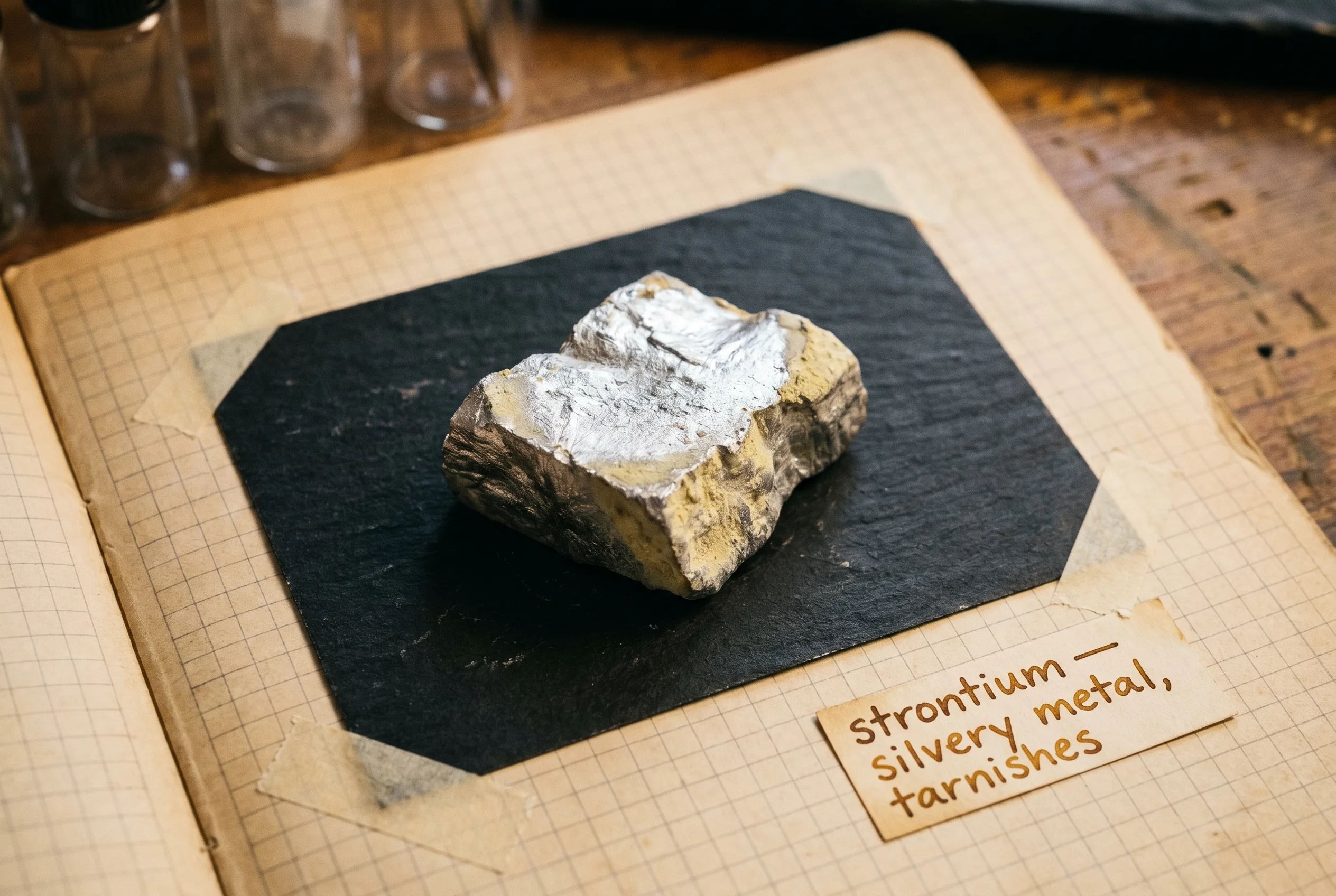
A freshly cut silvery strontium piece with pale yellow tarnish at the edges on slate.
What it looks likeStrontium is a silvery metal that tarnishes to a pale yellow when exposed to air.
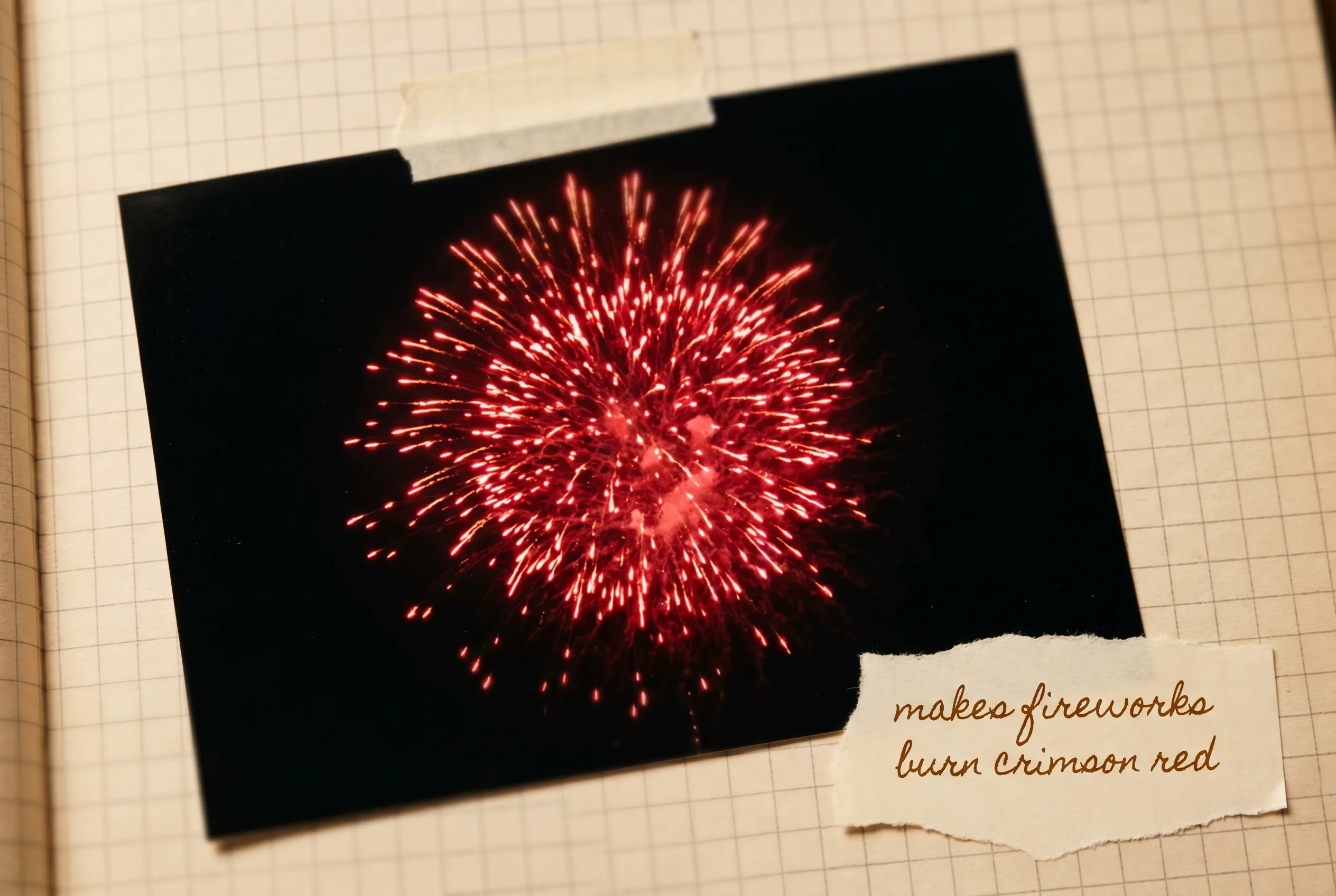
A burst of crimson-red fireworks fanning out against a black night sky.
Where you'd see itStrontium burns crimson red - it is what makes red fireworks and flares red.
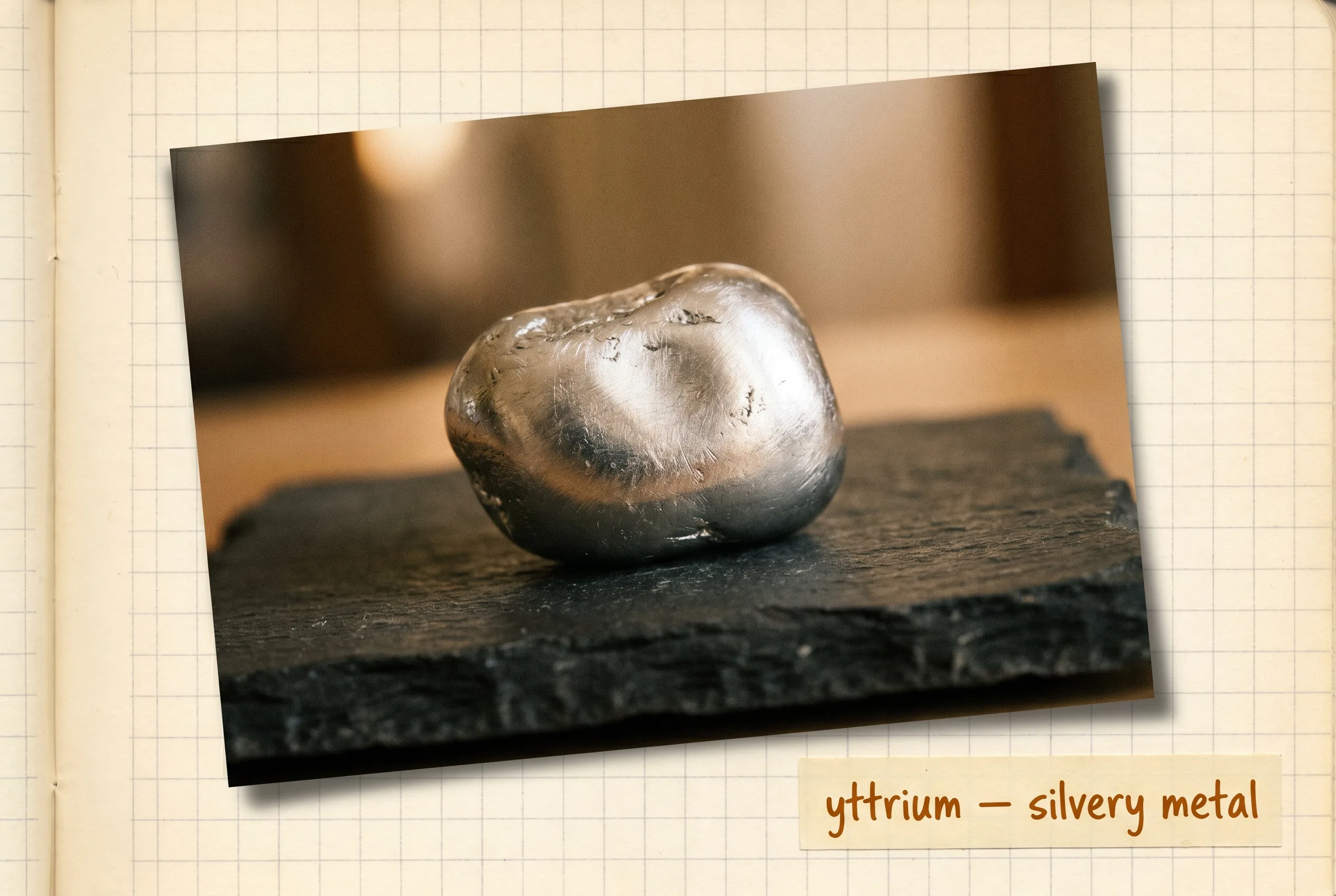
A silvery lump of yttrium metal with a soft luster on black slate.
What it looks likeYttrium is a soft silvery metal used mostly inside high-tech materials.
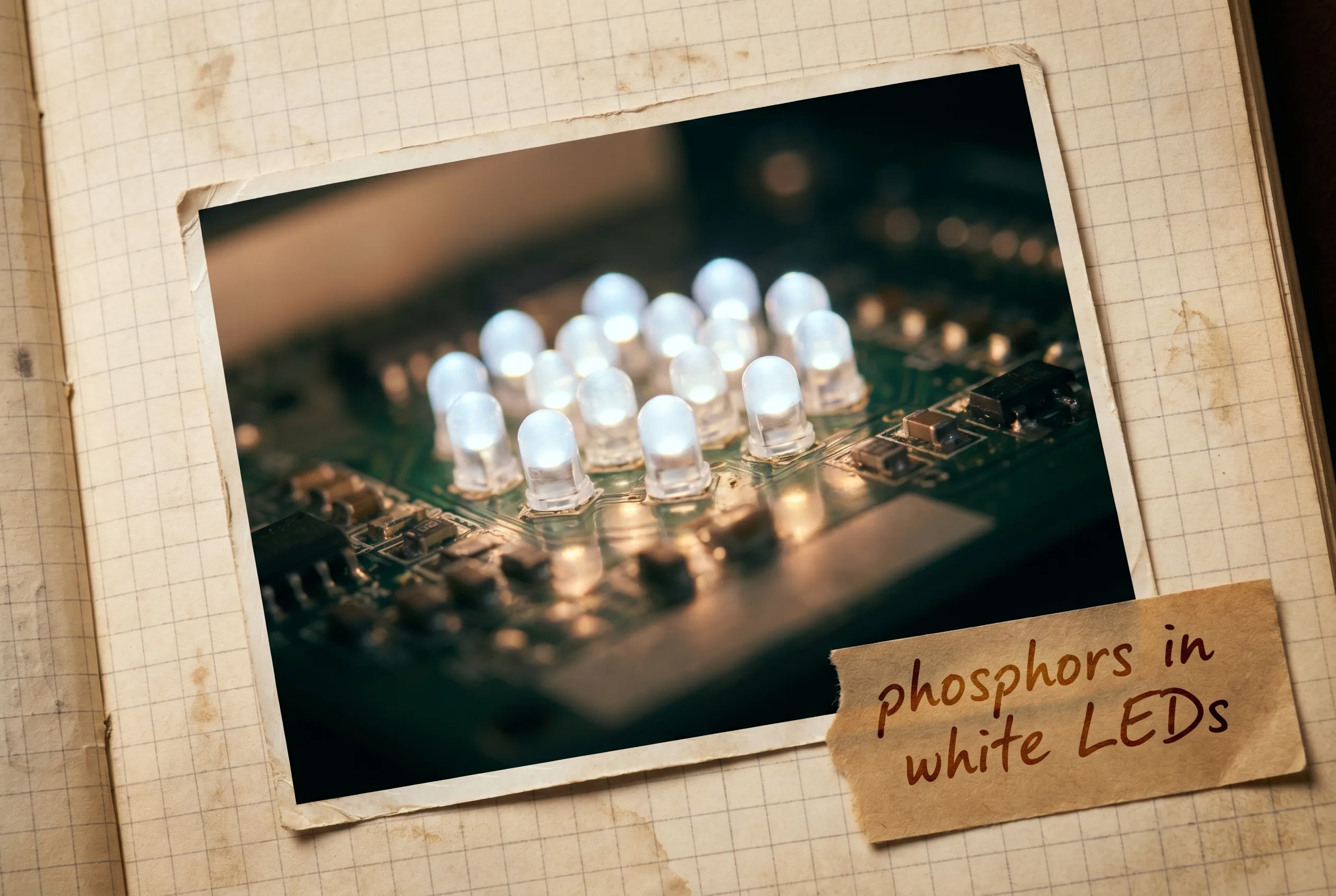
A cluster of small white LED emitters glowing cool-white on a dark circuit surface.
Where you'd see itYttrium phosphors help white LEDs glow and once made the red in old TV screens.
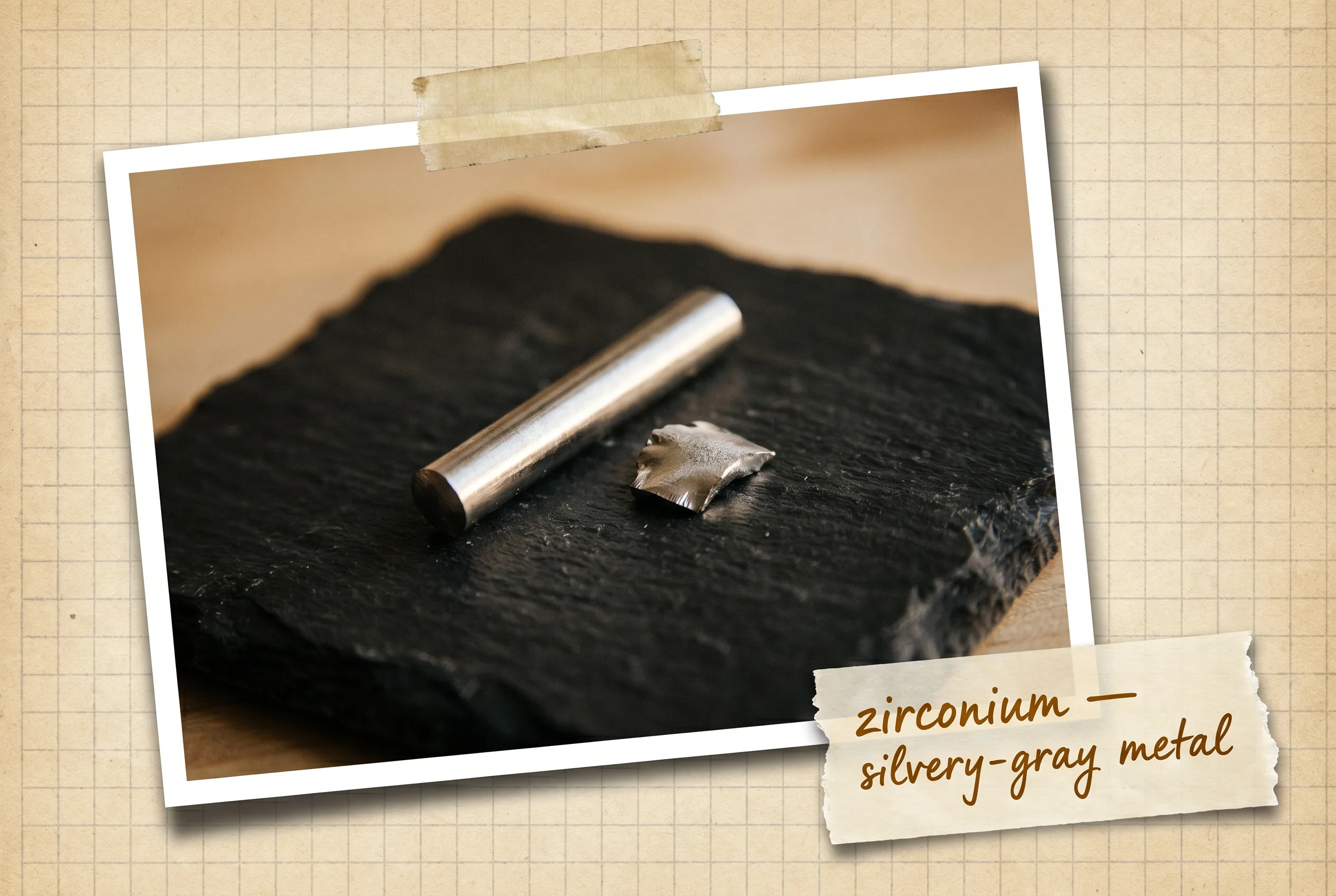
A silvery-gray zirconium rod and chip with a smooth metallic luster on black slate.
What it looks likeZirconium is a strong silvery-gray metal that resists heat and corrosion.
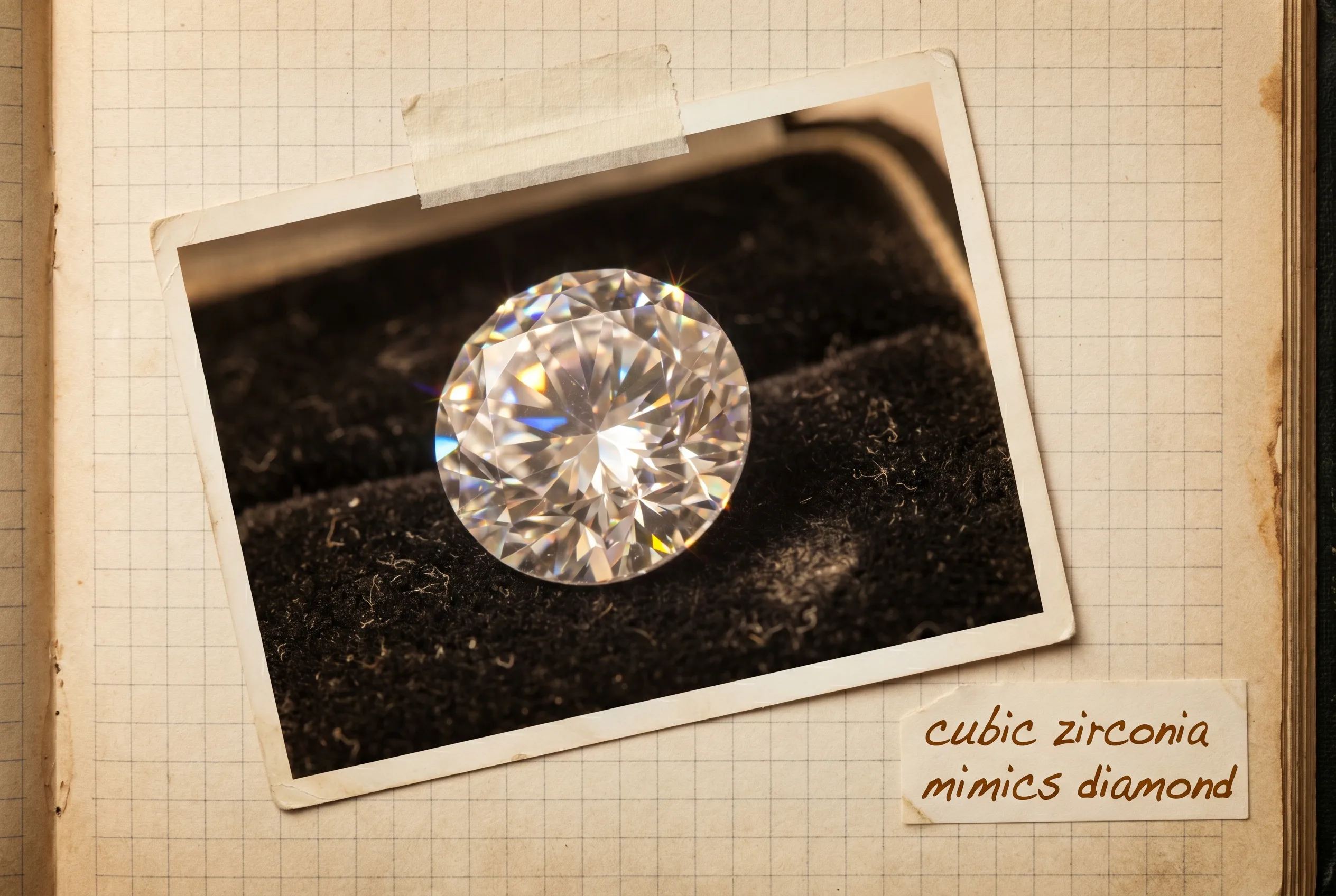
A brilliant clear faceted cubic-zirconia gemstone sparkling on dark velvet.
Where you'd see itCubic zirconia - made from a zirconium oxide - sparkles like diamond for a fraction of the cost.
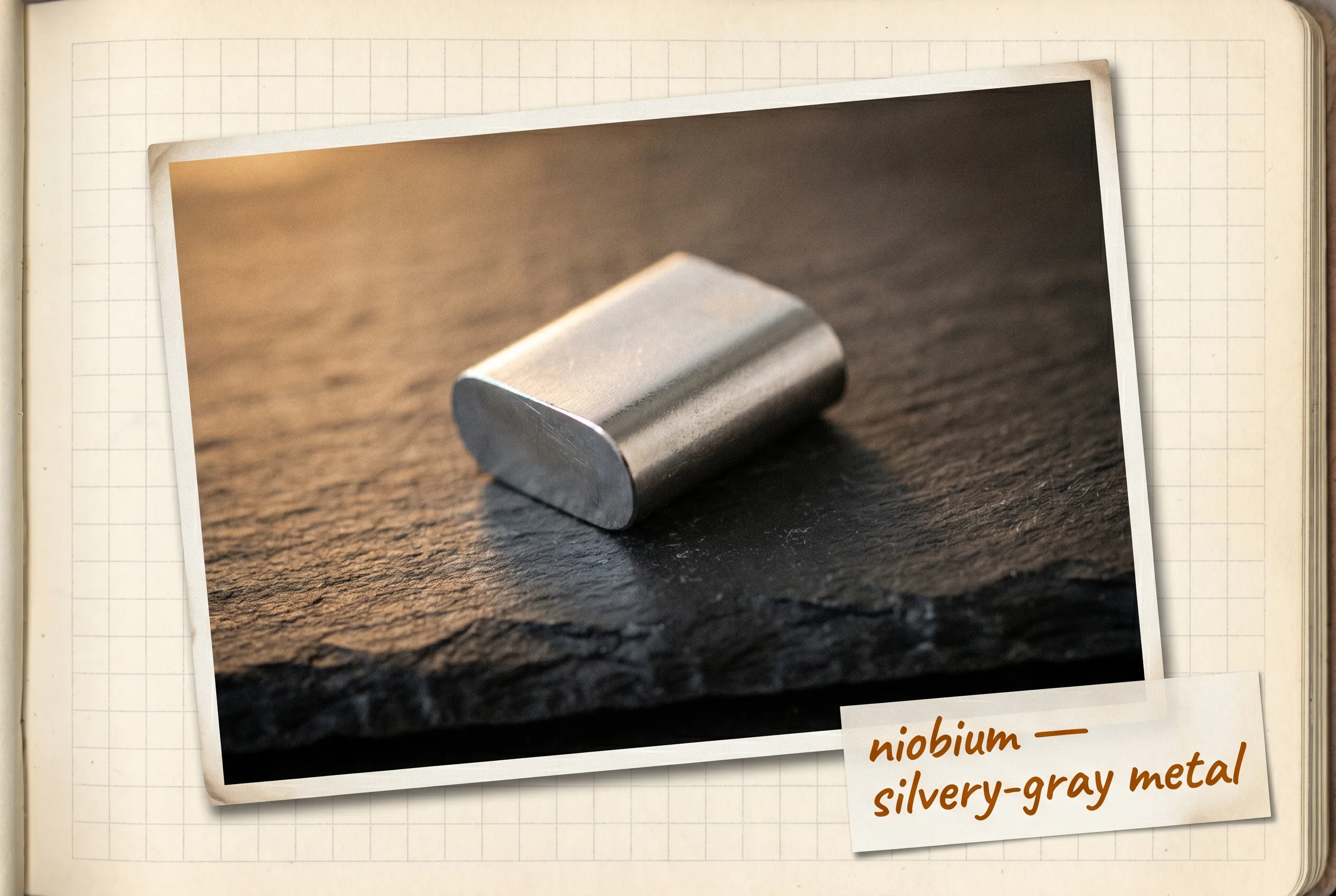
A silvery-gray piece of niobium metal with a clean metallic luster on black slate.
What it looks likeNiobium is a silvery-gray metal prized for superconductors and surgical implants.
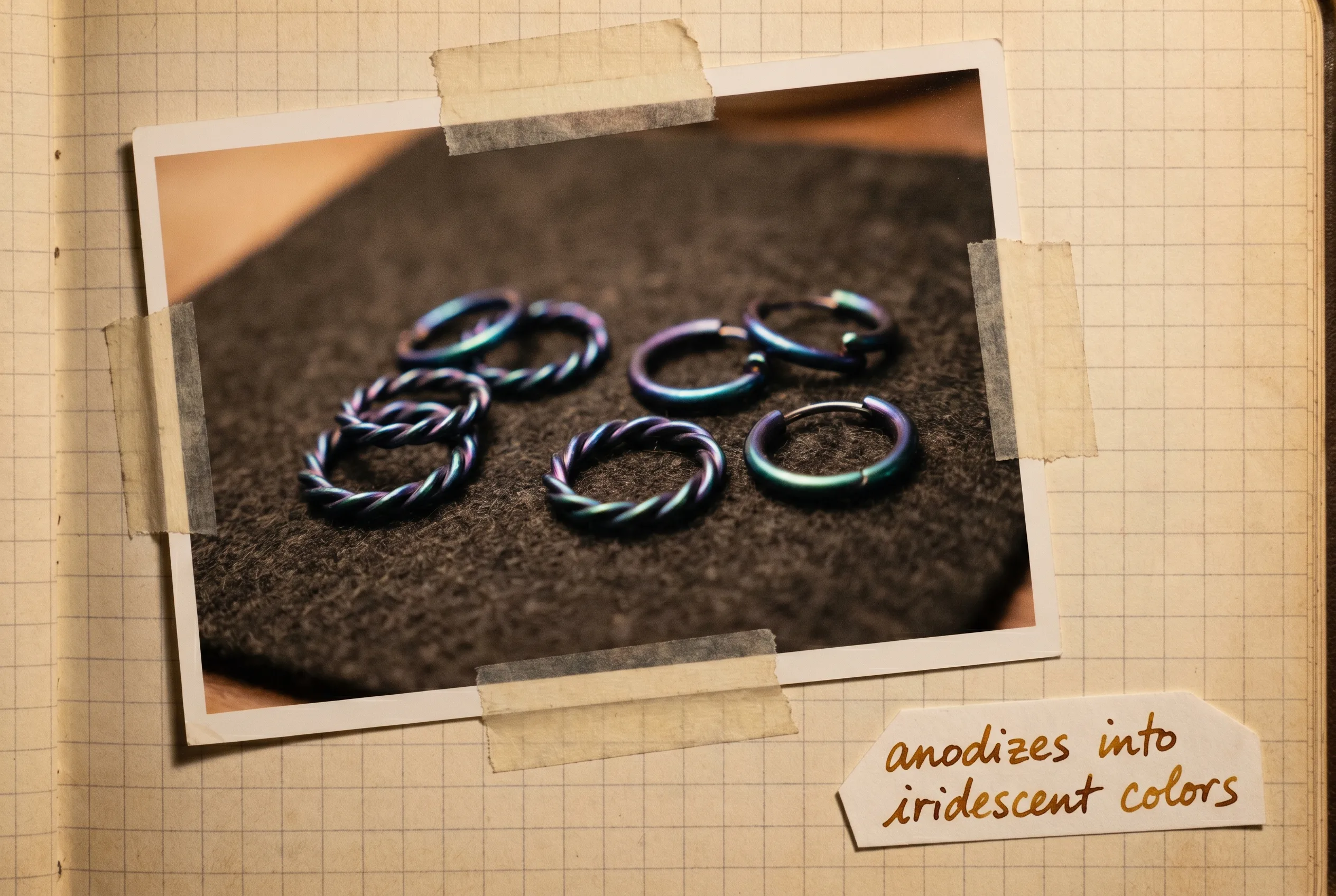
Anodized niobium jewelry glowing iridescent blue, purple and green on a dark surface.
Where you'd see itA small electric current anodizes niobium into bright peacock blues and purples - no dye needed.
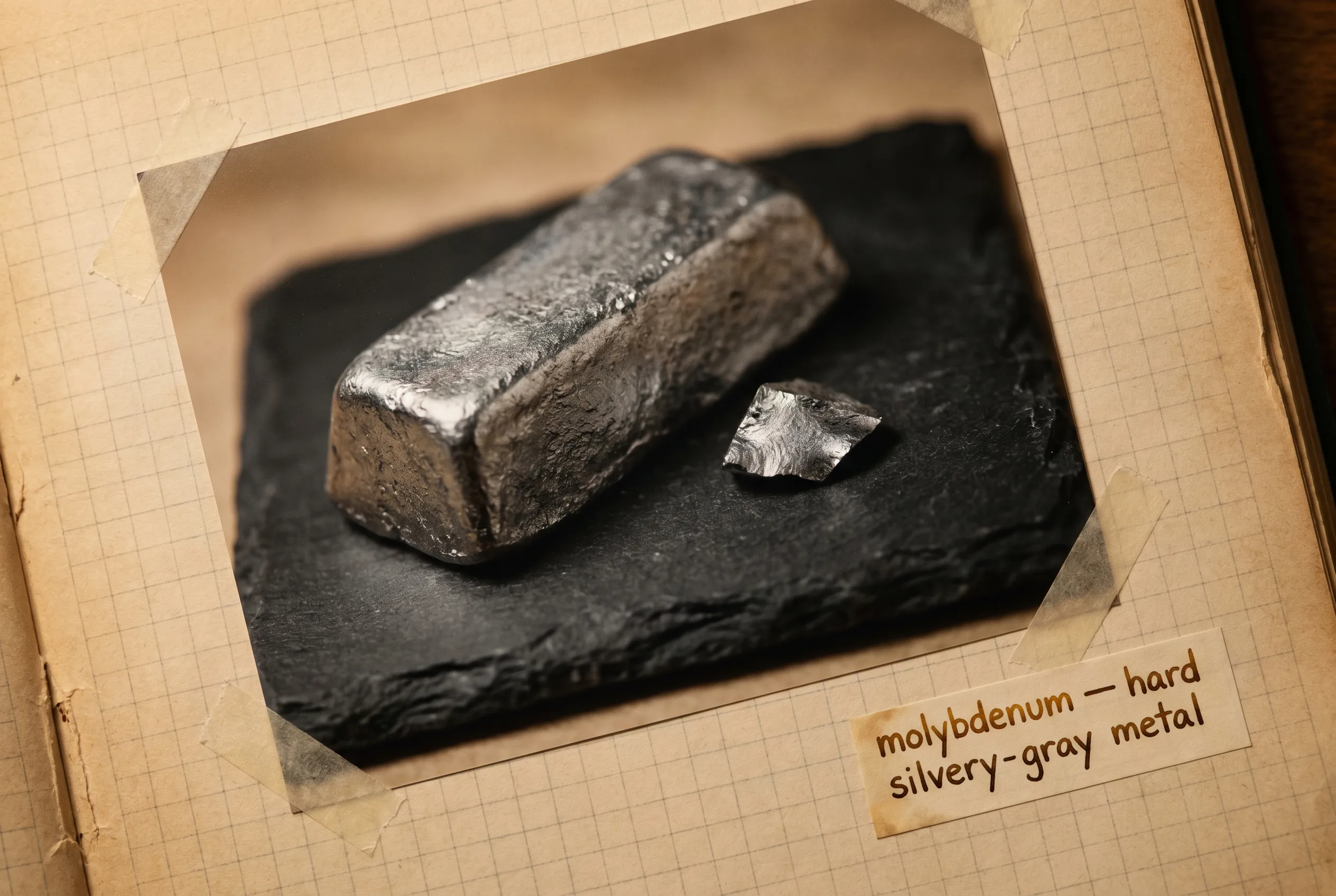
A hard silvery-gray molybdenum ingot and chip with a cool luster on black slate.
What it looks likeMolybdenum is a hard silvery-gray metal with one of the highest melting points known.
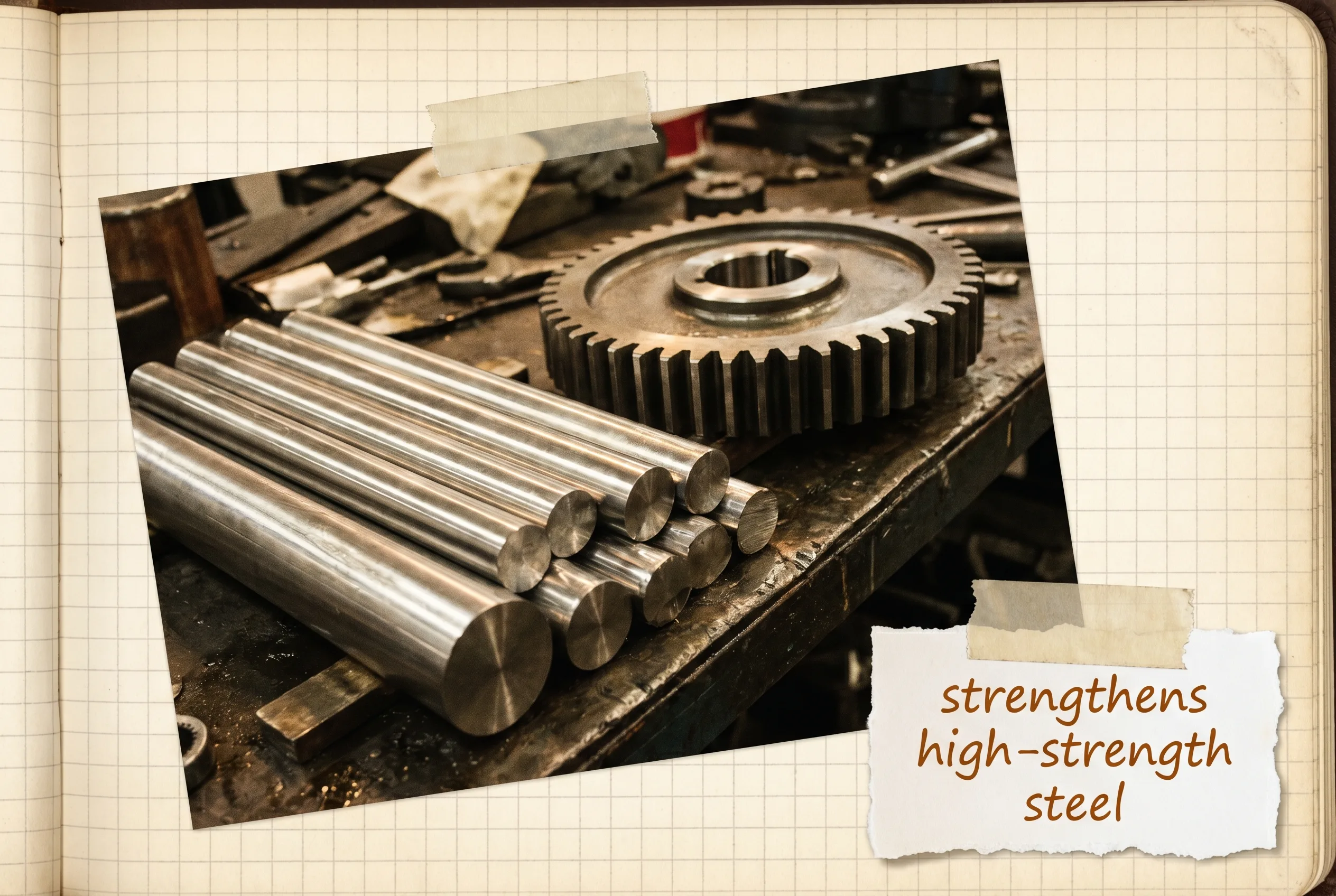
A stack of heavy polished steel bars and a large gear on a dark workshop surface.
Where you'd see itMolybdenum toughens steel for tools, engines, and aircraft parts.
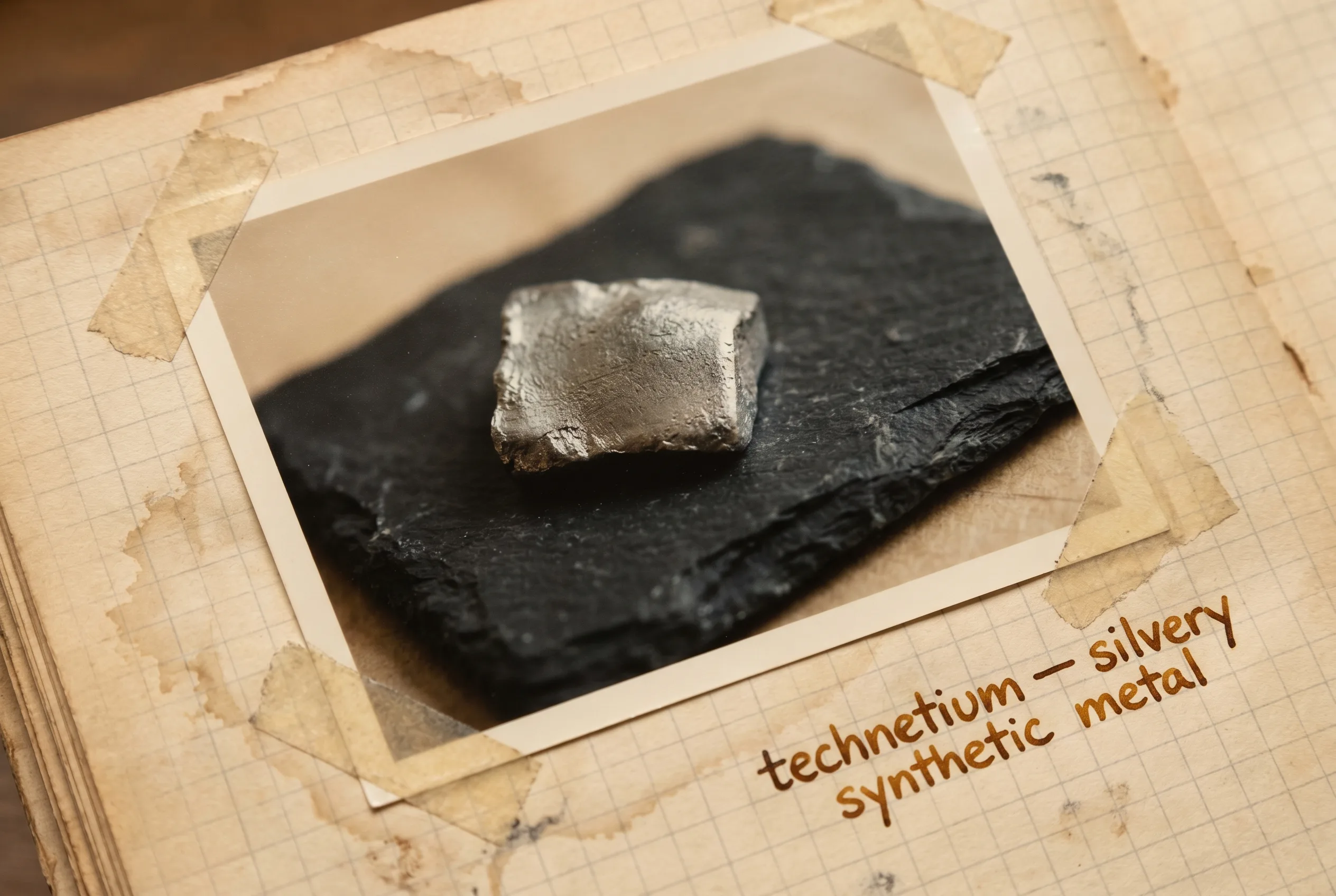
A small silvery-gray piece of technetium metal with a matte luster on black slate.
What it looks likeTechnetium is a silvery synthetic metal - the lightest element with no stable form.
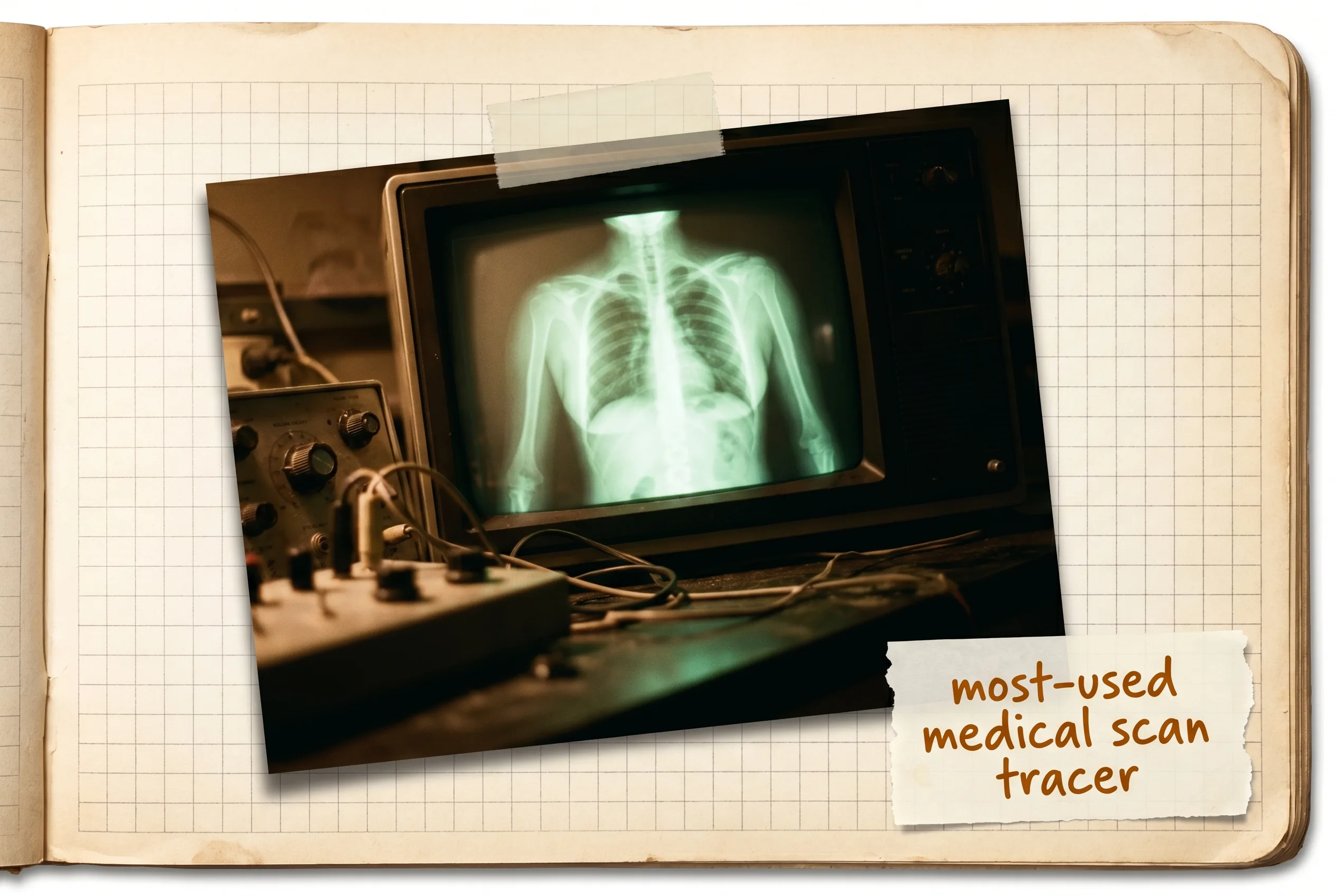
A glowing nuclear-scan image of a human skeleton on a dark display screen.
Where you'd see itTechnetium-99m is the most-used tracer in medical scans of bones and organs.
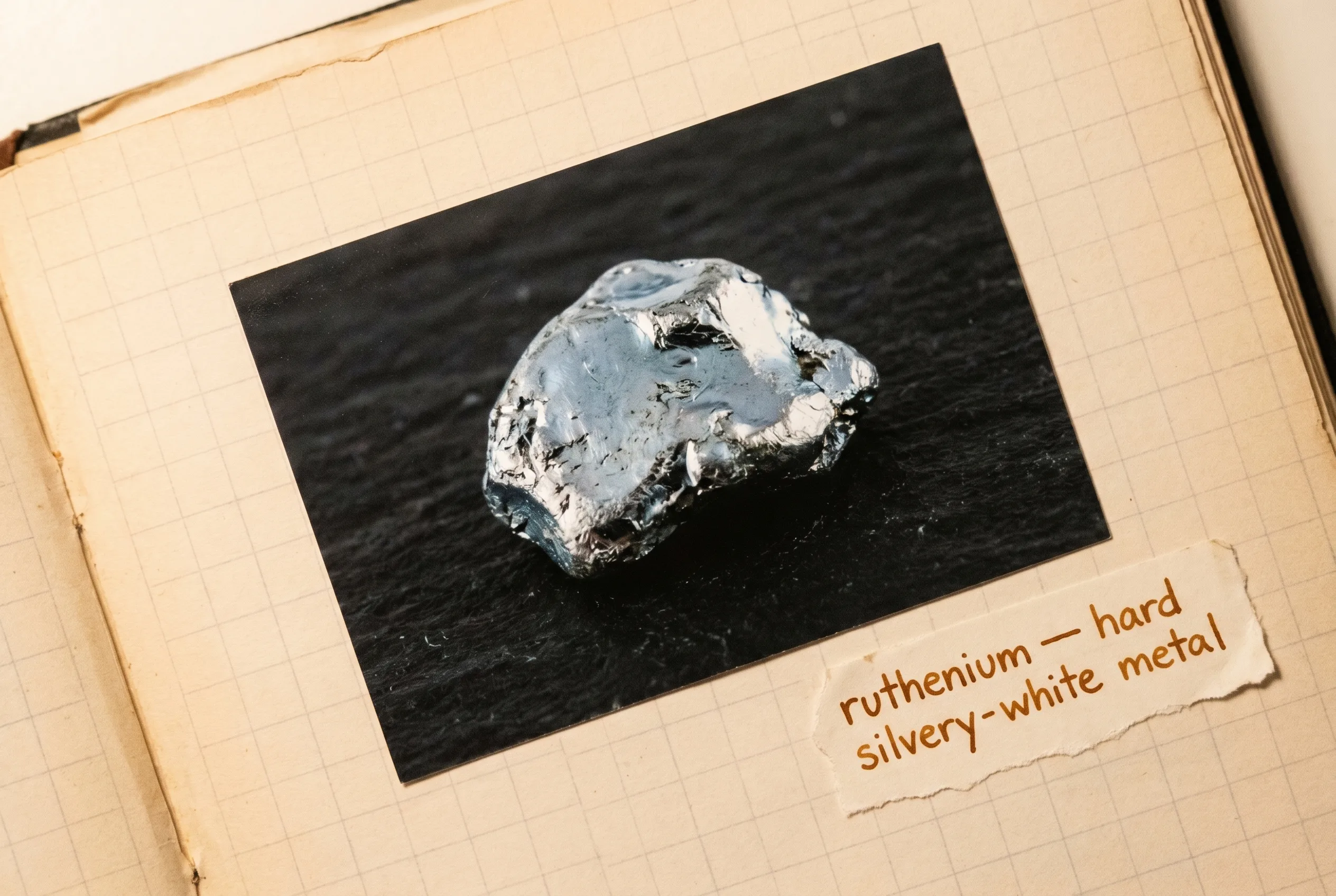
A hard brittle silvery-white ruthenium nugget with a bright luster on black slate.
What it looks likeRuthenium is a hard, brittle, silvery-white metal with a faint blue tinge.
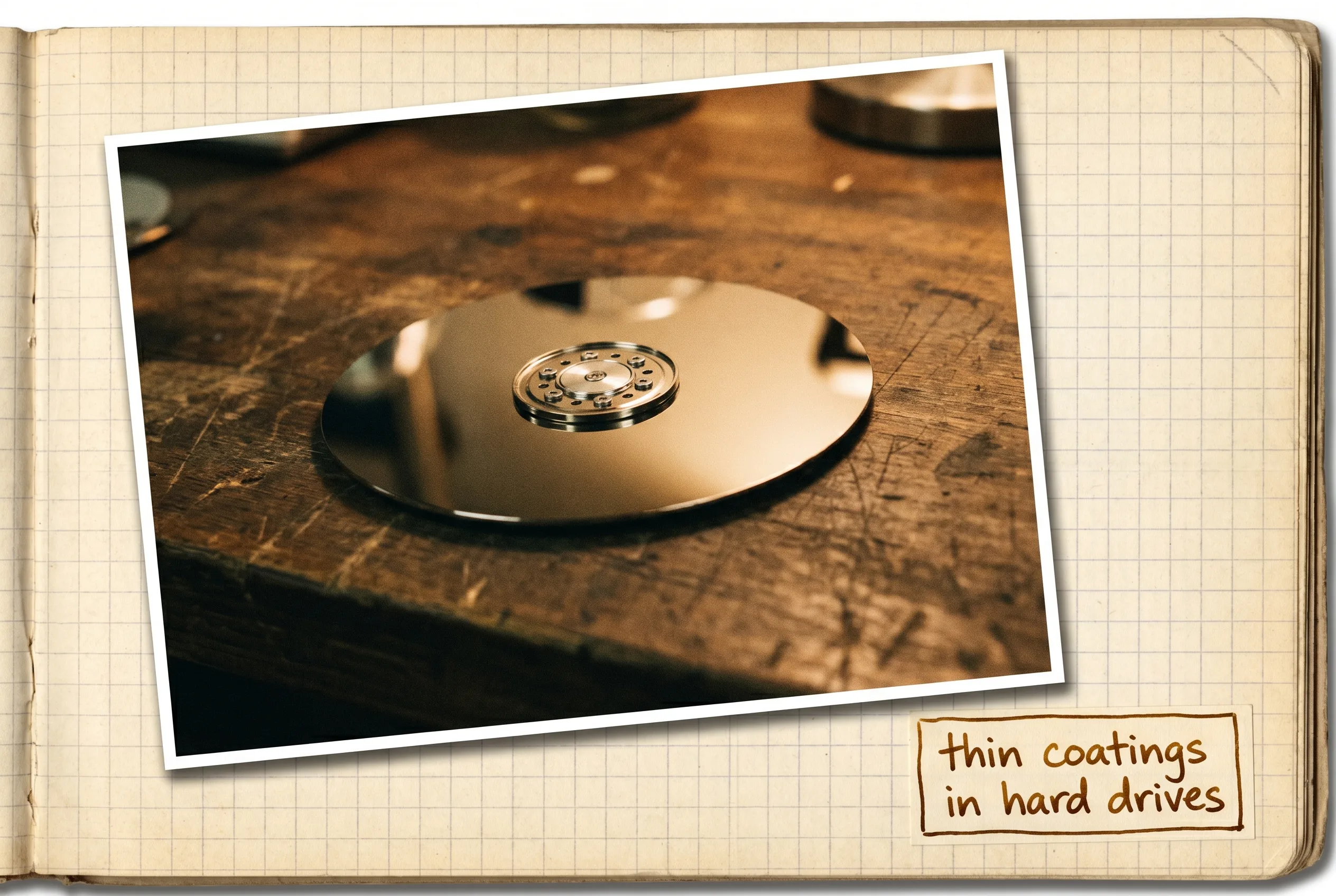
A mirror-bright bare hard-drive platter catching a sweep of light on a dark surface.
Where you'd see itA thin ruthenium coating helps hard-drive platters store more data.
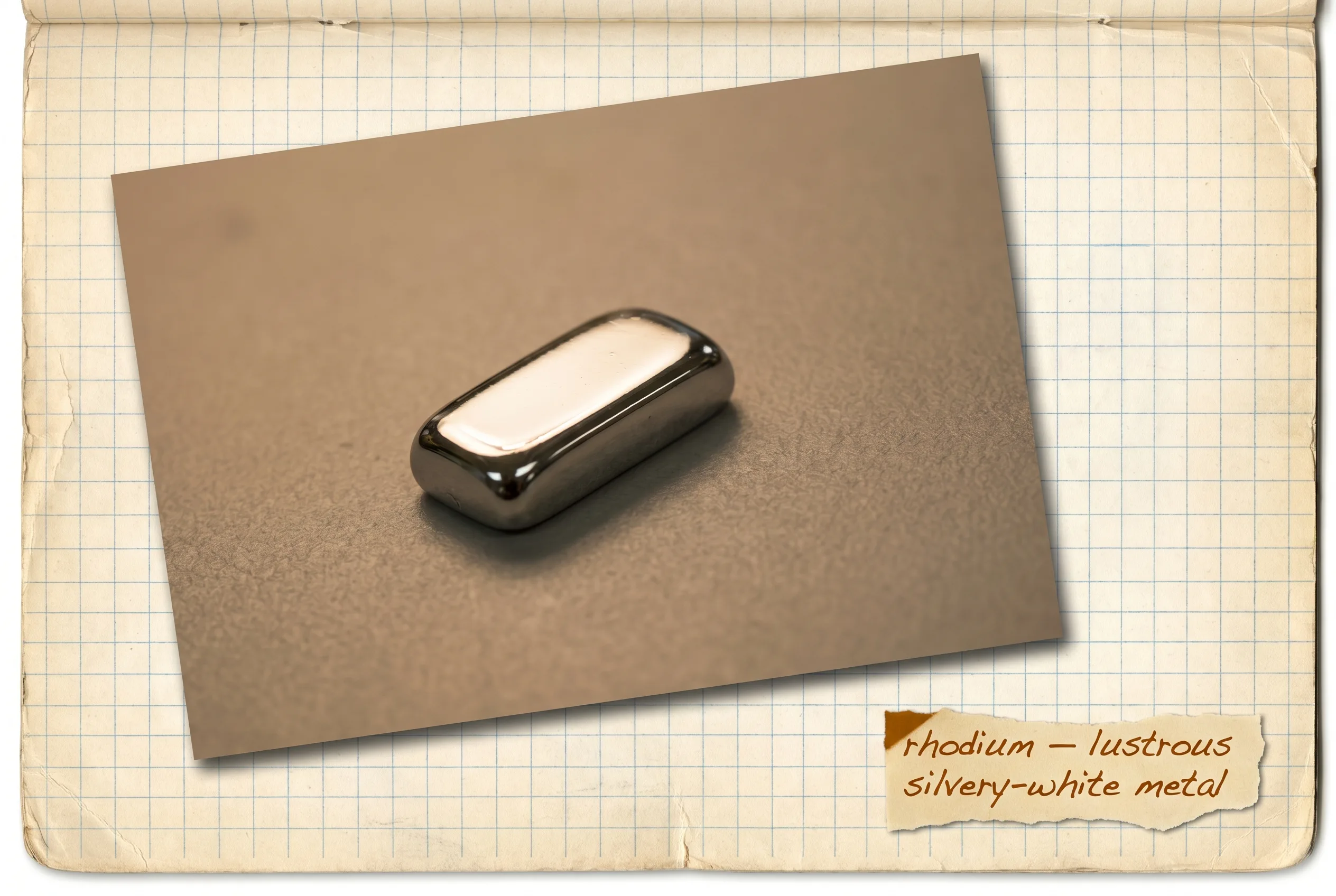
Bright mirror-like silvery-white metal ingot on a plain surface.
What it looks likeRhodium is a lustrous silvery-white precious metal, prized for its bright, mirror-like shine.
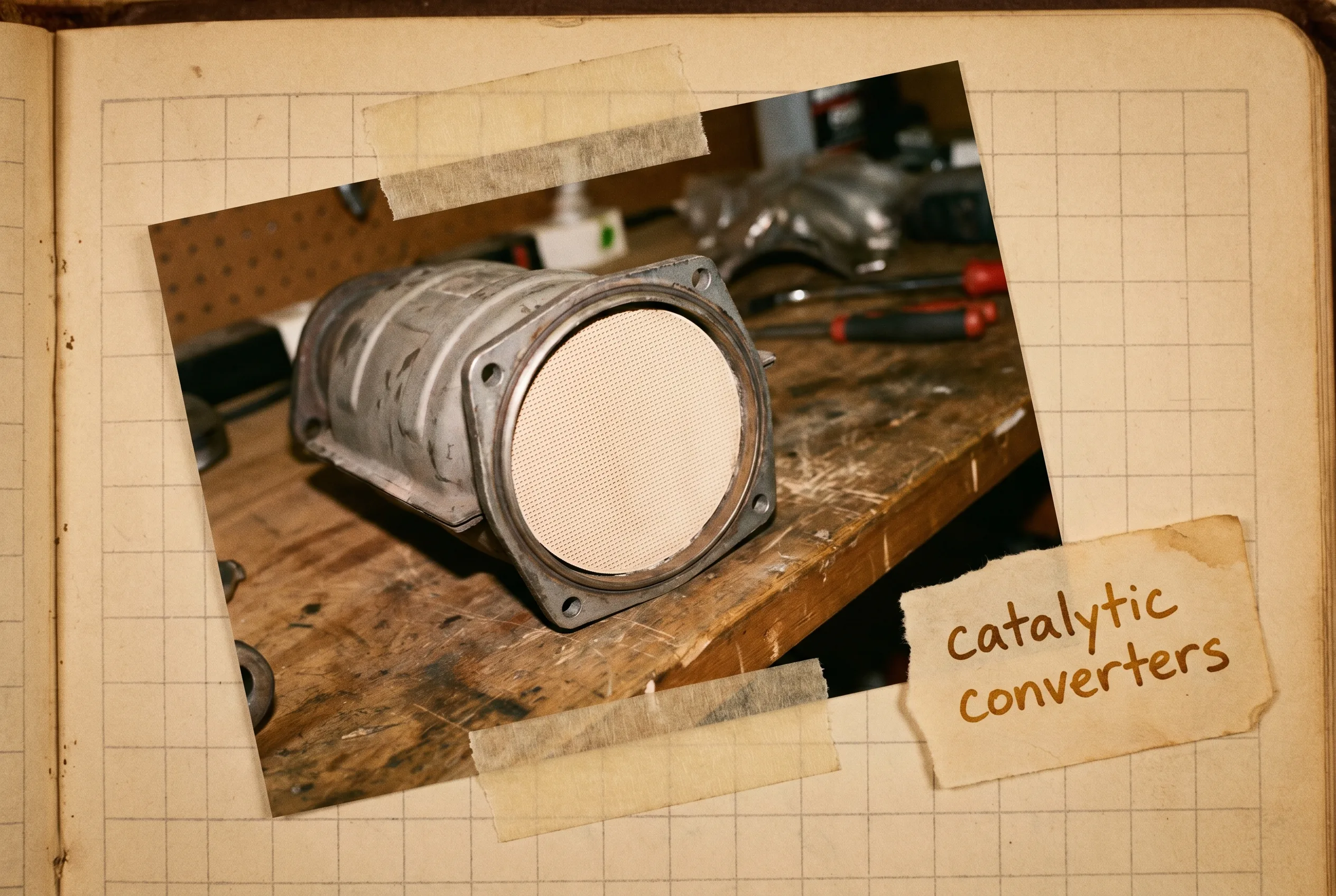
Cut-open catalytic converter showing a pale ceramic honeycomb core.
Where you'd see itRhodium does its biggest job inside catalytic converters, cleaning the exhaust from car engines.
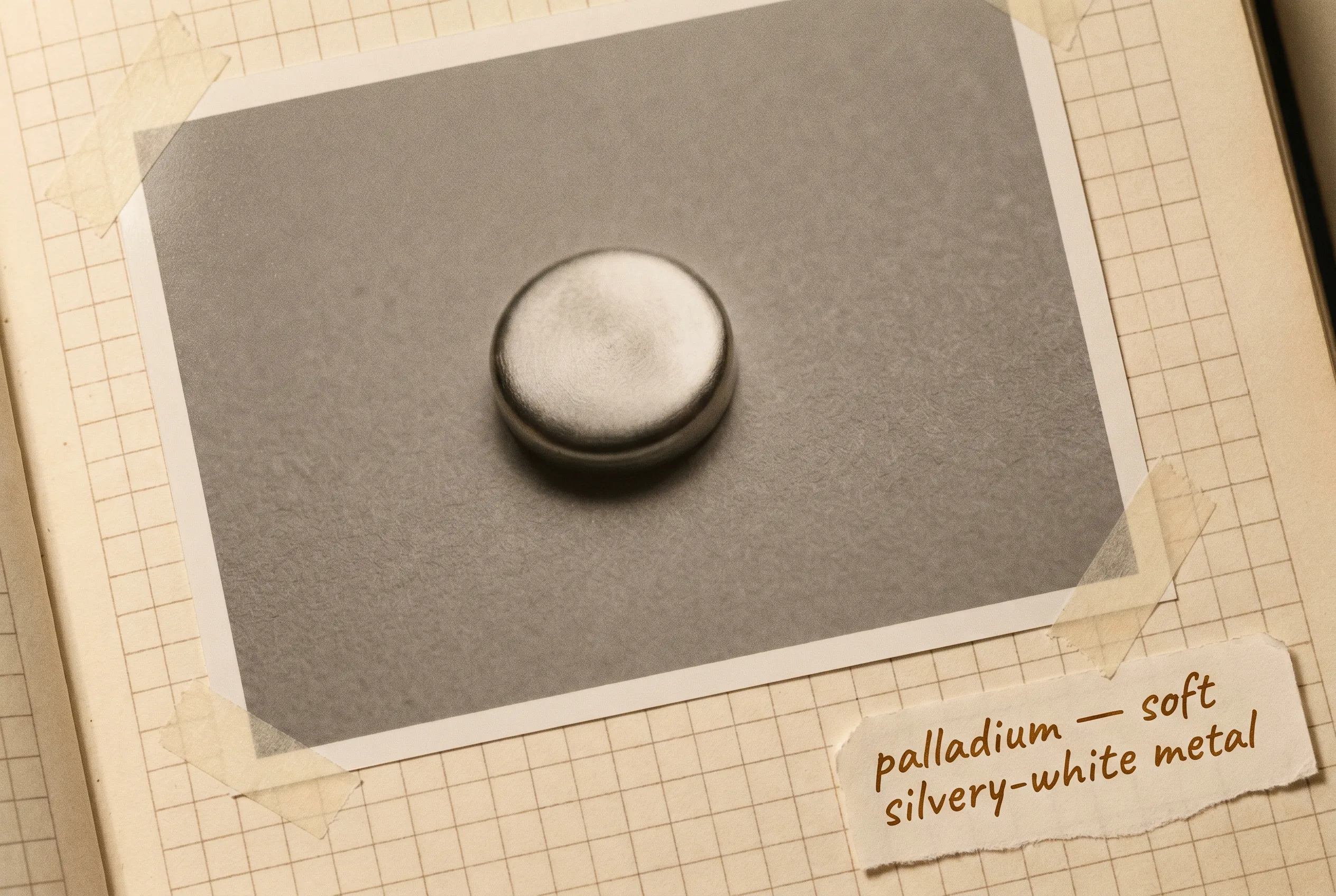
Soft silvery-white metal disc with a satin sheen on a plain surface.
What it looks likePalladium is a soft, silvery-white precious metal with a gentle satin luster.
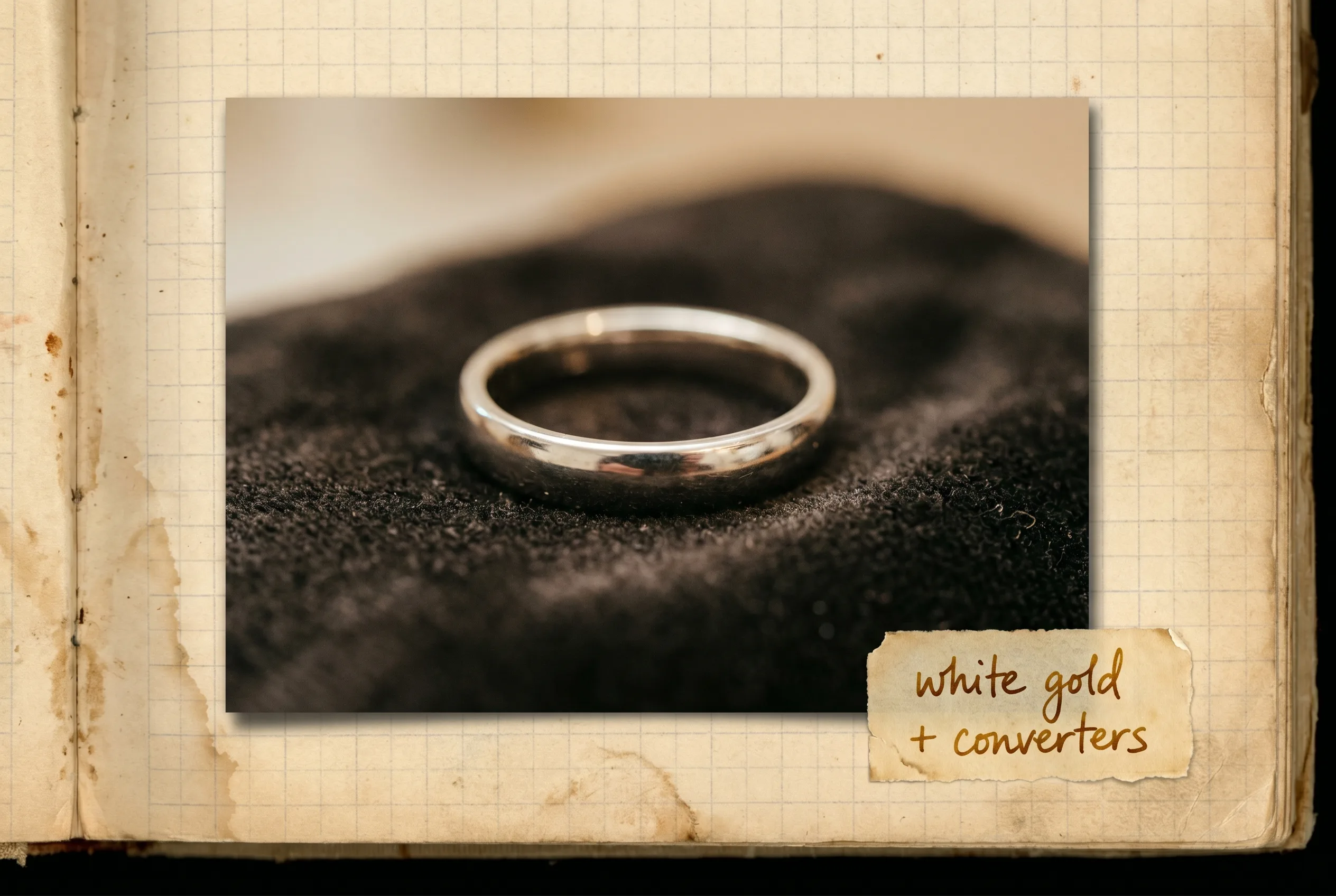
Polished white-gold ring band with a cool silvery sheen on dark cloth.
Where you'd see itPalladium goes into white-gold jewelry and catalytic converters, and can soak up hydrogen gas.
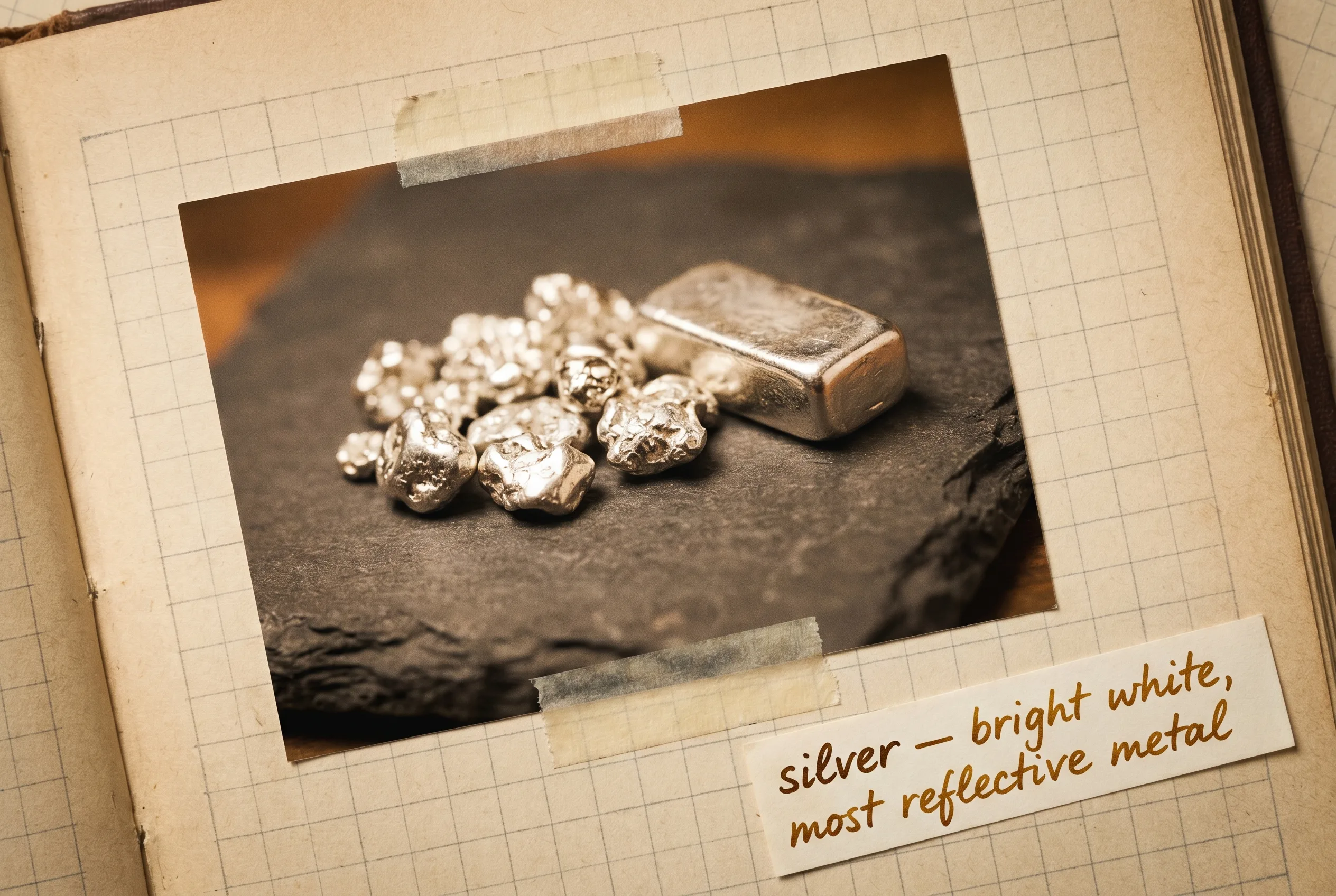
A natural silver nugget and a cast silver bar, bright lustrous white metal, on slate.
What it looks likeSilver is bright, white, and the most reflective of all the metals.
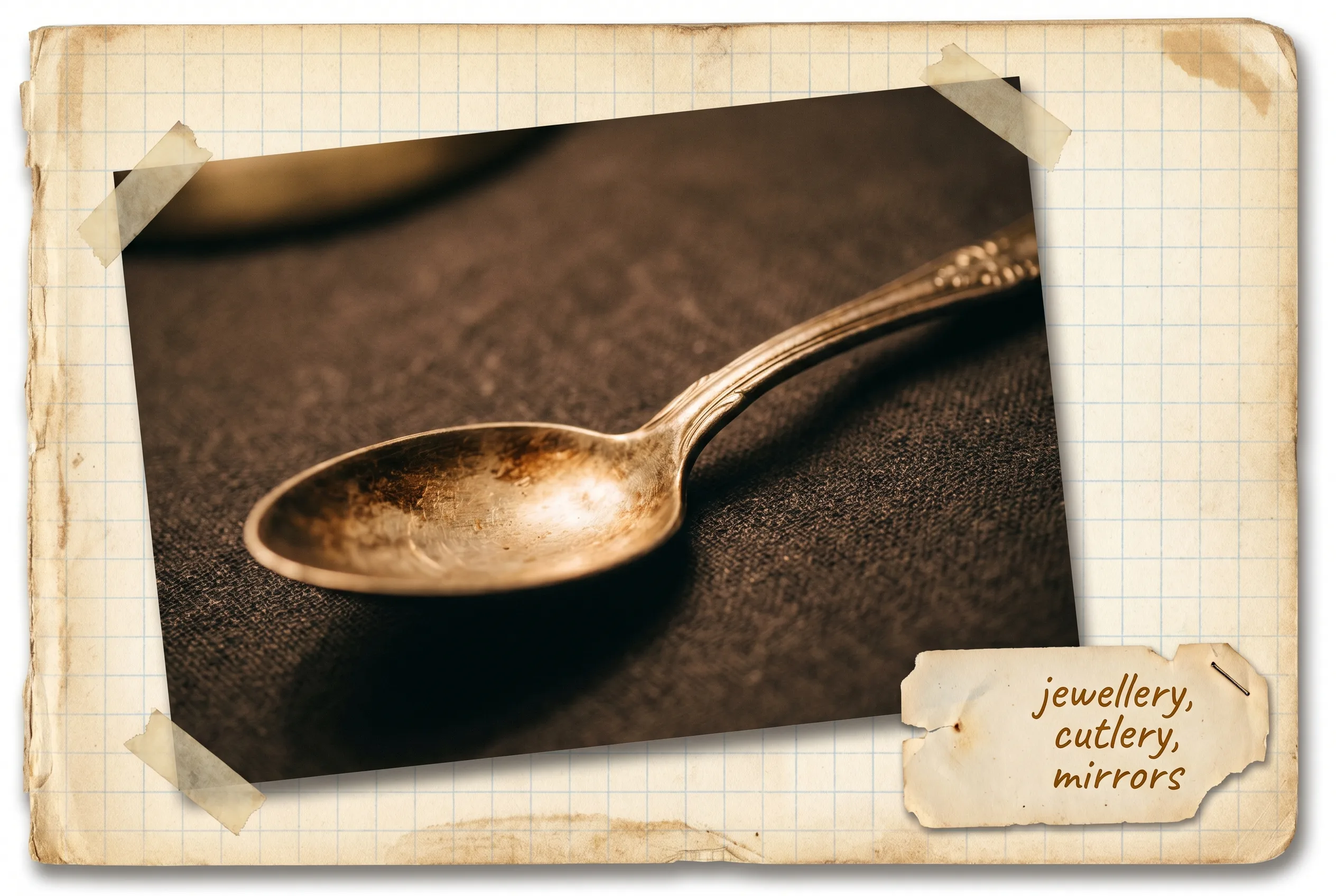
An old silver spoon with dark tarnish in its hollows resting on dark cloth.
Where you'd see itJewelry, cutlery, and mirrors - silver tarnishes dark but polishes back to a bright shine.
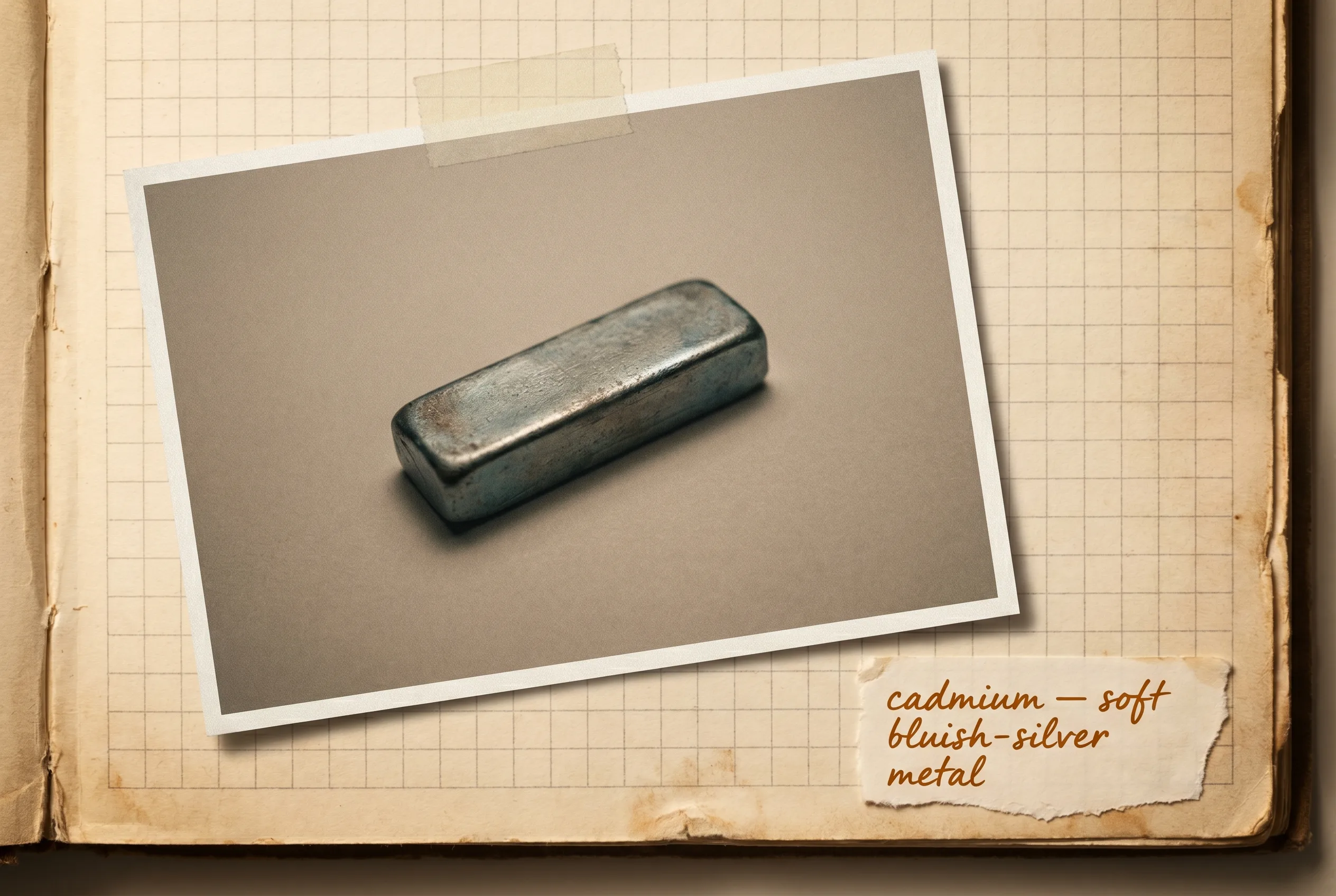
Soft bluish-silver metal bar with a faint blue-gray tint on a plain surface.
What it looks likeCadmium is a soft, bluish-silver metal. It is toxic and handled with care.
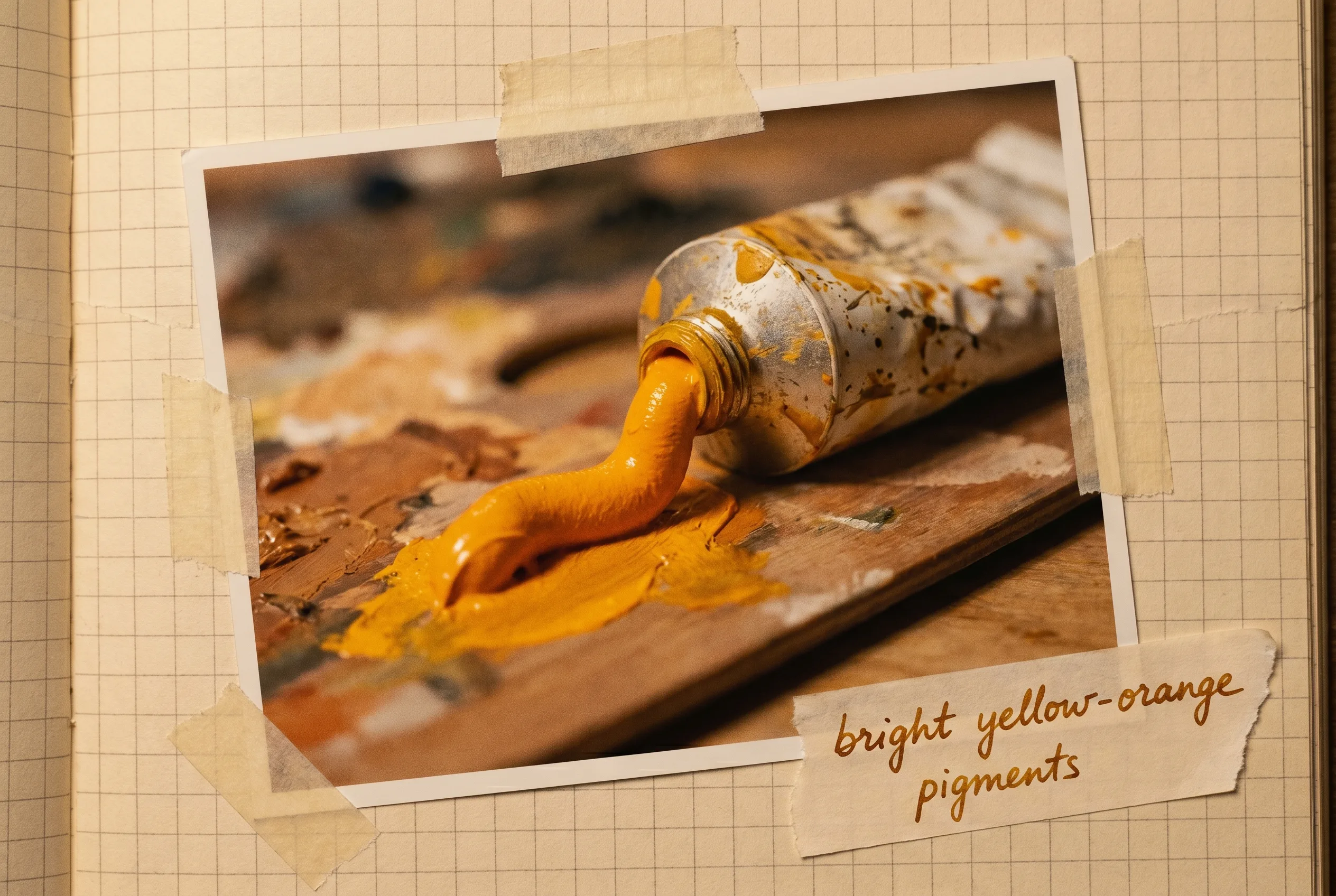
Tube of bright yellow-orange oil paint squeezed onto a palette.
Where you'd see itCadmium compounds make the vivid yellow and orange pigments found in some artist paints.
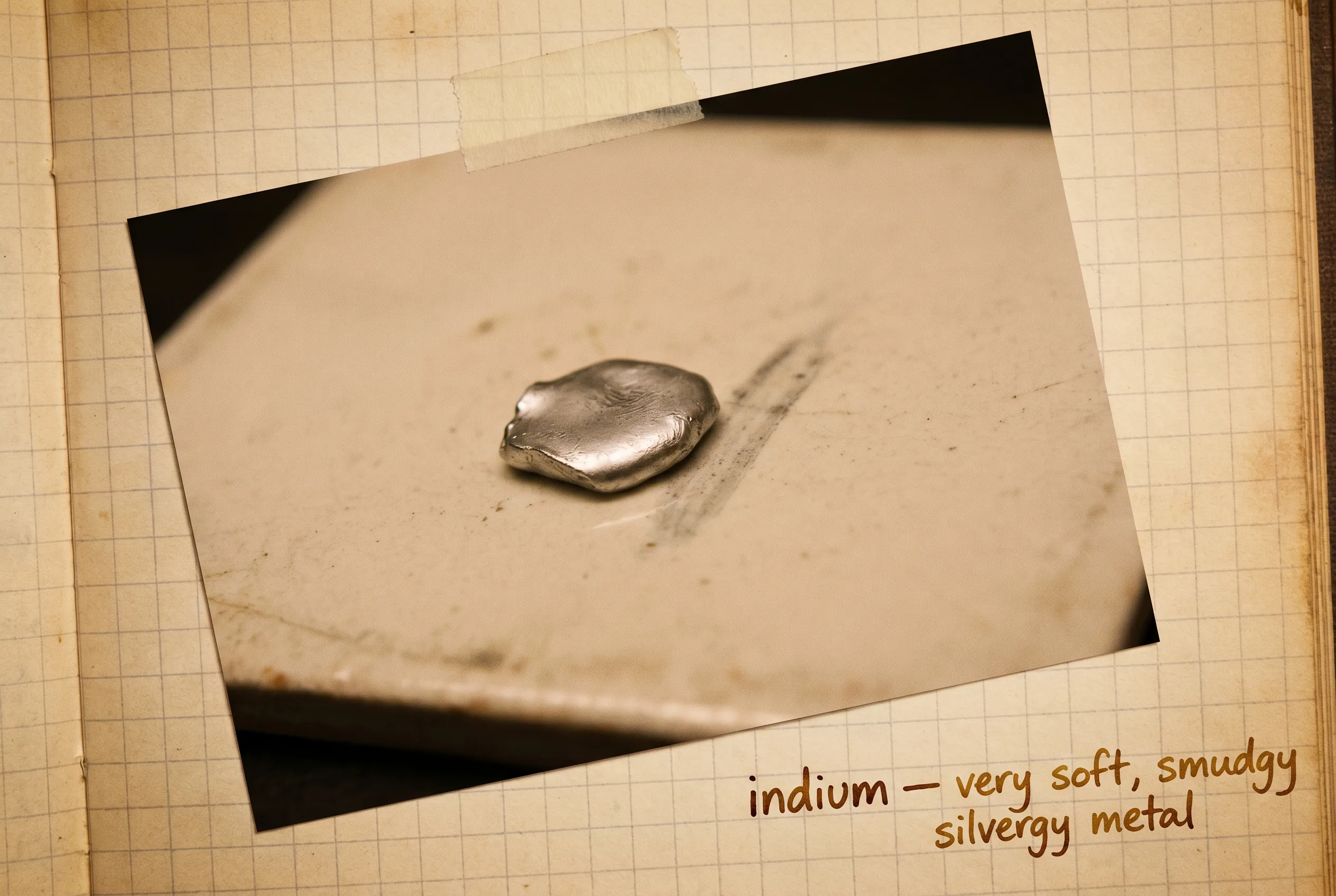
Soft dull silvery metal piece with a smudged matte surface on a plain surface.
What it looks likeIndium is so soft it leaves a streak when rubbed, and it cries faintly when bent.
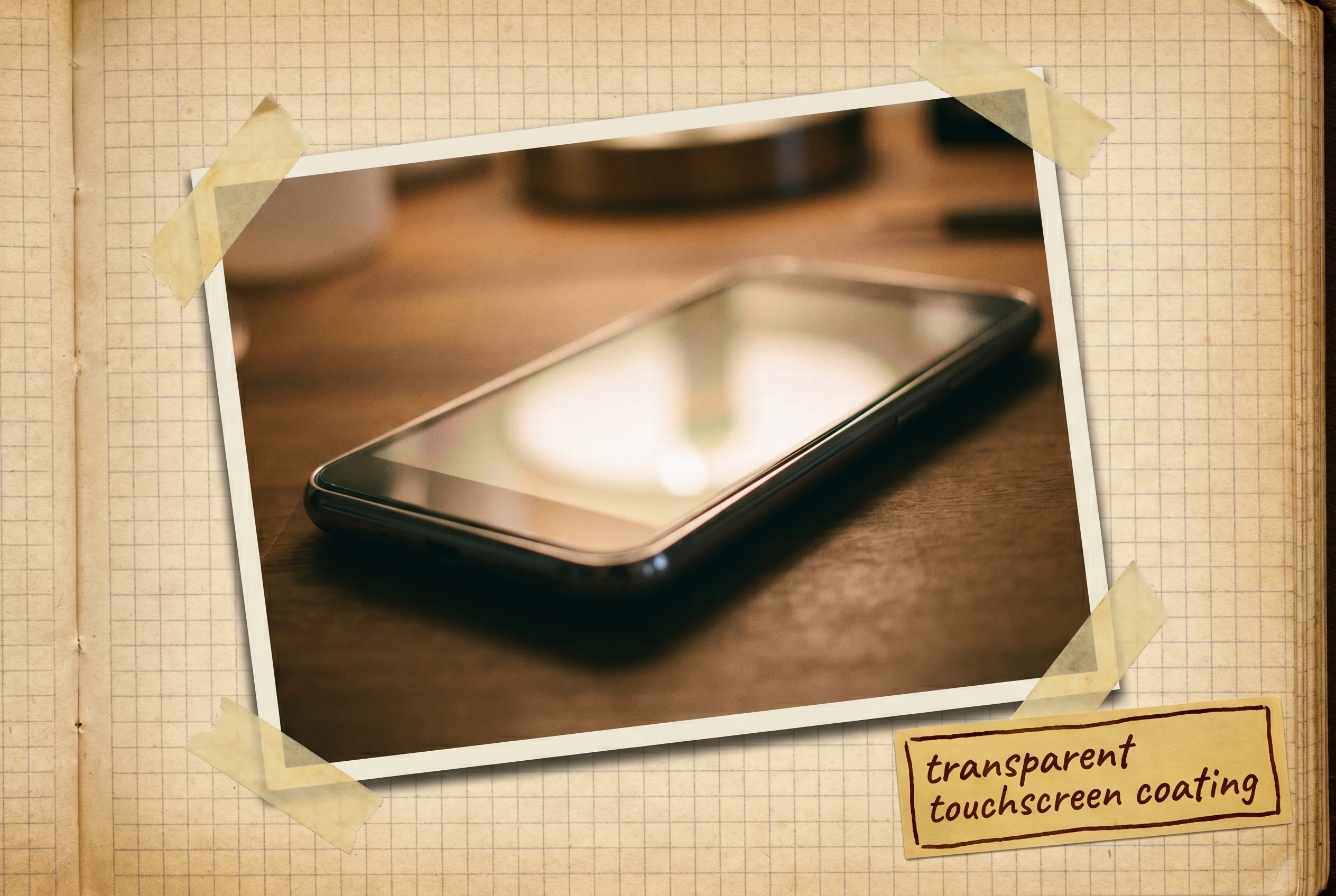
Glowing smartphone touchscreen glass panel held up, faintly reflective.
Where you'd see itIndium tin oxide forms the clear, electricity-conducting layer on touchscreens.
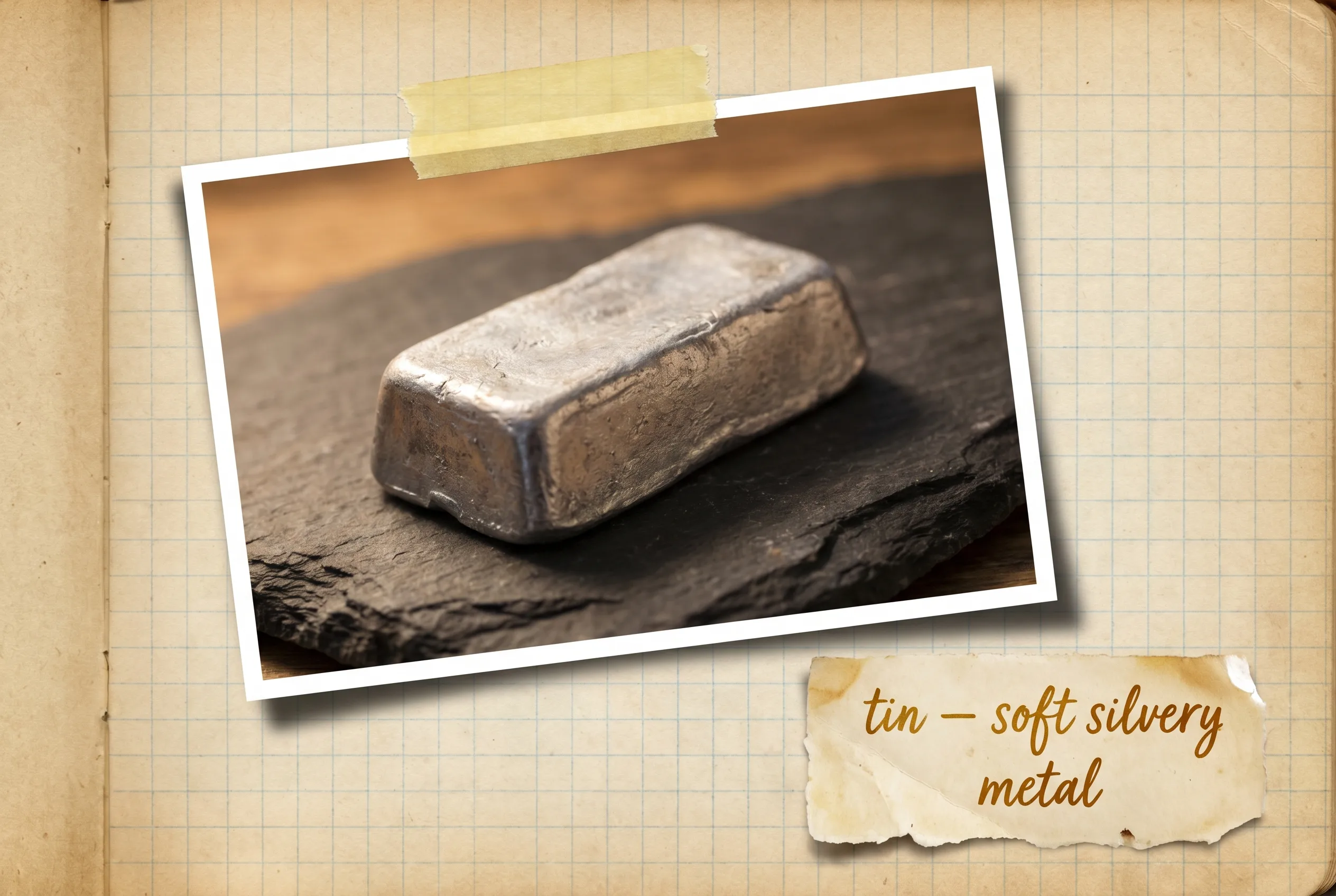
A small silvery-white tin ingot with a soft sheen on black slate.
What it looks likeTin is a soft, silvery-white metal with a quiet sheen.
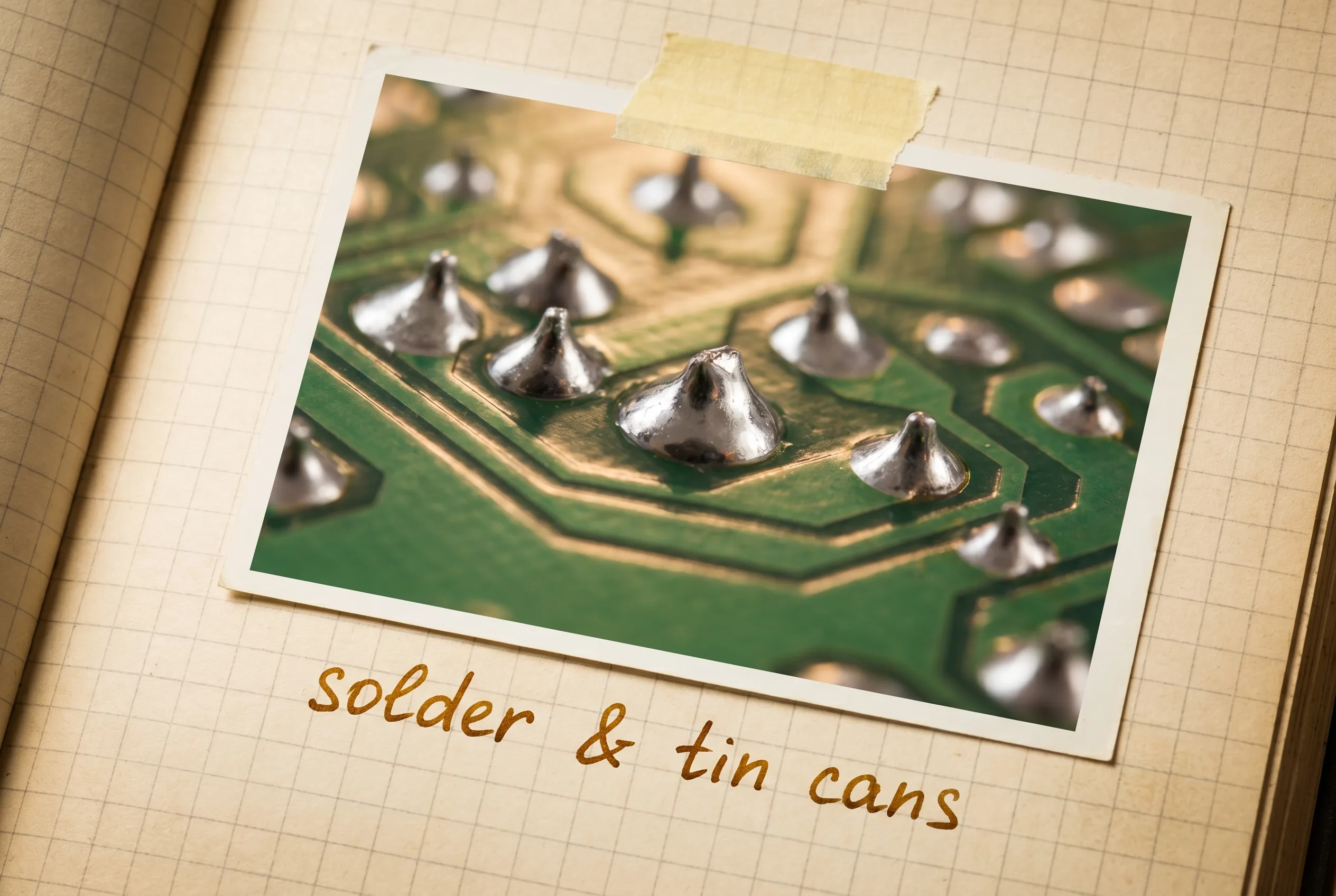
Close-up of shiny grey solder joints on a green circuit board.
Where you'd see itThe shiny joints holding electronics together are tin-based solder - and “tin” cans are tin-plated.
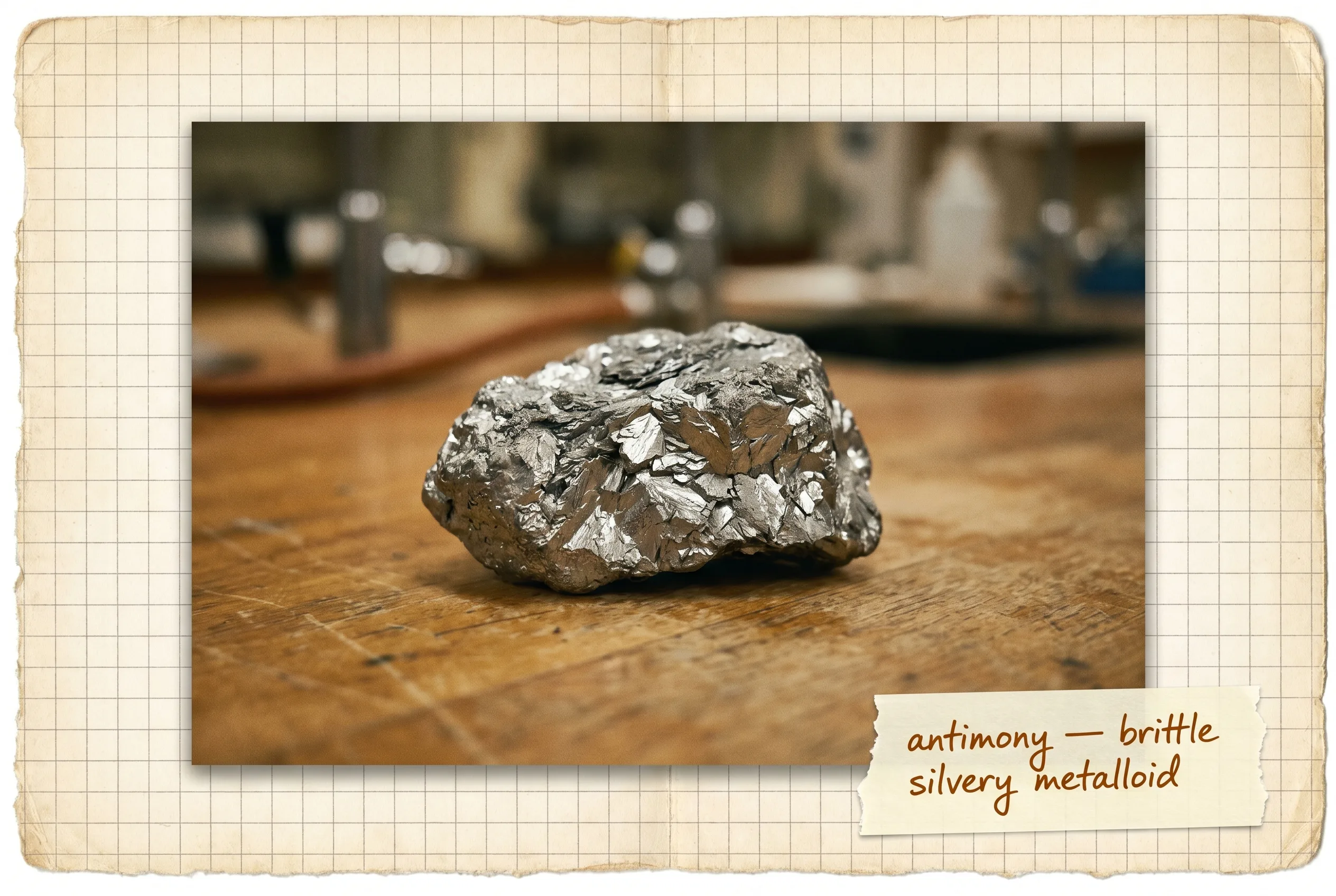
Brittle silvery-gray metalloid lump with a flaky, faceted surface.
What it looks likeAntimony is a brittle, silvery metalloid with a flaky, lustrous, crystalline surface.
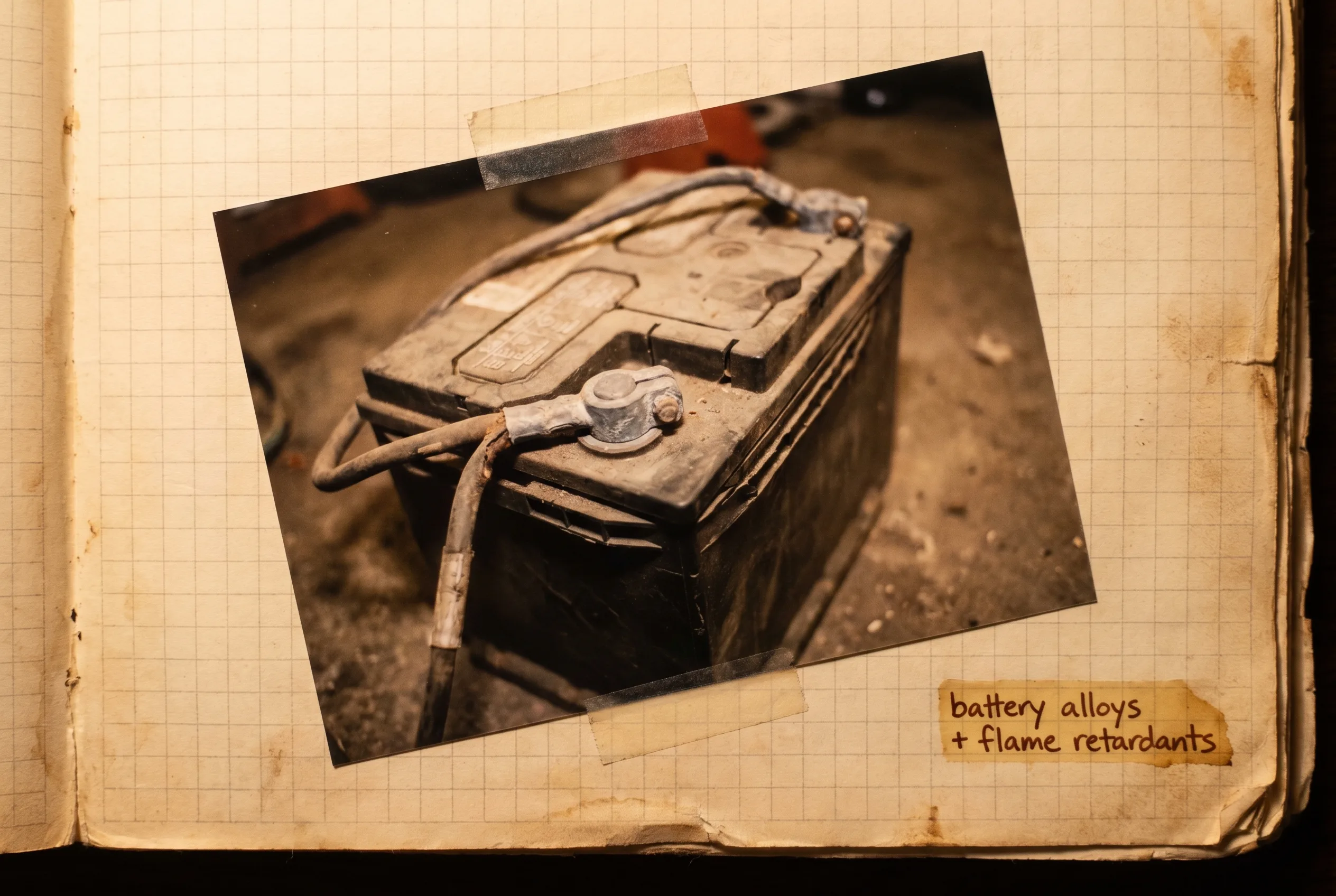
Heavy lead-acid car battery with thick gray terminal posts on a floor.
Where you'd see itAntimony strengthens the lead in car batteries and is used in flame retardants.
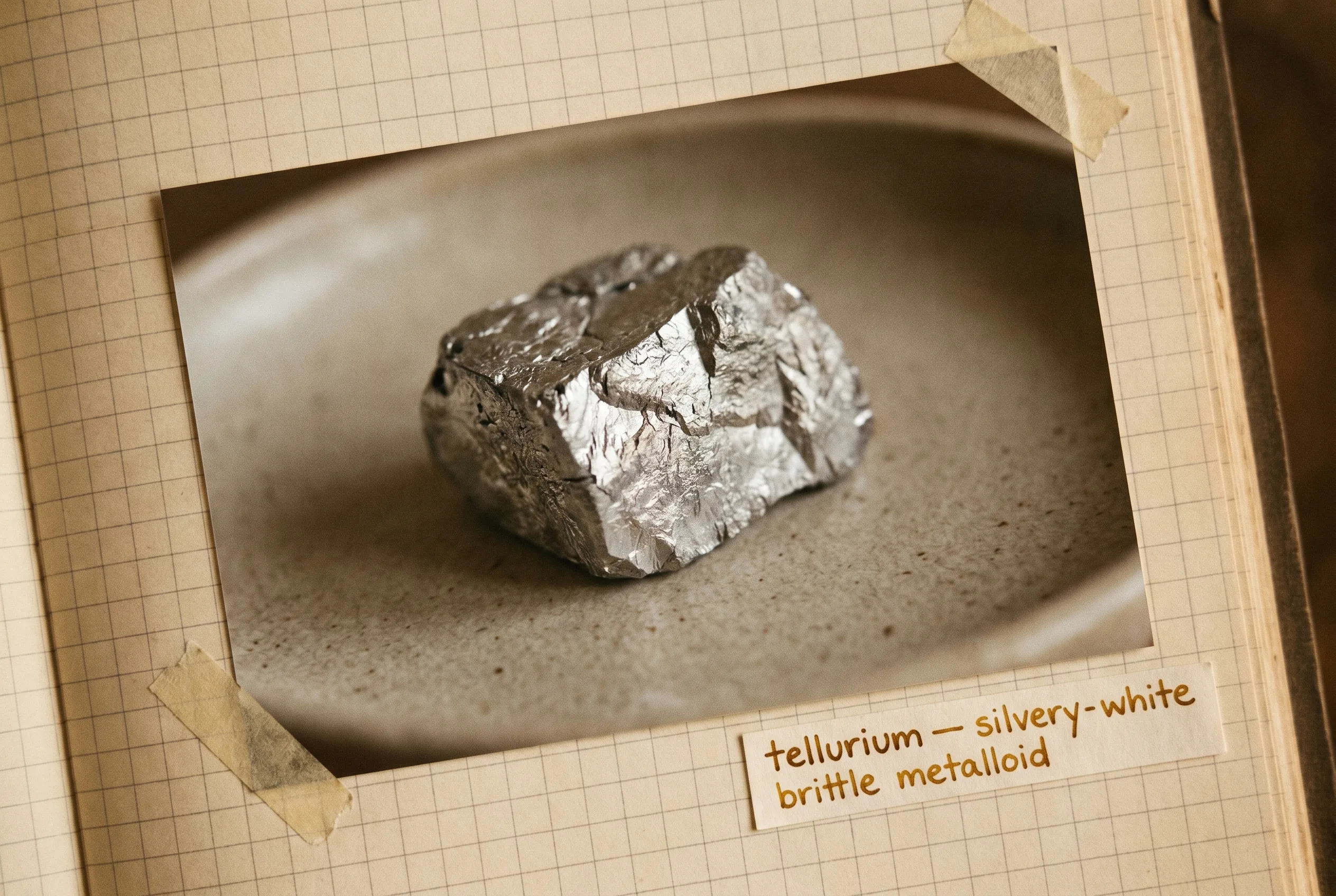
Silvery-white brittle metalloid chunk with a fractured surface on a plain surface.
What it looks likeTellurium is a silvery-white, brittle metalloid with a faintly crystalline surface.
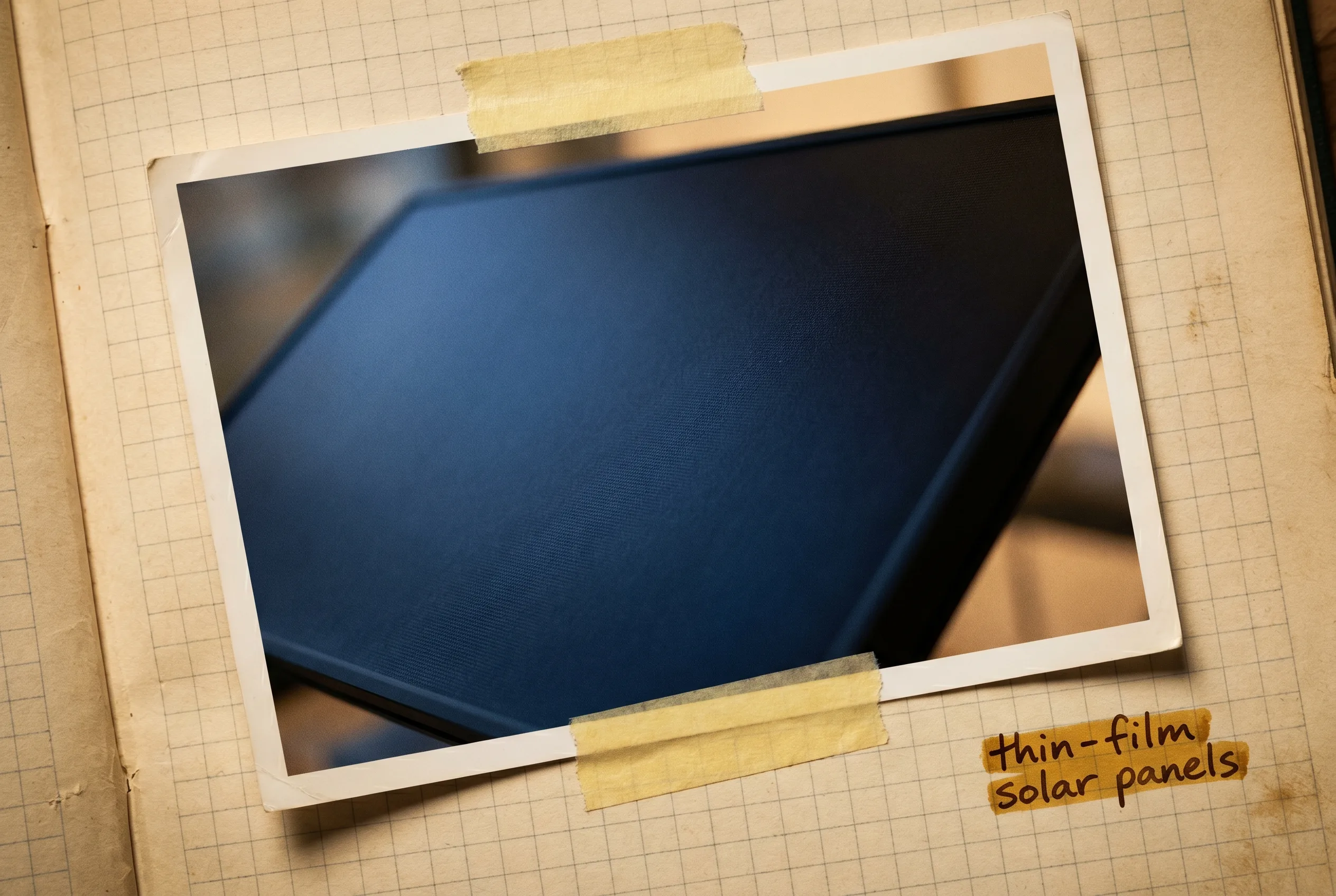
Dark thin-film solar panel with a deep blue-black surface tilted to the sun.
Where you'd see itCadmium telluride is used to make thin-film solar panels that turn sunlight into power.
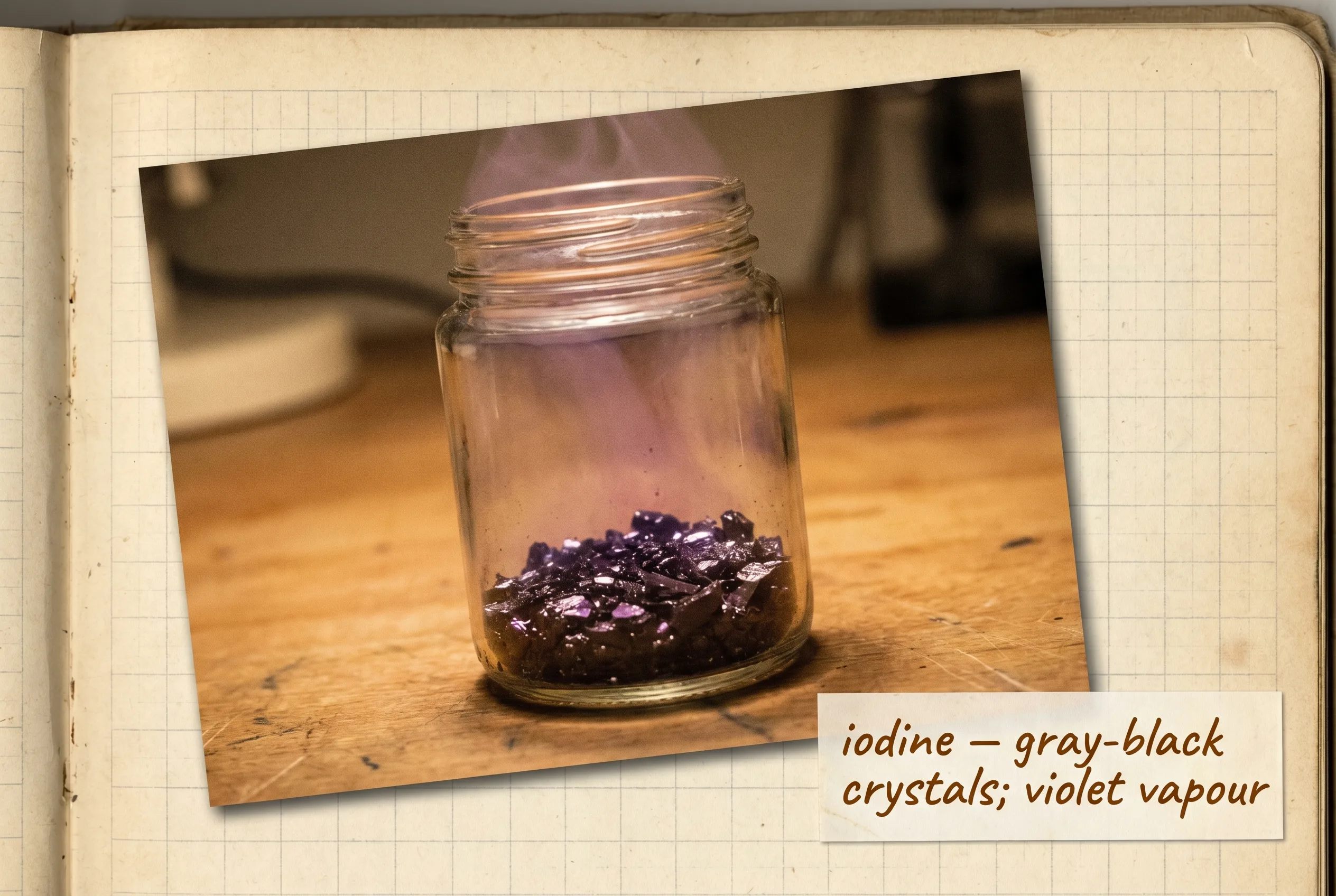
Lustrous purple-black iodine crystals in a glass jar with violet vapor rising above.
What it looks likeIodine forms shiny grey-black crystals that sublime straight into a violet vapor.
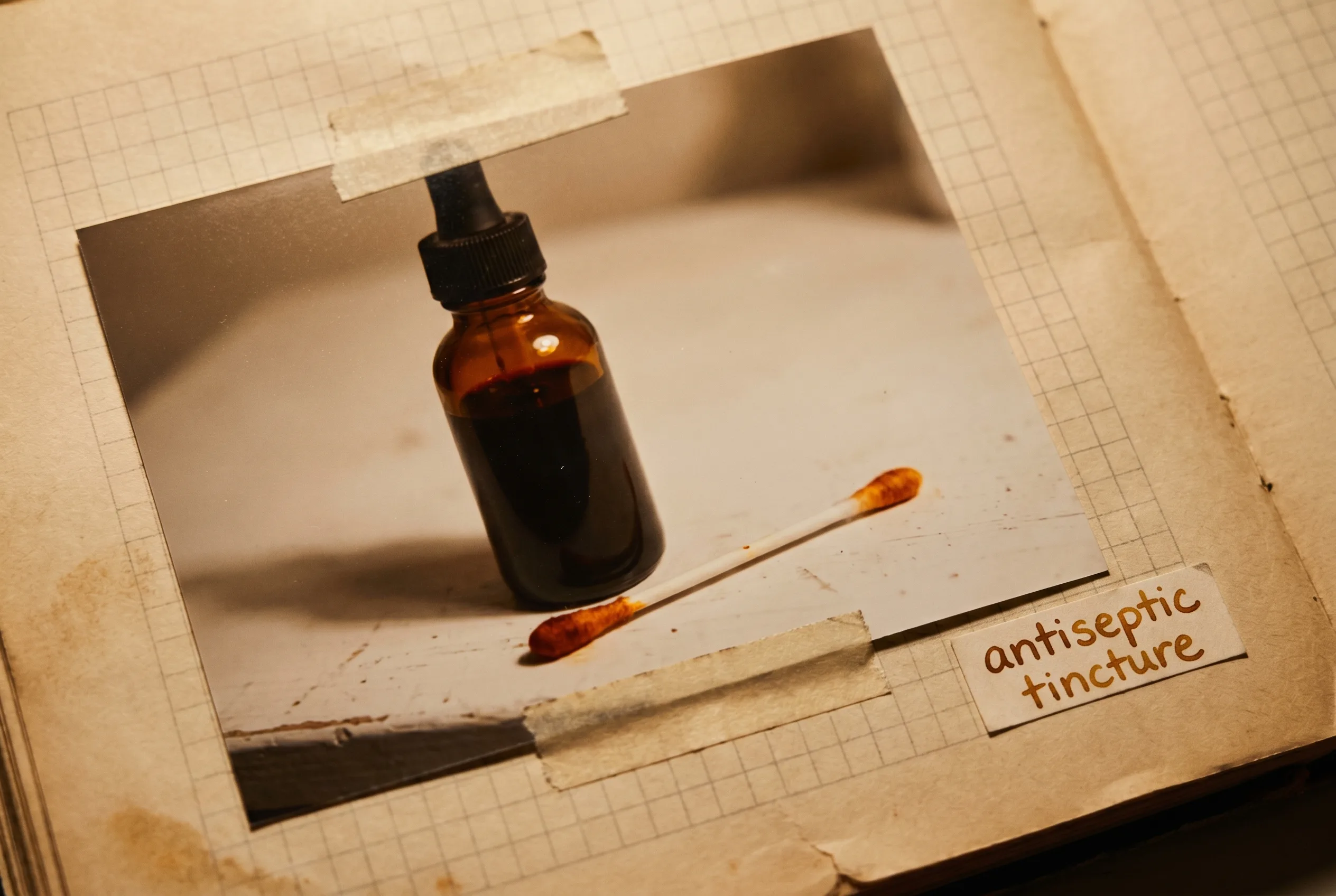
A glass dropper bottle of brown iodine tincture beside an orange-brown stained swab.
Where you'd see itDissolved into tincture, iodine is a brown antiseptic for cuts.
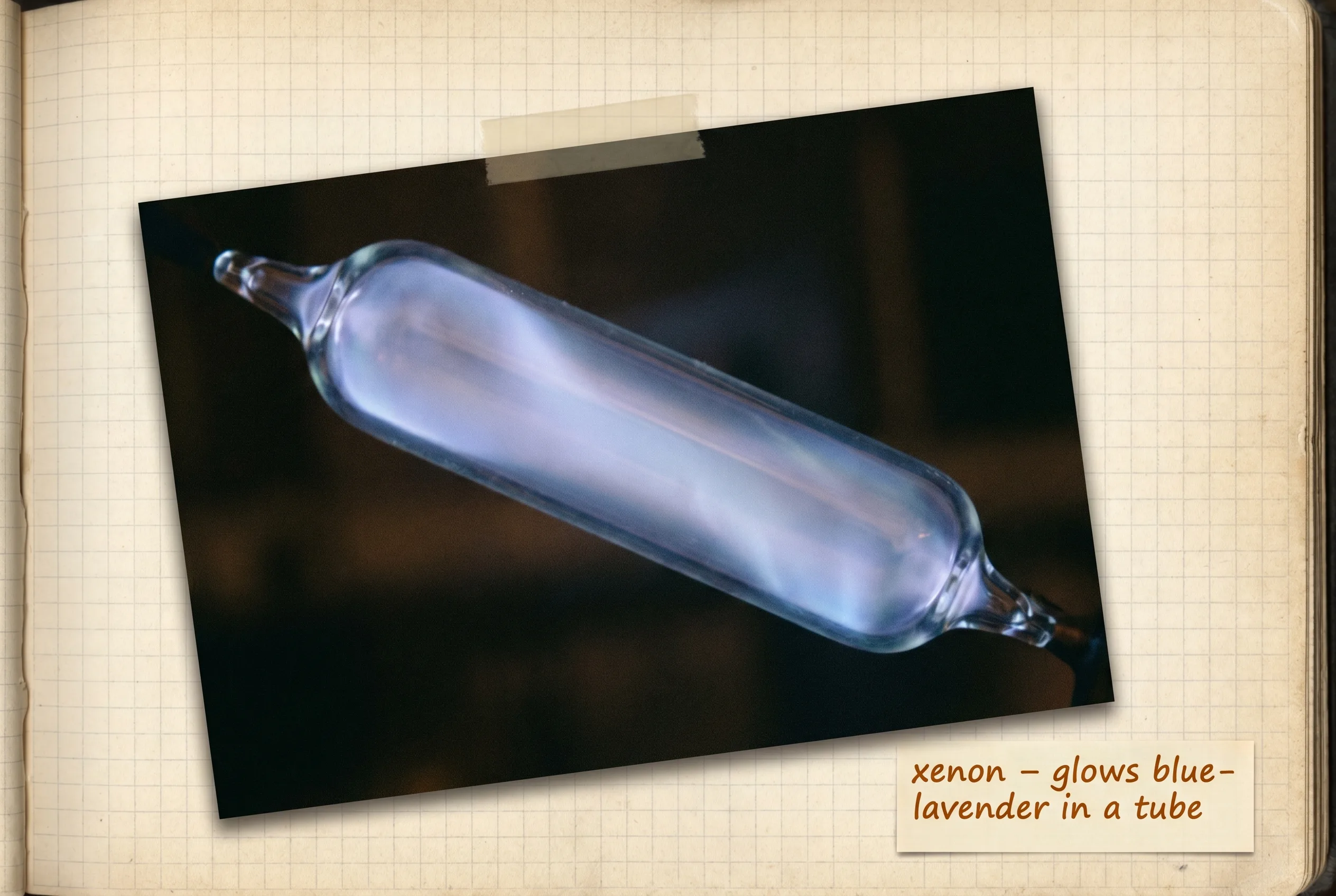
Glass discharge tube glowing soft blue-lavender-white against a dark background.
What it looks likeXenon is an invisible noble gas, but it glows a soft blue-lavender when electrified.
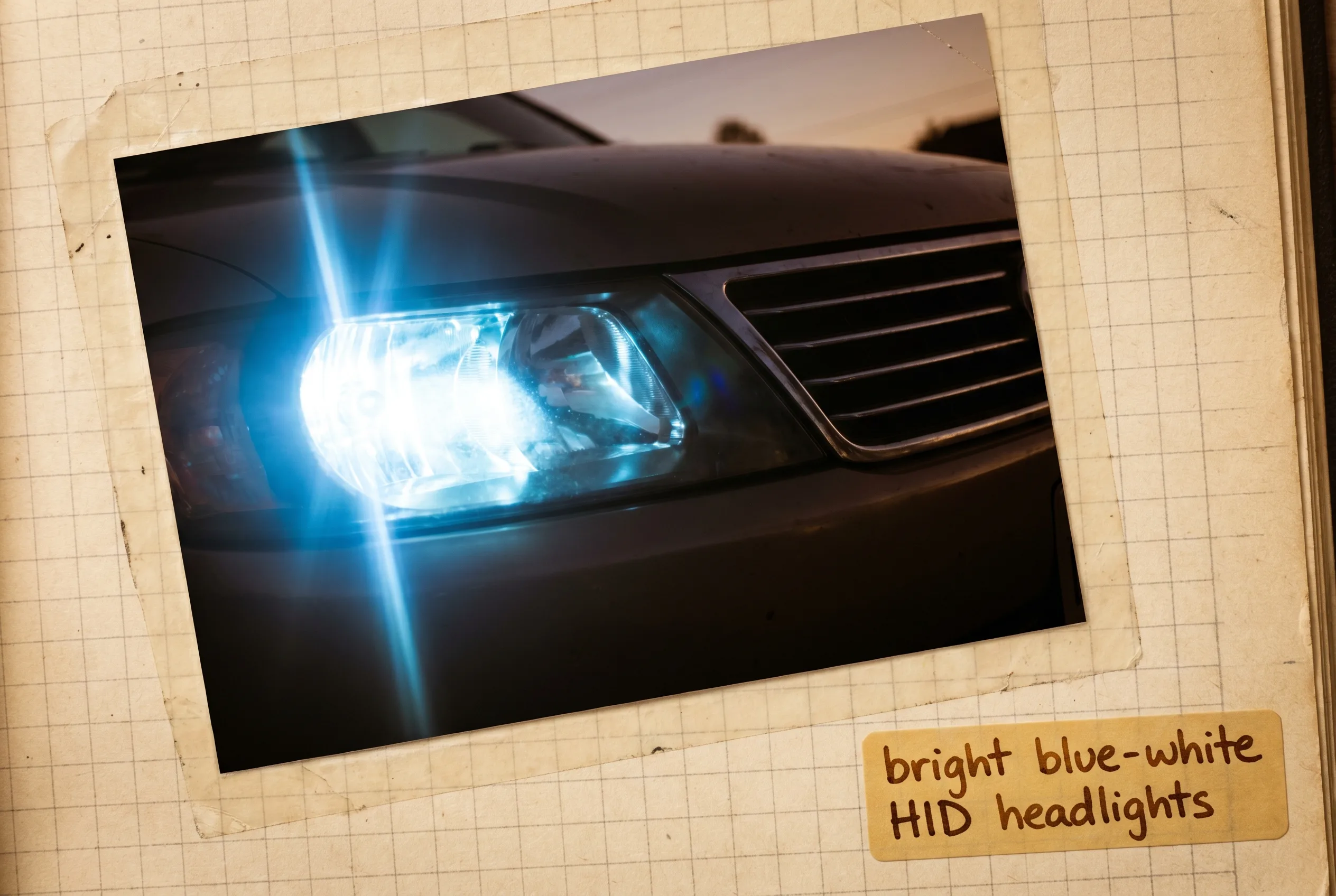
Car headlight casting a crisp bright blue-white beam at dusk.
Where you'd see itXenon gas powers the bright blue-white HID headlights on some cars.
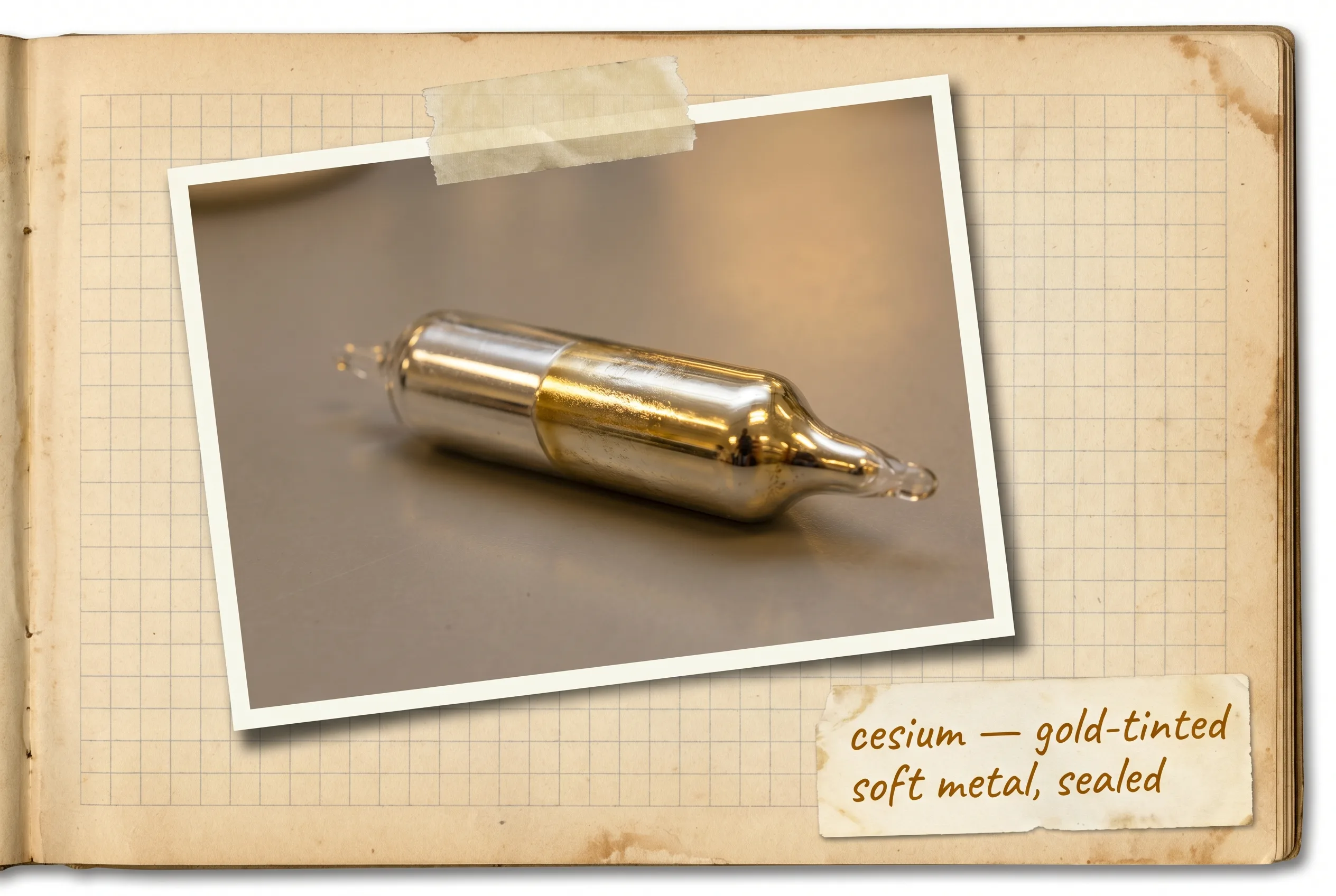
Sealed glass ampoule holding soft gold-tinted silvery cesium metal.
What it looks likeCesium is a rare gold-tinted metal so soft it melts just above room temperature.
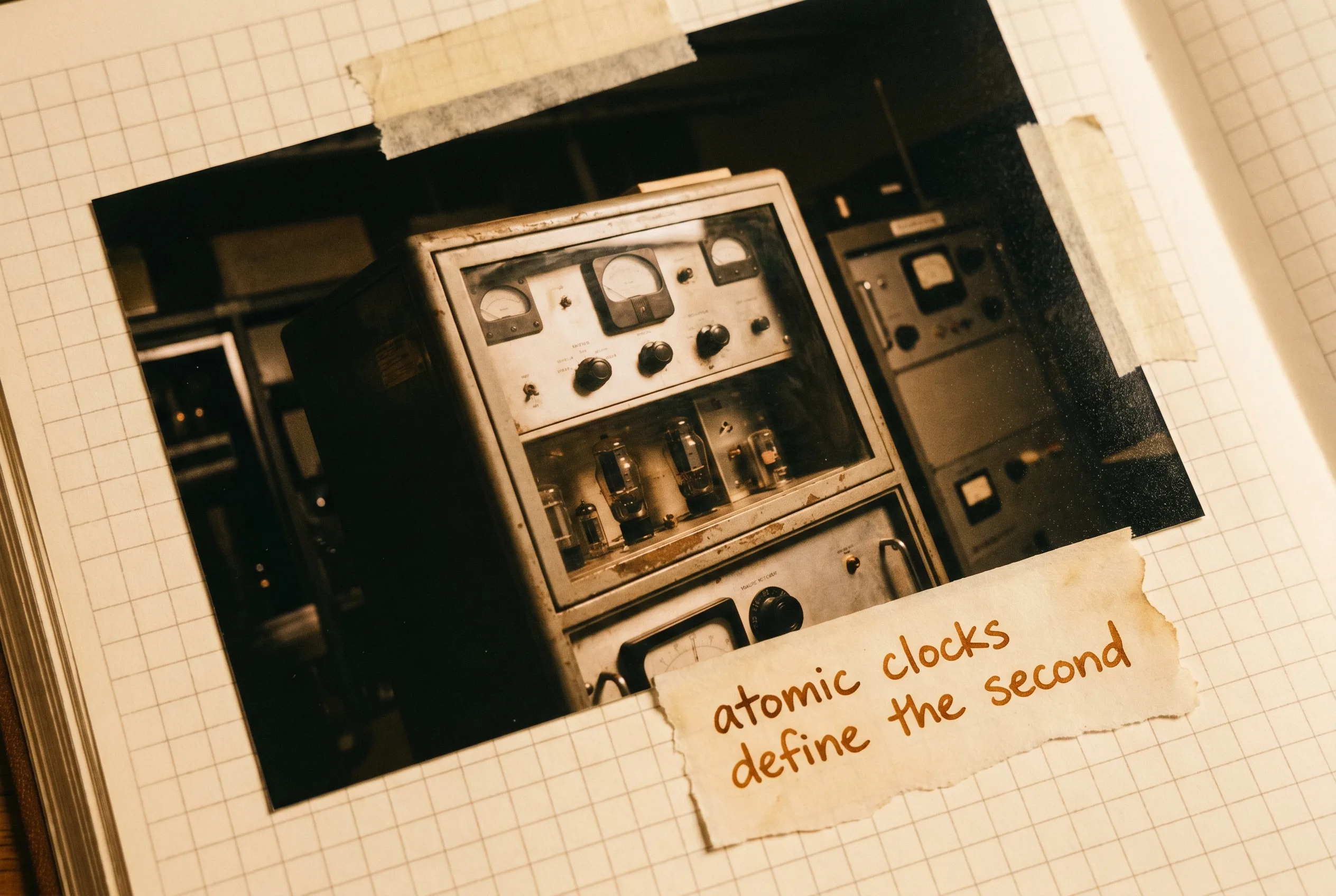
Clean metal-housed precision instrument cabinet in a laboratory.
Where you'd see itCesium atomic clocks are so steady they define exactly how long one second is.
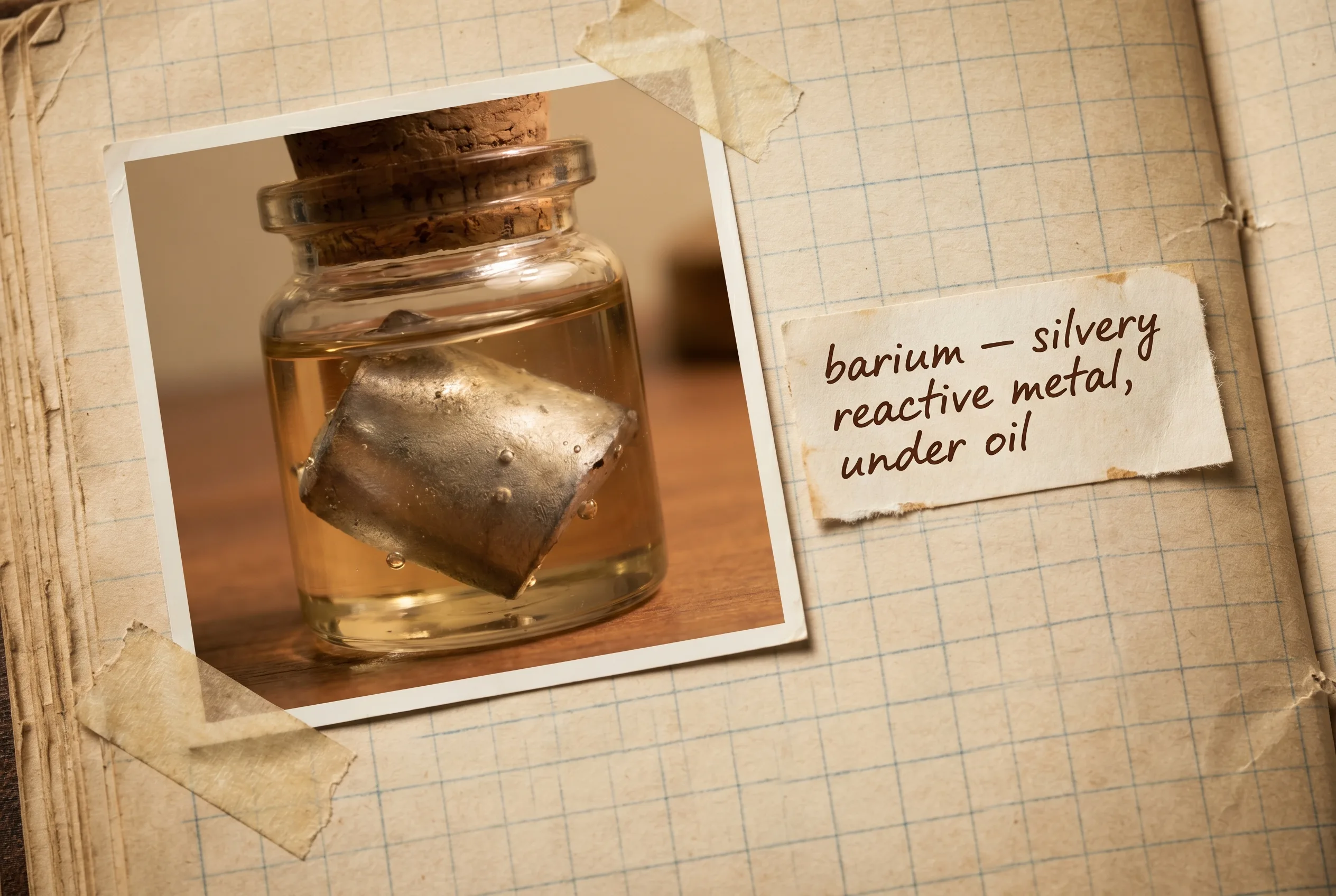
Dull silvery-white metal piece submerged in clear oil inside a glass jar.
What it looks likeBarium is a silvery-white reactive metal, kept under oil so it does not react with air.
Night sky filled with brilliant green firework bursts.
Where you'd see itBarium compounds burn bright green, giving fireworks their vivid green bursts.
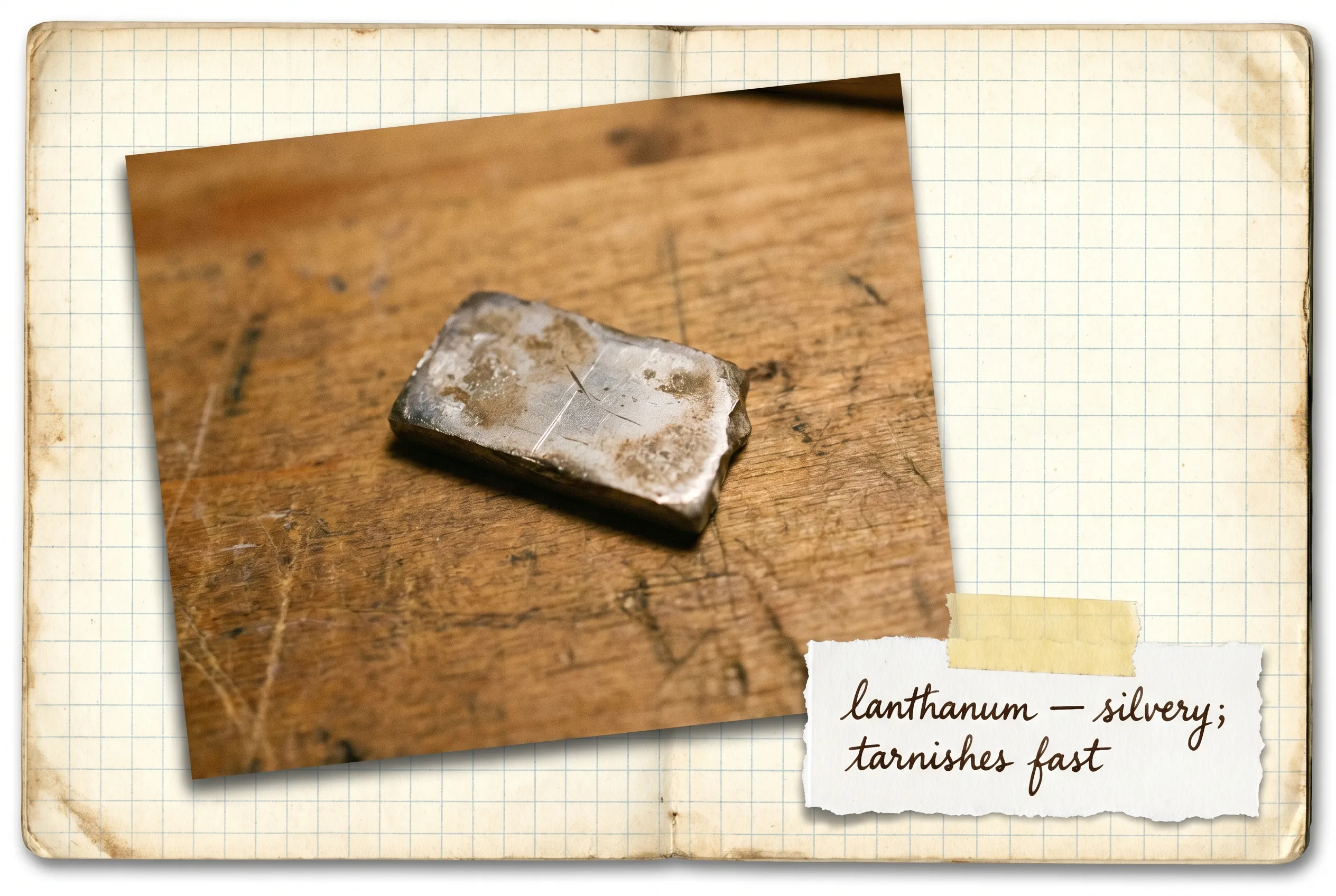
Soft silvery metal piece with a partly tarnished dull-gray surface.
What it looks likeLanthanum is a soft, silvery metal that tarnishes to gray quickly in air.
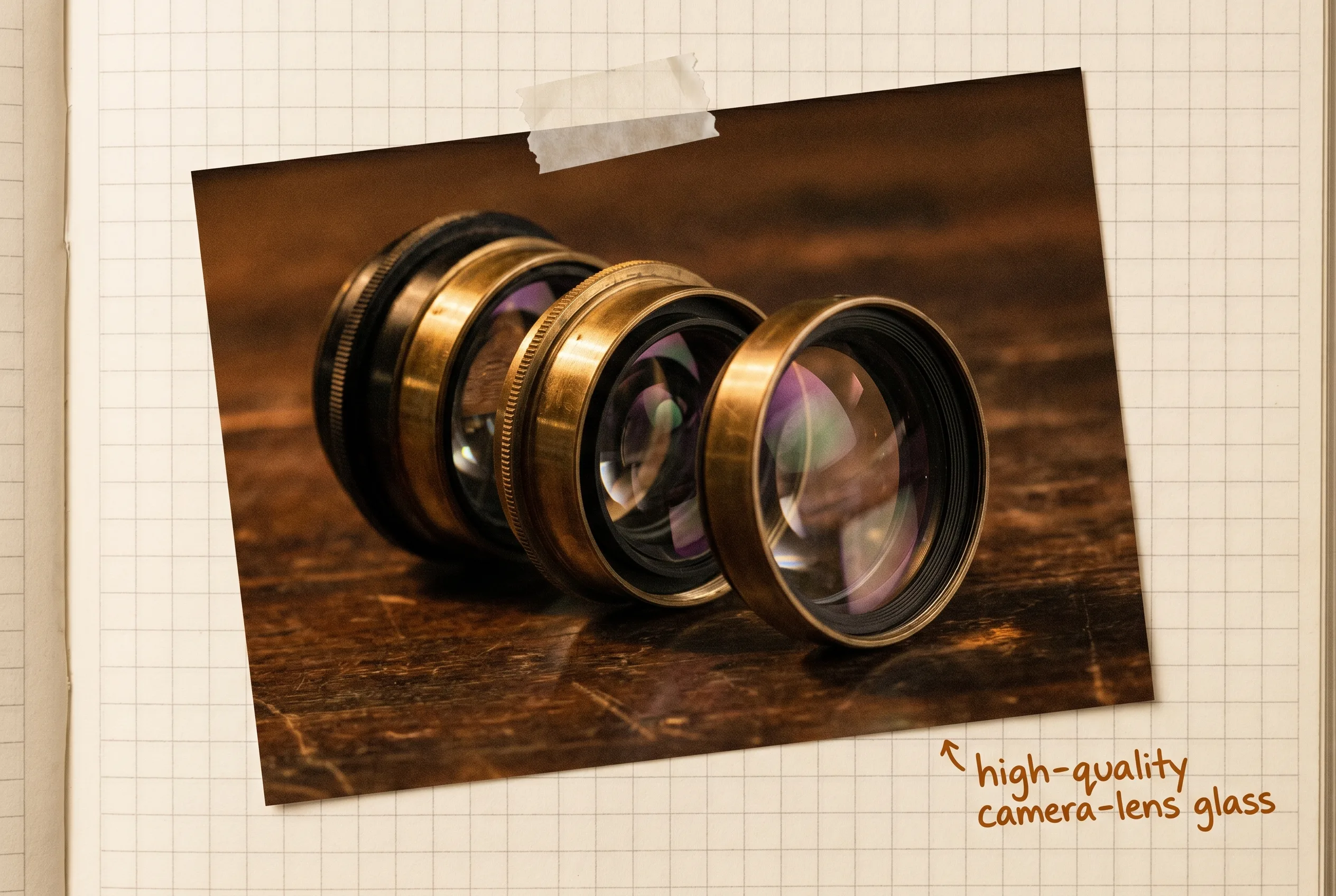
Camera lens assembly with curved glass elements and faint colored reflections.
Where you'd see itLanthanum glass bends light cleanly, making it ideal for high-quality camera lenses.
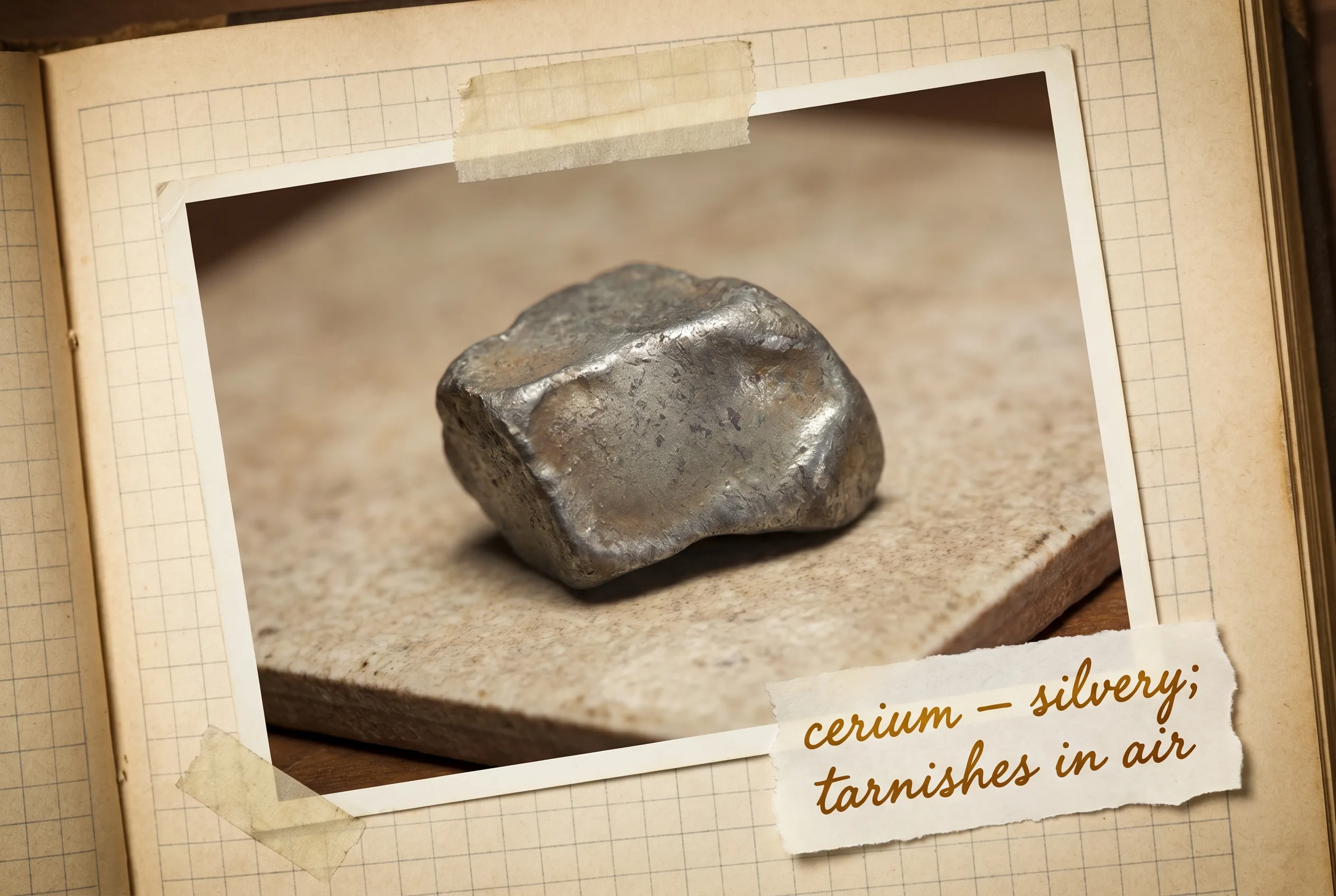
Silvery metal chunk with a dull, slightly tarnished gray surface.
What it looks likeCerium is a silvery metal that tarnishes in air and is the most common rare-earth element.
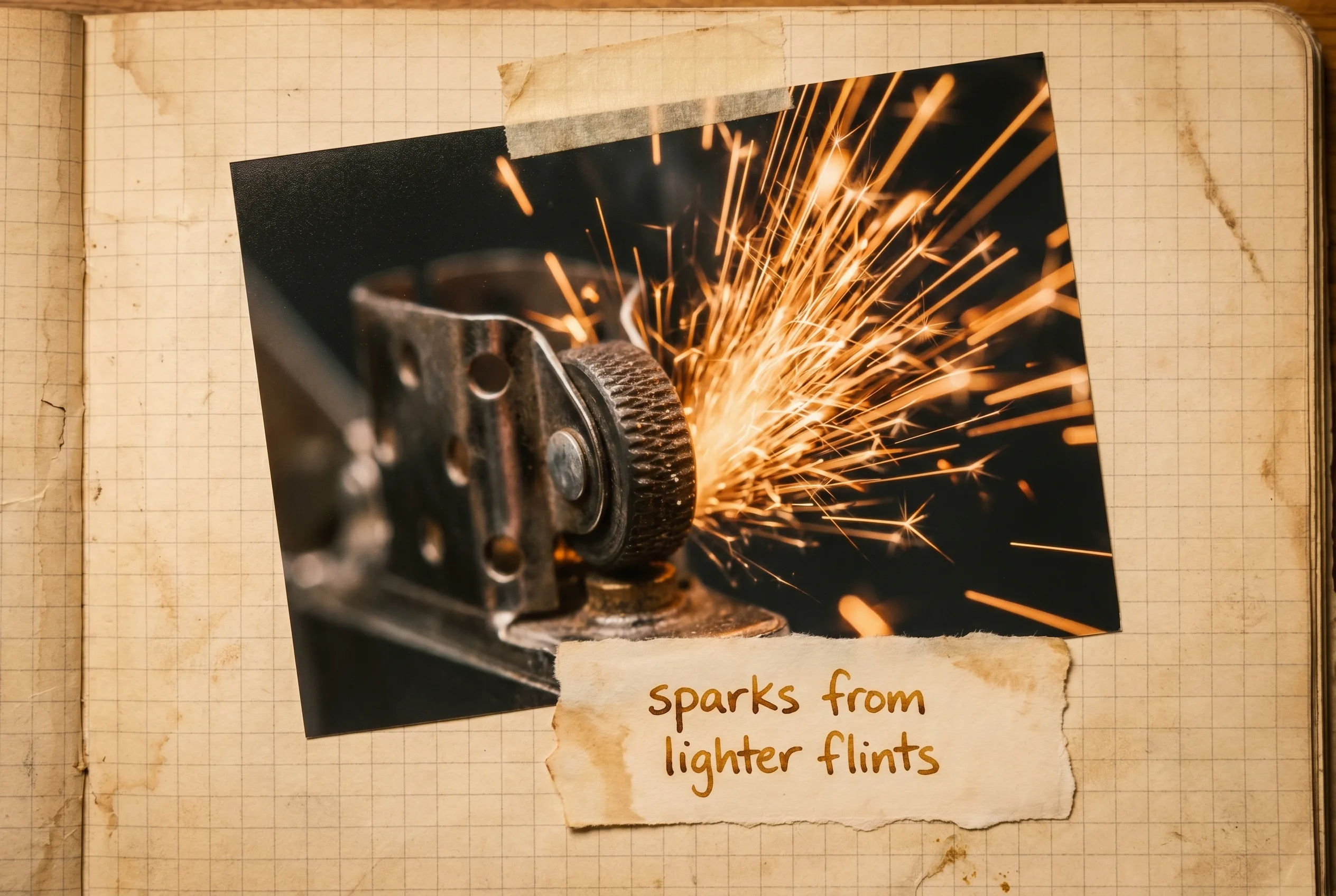
A lighter flint wheel throwing a bright shower of orange sparks in the dark.
Where you'd see itCerium alloy is the flint in lighters, throwing sparks when you strike the wheel.
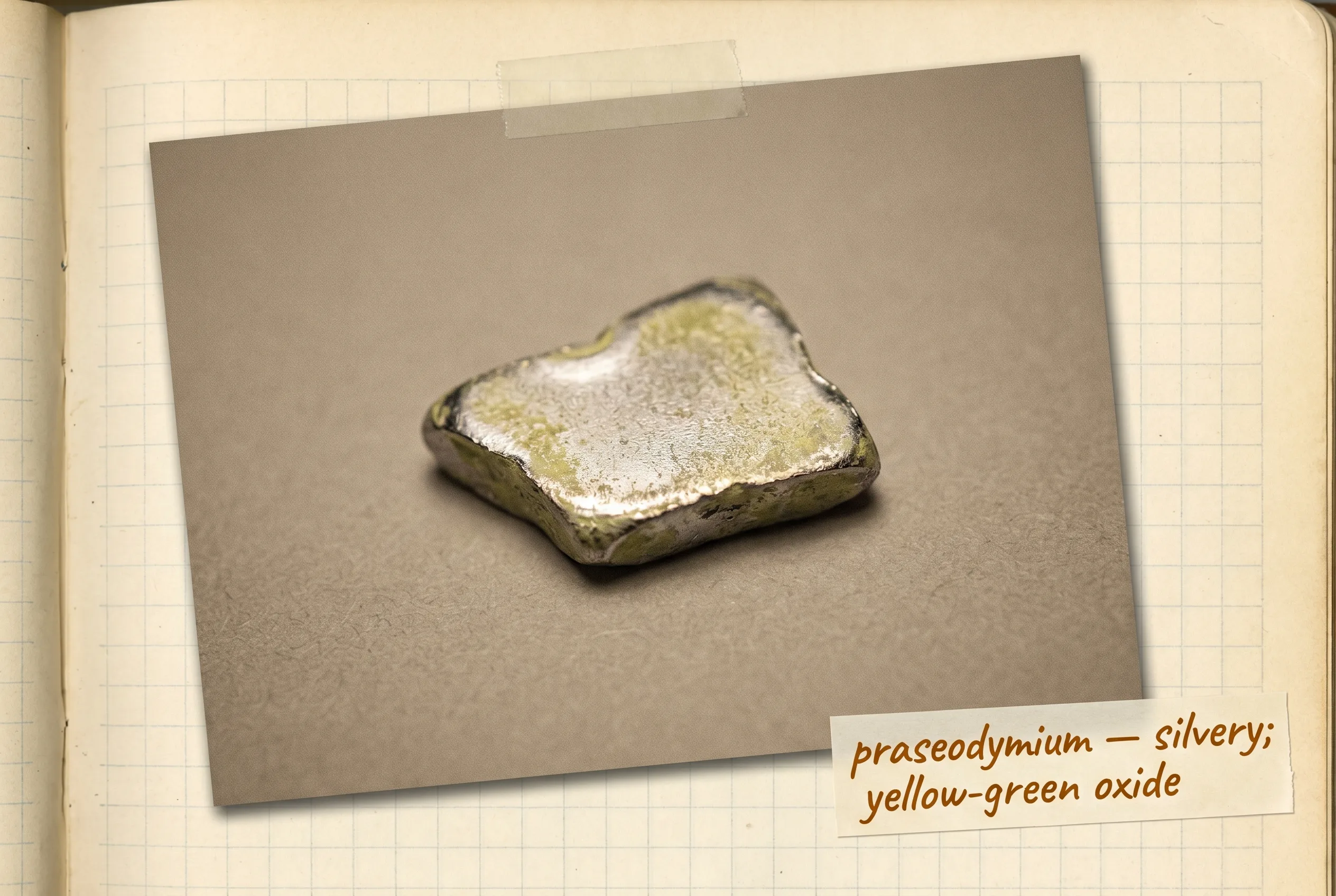
Silvery metal piece with a faint yellow-green oxide film on its surface.
What it looks likePraseodymium is a silvery metal that forms a faint yellow-green coating in air.
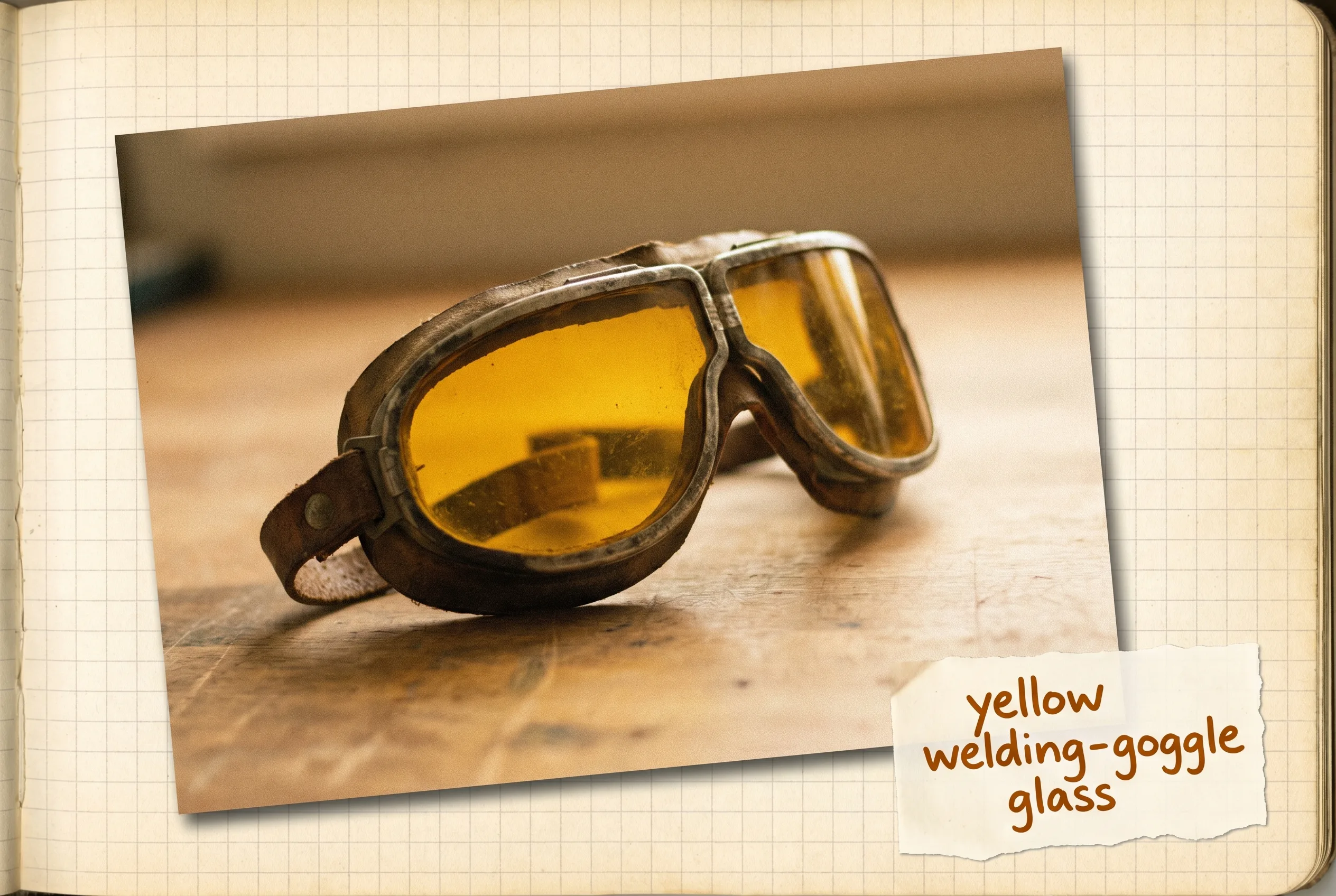
Welding goggles with deep amber-yellow tinted lenses on a workbench.
Where you'd see itPraseodymium tints the yellow glass in welding goggles that shields the eyes.
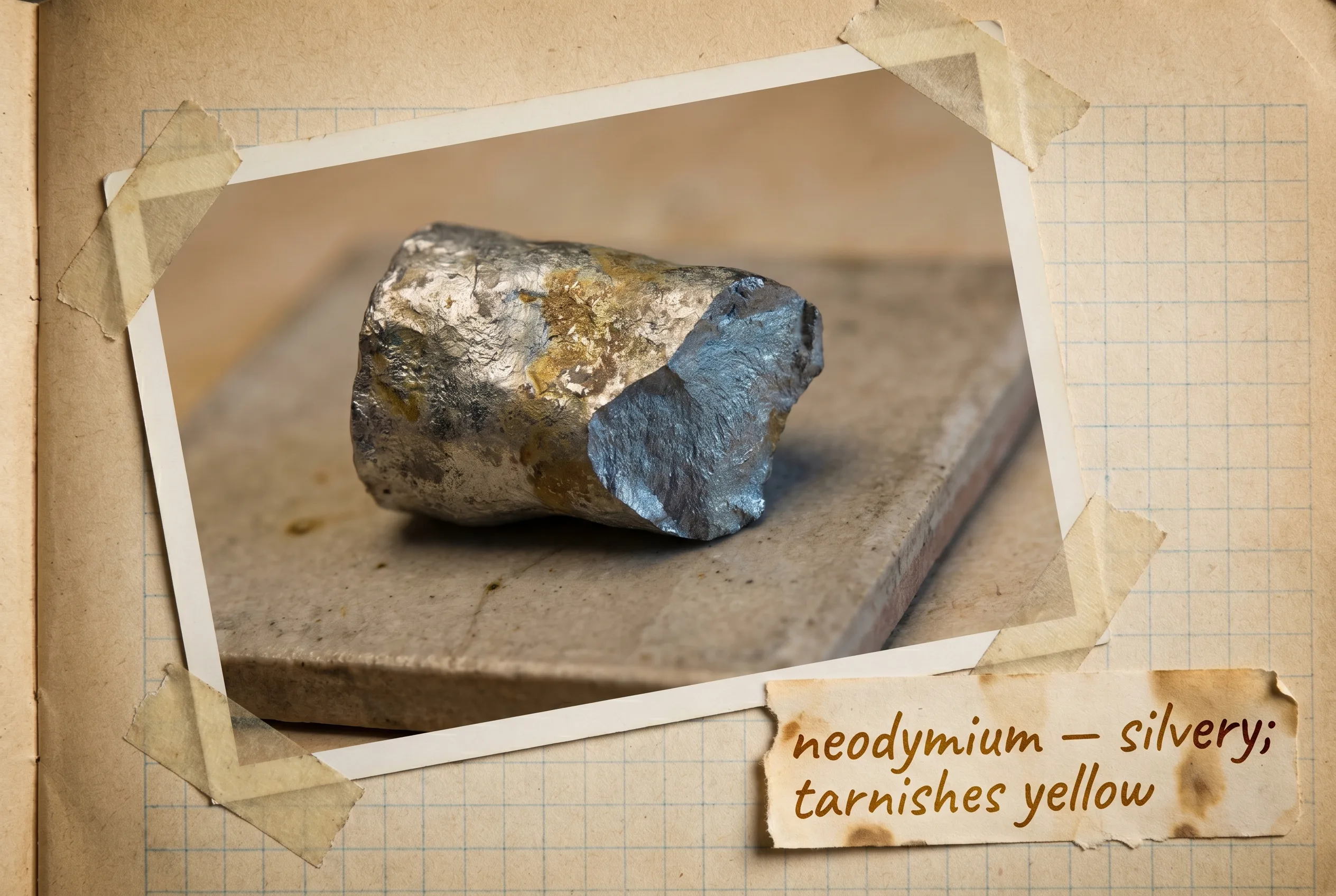
Silvery metal piece tarnishing to yellow with a bluish-gray fresh break.
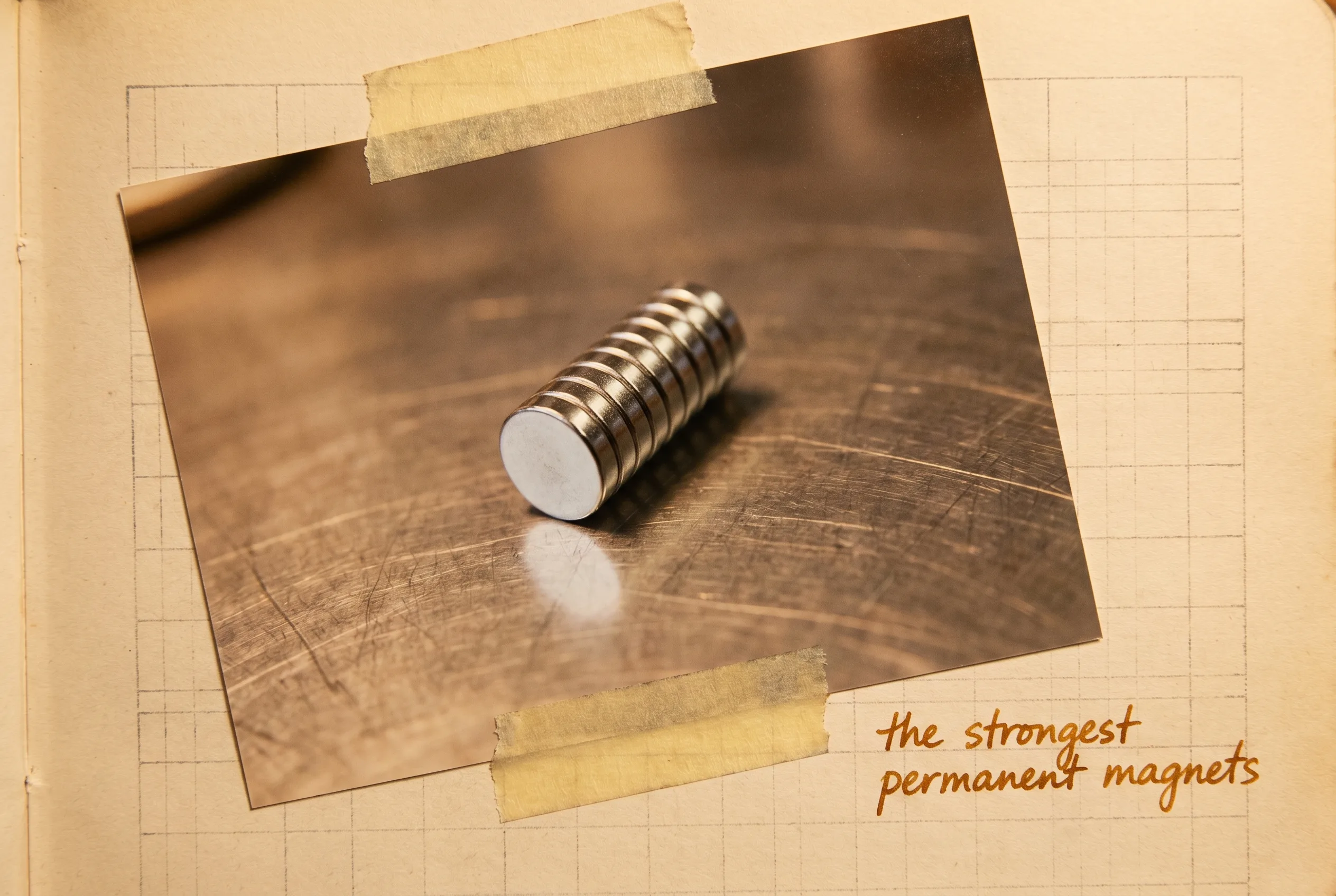
What it looks likeNeodymium is a silvery metal that tarnishes to a yellowish tint in air.
Bright silvery disc magnets clinging together in a stack on steel.
Where you'd see itNeodymium makes the strongest permanent magnets, found in headphones and motors.
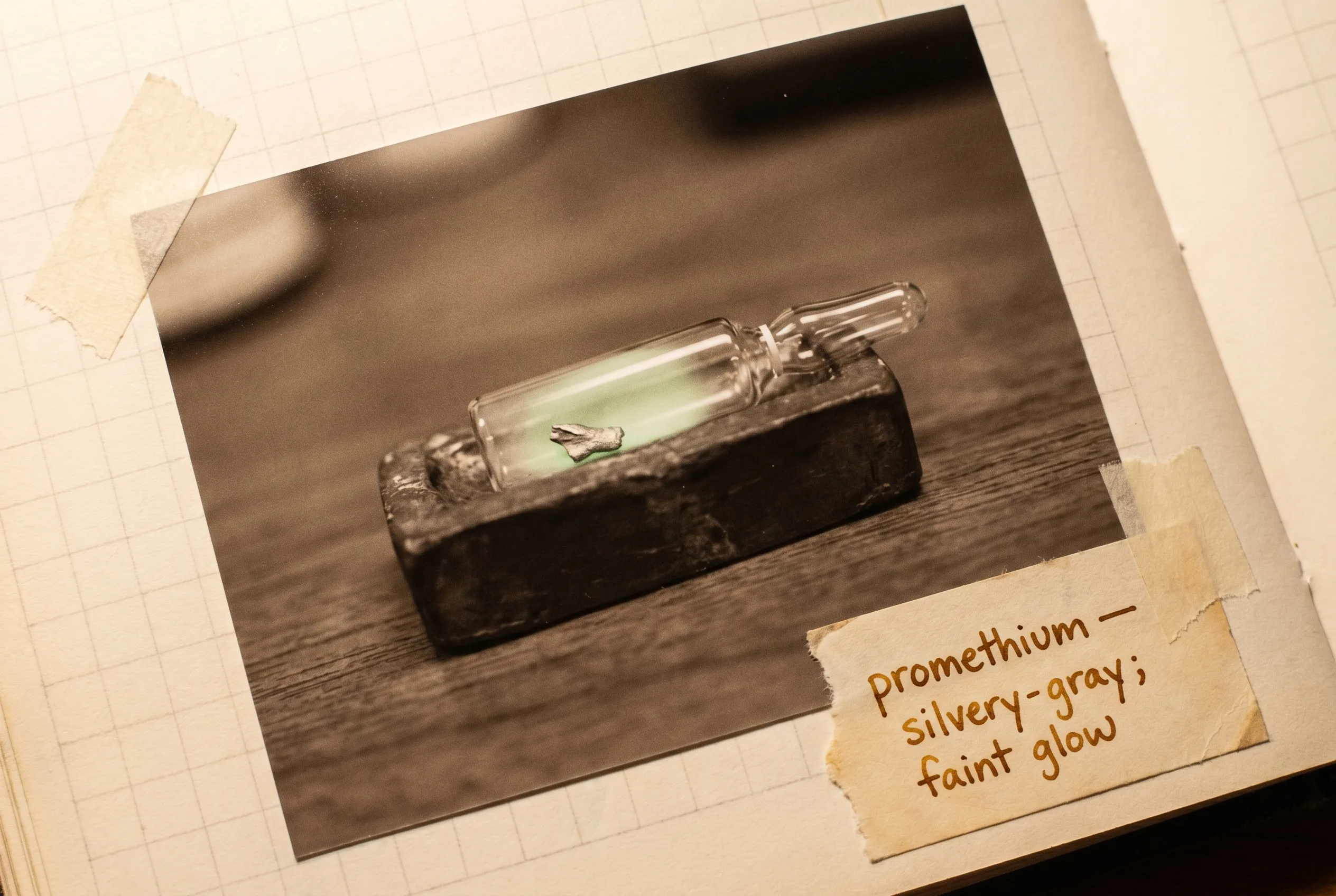
Dull silvery-gray metal fragment sealed in a small glass ampoule with a faint green glow.
What it looks likePromethium is a synthetic, radioactive silvery metal - so rare it is kept in tiny sealed ampoules.
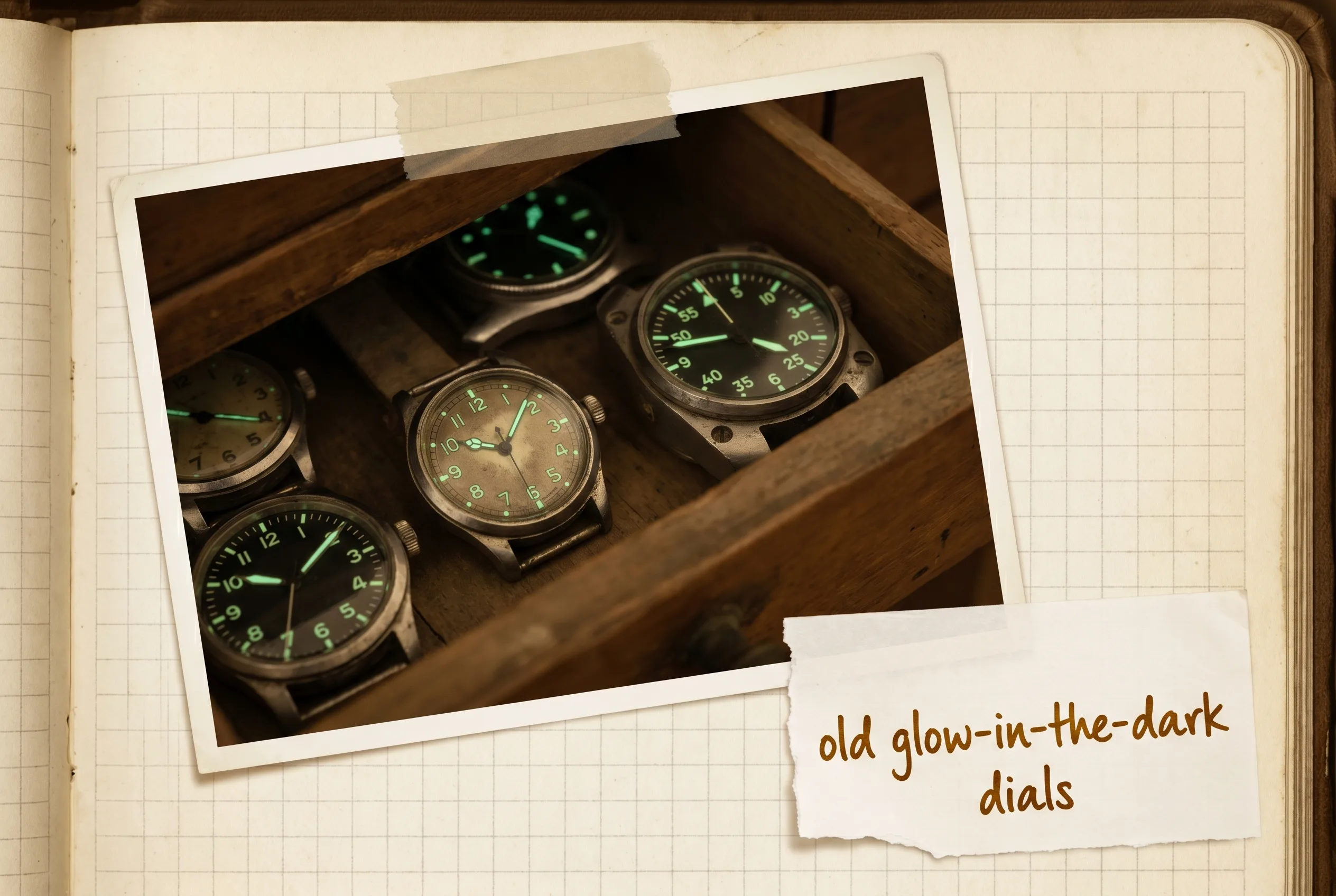
Wristwatch and instrument dial with numerals glowing soft green in the dark.
Where you'd see itPromethium once powered glow-in-the-dark watch dials and is used in tiny long-life nuclear batteries.
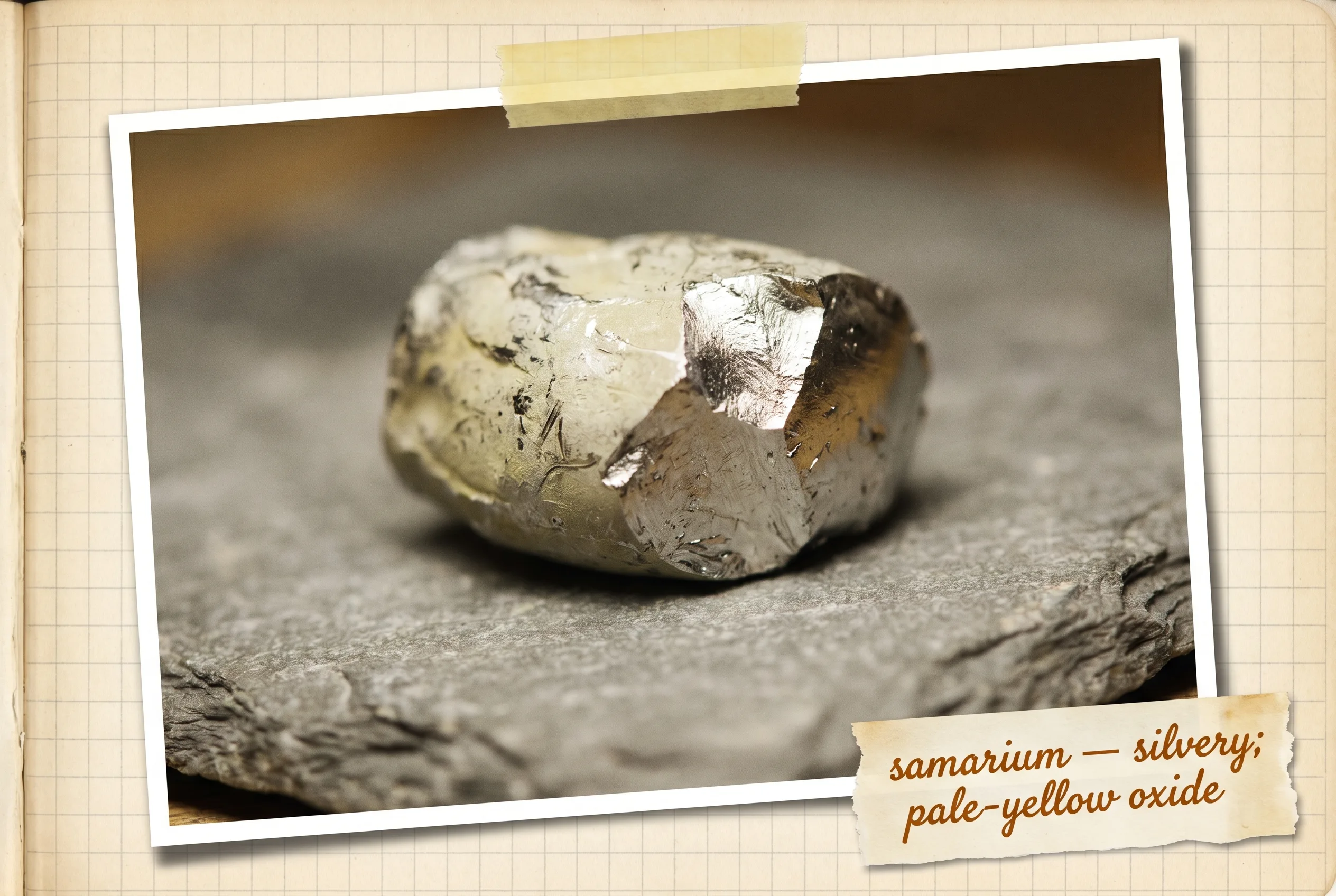
Irregular silvery metal lump with one bright broken facet and a duller yellowish surface.
What it looks likeSamarium is a silvery rare-earth metal that slowly grows a pale-yellow film of oxide in air.
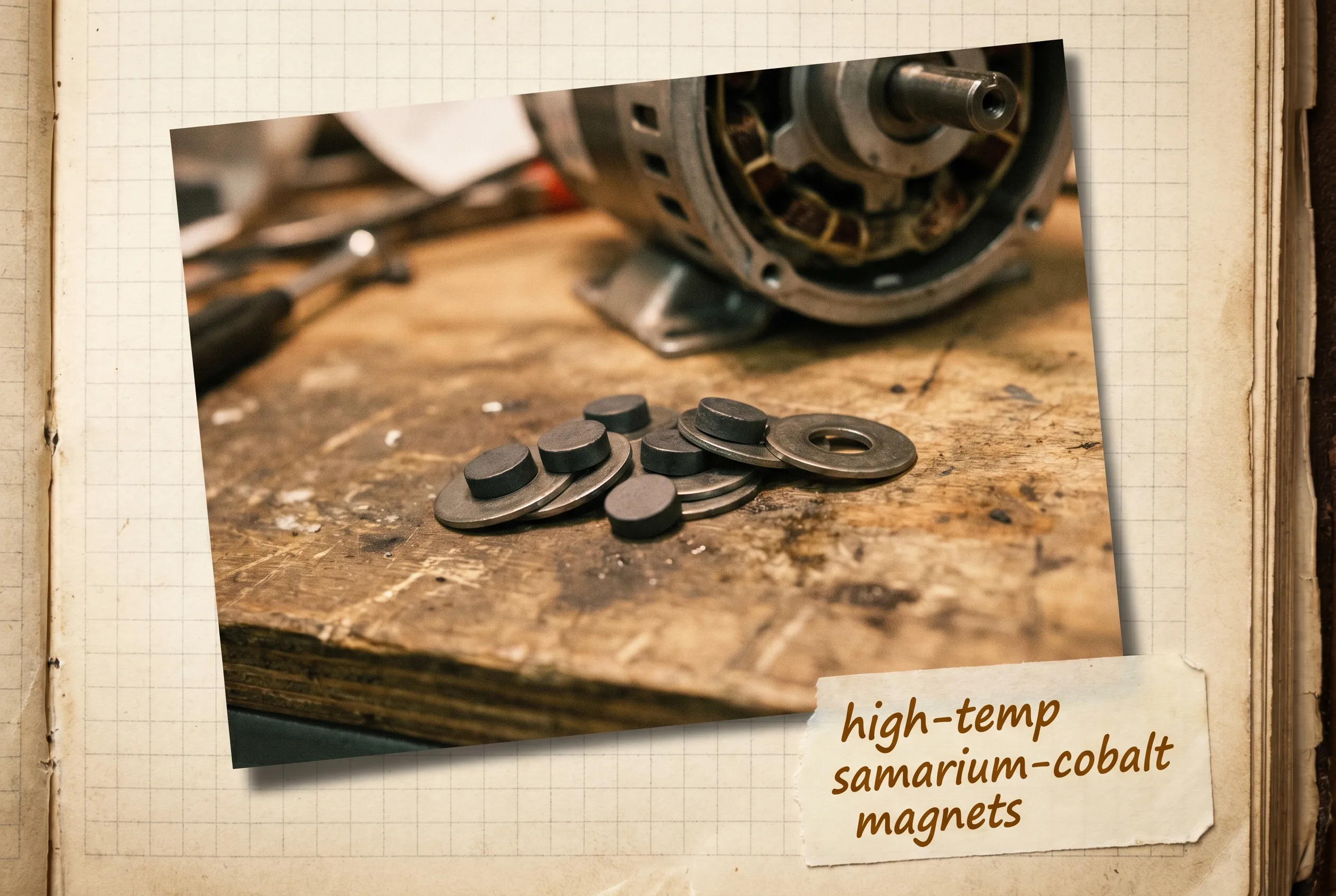
Cluster of dark-gray magnets gripping steel washers on a workbench.
Where you'd see itSamarium-cobalt magnets stay strong at high temperatures, so they run motors and precision devices.
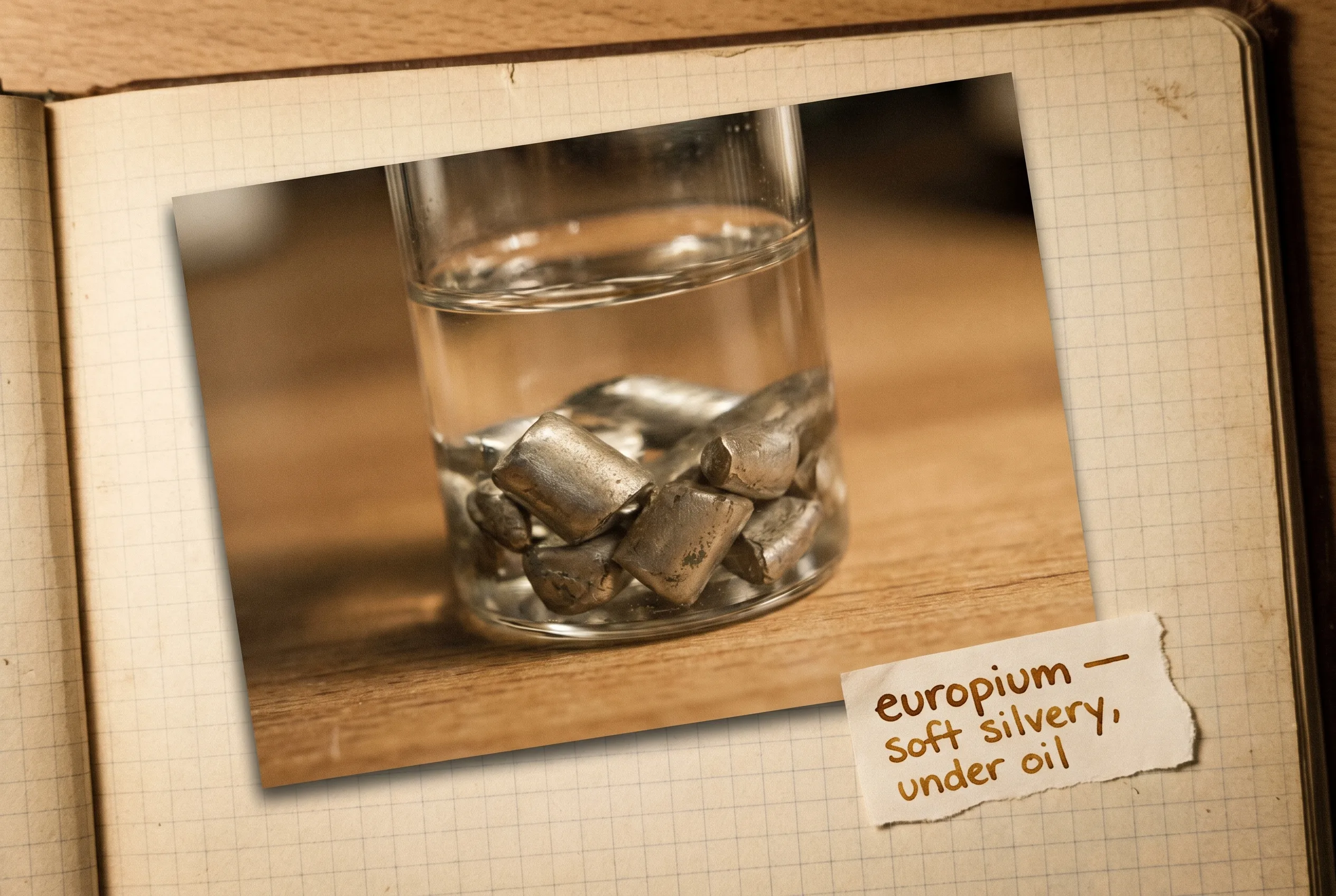
Soft silvery metal pieces submerged in clear oil inside a glass jar.
What it looks likeEuropium is so reactive it must be stored under oil - the most reactive of the rare-earth metals.
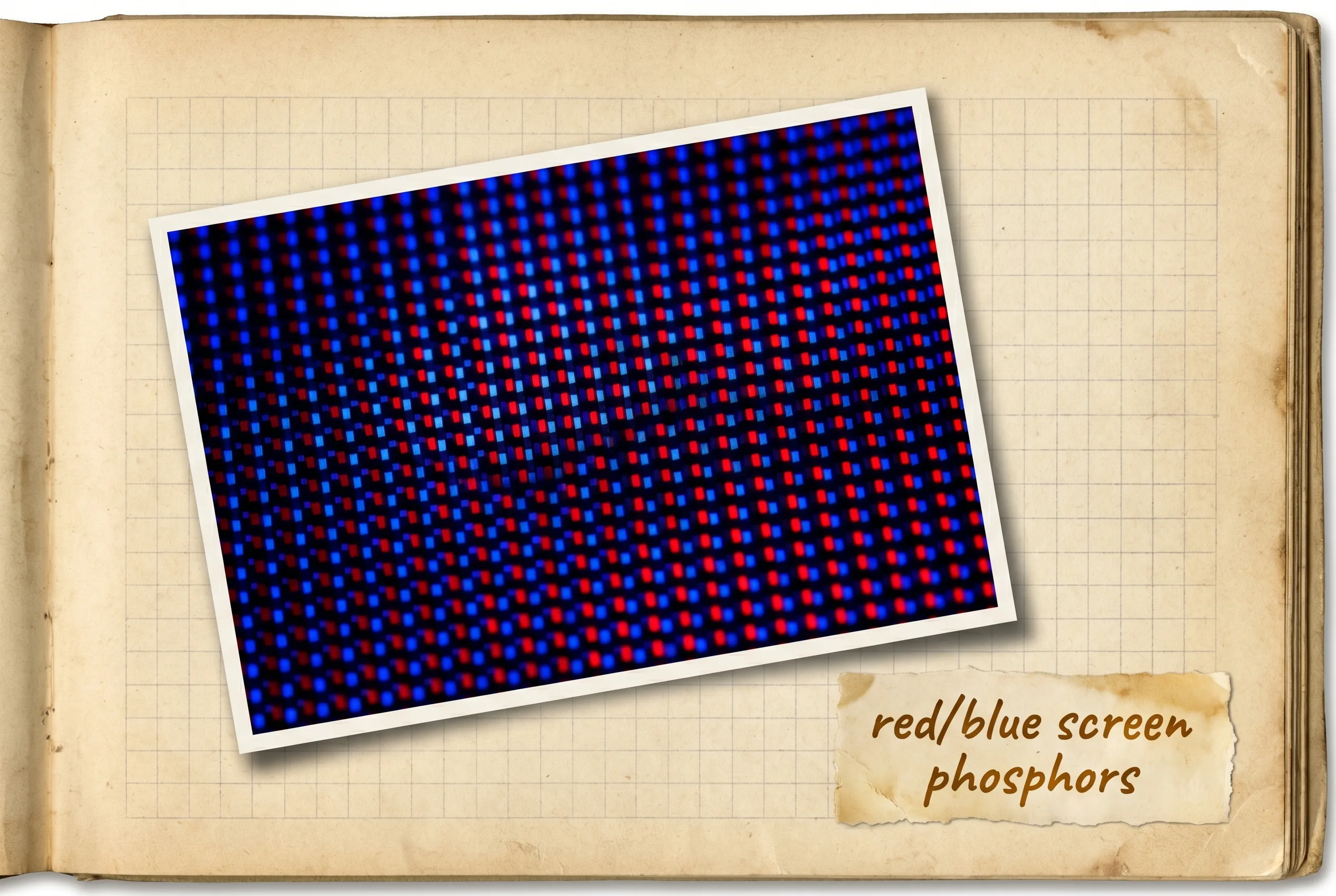
Extreme close-up of a screen showing glowing red and blue subpixels in a grid.
Where you'd see itEuropium phosphors make the red and blue glow in TV and phone screens - and secure euro banknotes.
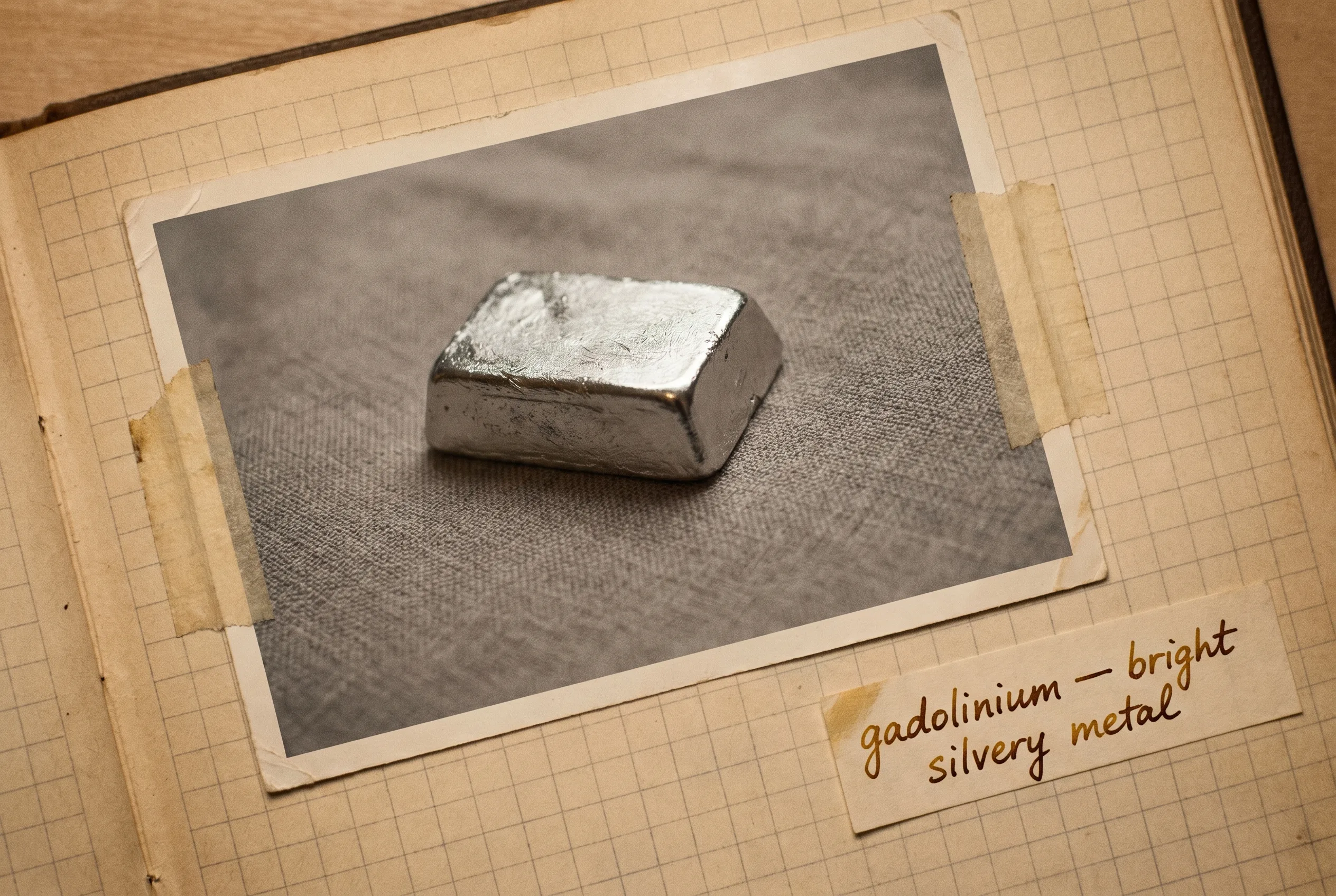
Small bright silvery metal ingot with a clean luster on gray cloth.
What it looks likeGadolinium is a bright silvery rare-earth metal with unusual magnetic behavior near room temperature.
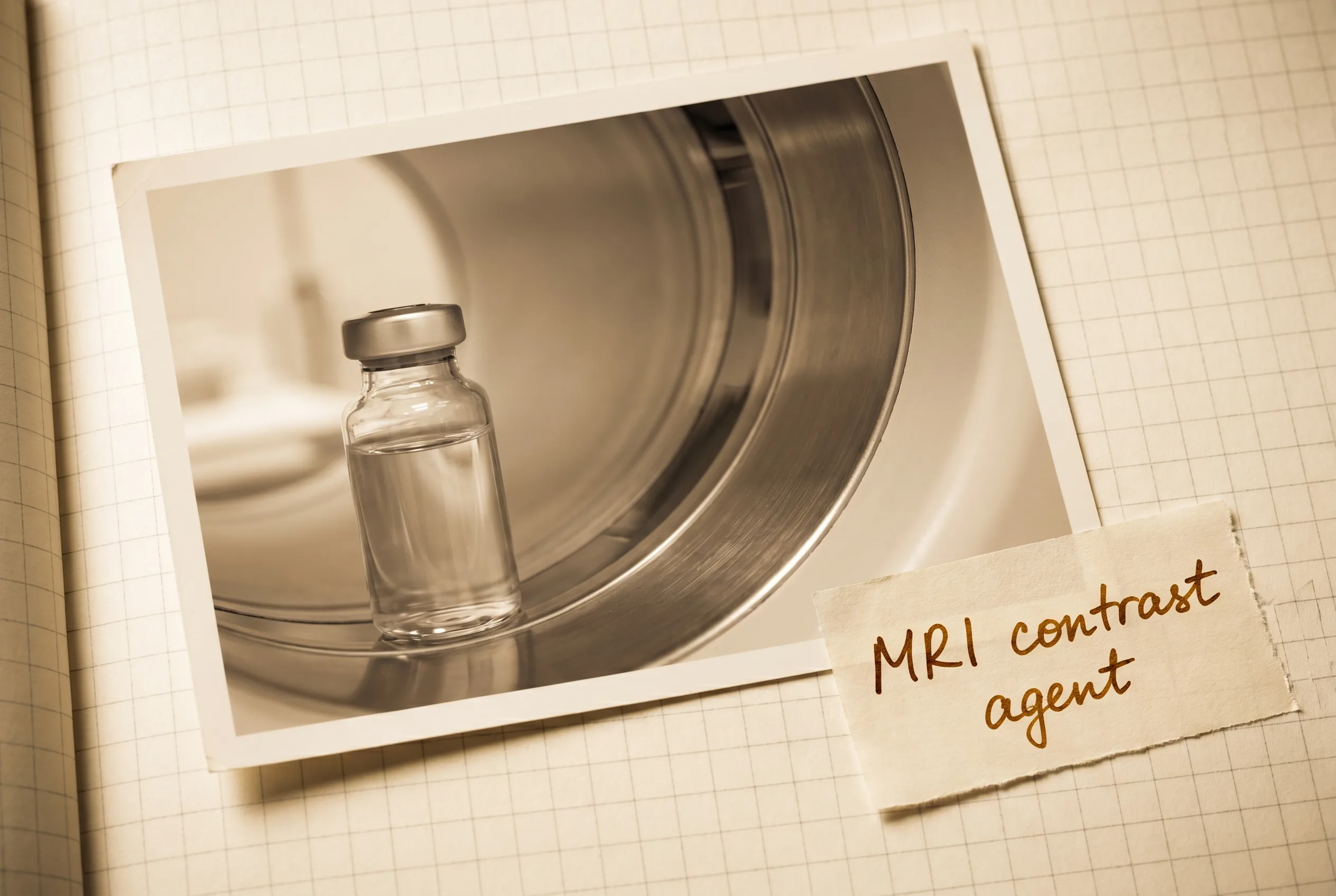
Clear vial of colorless solution beside the bore of a cylindrical MRI scanner.
Where you'd see itA gadolinium solution injected before an MRI makes certain tissues stand out clearly in the scan.
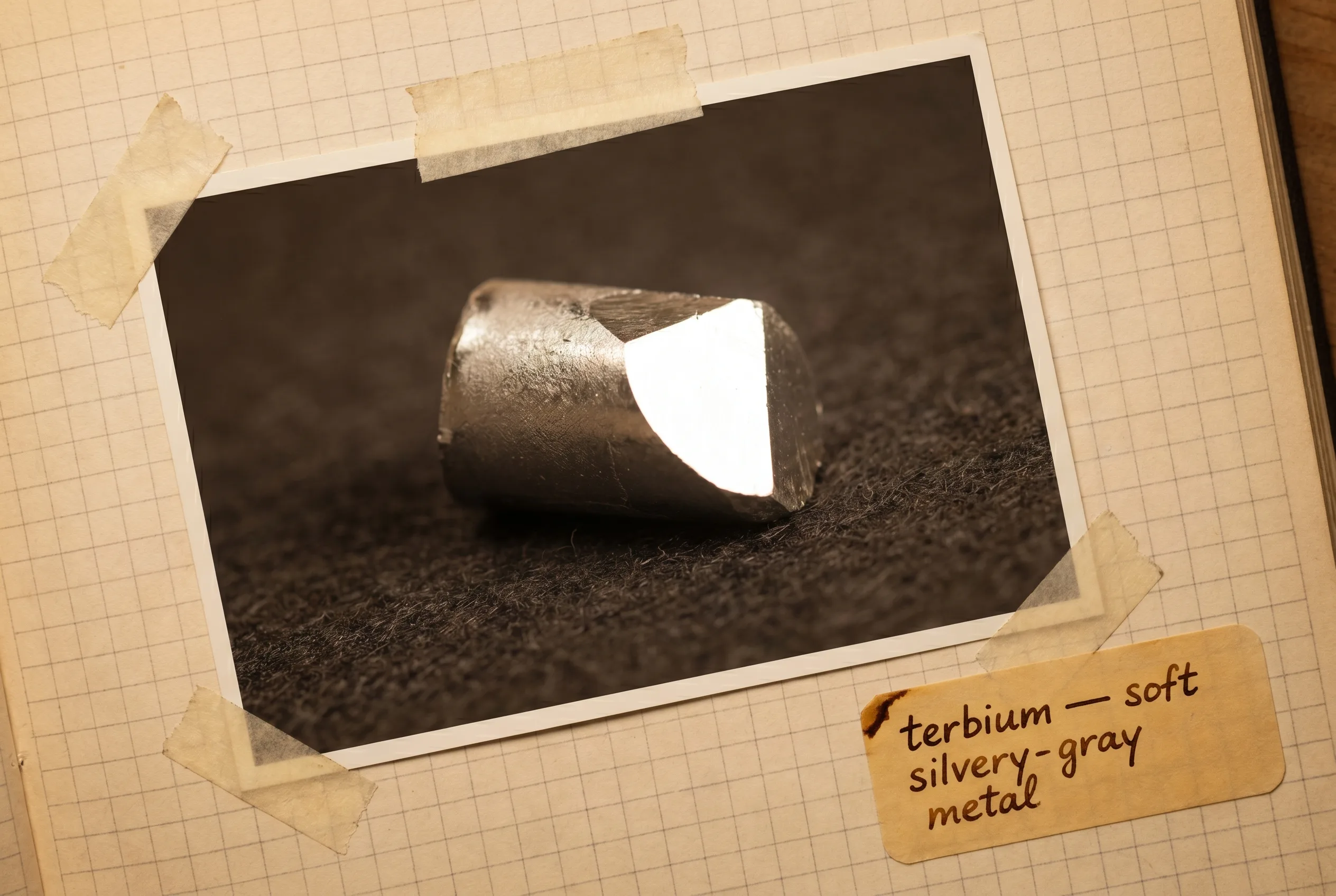
Freshly cut piece of soft silvery-gray metal with a bright facet on dark felt.
What it looks likeTerbium is a soft, silvery-gray rare-earth metal that can be cut with a knife.
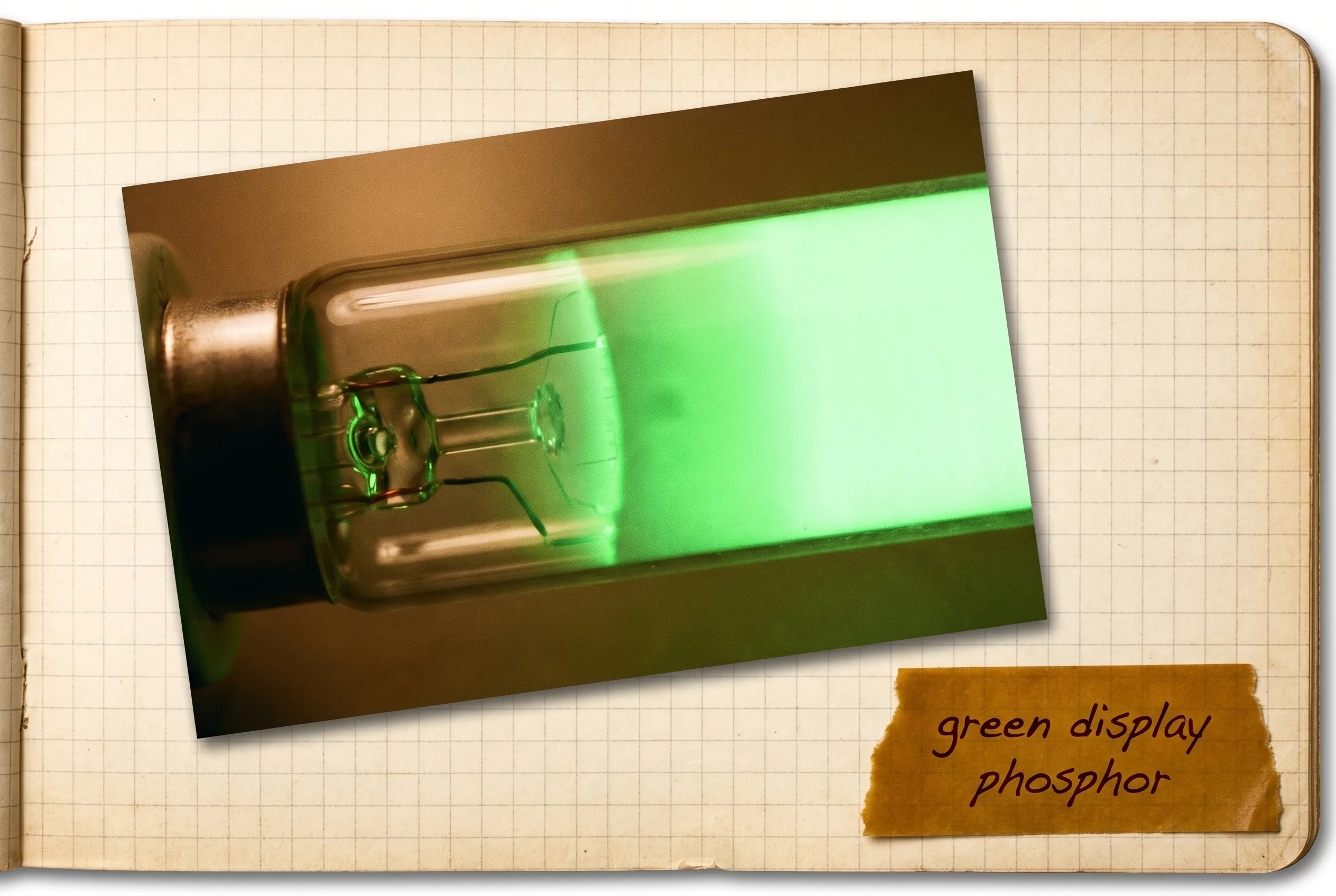
Extreme close-up of a display and lamp interior glowing vivid green.
Where you'd see itTerbium is the green phosphor in fluorescent lamps and many color displays.
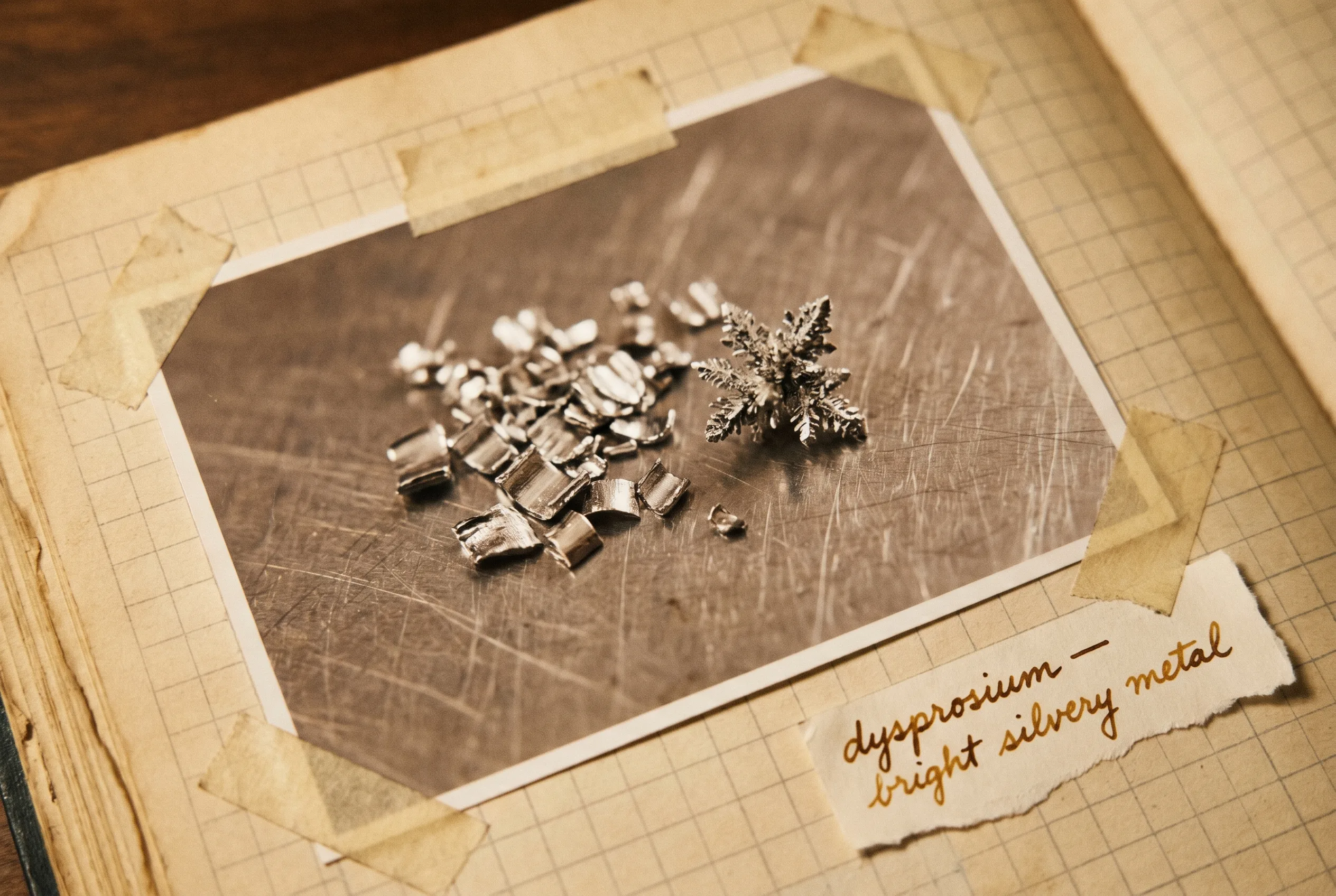
Bright silvery metal chips and a small crystal cluster on a steel plate.
What it looks likeDysprosium is a bright, lustrous silvery metal - one of the most magnetic elements.
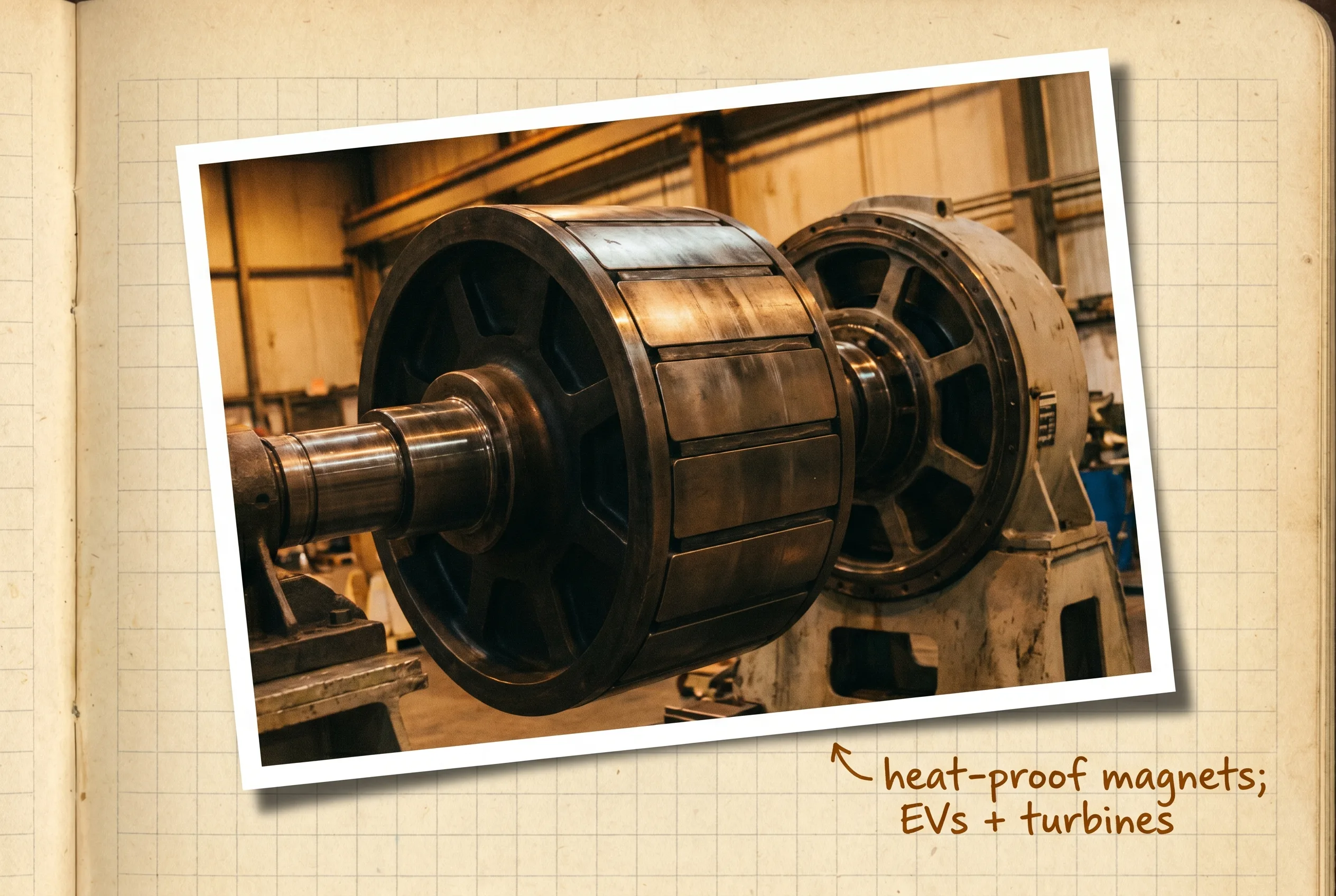
Dark magnet rotor from an electric-motor beside a wind-turbine generator hub.
Where you'd see itAdding dysprosium lets powerful magnets stay strong when hot, key for EV motors and wind turbines.
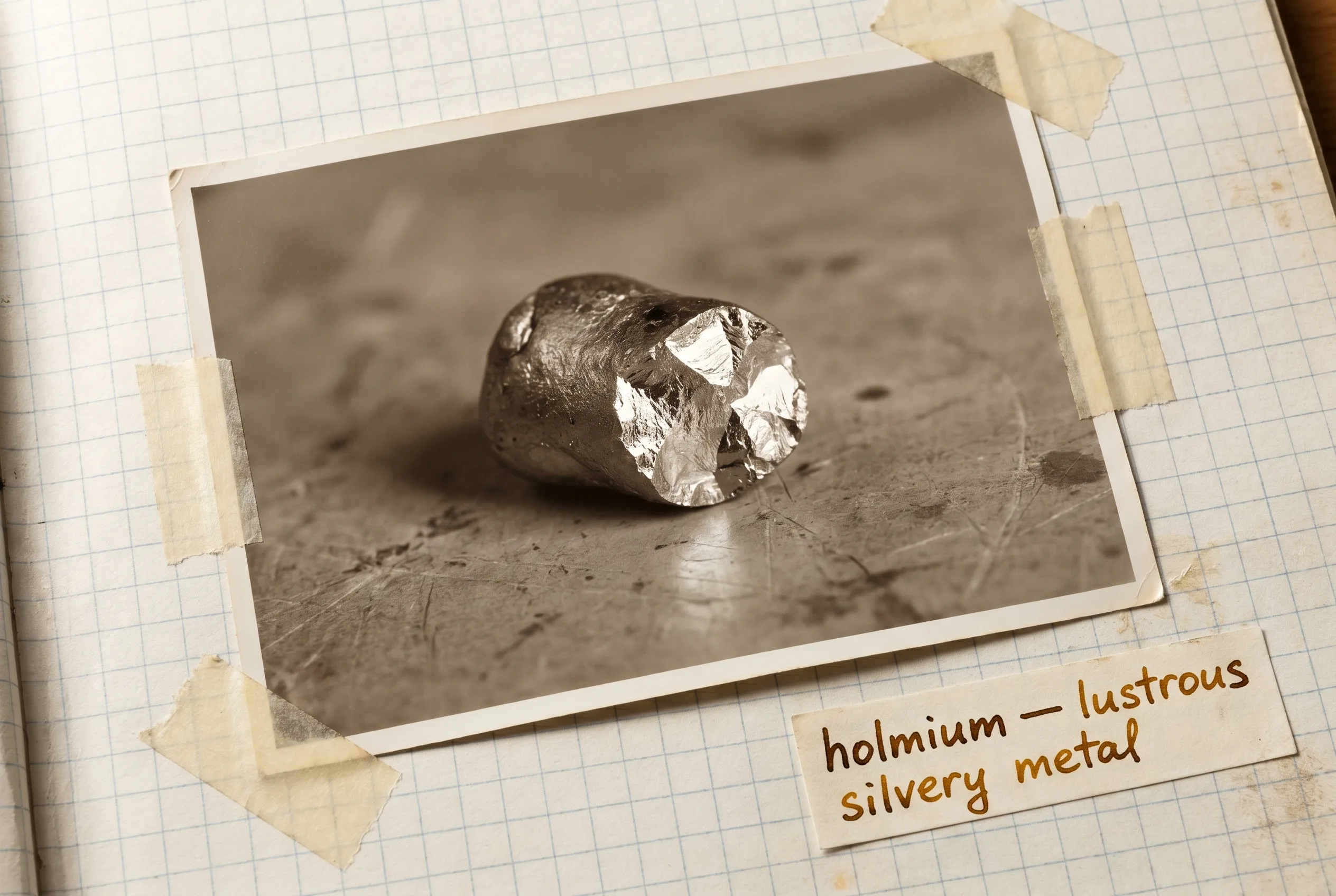
Small lustrous silvery metal lump with a freshly broken bright face.
What it looks likeHolmium is a lustrous silvery metal able to hold the strongest magnetic fields of any element.
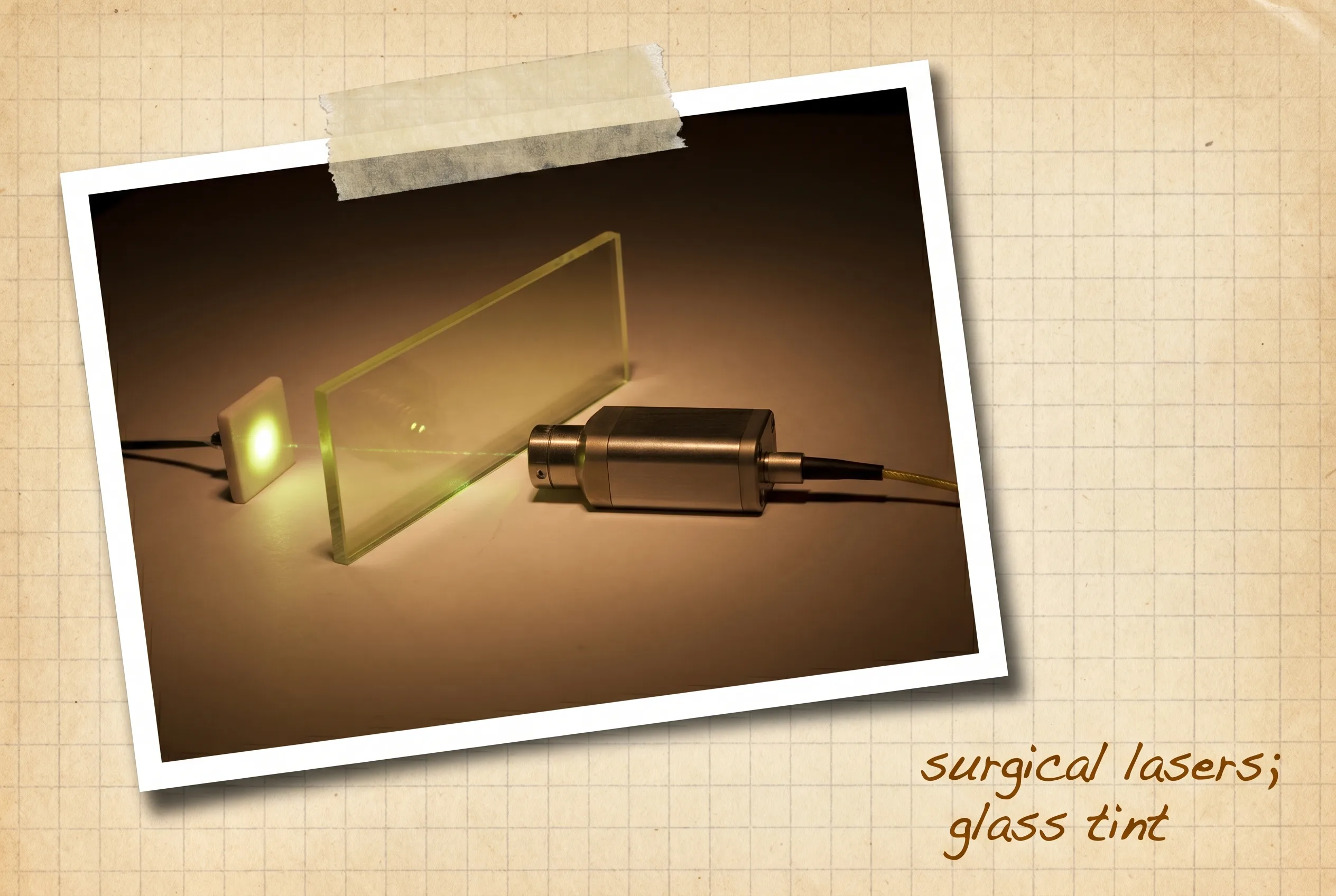
Surgical laser focused on a glowing point beside a slab of yellow-tinted glass.
Where you'd see itHo:YAG lasers cut and treat tissue in surgery, and holmium tints glass a soft yellow.
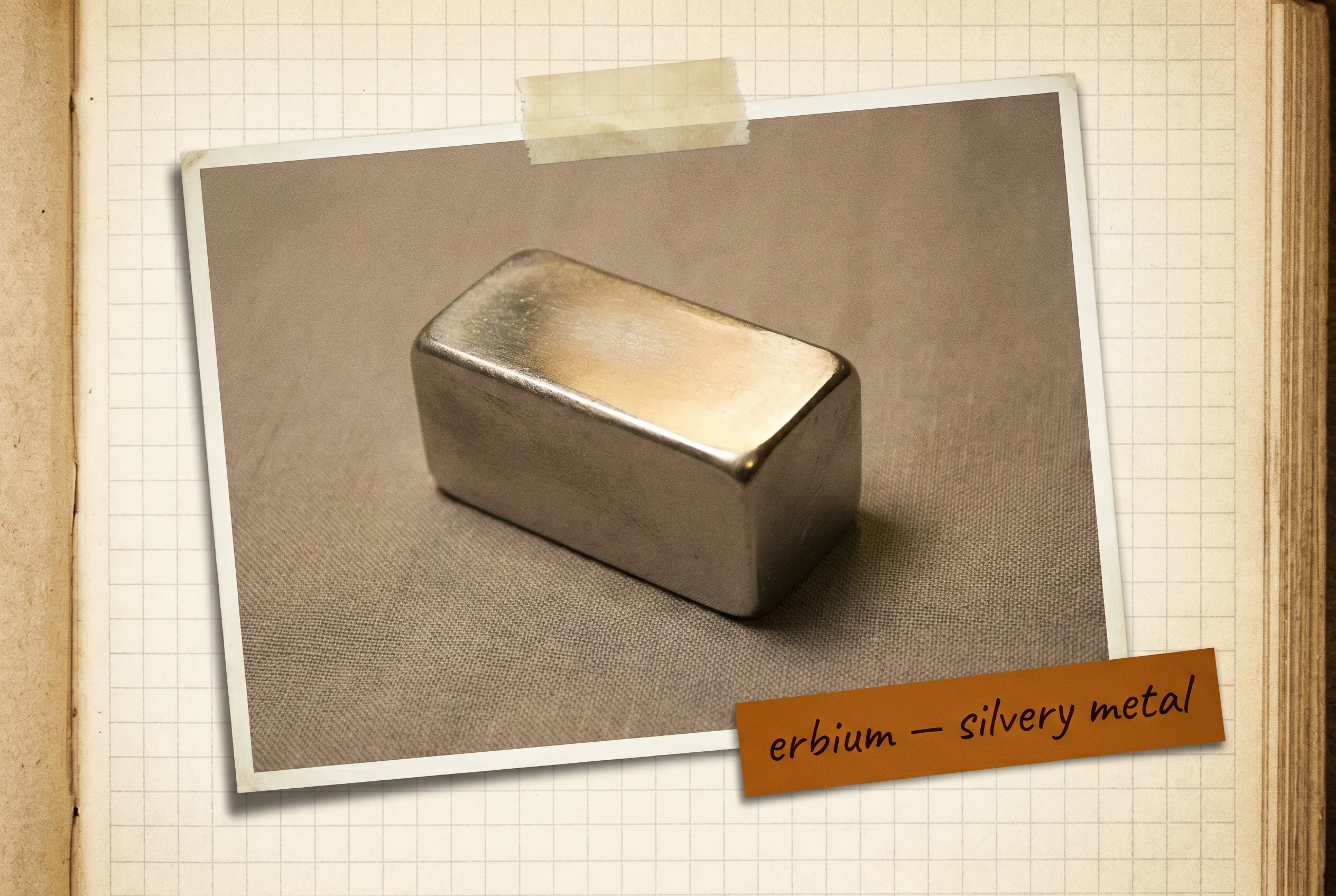
Silvery metal ingot with a soft polished luster on a neutral cloth.
What it looks likeErbium is a soft silvery rare-earth metal - but its compounds famously turn glass pink.
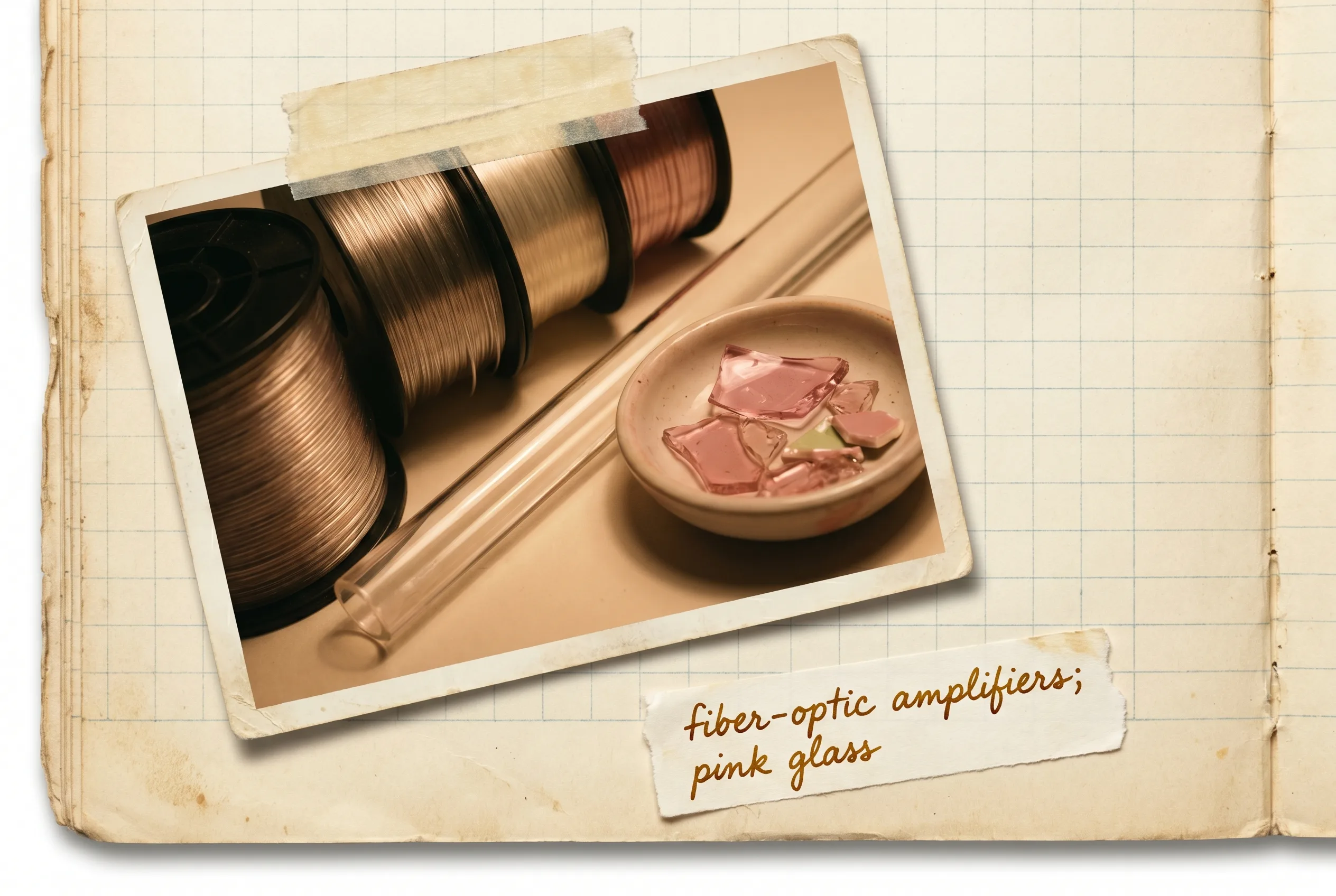
Spools of optical fiber beside a dish of rose-pink erbium glass and glaze.
Where you'd see itErbium-doped fibers amplify light to carry the internet across oceans; erbium also makes pink glass.
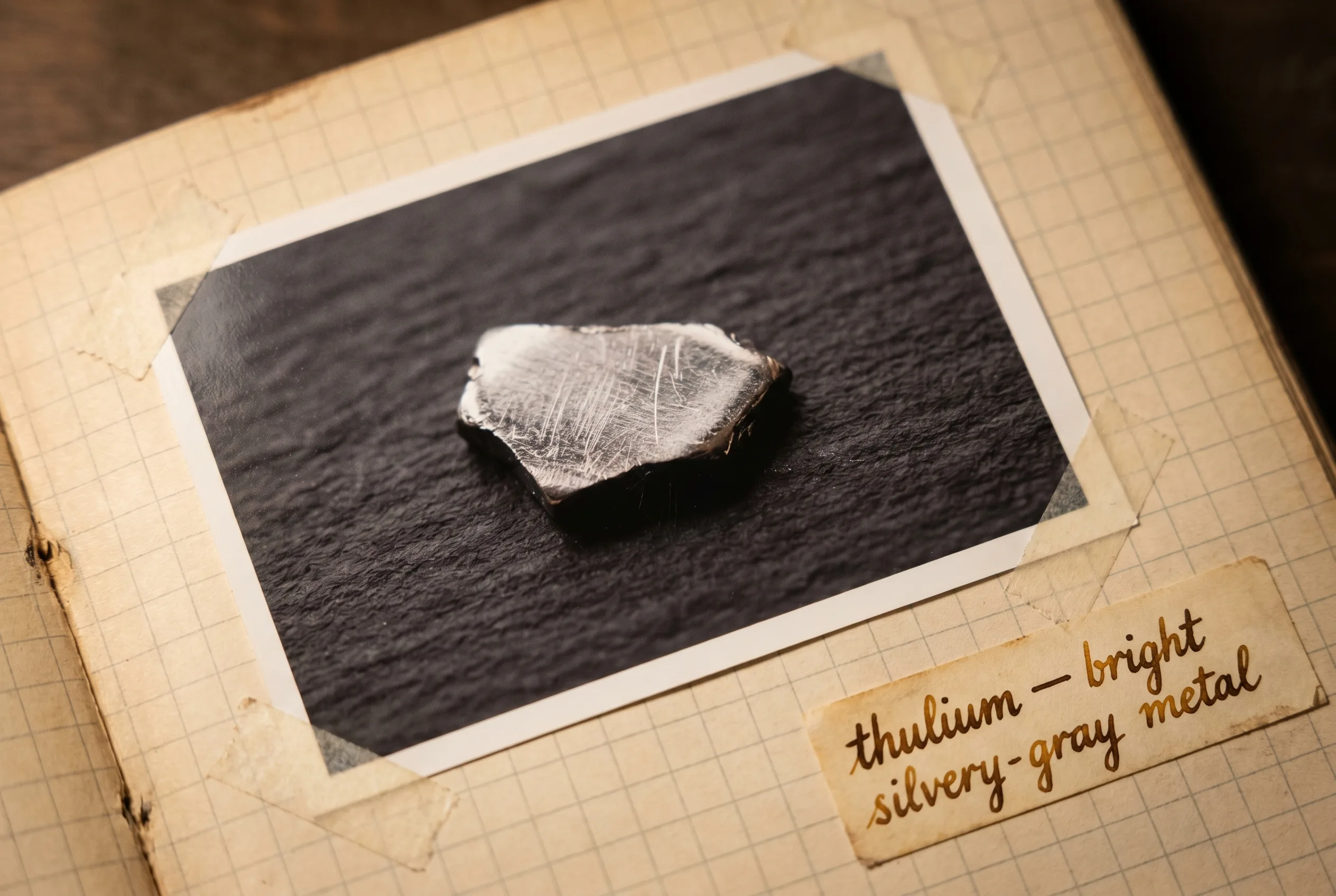
Small bright silvery-gray metal piece on a dark slate tray.
What it looks likeThulium is a bright silvery-gray metal and one of the rarest of the rare-earth elements.
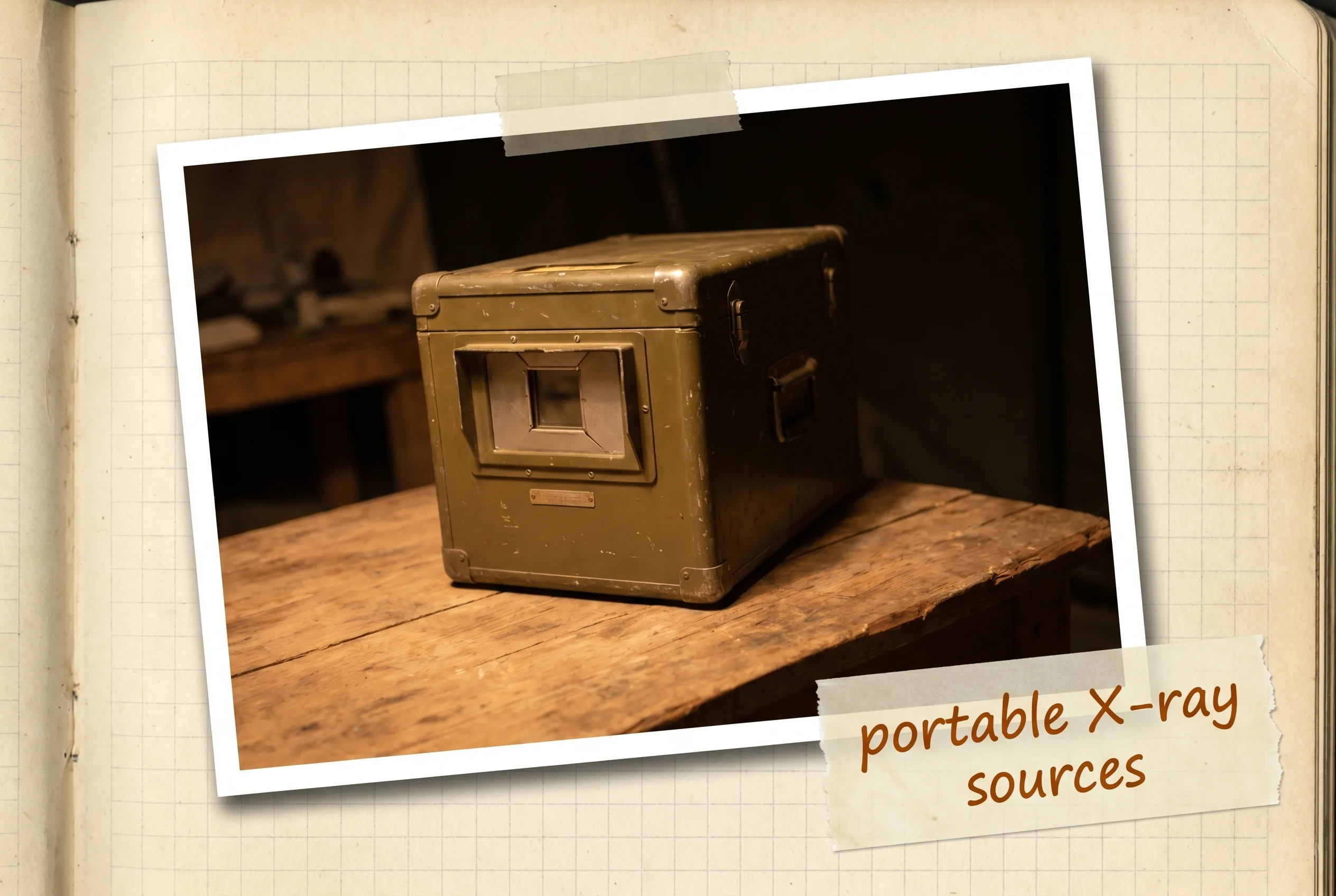
Compact portable X-ray unit with a sealed source set up in a field clinic.
Where you'd see itA thulium isotope powers small portable X-ray machines used far from hospitals.
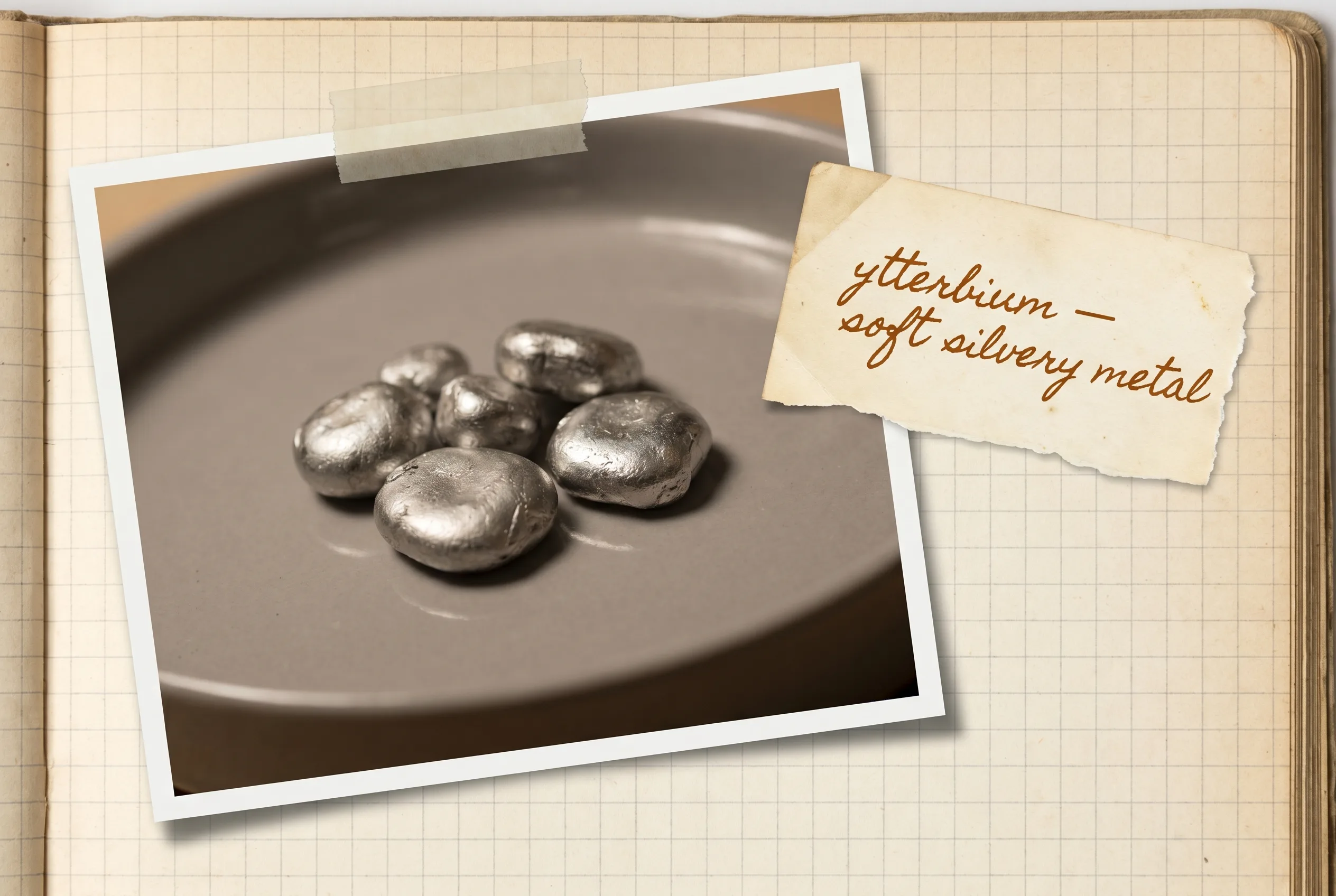
Soft silvery metal lumps with a slightly dulled lustrous surface on a gray tray.
What it looks likeYtterbium is a soft, silvery rare-earth metal with a gentle metallic luster.
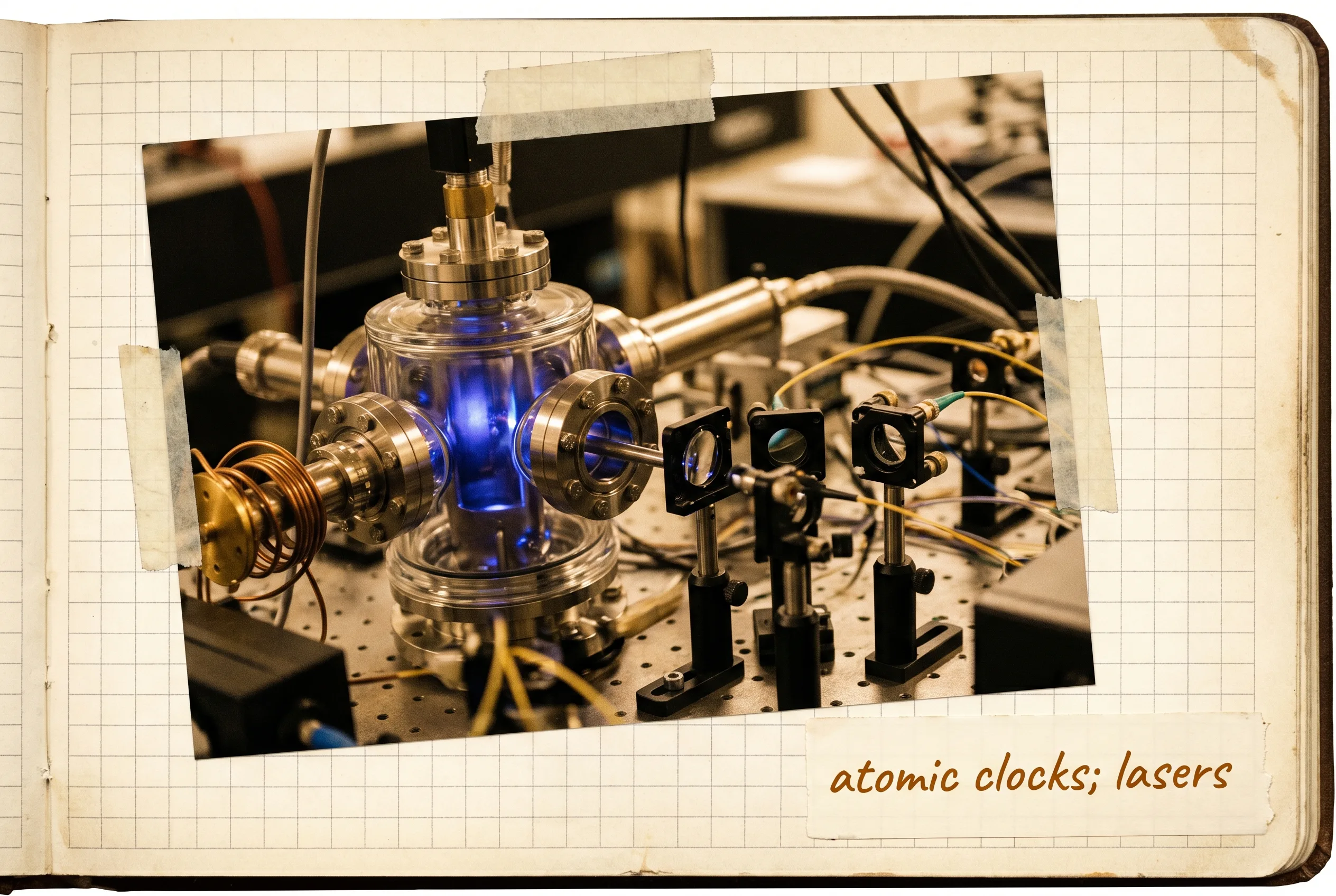
Precision optical atomic-clock apparatus with vacuum chamber and laser optics.
Where you'd see itYtterbium powers some of the world's most precise atomic clocks and high-power lasers.
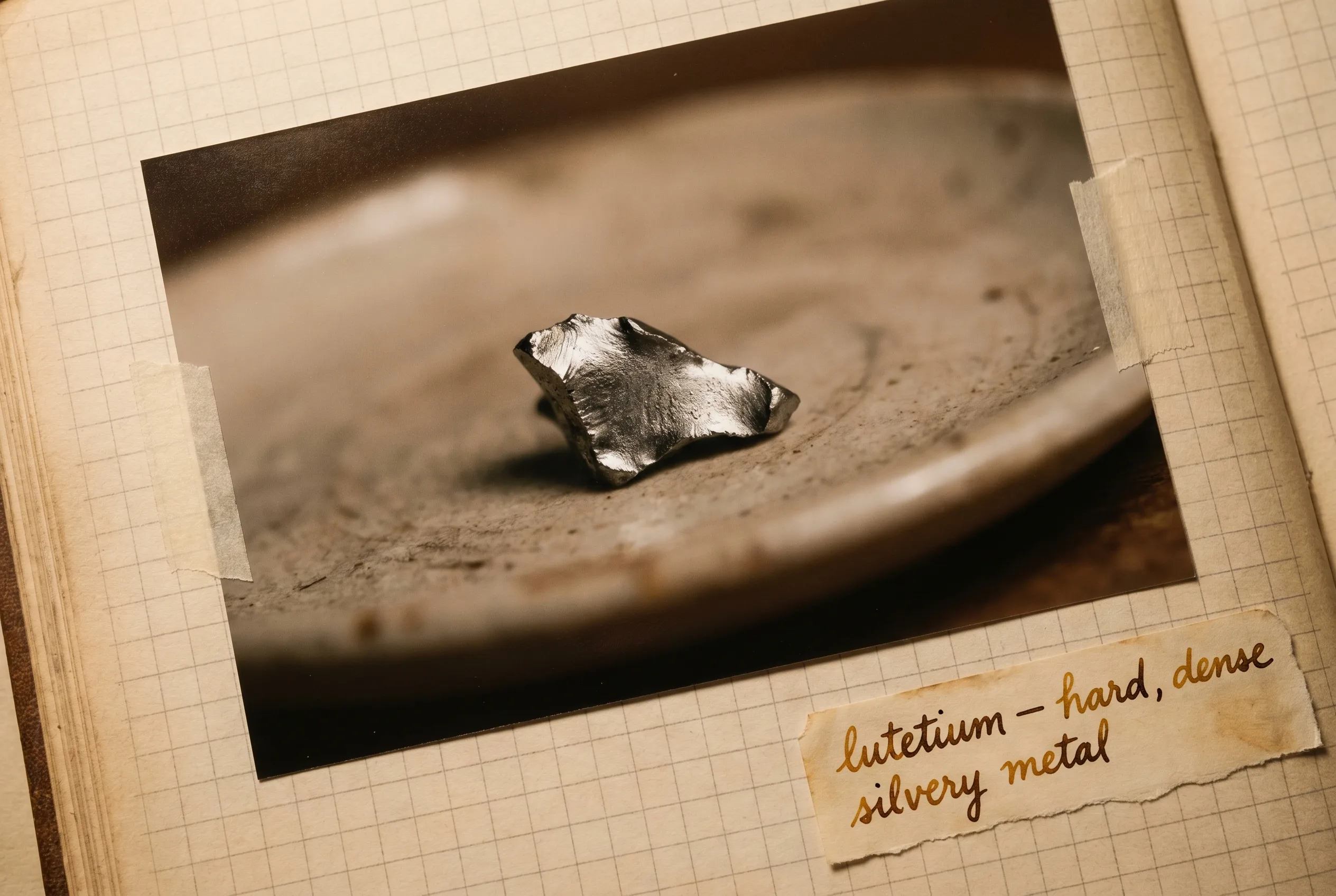
Small hard silvery metal fragment with a bright dense luster on a neutral surface.
What it looks likeLutetium is the last lanthanide - a hard, dense, silvery metal.
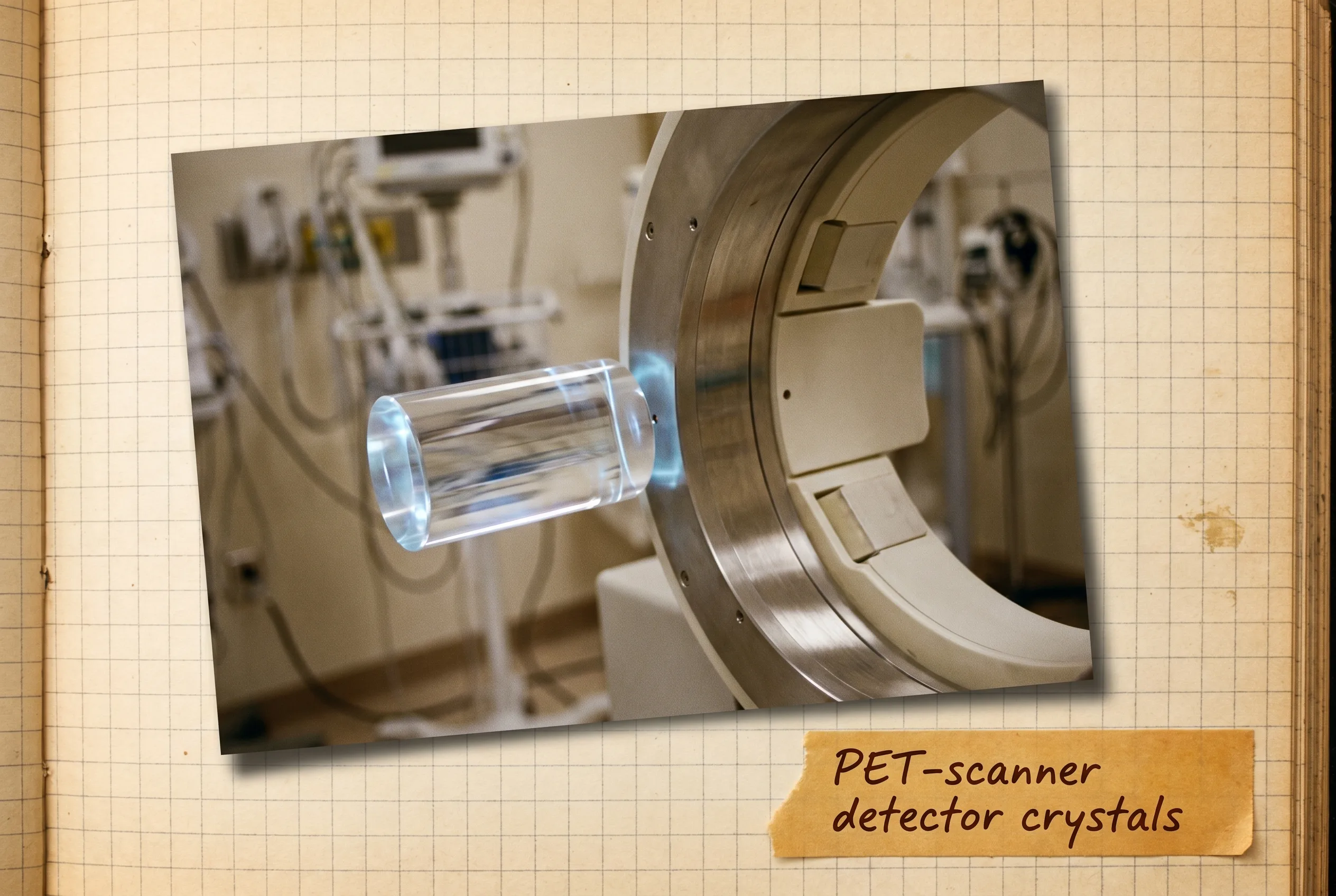
Clear scintillator crystal cylinder beside a ring-shaped PET medical scanner.
Where you'd see itLutetium crystals detect the radiation inside PET scanners, helping doctors image the body.
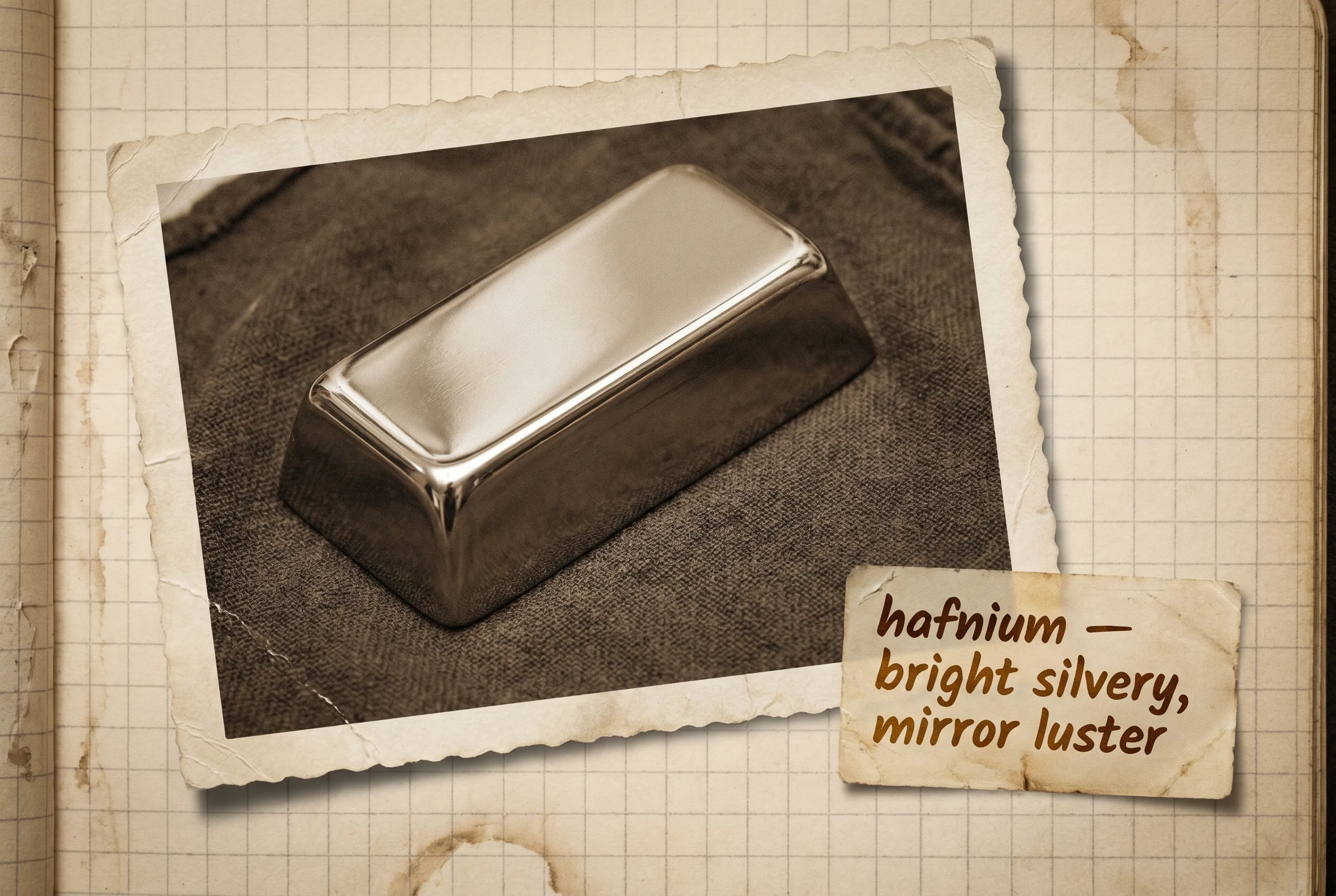
Bright silvery metal ingot with a clean mirror-like luster on dark cloth.
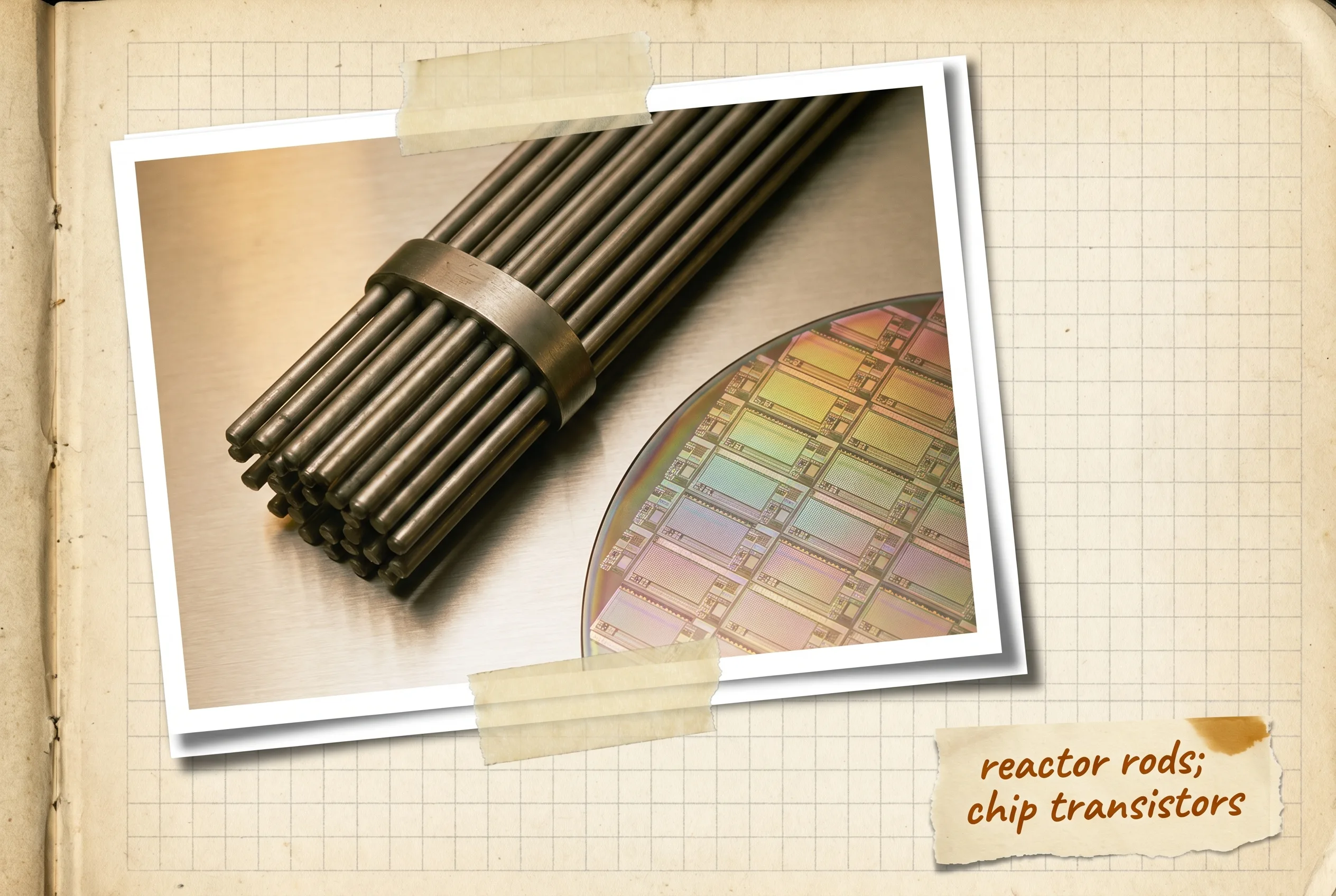
What it looks likeHafnium is a bright silvery metal that resists corrosion and absorbs neutrons well.
Bundle of slender metal control rods beside an extreme-macro silicon chip wafer.
Where you'd see itHafnium soaks up neutrons in reactor control rods and helps tiny transistors switch in chips.
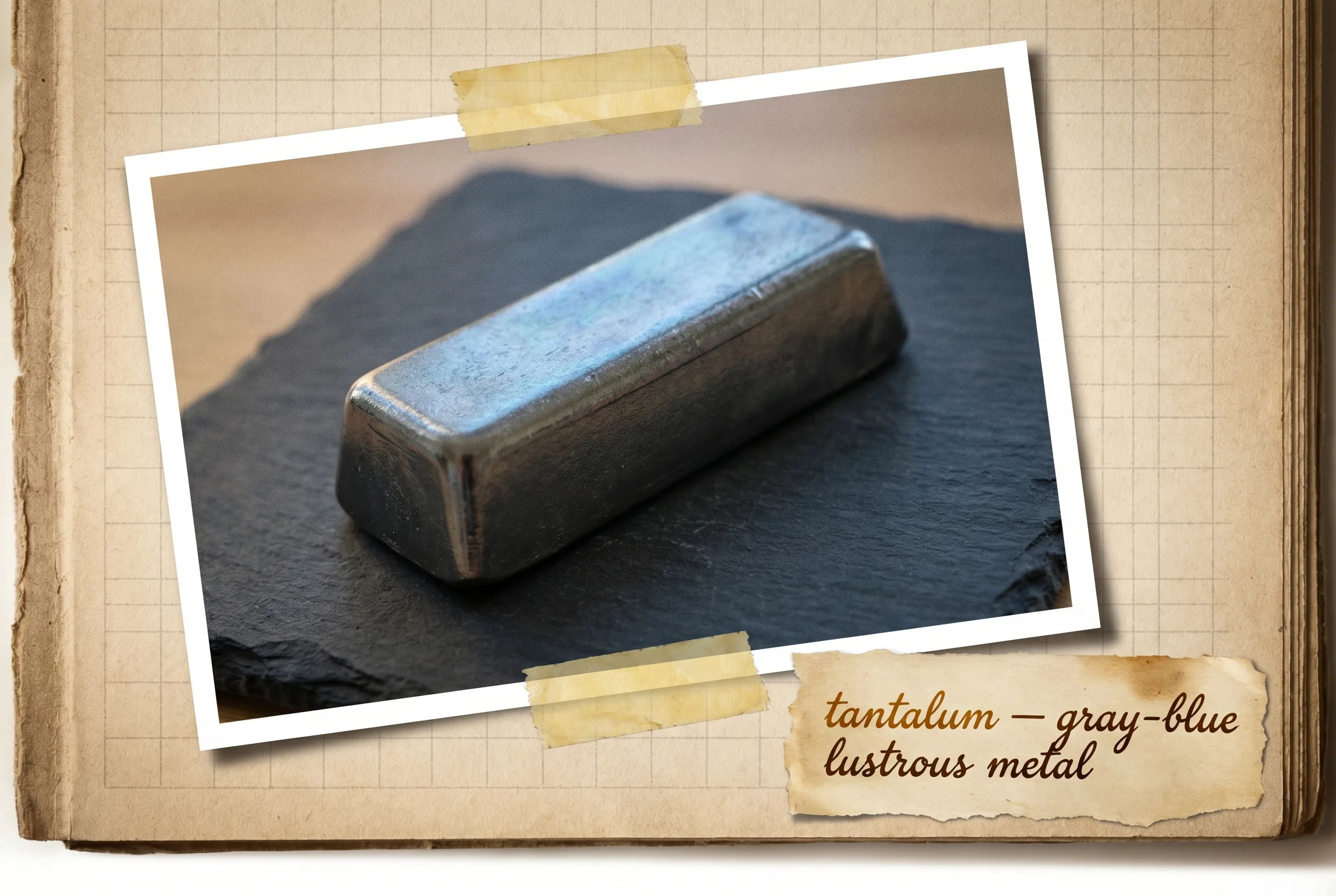
Dense gray-blue lustrous metal ingot with a faint bluish sheen on slate.
What it looks likeTantalum is a dense, gray-blue lustrous metal that strongly resists corrosion.
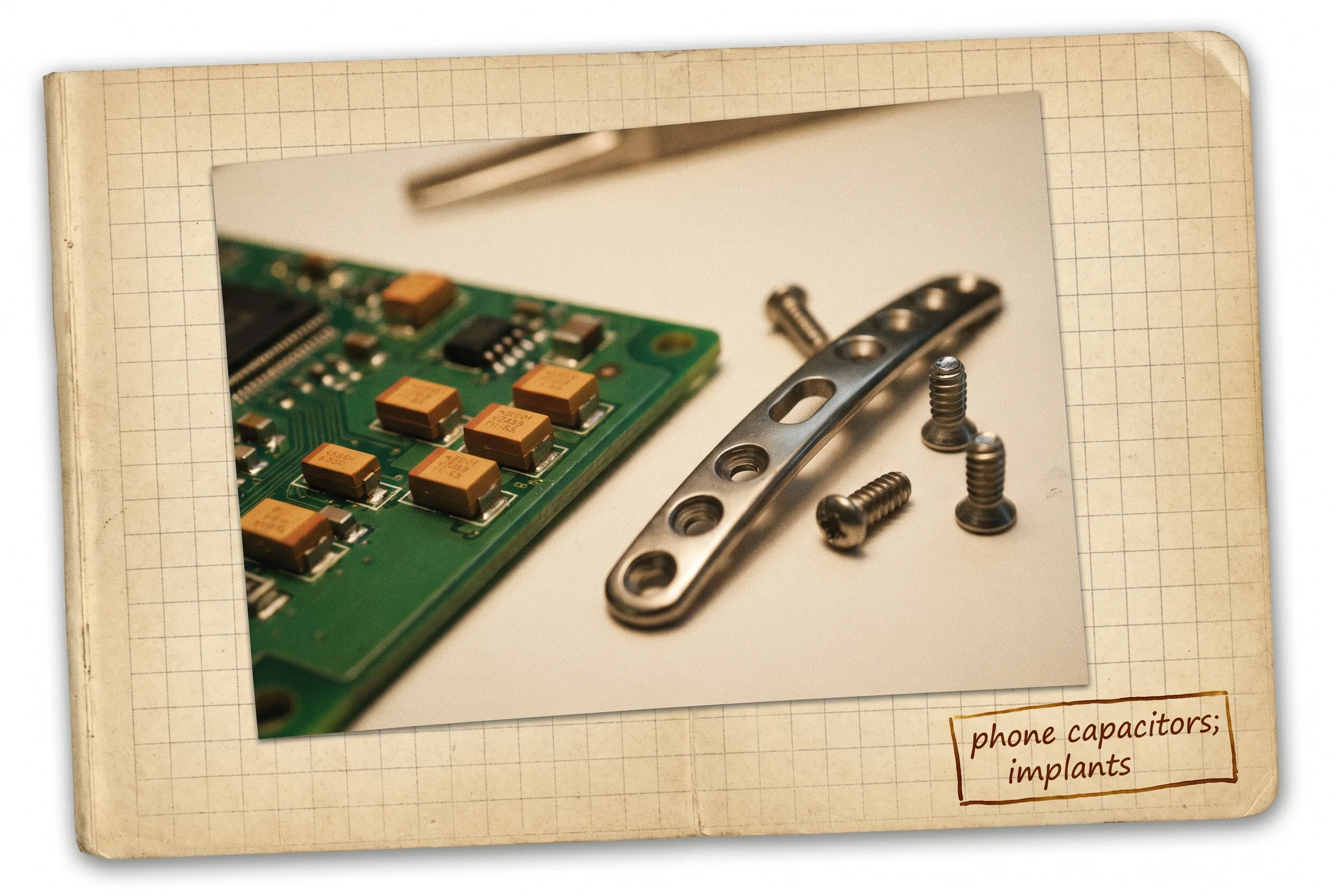
Circuit board with small tantalum capacitors beside a polished implant plate.
Where you'd see itTantalum capacitors pack big storage into tiny phones, and the metal is safe inside surgical implants.
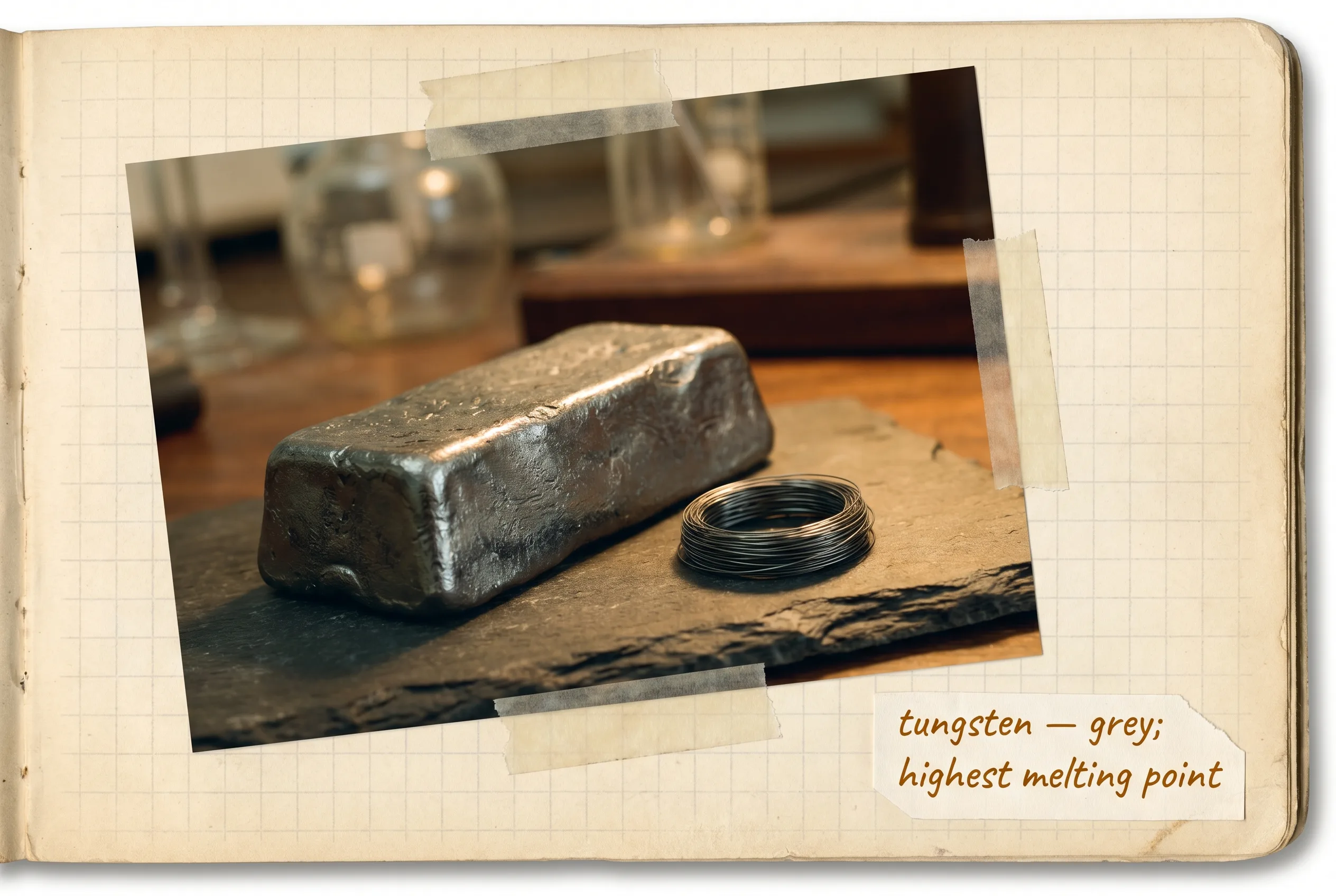
A dark-grey tungsten ingot beside a tiny coil of fine tungsten wire on black slate.
What it looks likeTungsten is a dense grey metal with the highest melting point of any element.
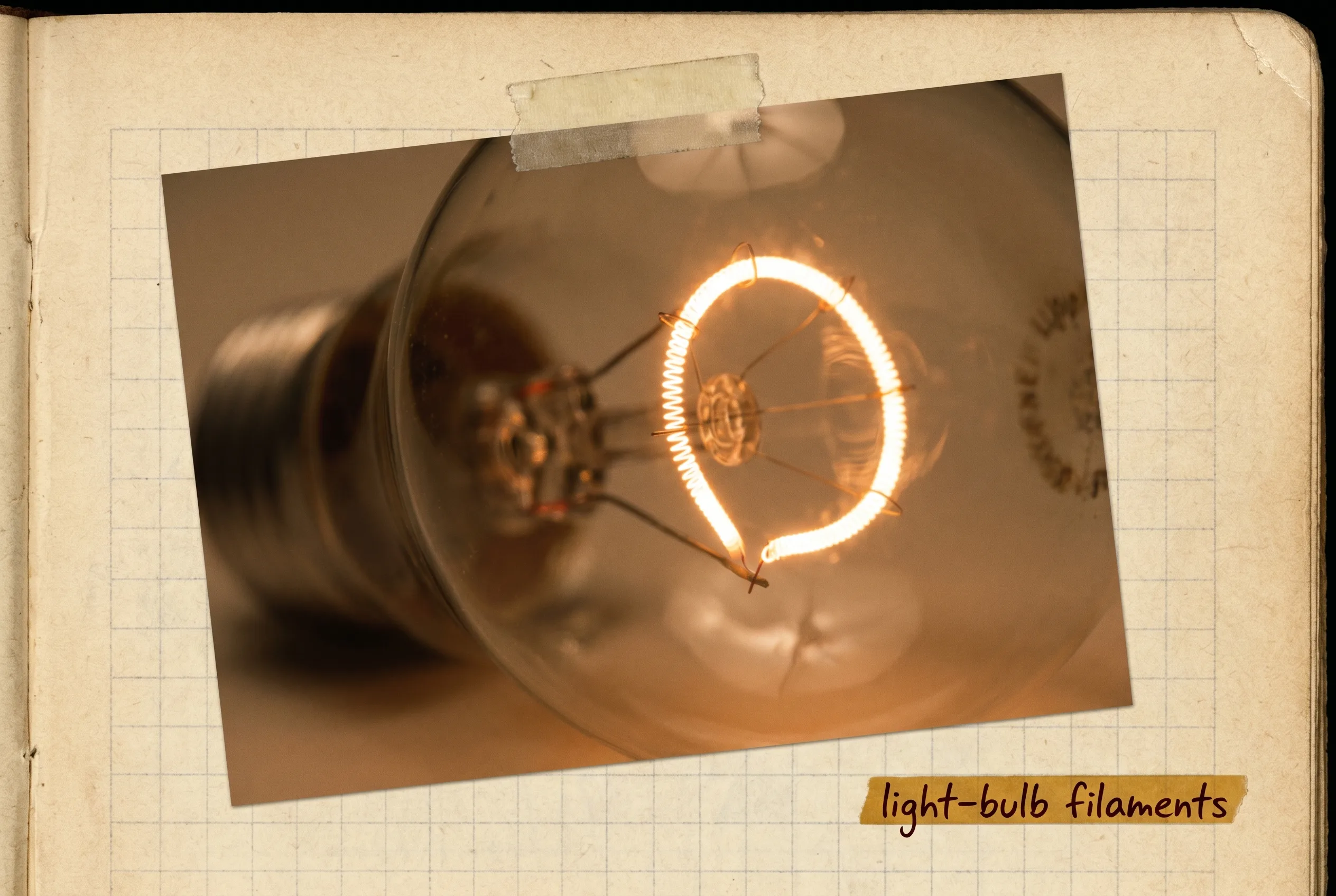
Macro inside a clear light bulb showing the coiled tungsten filament glowing white-hot.
Where you'd see itIts sky-high melting point is why tungsten glows as the filament in old light bulbs.
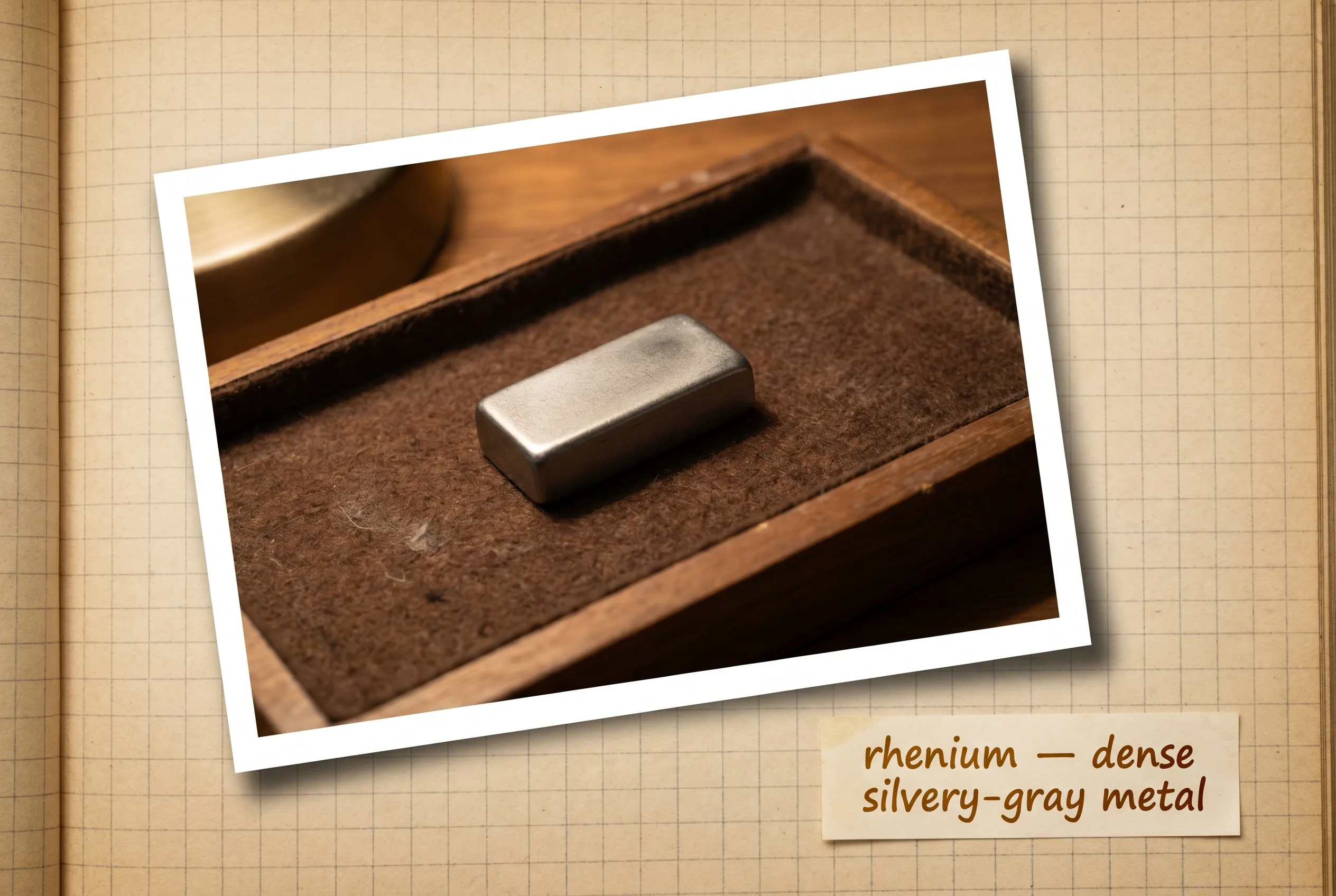
Small dense silvery-gray rhenium metal ingot with a matte sheen on a felt-lined tray.
What it looks likePure rhenium: a silvery-gray metal so dense and heat-resistant it stays solid at extreme temperatures.
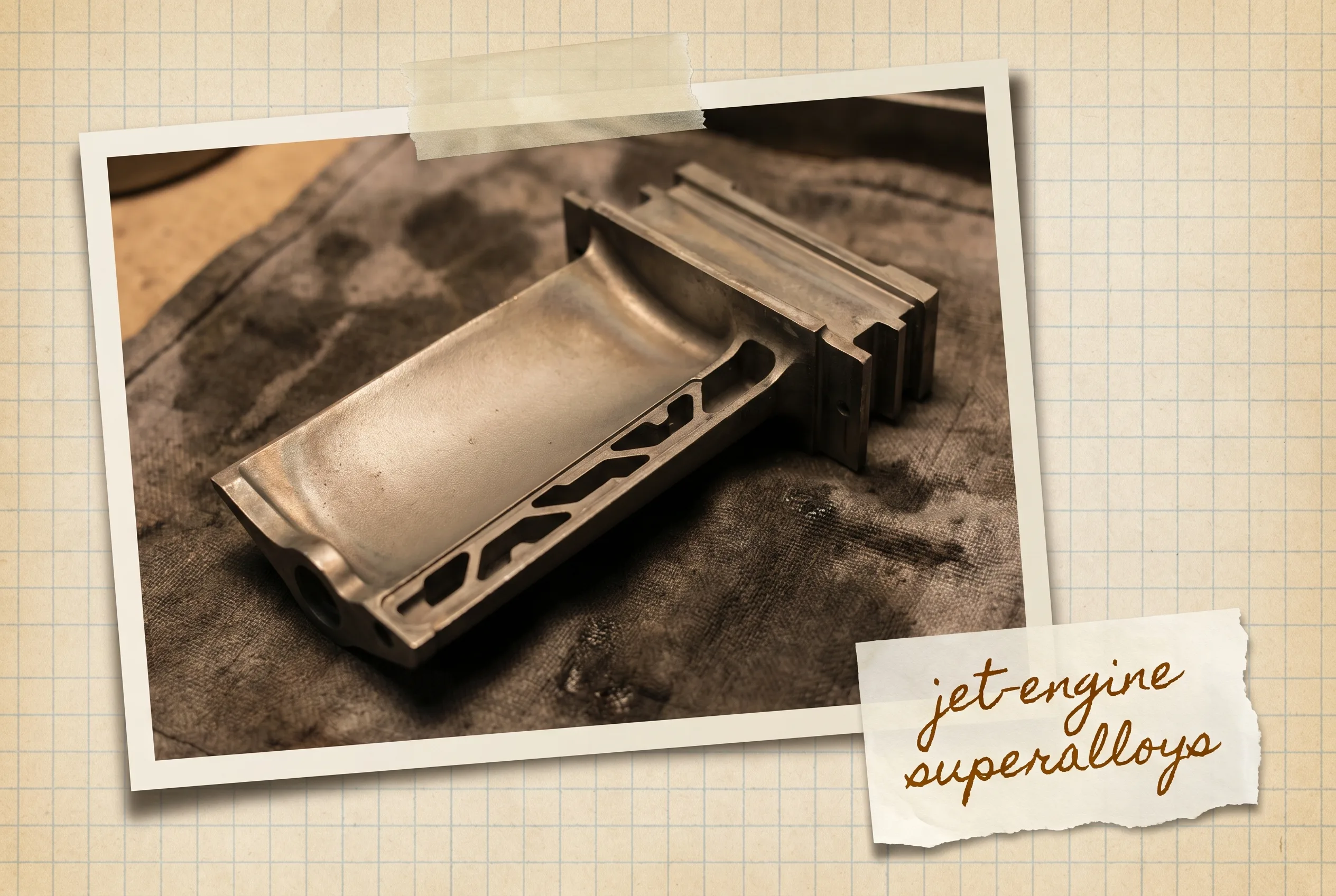
Cutaway nickel-rhenium superalloy jet-engine turbine blade on a dark workshop cloth.
Where you'd see itRhenium goes into the superalloys of jet-engine turbine blades, where metals must survive blistering heat.
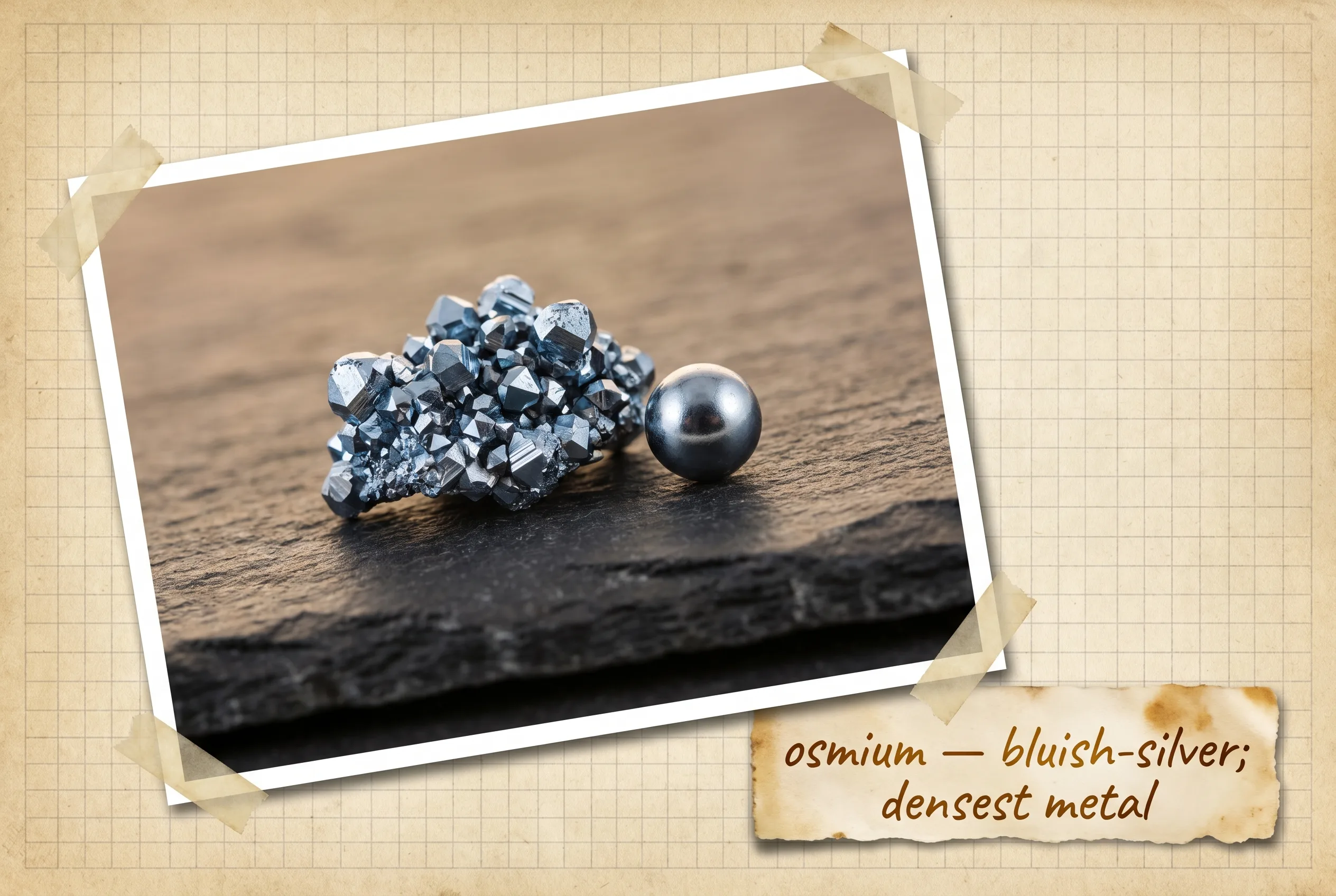
Cluster of bluish-silver osmium crystals and a bead with cold luster on dark slate.
What it looks likeOsmium: a bluish-silver metal and the densest element found in nature.
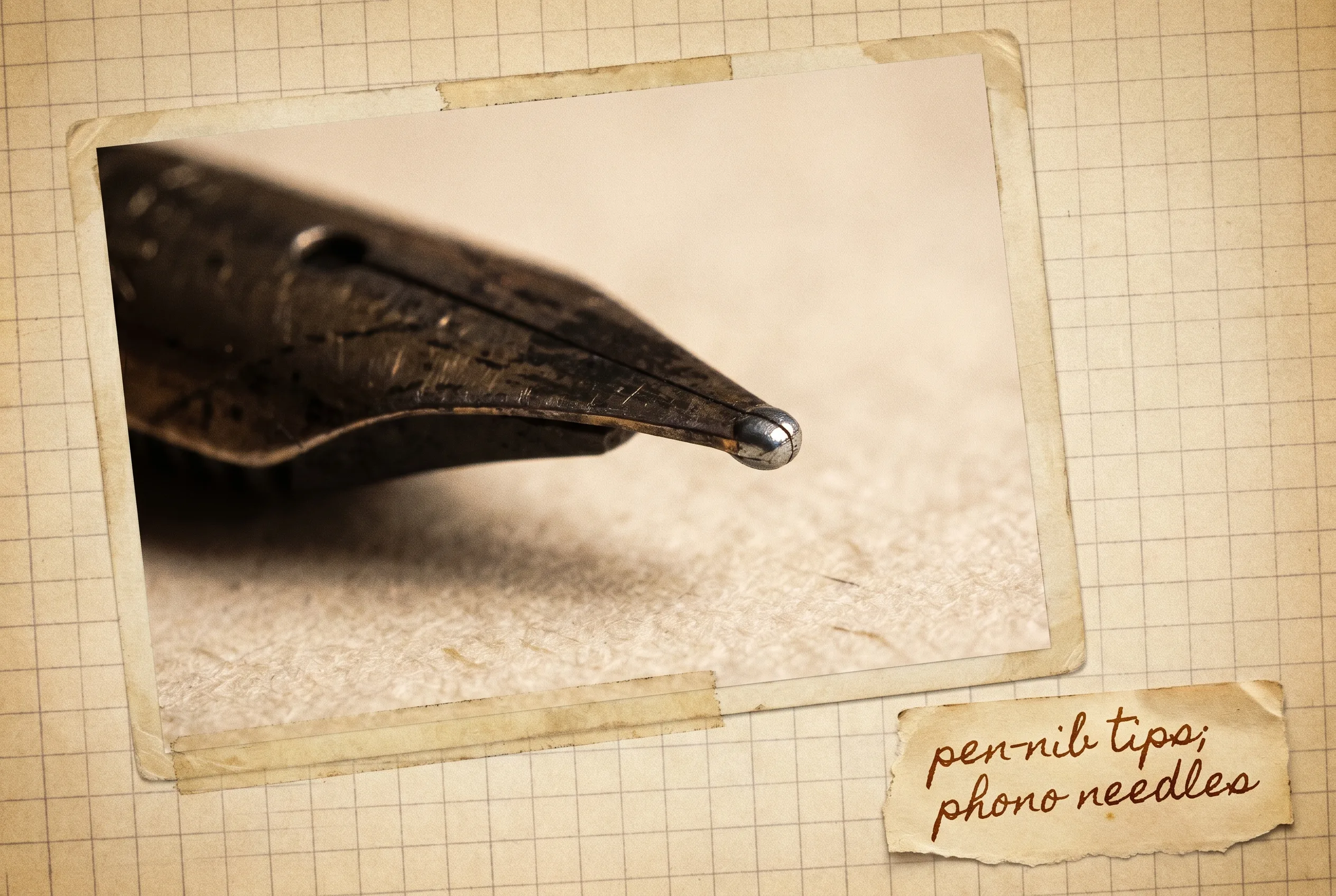
Macro of an antique fountain-pen nib with a tiny hard osmium-alloy pellet at the tip on paper.
Where you'd see itOsmium alloys tipped old fountain-pen nibs and phonograph needles because they barely wear down.
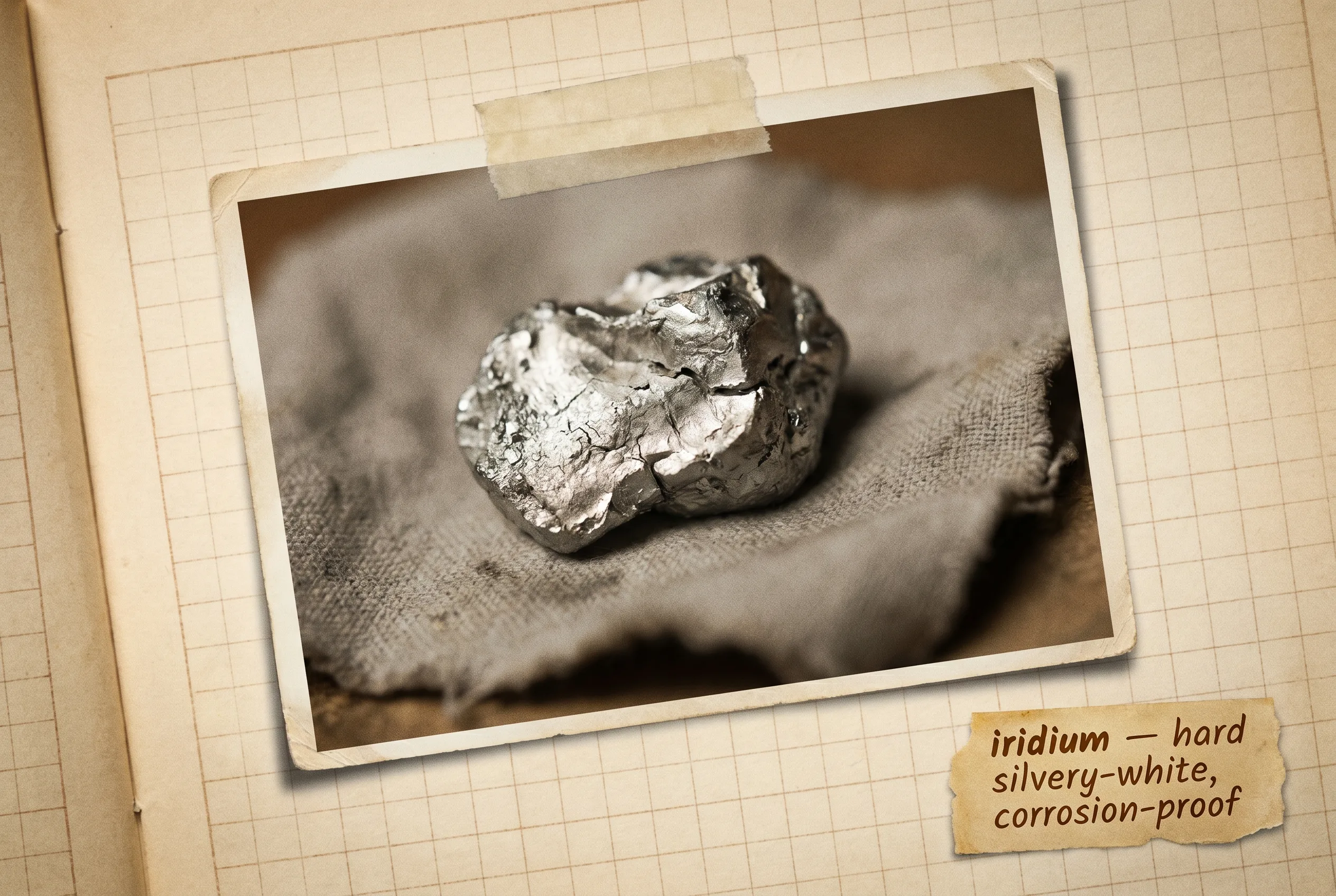
Rough silvery-white iridium nugget with a fractured surface on neutral gray cloth.
What it looks likeIridium: a hard, silvery-white metal famous for resisting corrosion better than almost anything.
Macro of a spark-plug center electrode capped with a tiny iridium tip on a dark background.
Where you'd see itIridium caps high-performance spark-plug tips and, with platinum, once defined the standard kilogram.
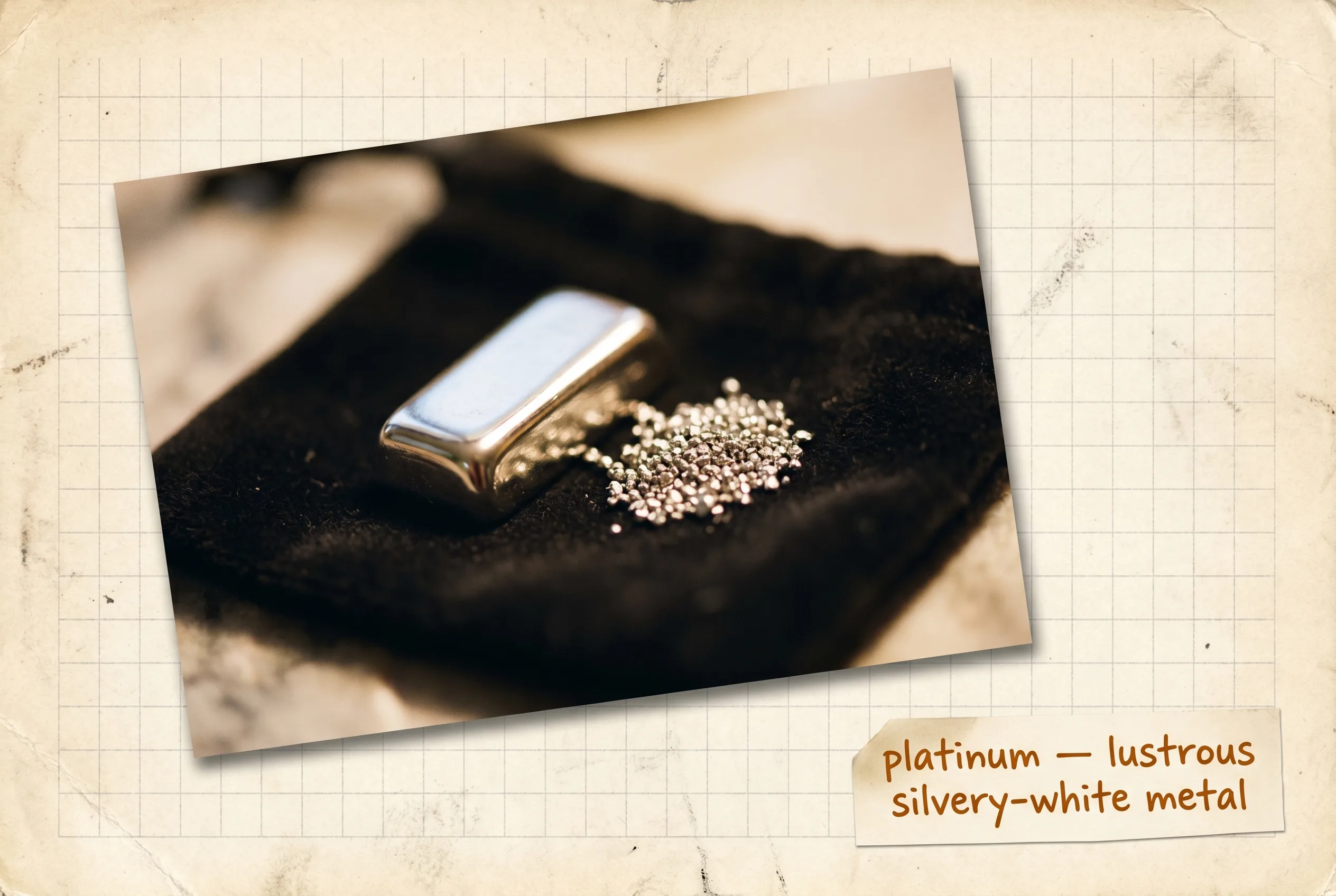
Polished silvery-white platinum bar beside platinum grains on dark velvet.
What it looks likePlatinum: a lustrous silvery-white precious metal prized for its shine and chemical stability.
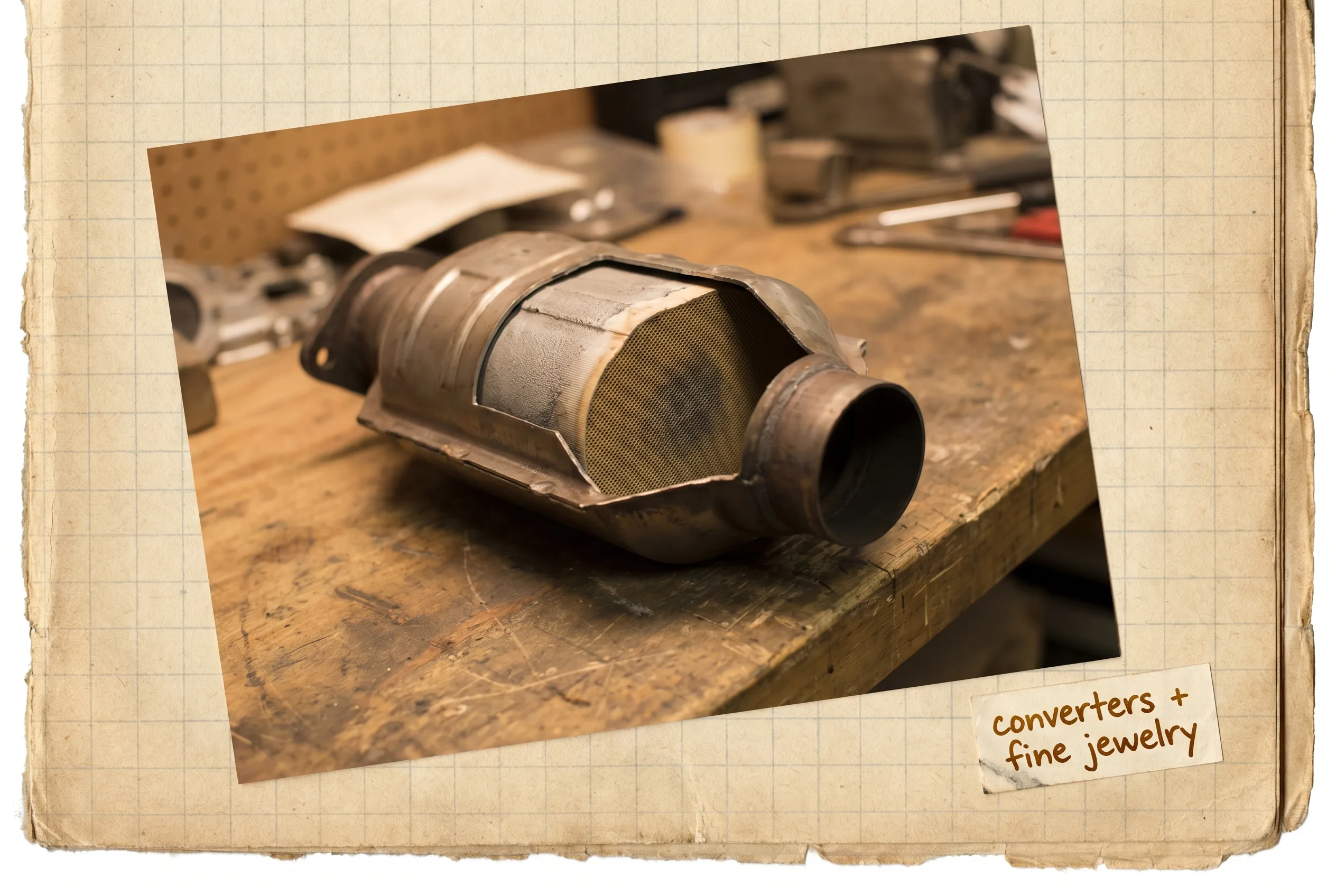
Cutaway catalytic converter showing a platinum-coated honeycomb ceramic core on a bench.
Where you'd see itPlatinum coats the honeycomb inside catalytic converters and is shaped into fine jewelry.
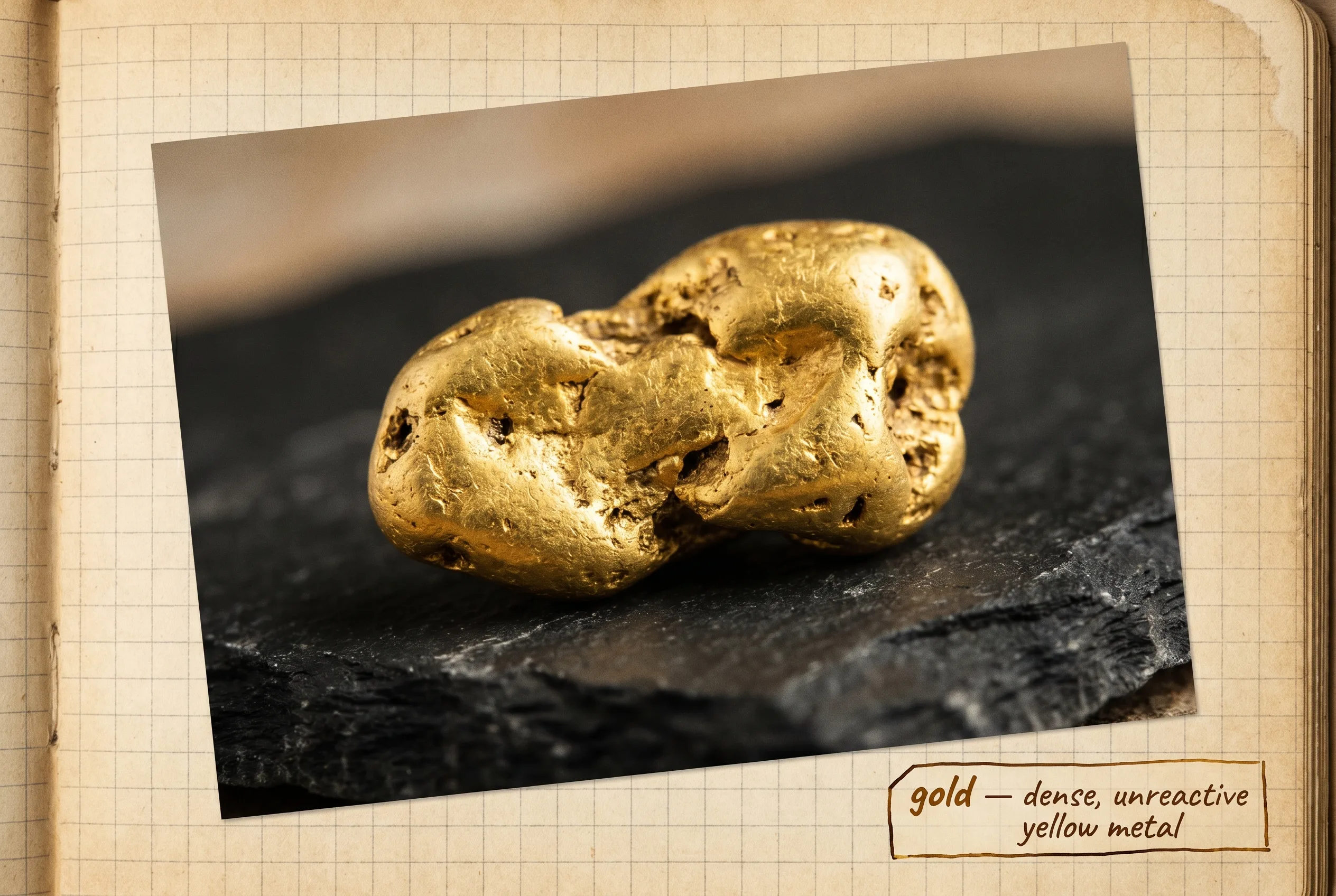
A raw gold nugget, rich metallic yellow with a warm luster, on black slate.
What it looks likeGold is dense, unreactive, and the unmistakable warm yellow metal.
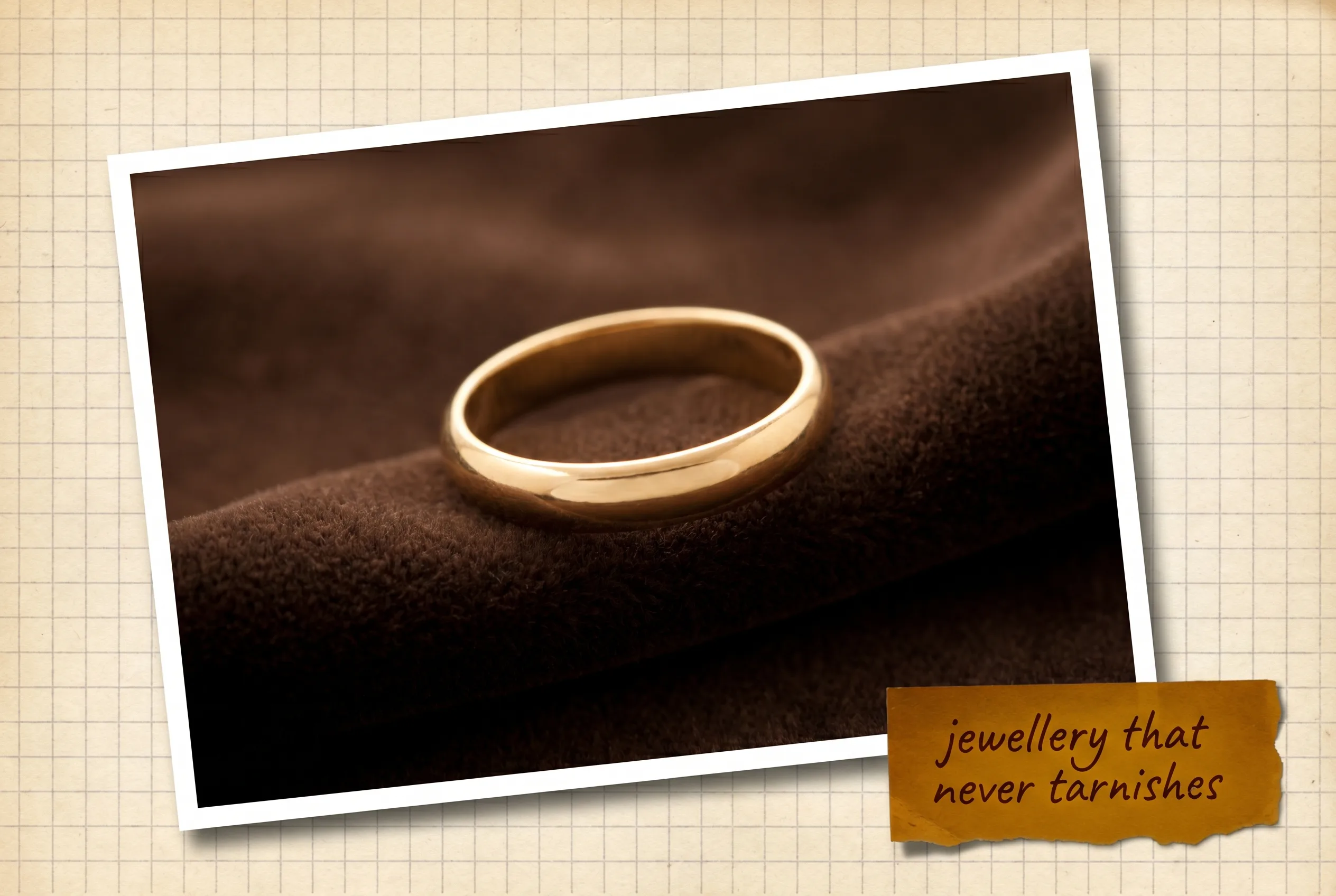
A single plain polished gold wedding ring resting on dark cloth.
Where you'd see itBecause it barely reacts, gold jewelry keeps its shine for centuries.
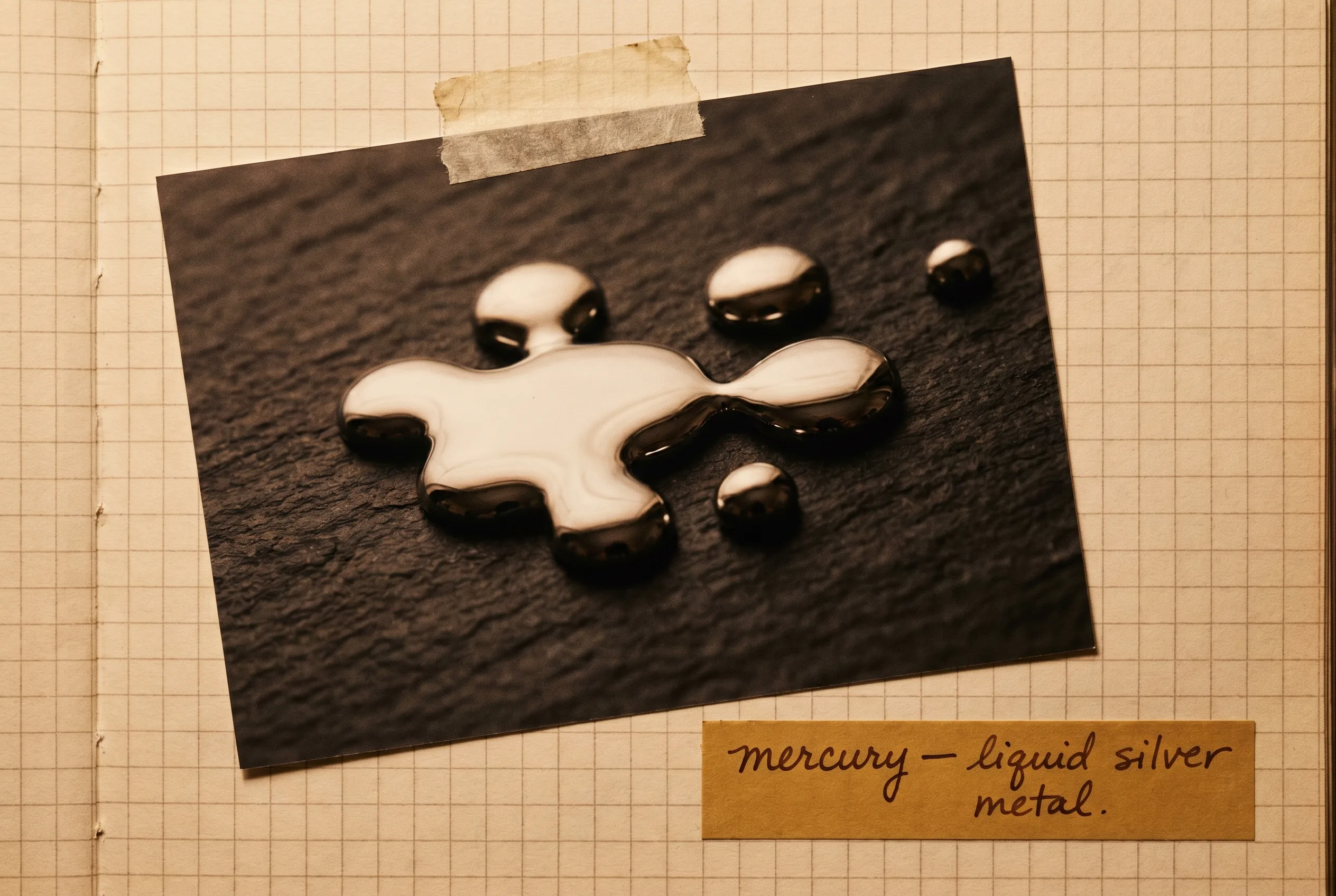
Beads of liquid mercury pooled on black slate, reflective silver metal.
What it looks likeMercury is the only metal that’s liquid at room temperature - mirror-bright silver beads.
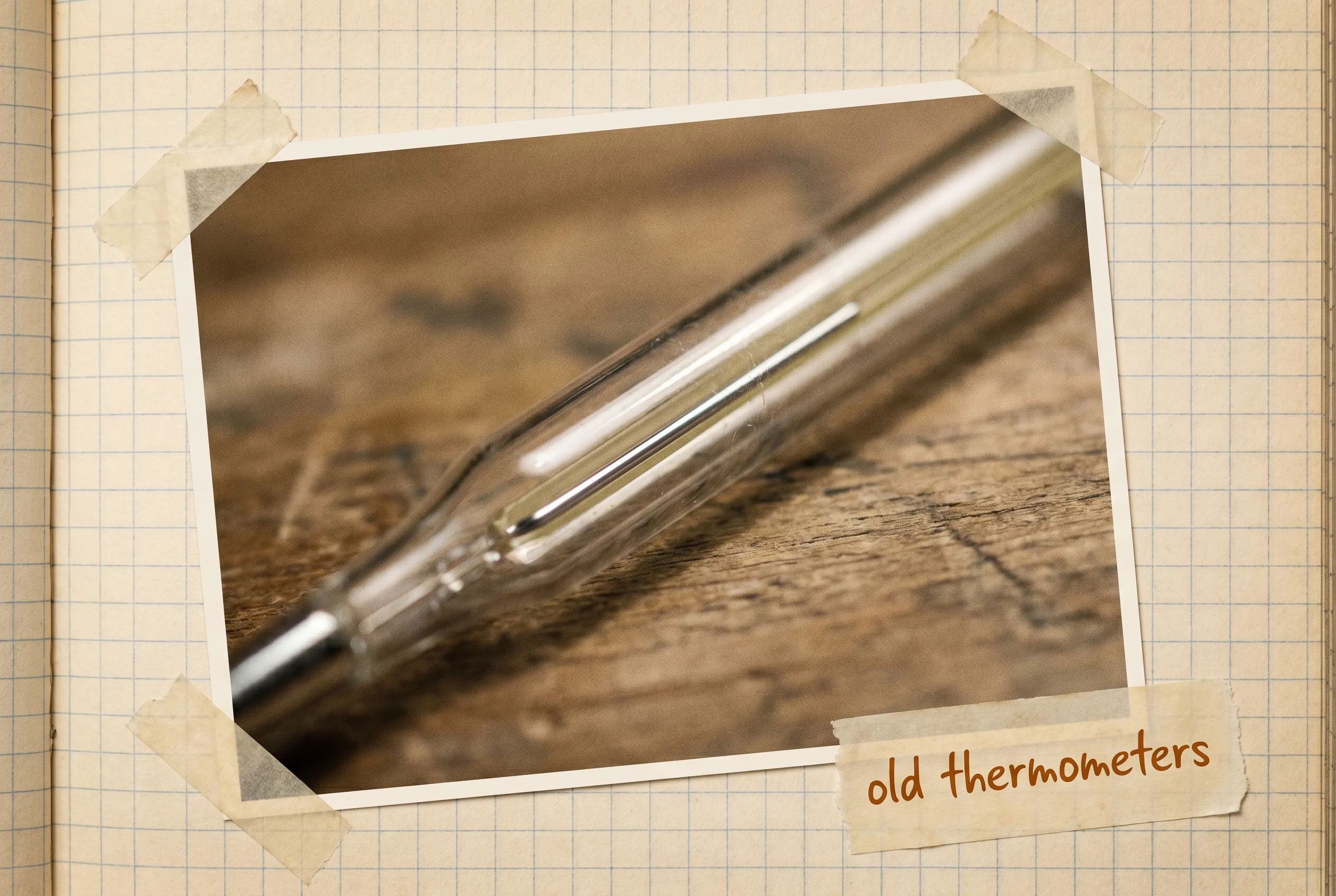
Close-up of an old mercury-in-glass thermometer with a thin silvery line in the bore.
Where you'd see itThe thin silver line in an old thermometer is mercury rising with the heat.
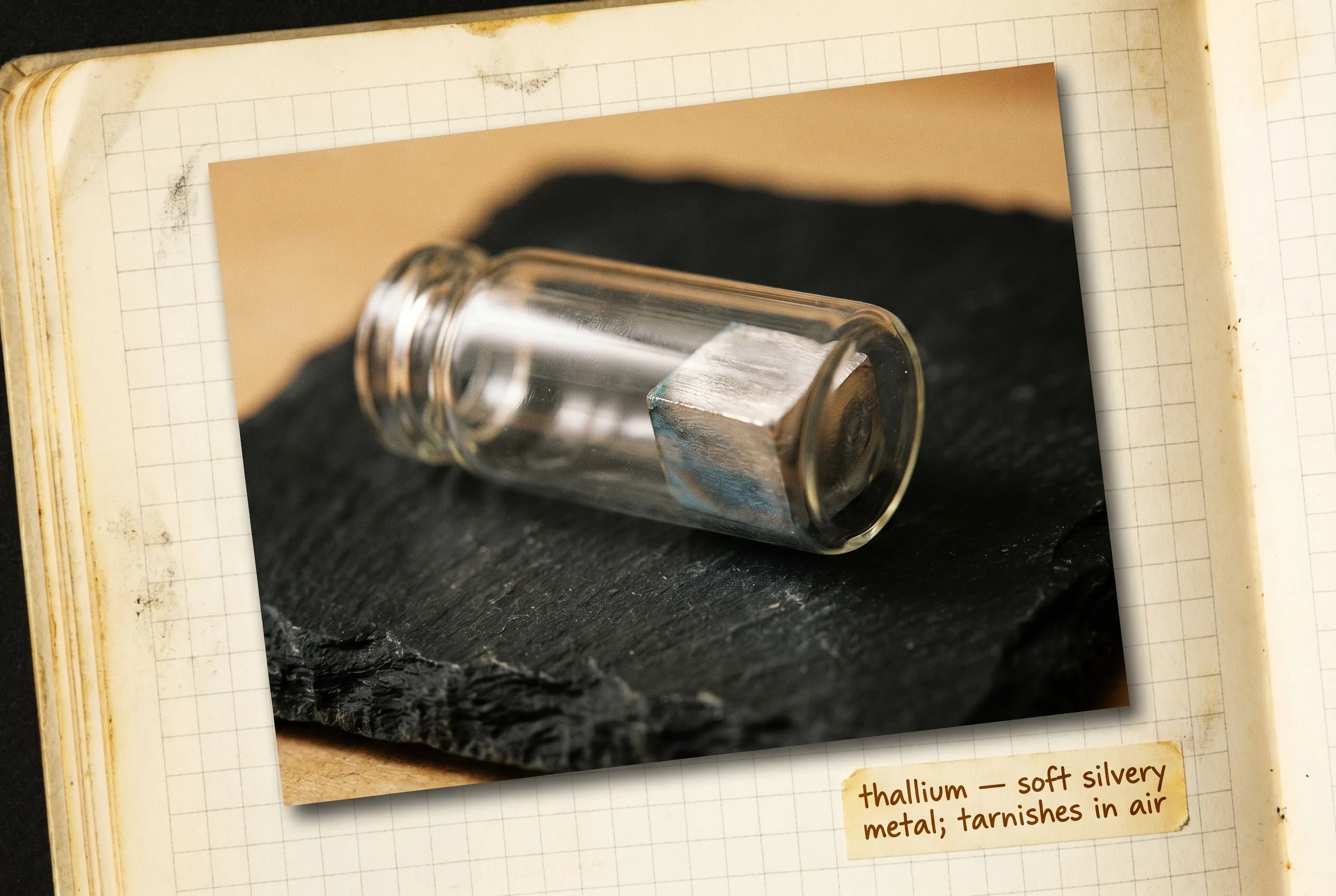
A silvery metal cube inside a small glass vial on black slate, faces dulling to blue-grey.
What it looks likeA soft, silvery thallium cube - bright where freshly cut, dulling to a bluish tarnish in air.
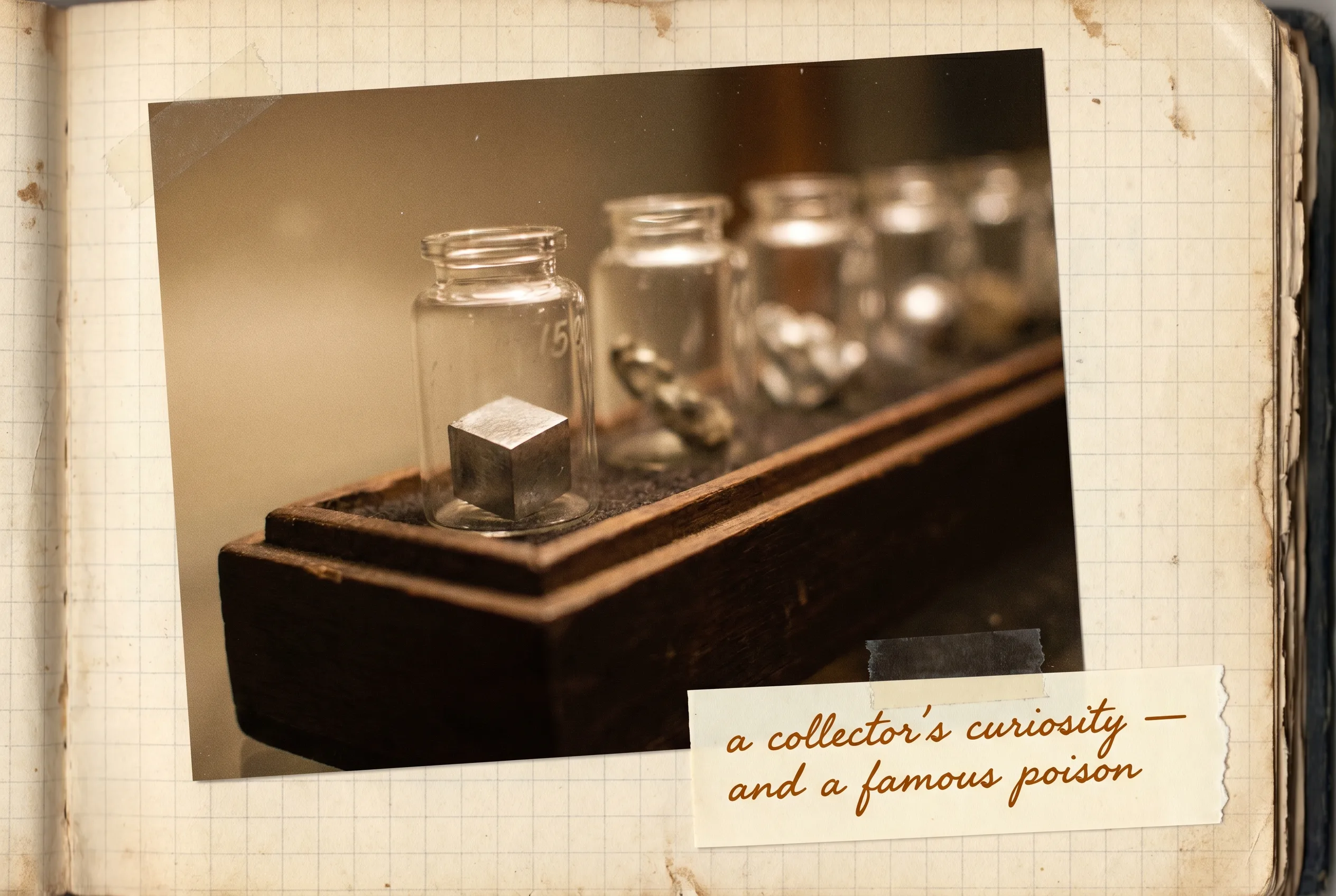
A row of sealed element-sample vials in a wooden display block, a silvery cube in focus.
Where you'd see itToday thallium is mostly a collector’s curiosity - and one of history’s most notorious poisons.
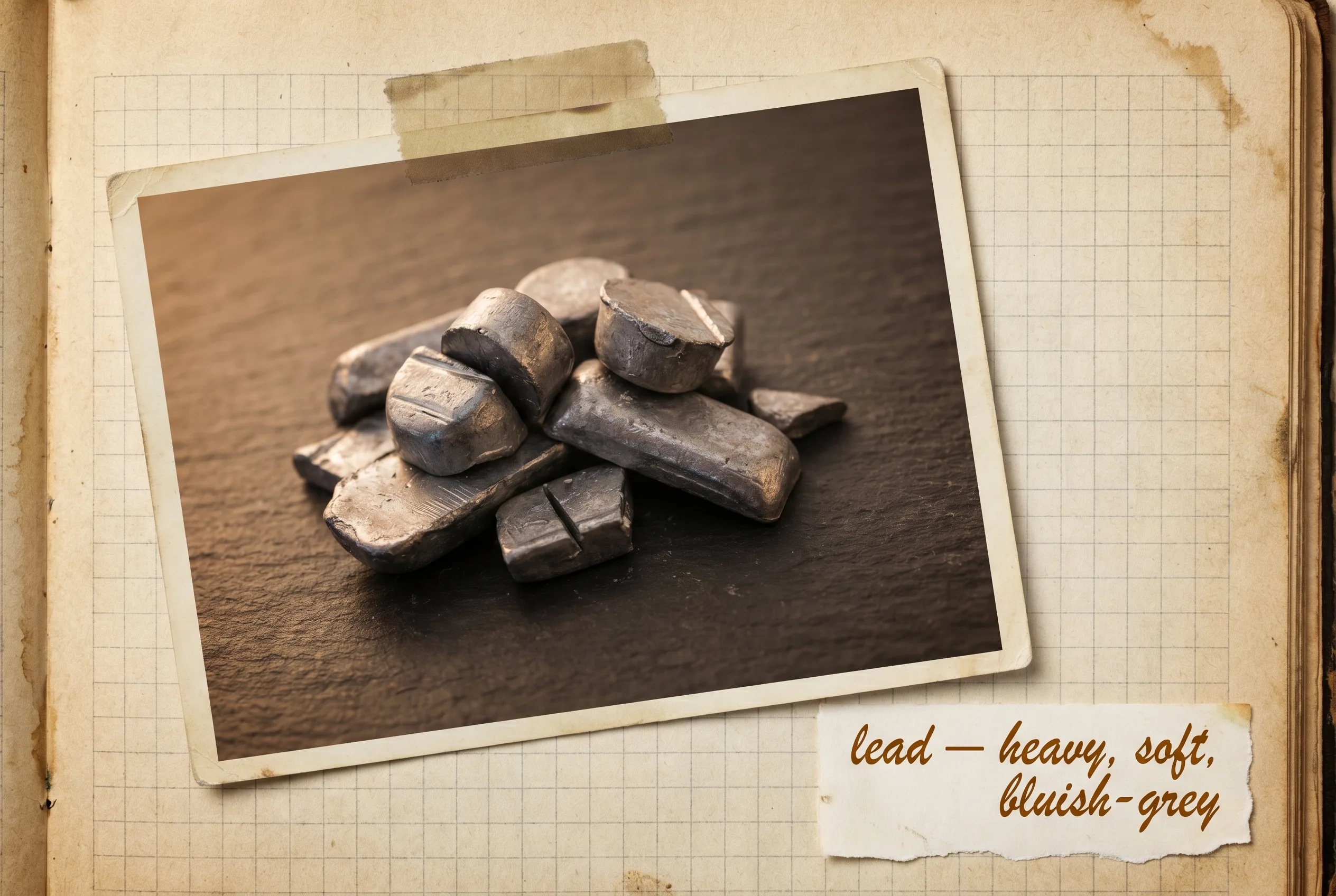
A cluster of dense bluish-grey lead pieces on black slate.
What it looks likeLead is heavy, soft, and bluish-grey - the pile looks small for how much it weighs.
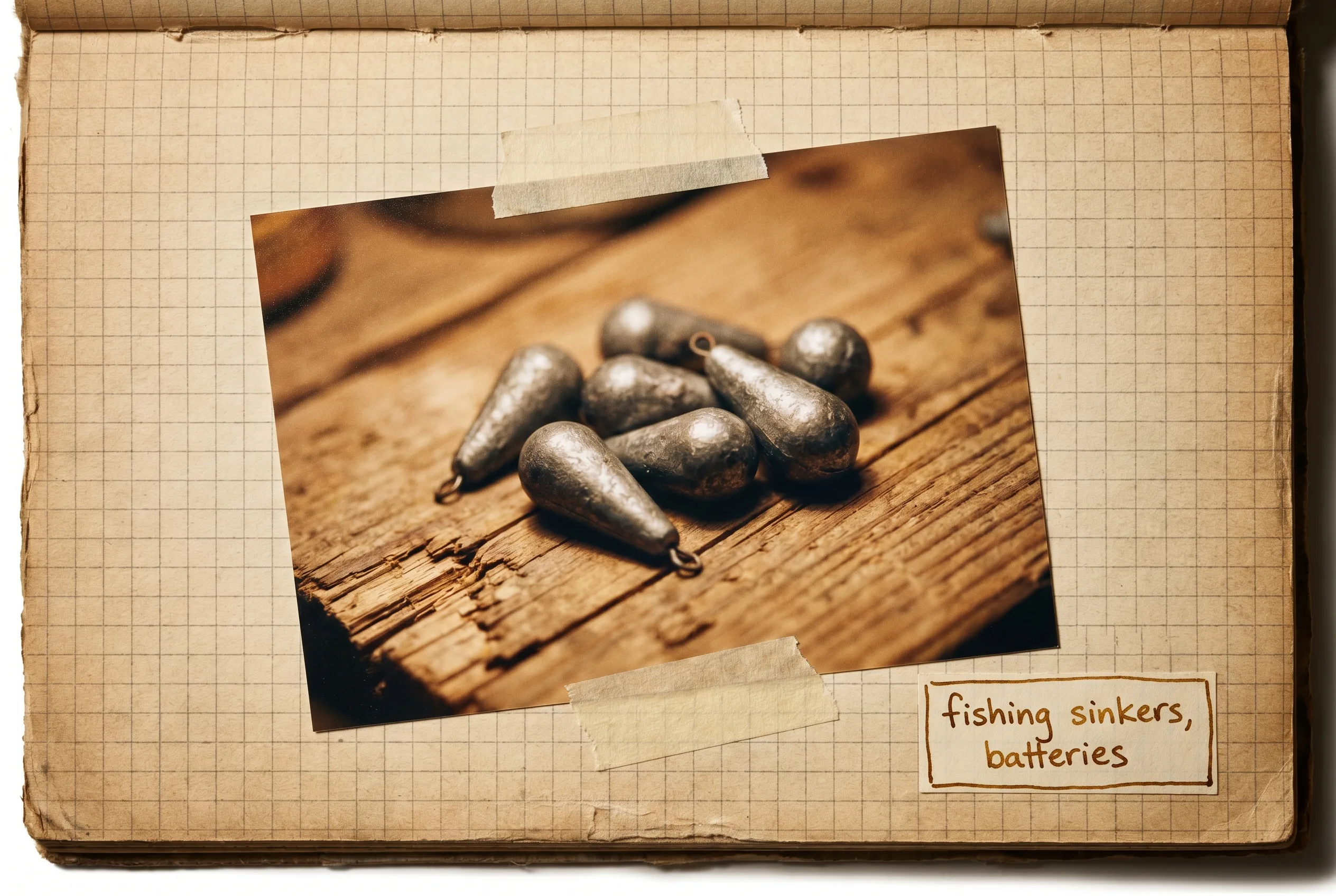
A handful of grey lead fishing sinkers in assorted shapes on weathered wood.
Where you'd see itLead’s density makes it ideal for fishing sinkers and car batteries.
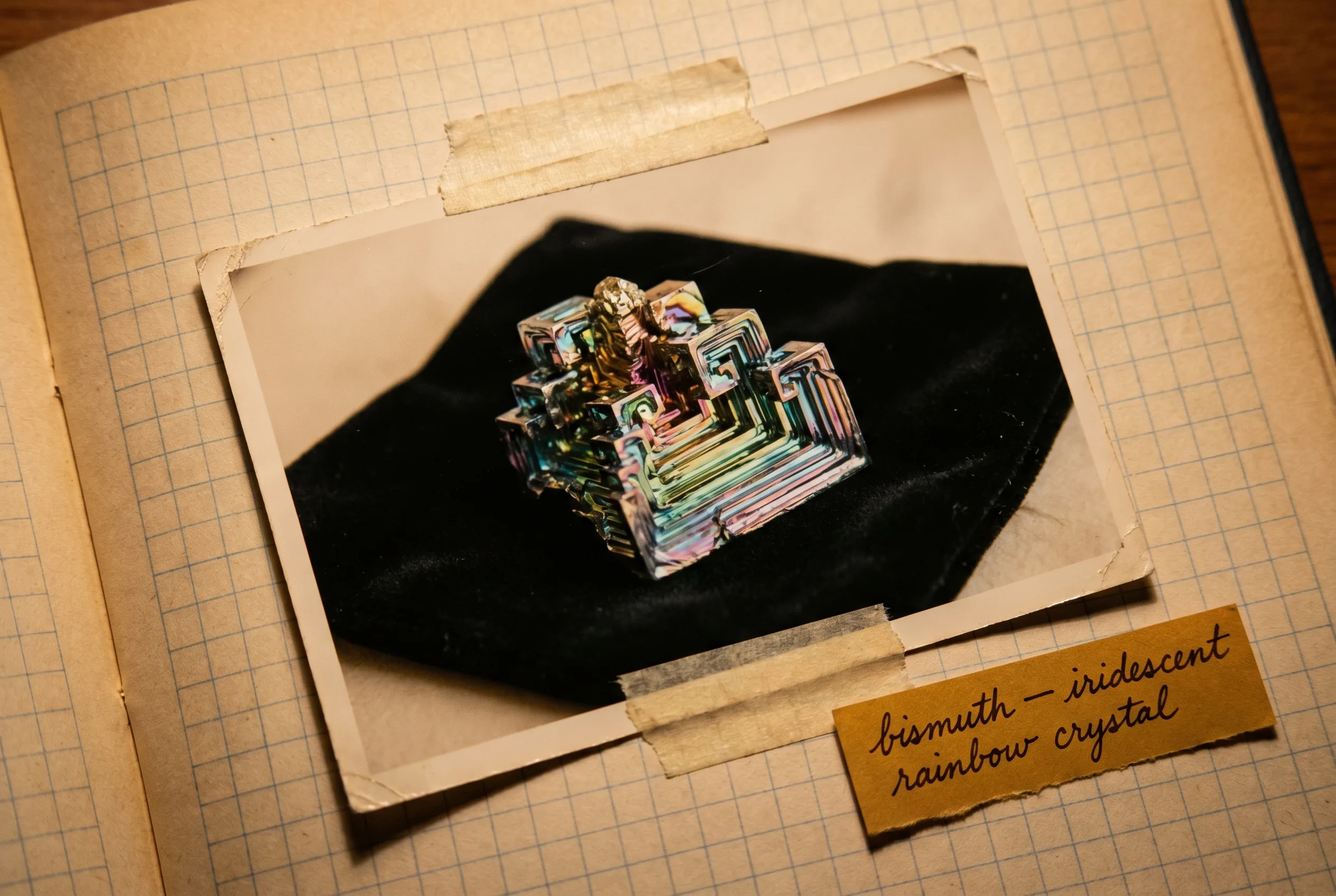
Lab-grown bismuth hopper crystal with iridescent pink, blue and gold stepped facets on black velvet.
What it looks likeBismuth grows into stair-stepped hopper crystals whose oxide film shimmers in rainbow colors.
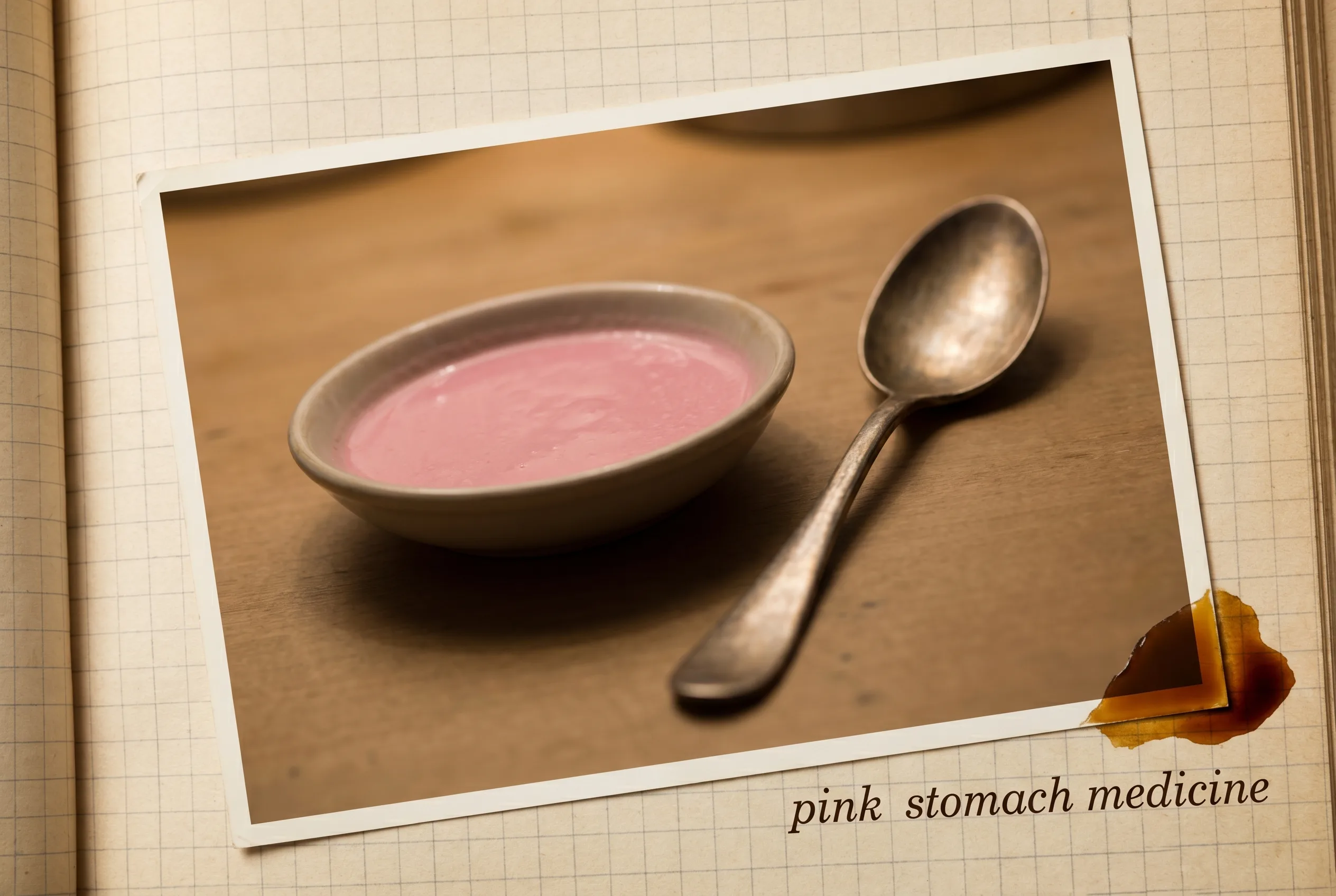
Small dish of chalky pink antacid liquid beside a spoon in soft warm light.
Where you'd see itA bismuth compound is the active ingredient in pink stomach medicine; the metal also makes low-melt alloys.
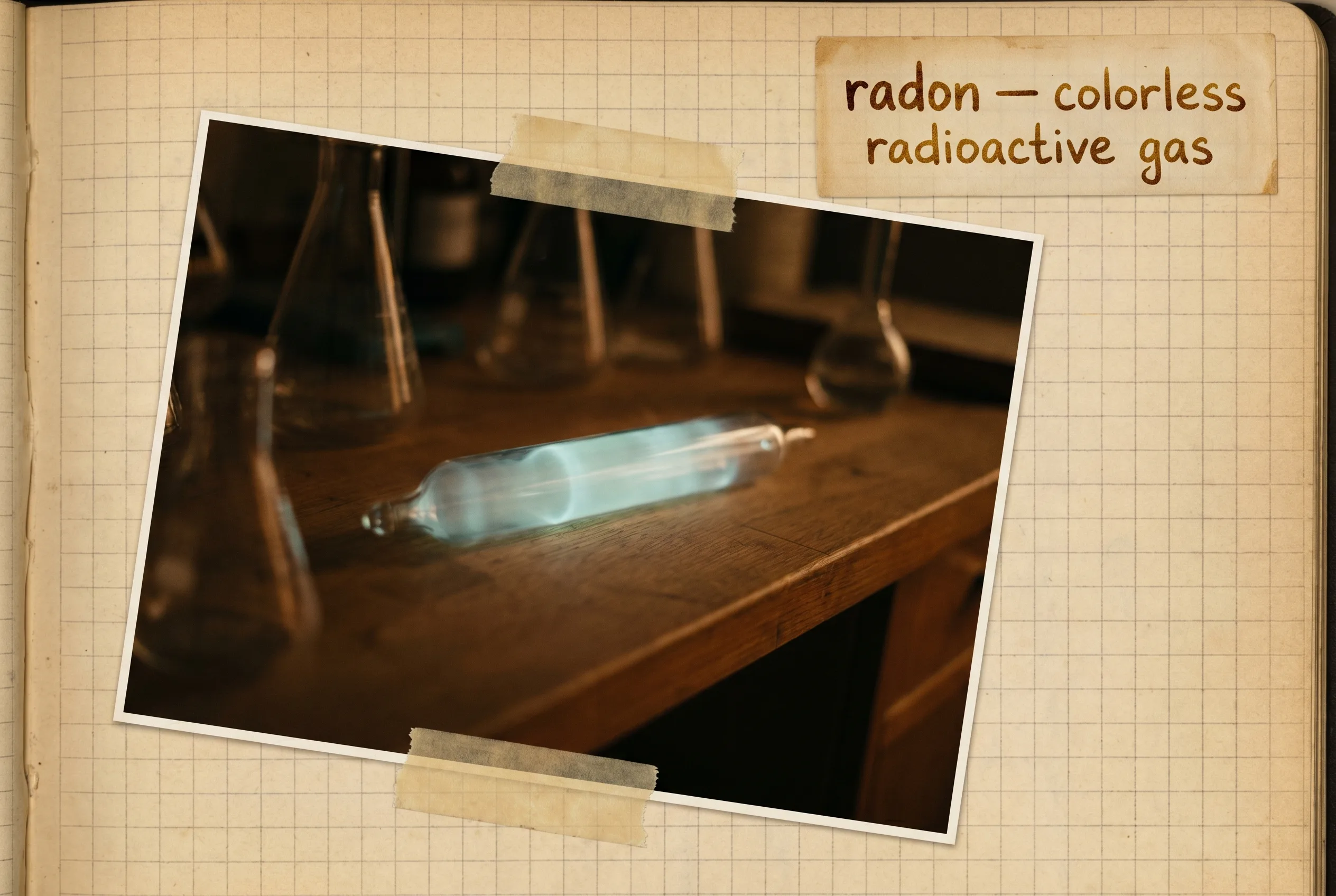
Sealed gas discharge tube giving off a very faint pale glow in a darkened room.
What it looks likeRadon is a colorless, invisible radioactive gas; a discharge tube only hints at its presence with a faint glow.
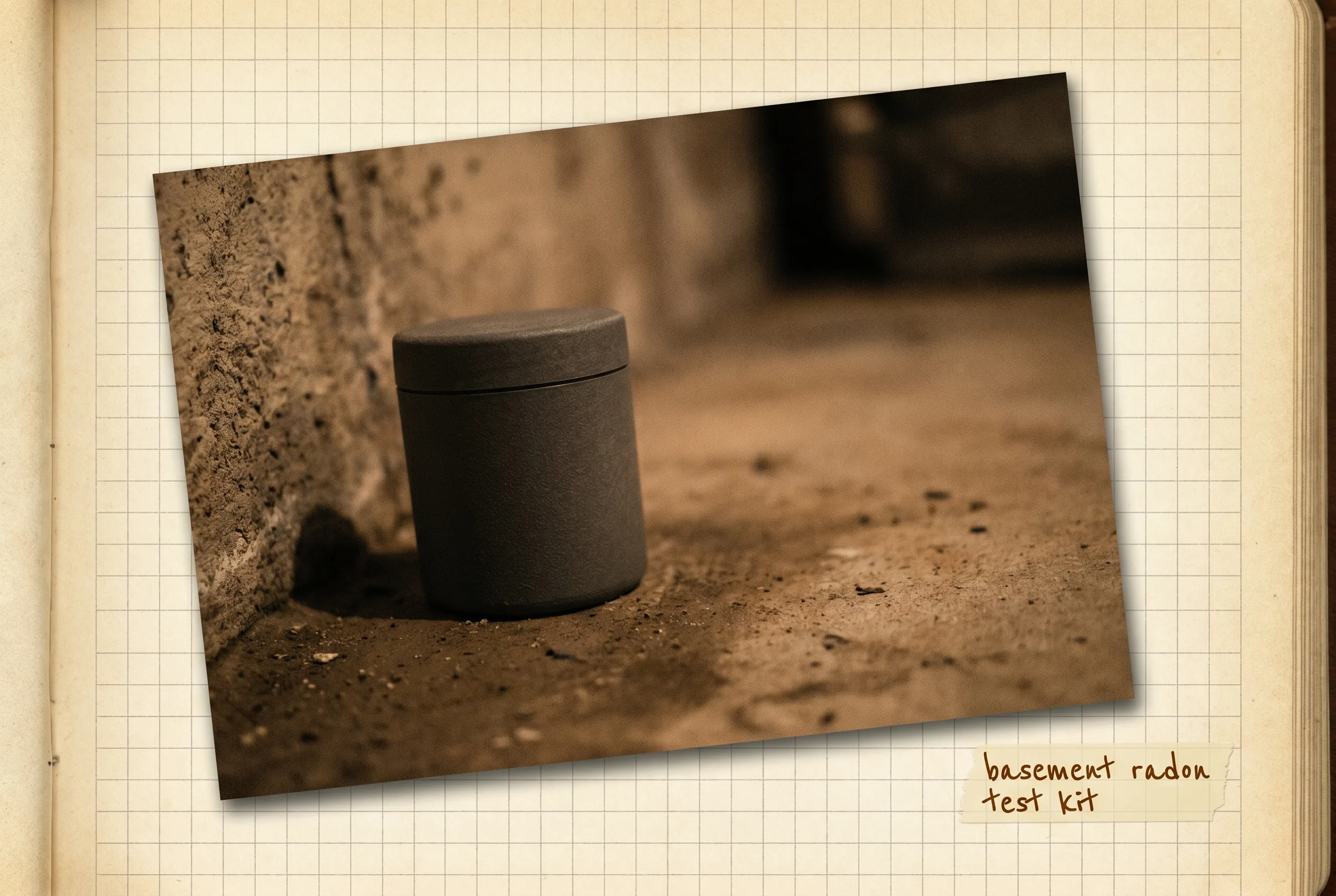
Plain charcoal radon test canister on a basement concrete floor by a foundation wall.
Where you'd see itRadon seeps from the ground into basements, so homes are checked with a simple radon test canister.
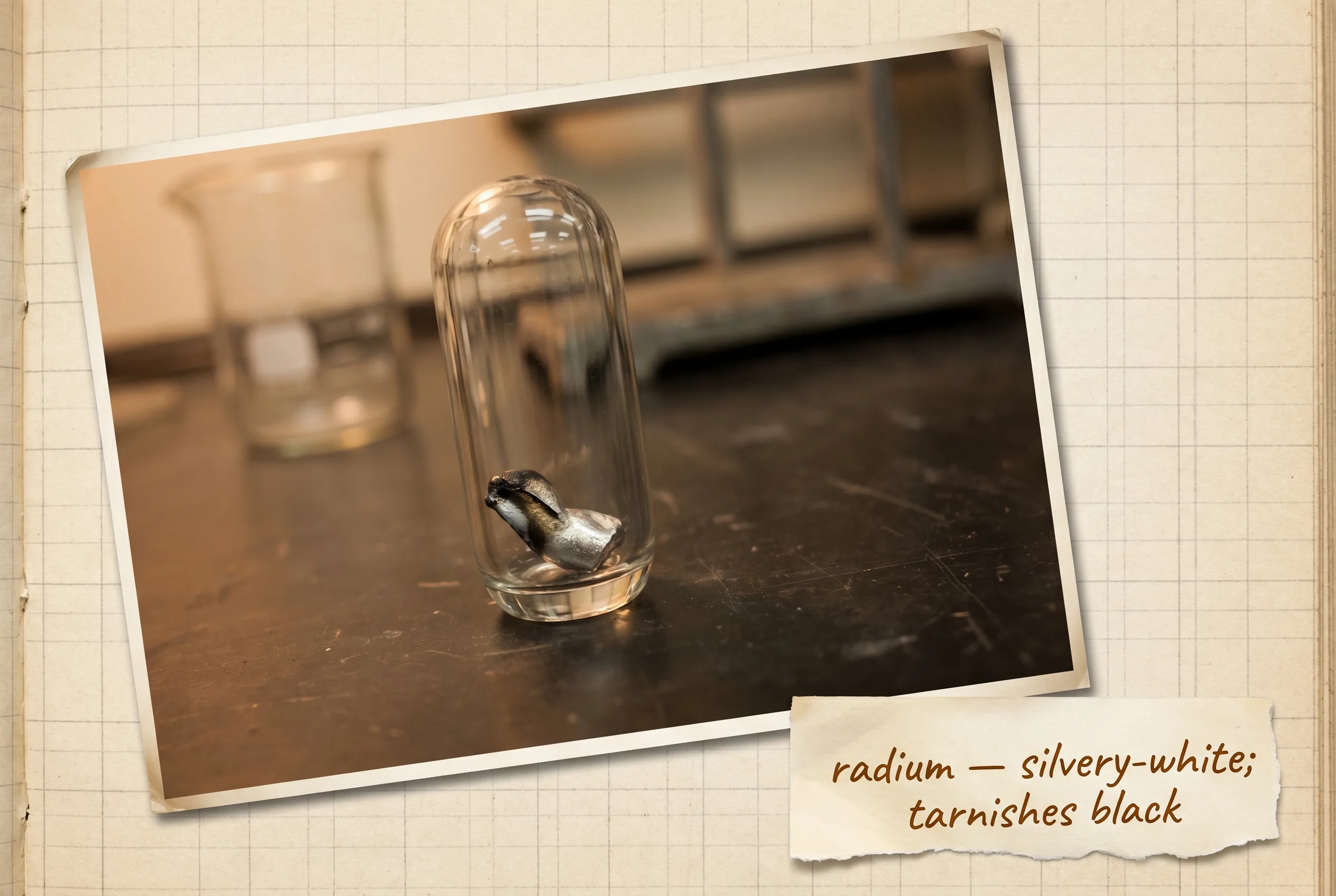
Tiny sealed sample of silvery-white radium metal tarnishing black inside a thick container.
What it looks likeRadium is a silvery-white metal that quickly tarnishes black; it is radioactive and kept sealed.
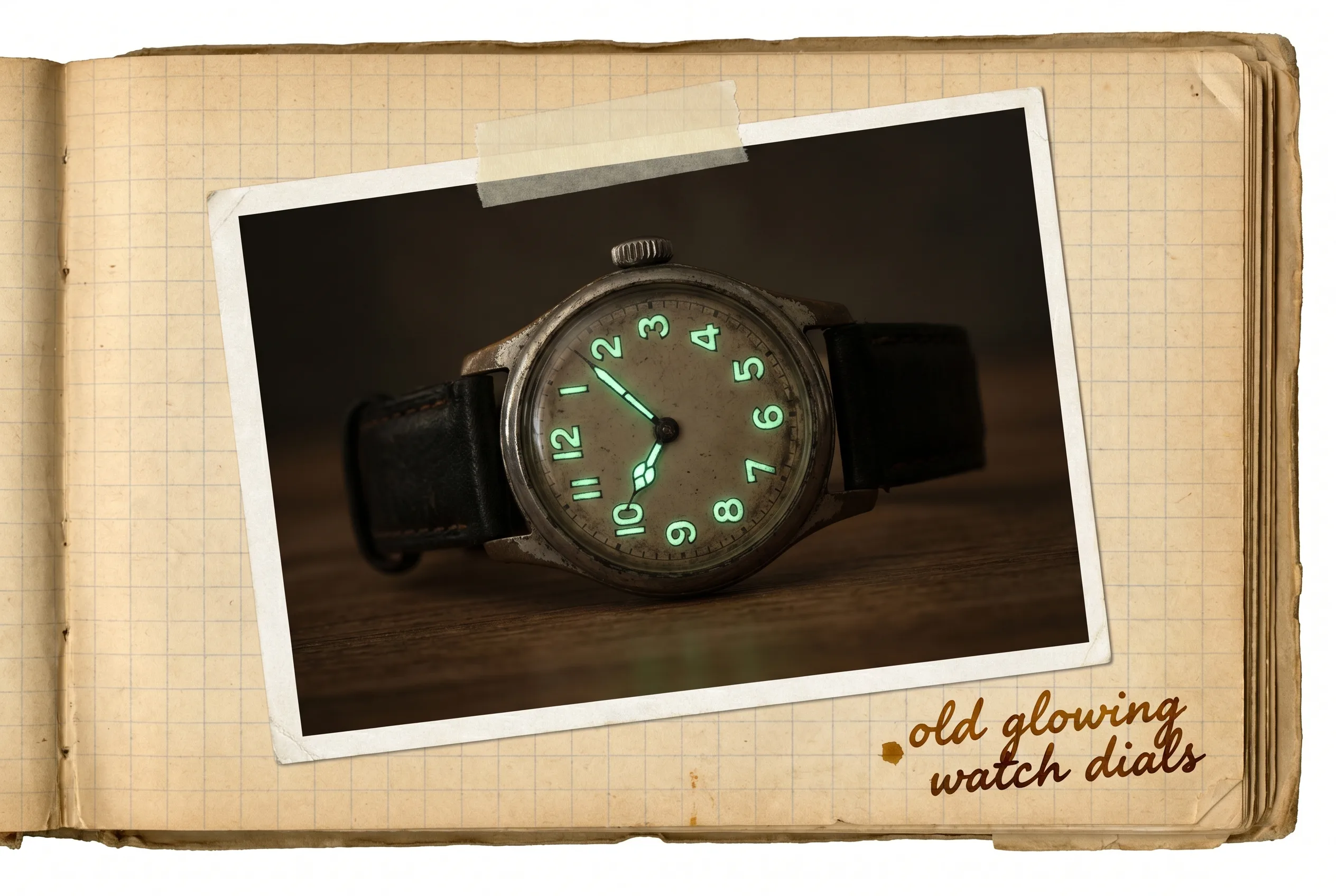
Antique wristwatch in the dark with dial numbers glowing soft green from radium paint.
Where you'd see itRadium paint made old watch and clock dials glow green in the dark, a practice long since abandoned.
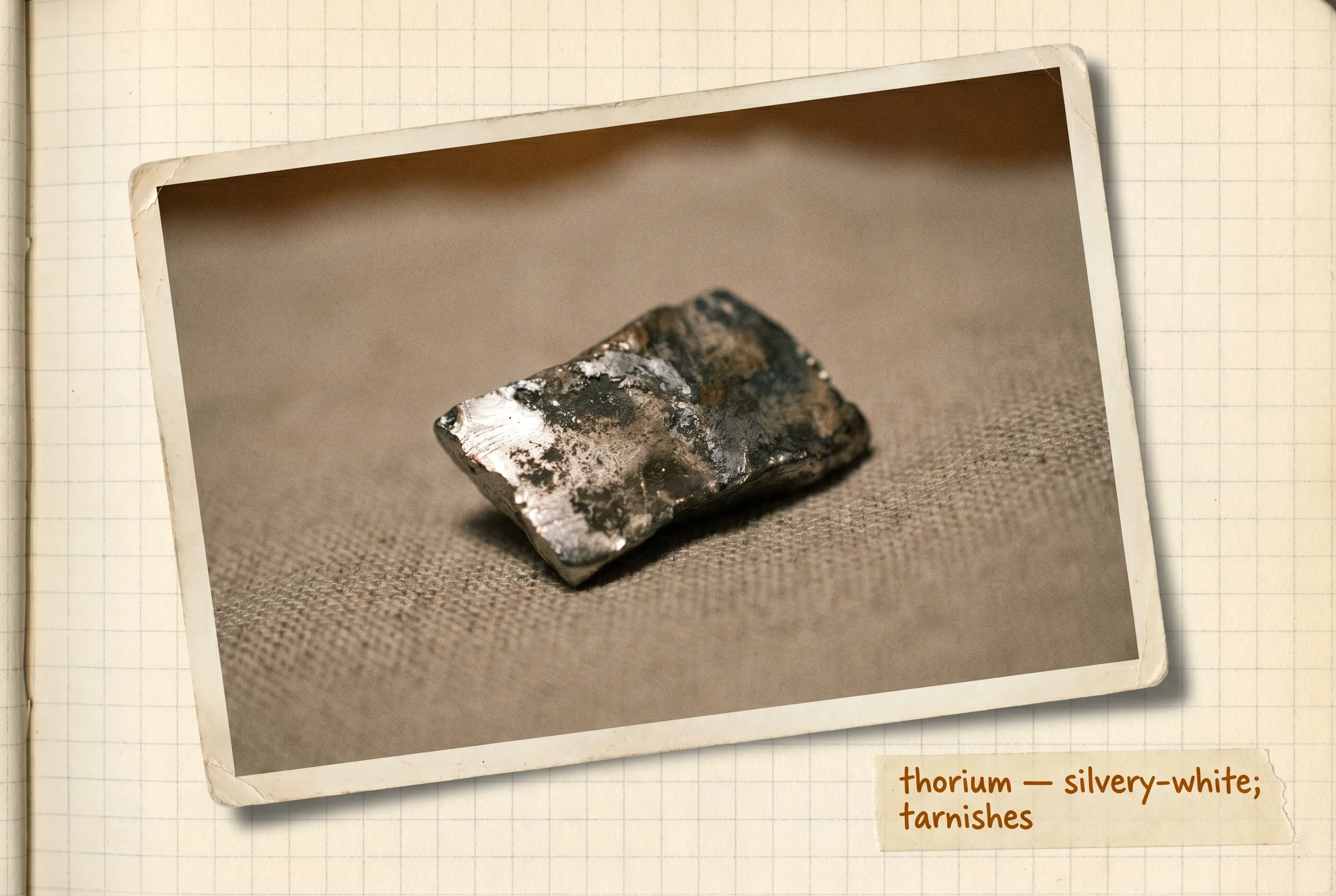
Piece of silvery-white thorium metal with gray and black tarnished surfaces on neutral cloth.
What it looks likeThorium is a silvery-white metal that tarnishes gray to black when exposed to air.
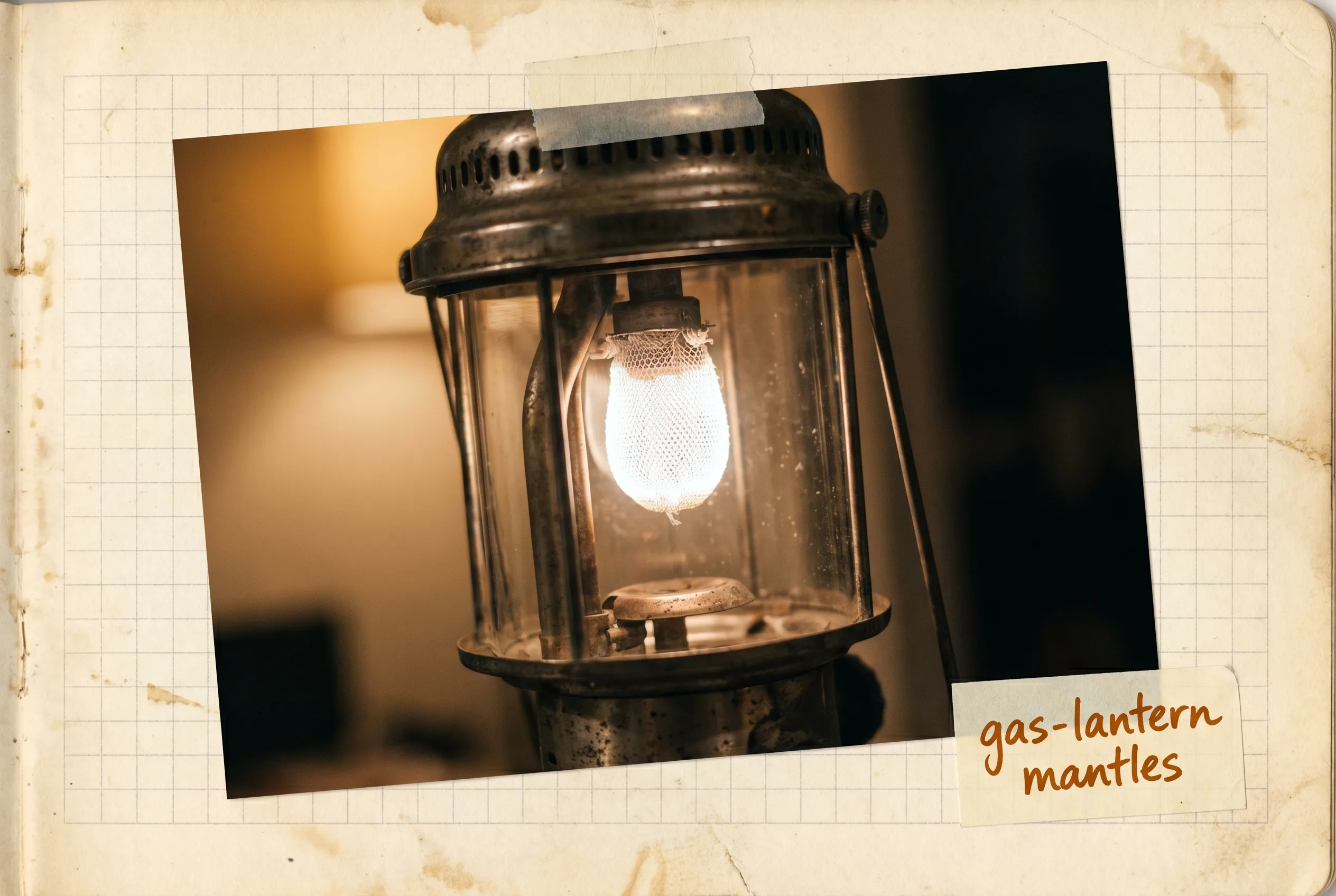
Old gas-lantern with a woven incandescent mantle glowing bright white in a dim background.
Where you'd see itThorium once brightened gas-lantern mantles and is studied as a possible nuclear fuel.
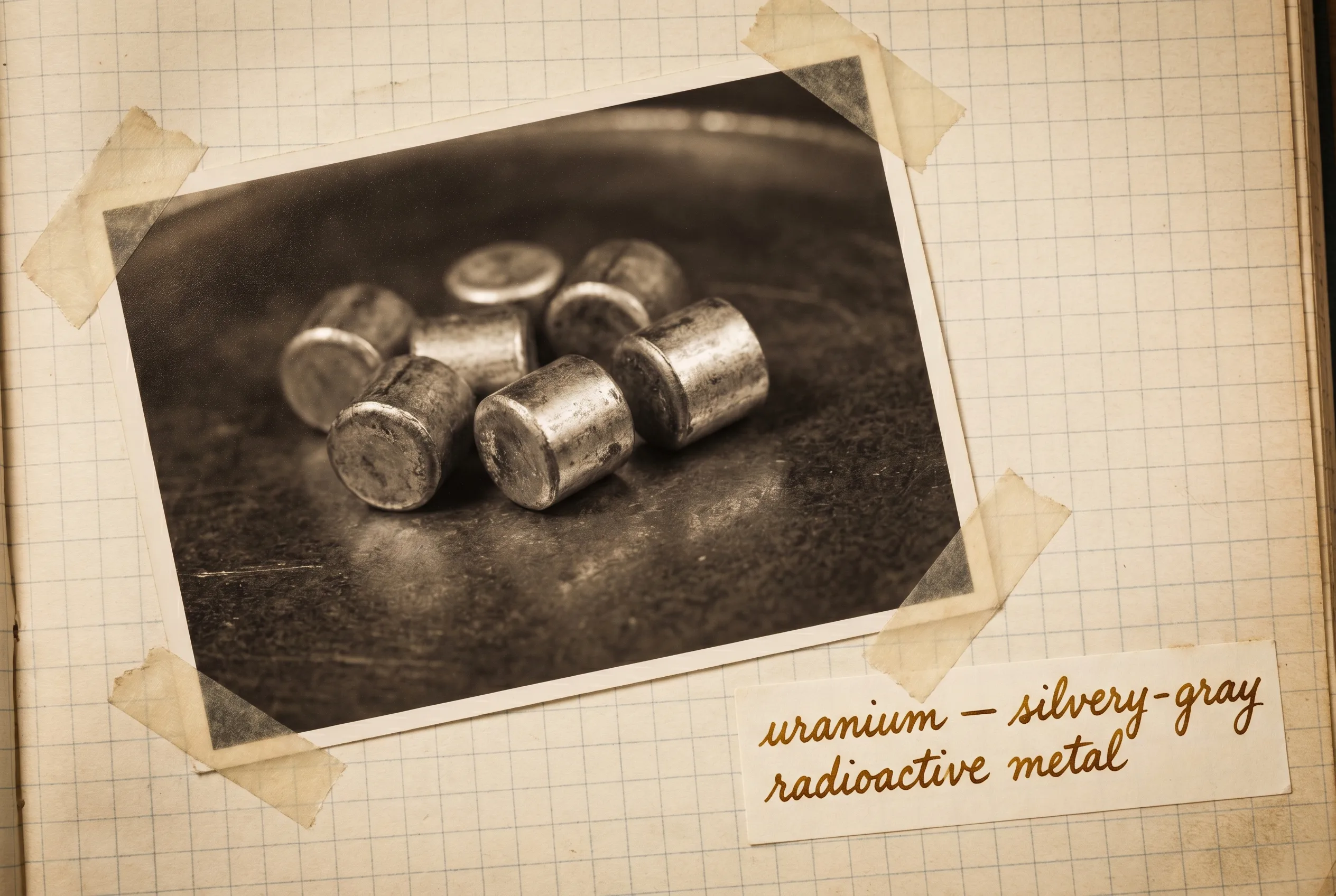
Few silvery-gray uranium metal fuel pellets with dulled surfaces on a dark steel tray.
What it looks likeUranium is a silvery-gray radioactive metal that tarnishes; it is pressed into nuclear fuel pellets.
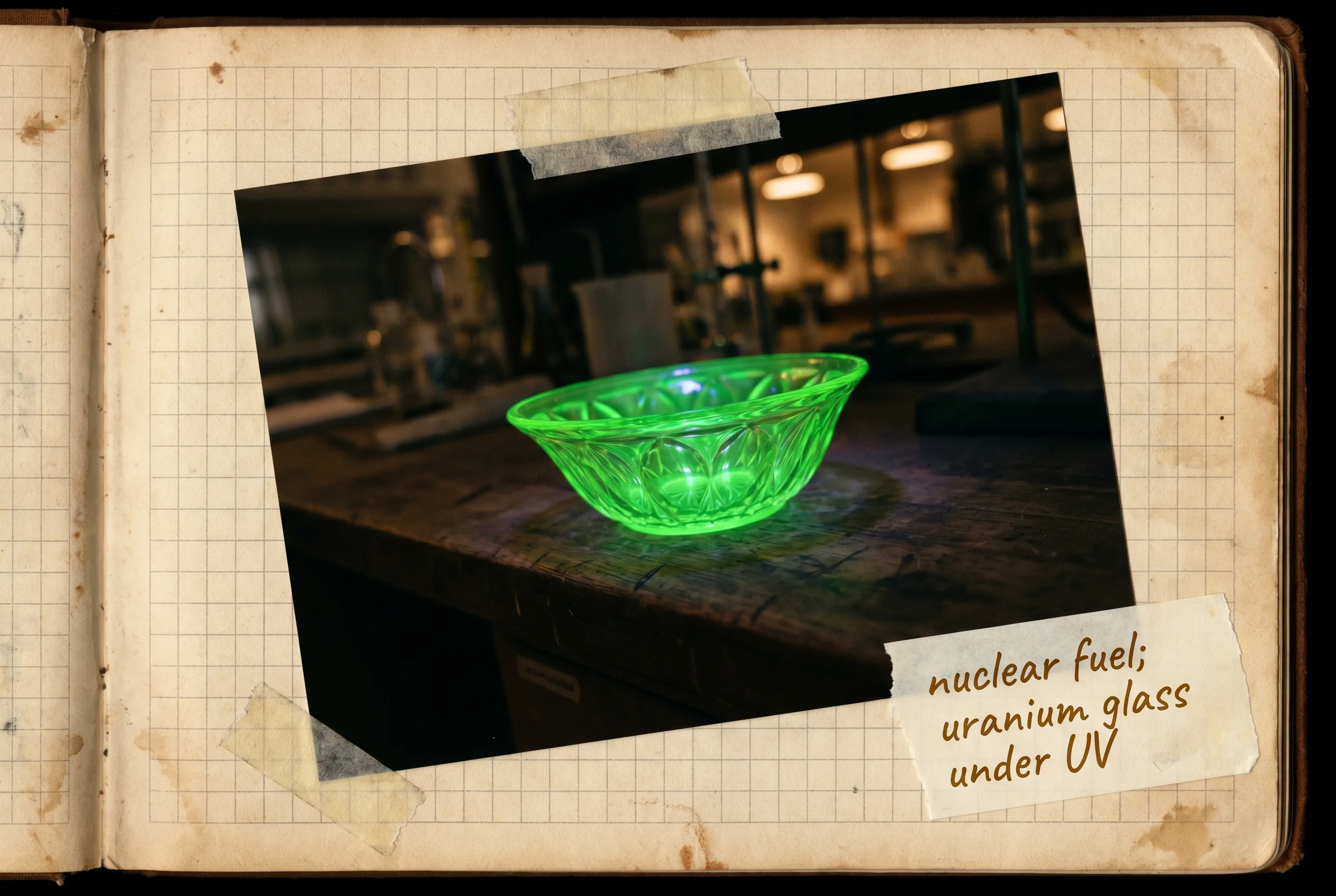
Vintage green uranium glass bowl glowing vivid fluorescent green under ultraviolet light.
Where you'd see itUranium powers nuclear reactors, and trace uranium makes vintage glass glow green under UV light.
Explore all 118 elements →