Atomic number 86
Radon
Noble gas
In the real world
Quick facts
- Atomic mass
- 222.00
- Group
- 18
- Period
- 6
- State (STP)
- gas
- Electronegativity
- –
- Common ox. states
- 0, +2
Properties
[Xe] 4f¹⁴ 5d¹⁰ 6s² 6p⁶
- Ionization energy
- 1037.0 kJ/mol
- Electron affinity
- -68.0 kJ/mol
- Melting point
- 202.00 K (-71.1 °C)
- Boiling point
- 211.50 K (-61.6 °C)
How dangerous is it?
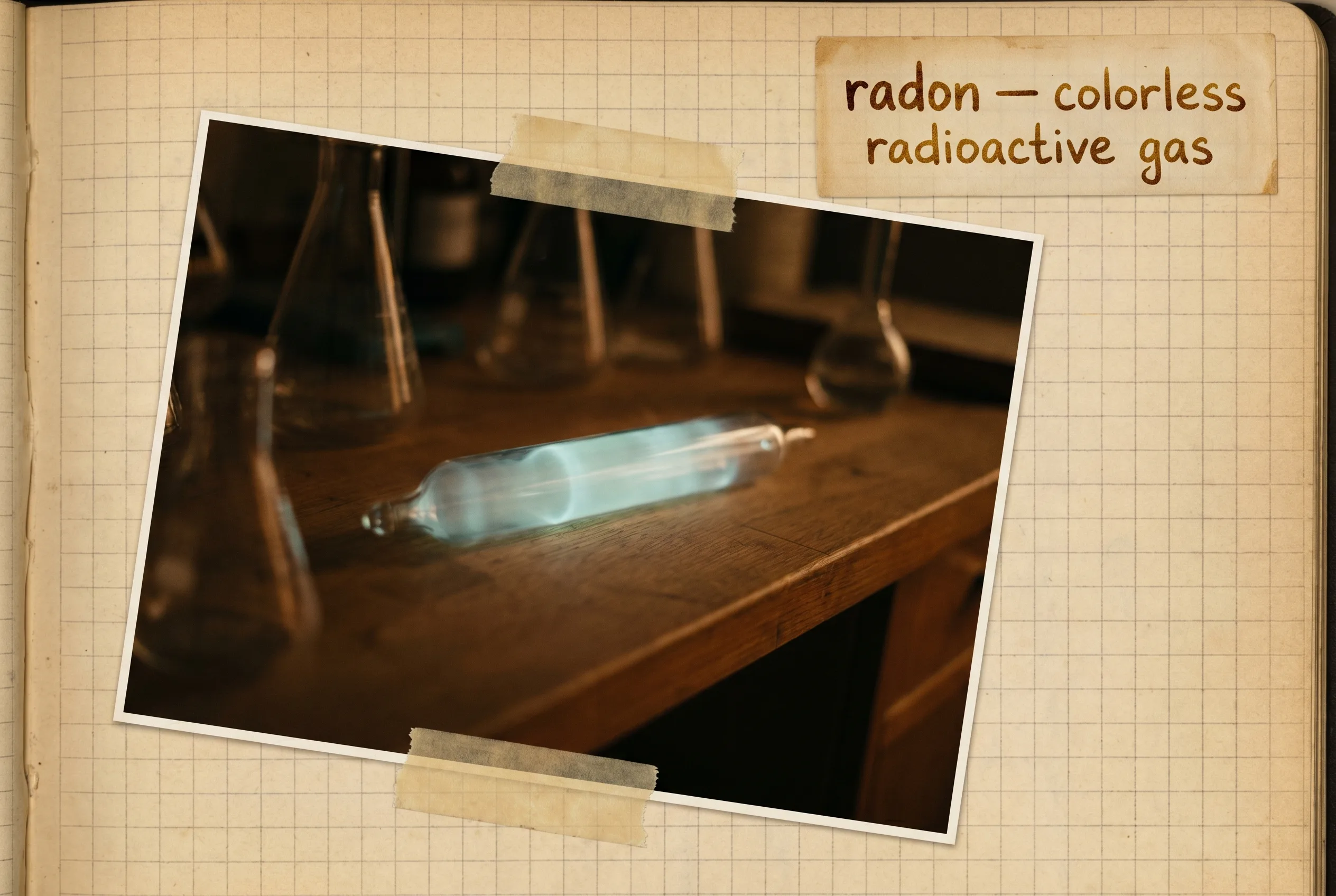
A radioactive gas that you cannot see or smell. It is chemically inert, so the danger is not a reaction but breathing it in over many years.
- RadioactiveBuilds up over time
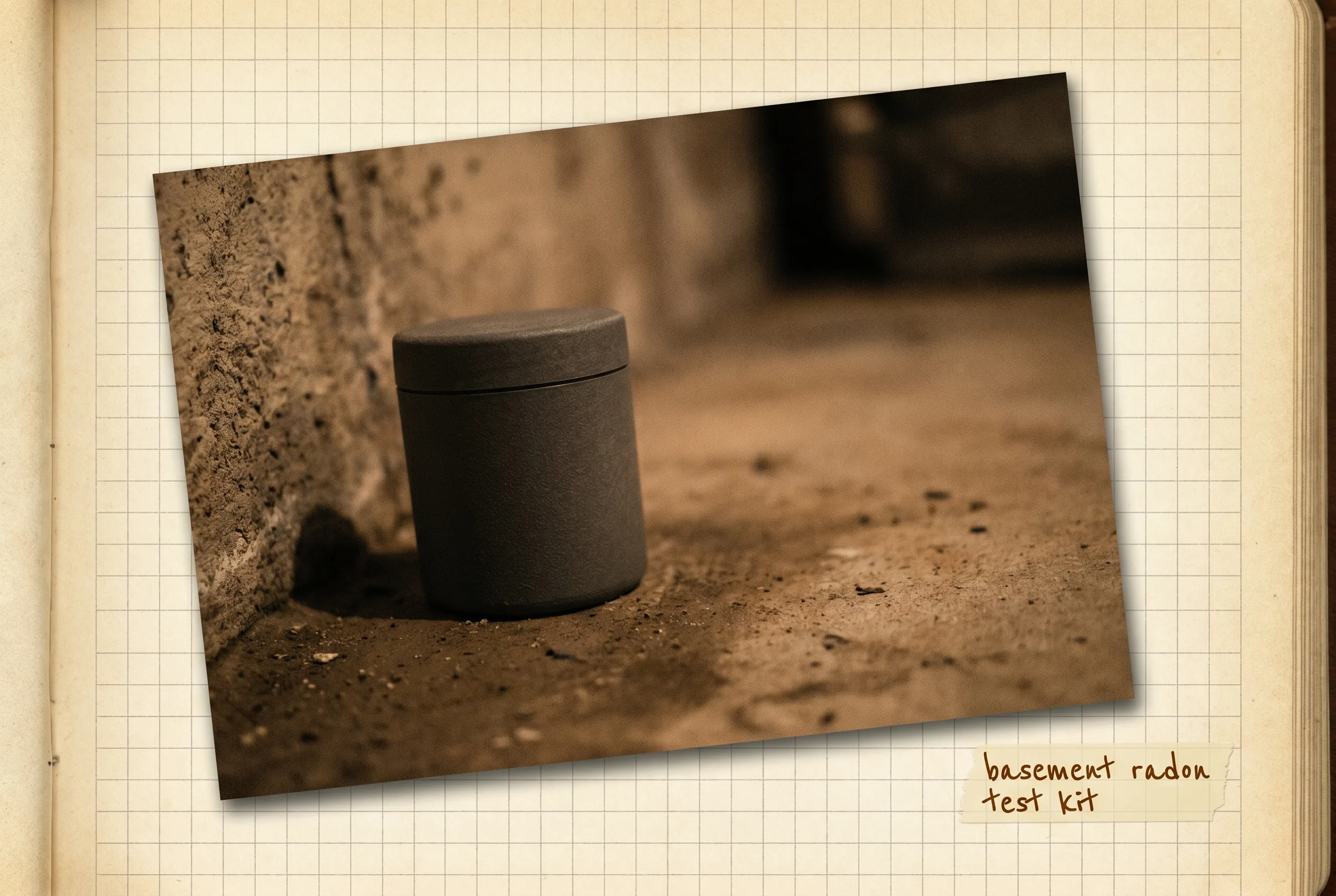
Breathing radon over a long time is a leading cause of lung cancer, and it can seep up into basements from the ground. (the risk comes from inhaling the gas over time, not from a chemical reaction)
Homes are tested for it and fitted with venting systems that keep it from building up indoors.
How it bonds
Radon is the heaviest noble gas; can form a few fluorides (RnF₂) under harsh conditions but mostly behaves as a noble gas. The big deal: it's a radioactive decay product of uranium and thorium in soil, seeps into basements, and is the second-leading cause of lung cancer in the US.