Atomic number 92
Uranium
Actinide
In the real world
Quick facts
- Atomic mass
- 238.03
- Group
- –
- Period
- 7
- State (STP)
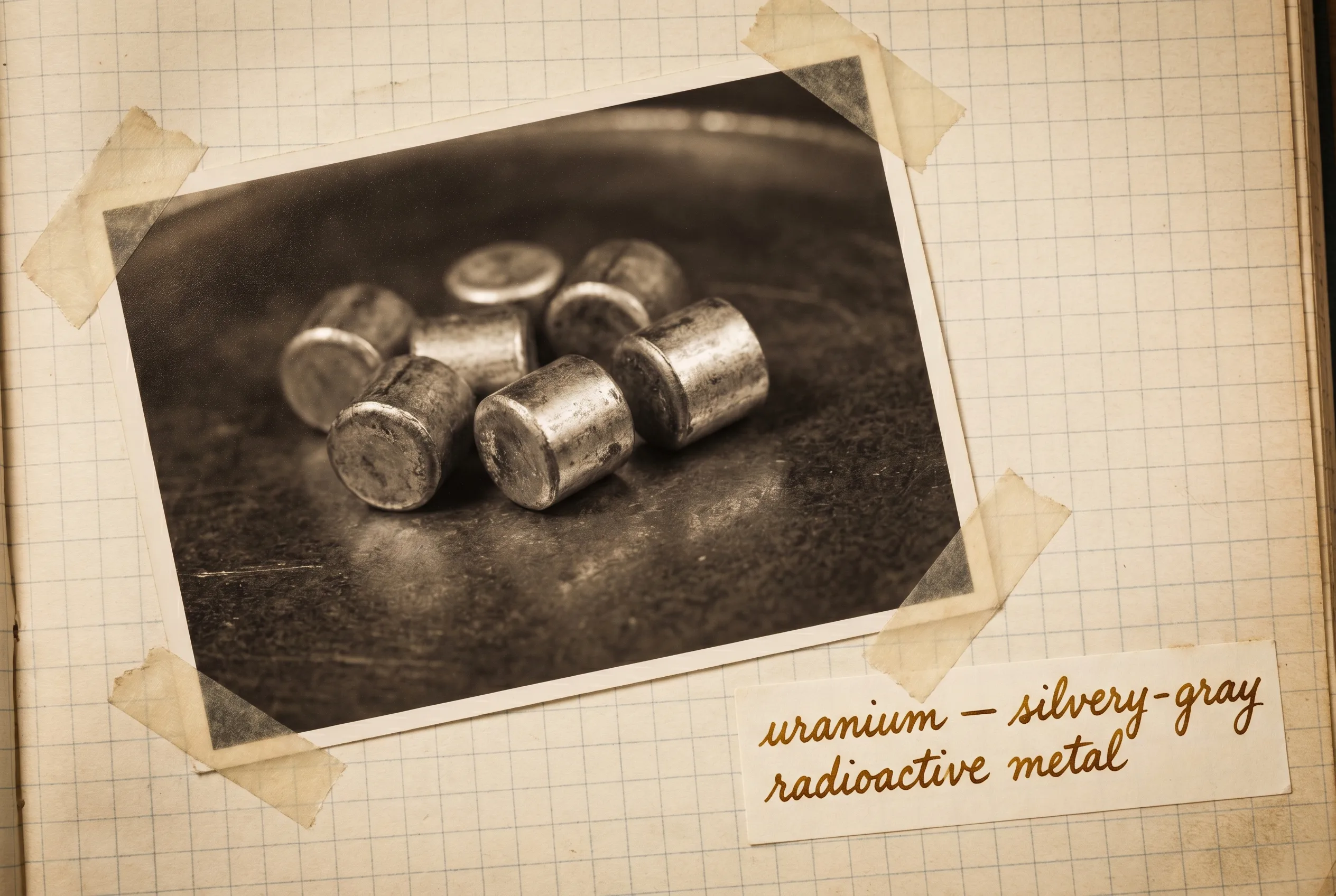
- solid
- Electronegativity
- 1.38
- Common ox. states
- +3, +4, +5, +6
Properties
[Rn] 5f³ 6d¹ 7s²
- Ionization energy
- 597.6 kJ/mol
- Electron affinity
- –
- Melting point
- 1408.00 K (1134.8 °C)
- Boiling point
- 4404.00 K (4130.9 °C)
How dangerous is it?
The heaviest element found in real amounts in nature. It is radioactive, and like other heavy metals it is also a chemical poison.
- RadioactiveBuilds up over time
It steadily emits radiation; the bigger danger is breathing or swallowing its dust. (most dangerous as inhaled dust)
Handled in licensed facilities with shielding and contamination checks.
- ToxicBuilds up over time
As a heavy metal it harms the kidneys over time.
Kept sealed; the dust is controlled and never inhaled or swallowed.

How it bonds· family overview
Uranium (U) is an actinide. Like the lanthanides it tends toward a +3 oxidation state, but the early actinides (Th–Am) routinely access +4, +5, +6, even +7 because the 5f electrons are easier to ionize. Most actinides are radioactive; their "bonding" in school is read off the periodic table, not measured in lab.