Atomic number 6
Carbon
Nonmetal
In the real world
Quick facts
- Atomic mass
- 12.011
- Group
- 14
- Period
- 2
- State (STP)
- solid
- Electronegativity
- 2.55
- Common ox. states
- -4, +2, +4
Properties
[He] 2s² 2p²
- Ionization energy
- 1086.5 kJ/mol
- Electron affinity
- 121.8 kJ/mol
- Melting point
- 3823.00 K (3549.8 °C)
- Boiling point
- 4098.00 K (3824.8 °C)
How dangerous is it?
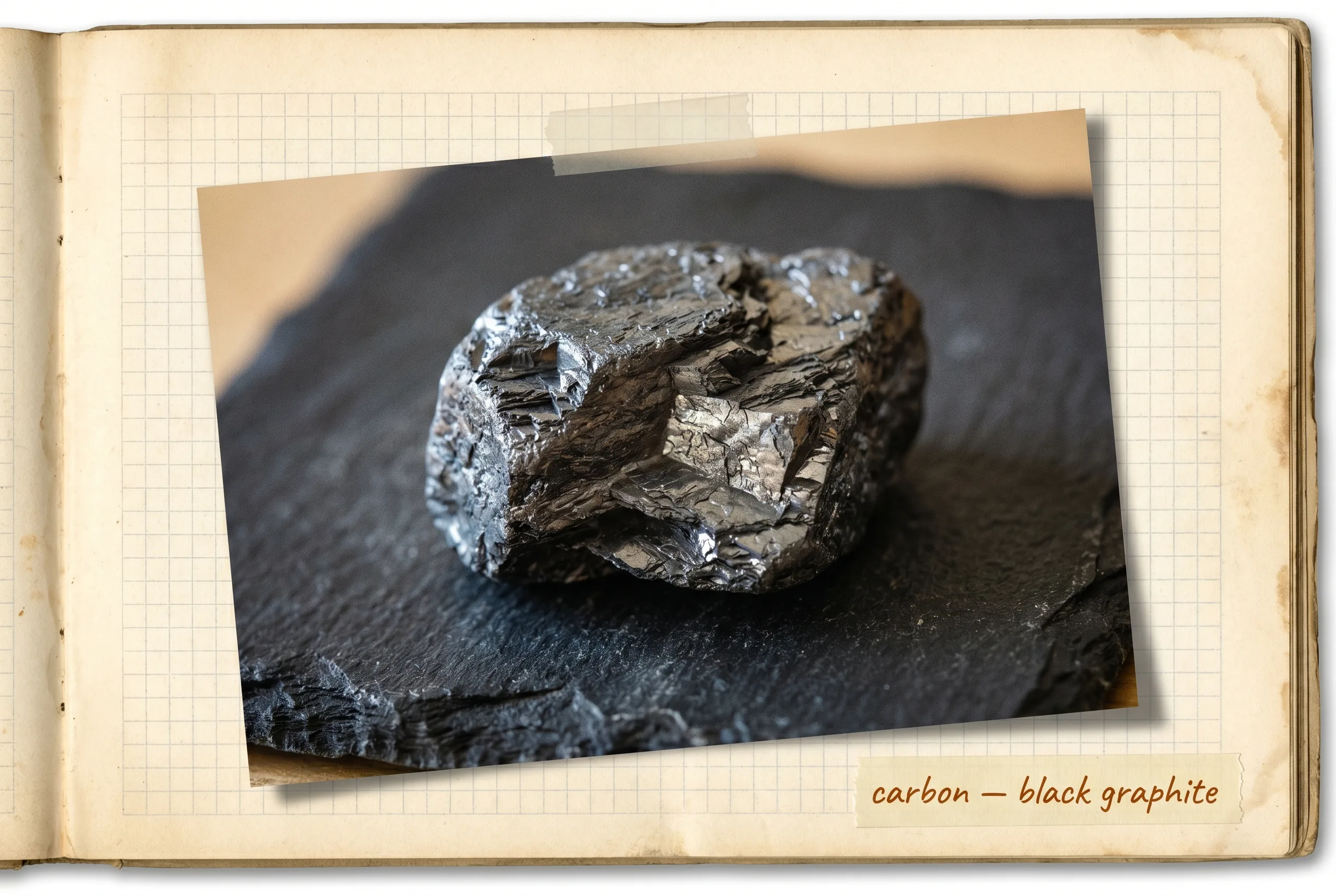
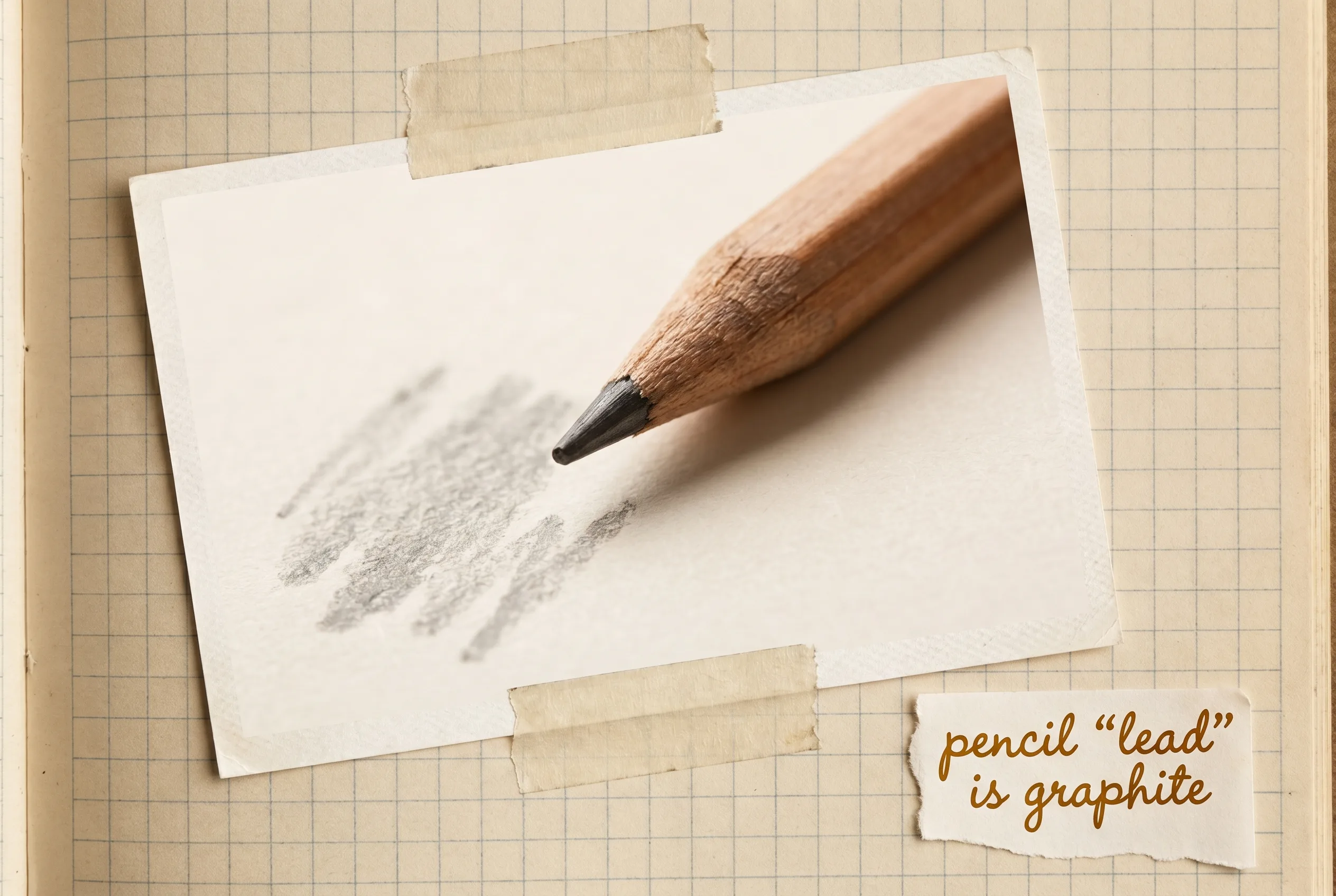
In its everyday forms, graphite, diamond, and charcoal, carbon is safe to hold and does not react with you. Only as a fine dust does it become a fire risk.
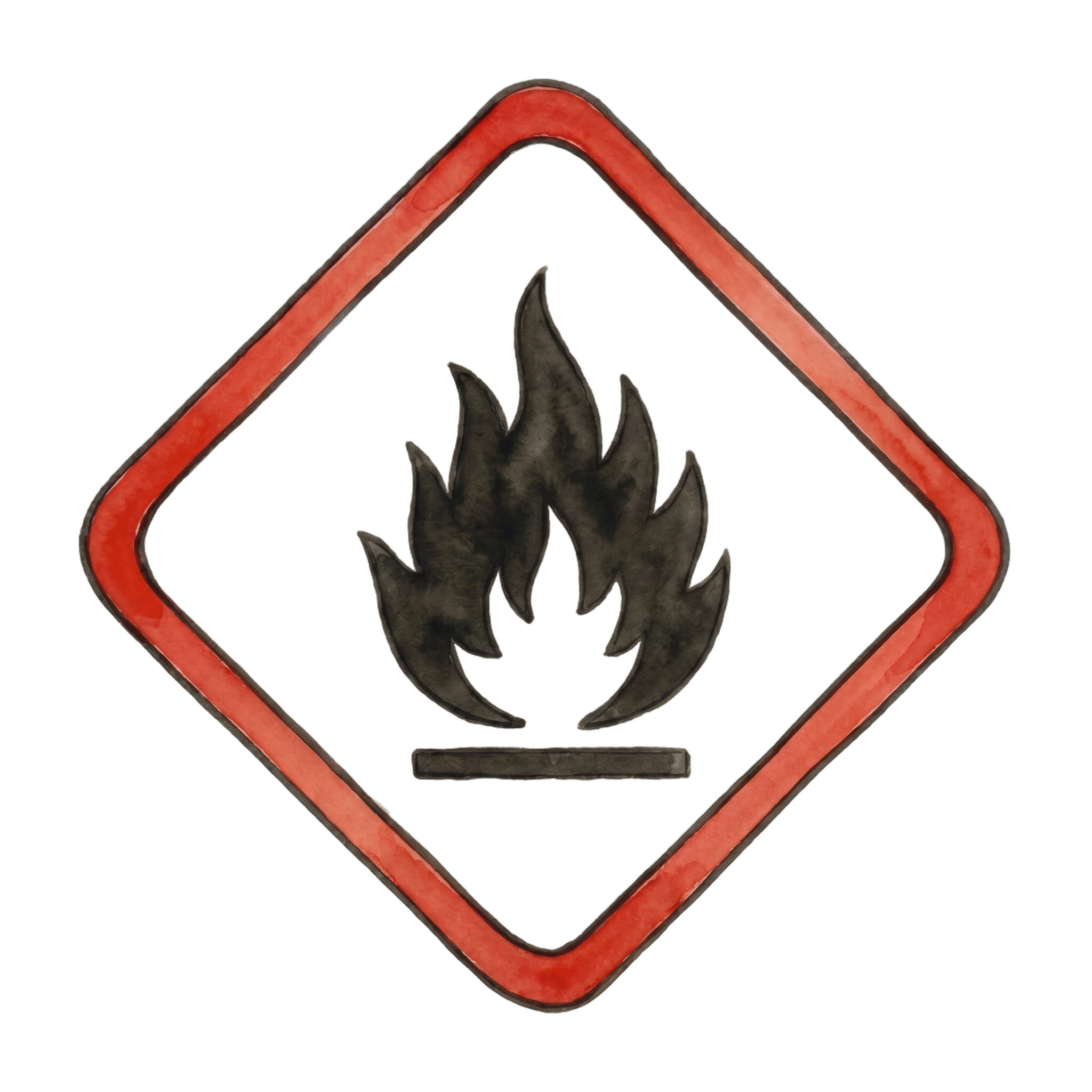
- FlammableImmediate
A cloud of fine carbon dust, like coal or charcoal dust, can catch fire and even explode; a solid lump or a pencil will not. (as a fine airborne dust, not graphite, diamond, or a charcoal briquette)
Coal and charcoal dust is kept damp and well ventilated away from sparks; everyday carbon needs no special care.
How it bonds
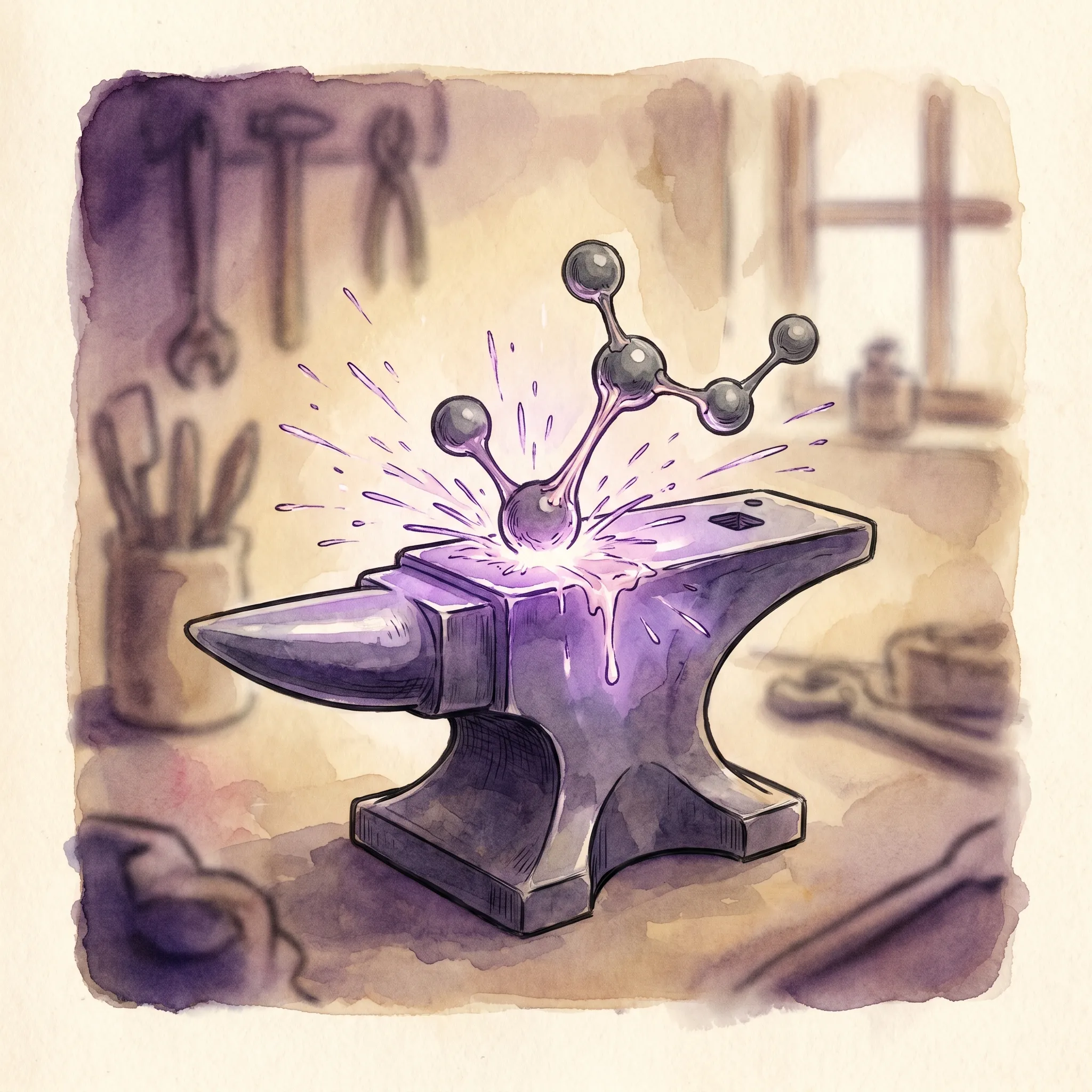
Carbon has 4 valence electrons and 4 spaces left in its 2nd shell - a perfectly balanced split that lets it form 4 strong covalent bonds in any combination of singles, doubles, and triples. Bonds to itself in chains, rings, and sheets (graphite, diamond, every organic molecule). The element of life.
Element Lore
Stories, history, and chemistry behind Carbon.
Read Carbon's lore →Where you meet it
Compounds featuring this element
- Carbon dioxideCO₂
- FormaldehydeCH₂O
- Hydrogen cyanideHCN
- MethaneCH₄