Atomic number 50
Tin
Post-transition metal
In the real world
Quick facts
- Atomic mass
- 118.71
- Group
- 14
- Period
- 5
- State (STP)
- solid
- Electronegativity
- 1.96
- Common ox. states
- +2, +4
Properties
[Kr] 4d¹⁰ 5s² 5p²
- Ionization energy
- 708.6 kJ/mol
- Electron affinity
- 107.3 kJ/mol
- Melting point
- 505.08 K (231.9 °C)
- Boiling point
- 2875.00 K (2601.8 °C)
How dangerous is it?
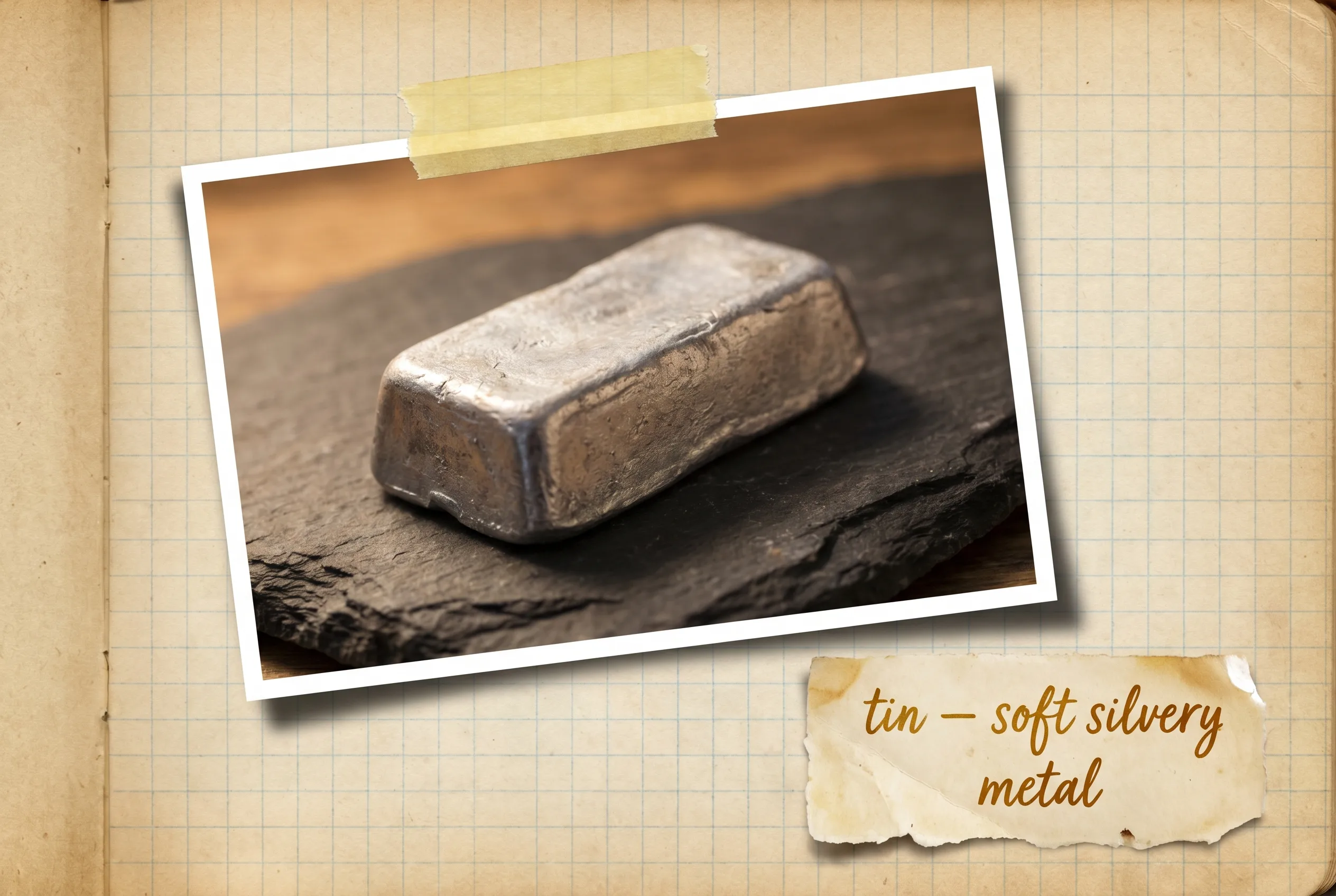
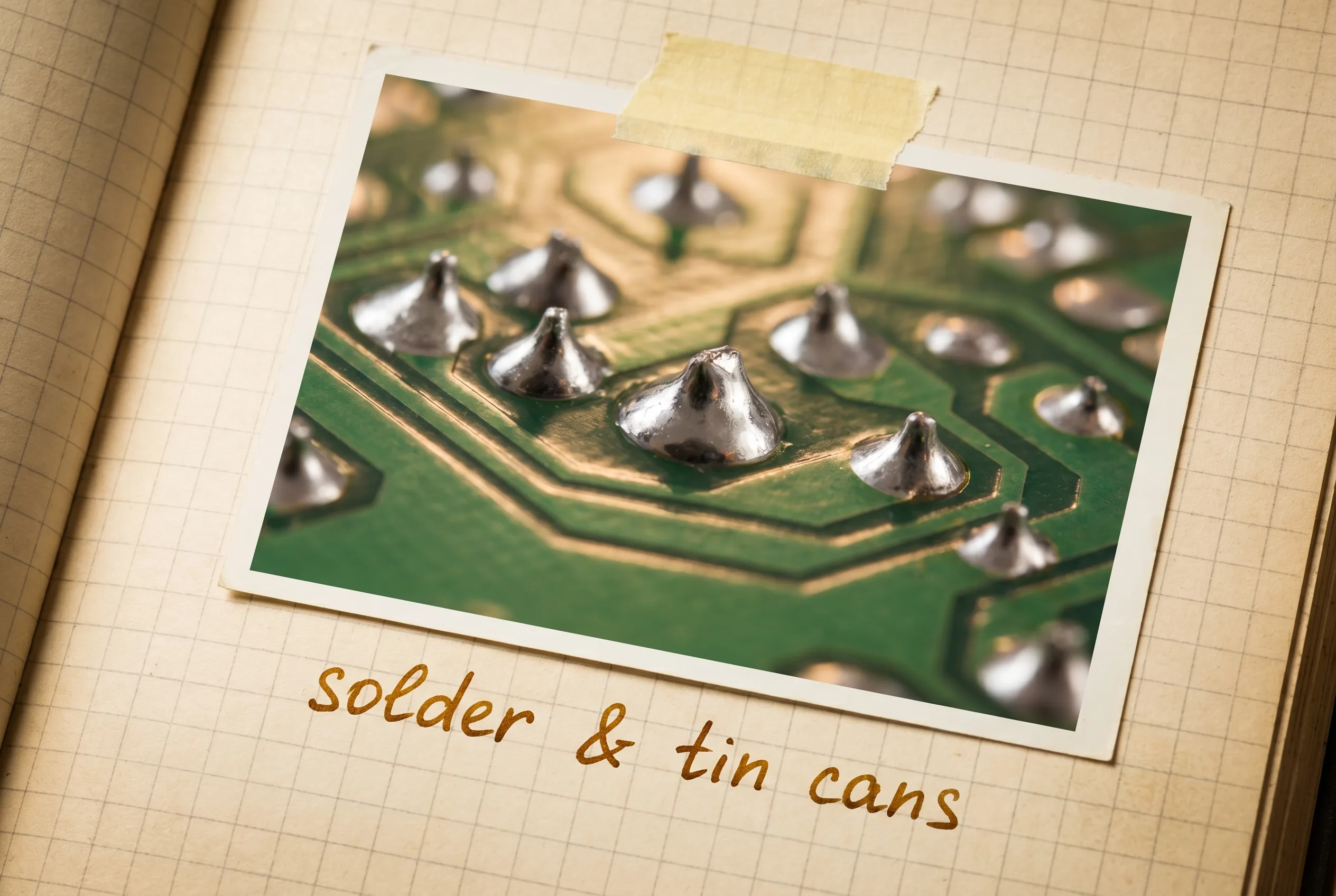
An everyday metal that is safe to handle and is used to coat food cans. Plain tin is harmless; it is certain tin-based organic compounds that are toxic.
- ToxicImmediate and cumulative
Organotin compounds, a special class of tin combined with carbon, can be poisonous, but ordinary tin metal is not. (the metal is harmless; the toxicity belongs to organotin compounds, not the element)
Those organic compounds are handled with care in industry; the plain metal in cans and solder is safe.
How it bonds
Tin shows both +2 (Sn²⁺, stannous) and +4 (Sn⁴⁺, stannic). The "inert pair effect" lets tin keep its 5s² electrons unbonded, so +2 is more common in heavier group-14 elements than in carbon or silicon. Used in solder, tinplated steel, and SnO₂ touchscreens.