Atomic number 3
Lithium
Alkali metal
In the real world
Quick facts
- Atomic mass
- 6.940
- Group
- 1
- Period
- 2
- State (STP)
- solid
- Electronegativity
- 0.98
- Common ox. states
- +1
Properties
[He] 2s¹
- Ionization energy
- 520.2 kJ/mol
- Electron affinity
- 59.6 kJ/mol
- Melting point
- 453.65 K (180.5 °C)
- Boiling point
- 1603.00 K (1329.8 °C)
How dangerous is it?
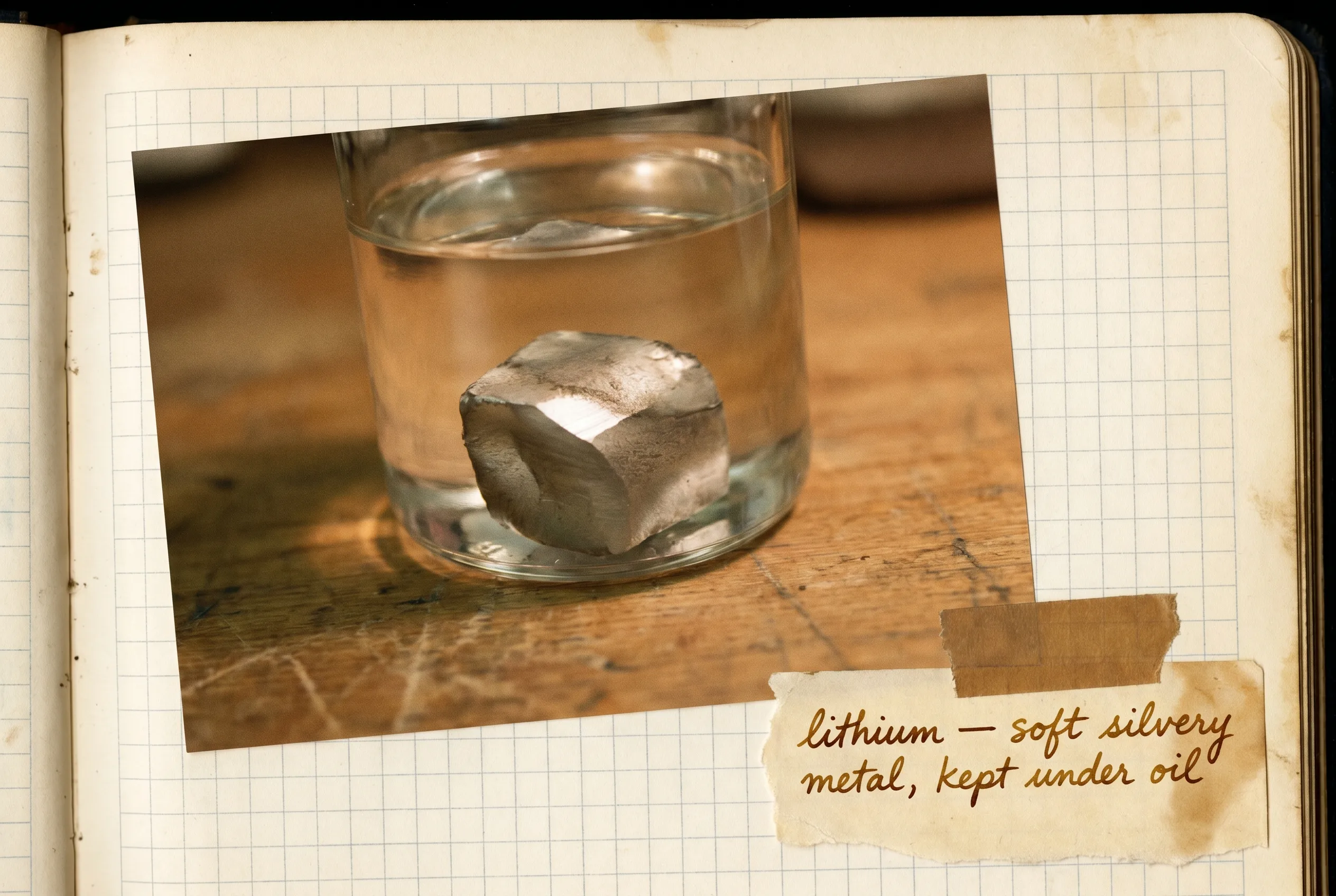
A soft, light metal that reacts with water and can catch fire, but it is milder about it than sodium or potassium.
- CorrosiveImmediate
When it meets water it forms a caustic solution that can burn skin and eyes.
Handled with gloves and eye protection so the metal never touches bare skin.
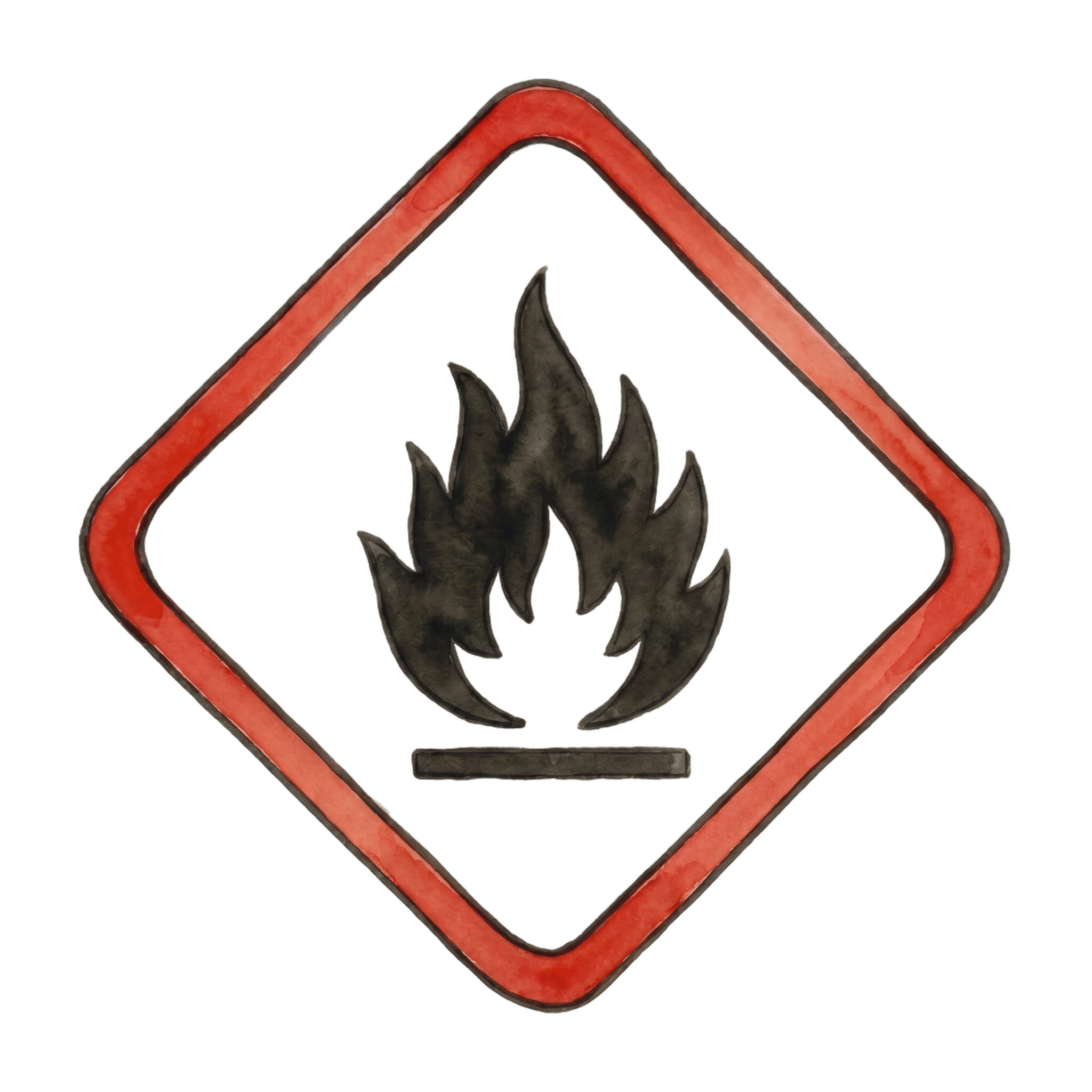
- FlammableImmediate
The fresh metal can ignite, and a lithium fire is hard to put out with ordinary water. (the clean metal is the risk, not the lithium locked inside a battery or a salt)
Handled in small amounts and smothered with a dry-powder extinguisher, never water.
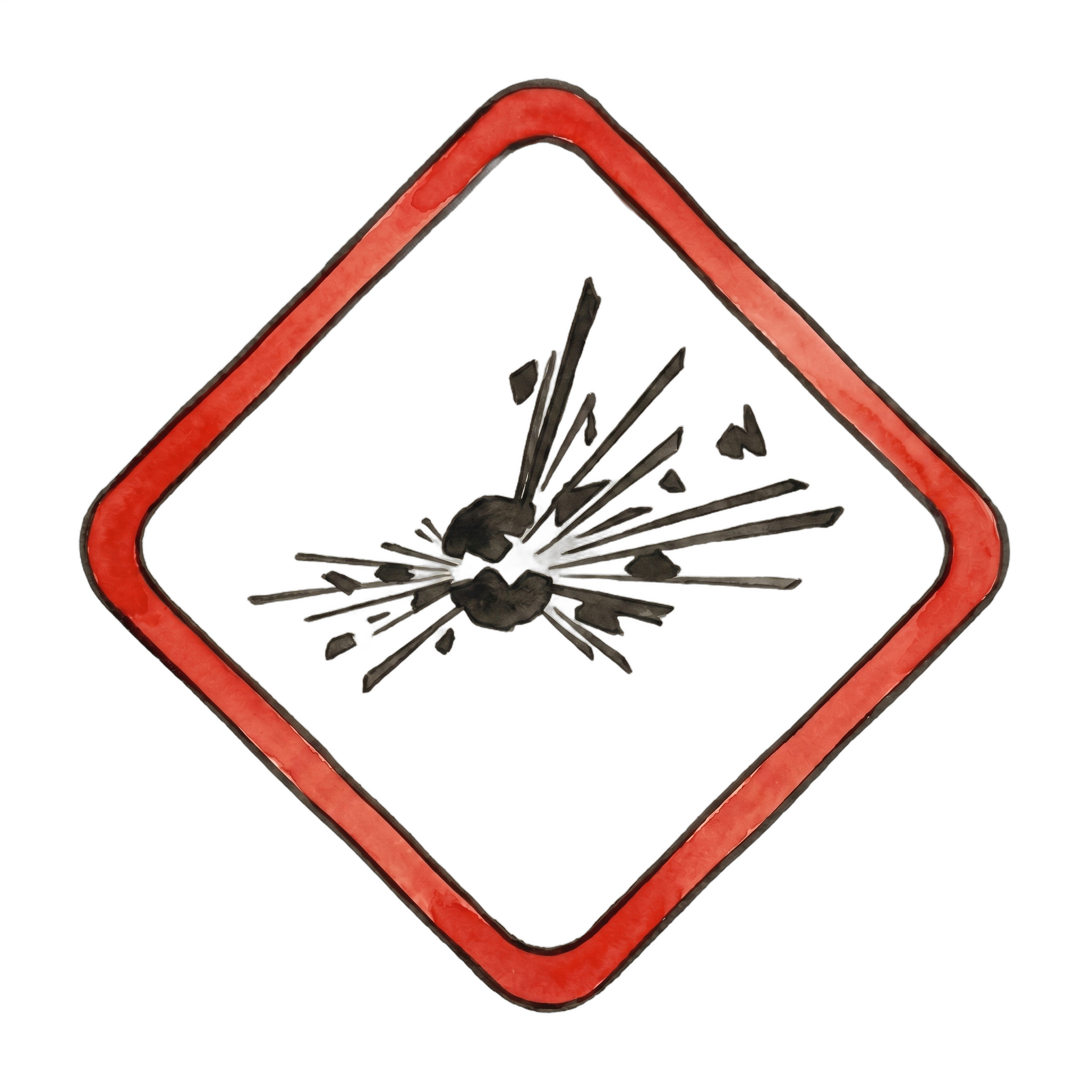
- ReactiveImmediate
It reacts with water and even moisture in the air, giving off flammable hydrogen gas.
Stored under oil or in an inert gas and kept well away from water.
How it bonds
Lithium loses its single 2s electron almost without resistance to become Li⁺. It bonds ionically with halogens (LiF, LiCl) and oxide-formers (Li₂O), and even with hydrogen (LiH). Lithium is small enough that its "ionic" salts have noticeable covalent character - a recurring theme of period-2 metals.
Where you meet it
- Periodic Quest challengeunlock card