Atomic number 90
Thorium
Actinide
In the real world

Quick facts
- Atomic mass
- 232.04
- Group
- –
- Period
- 7
- State (STP)
- solid
- Electronegativity
- 1.30
- Common ox. states
- +4
Properties
[Rn] 6d² 7s²
- Ionization energy
- 587.0 kJ/mol
- Electron affinity
- –
- Melting point
- 2023.00 K (1749.8 °C)
- Boiling point
- 5061.00 K (4787.9 °C)
How dangerous is it?
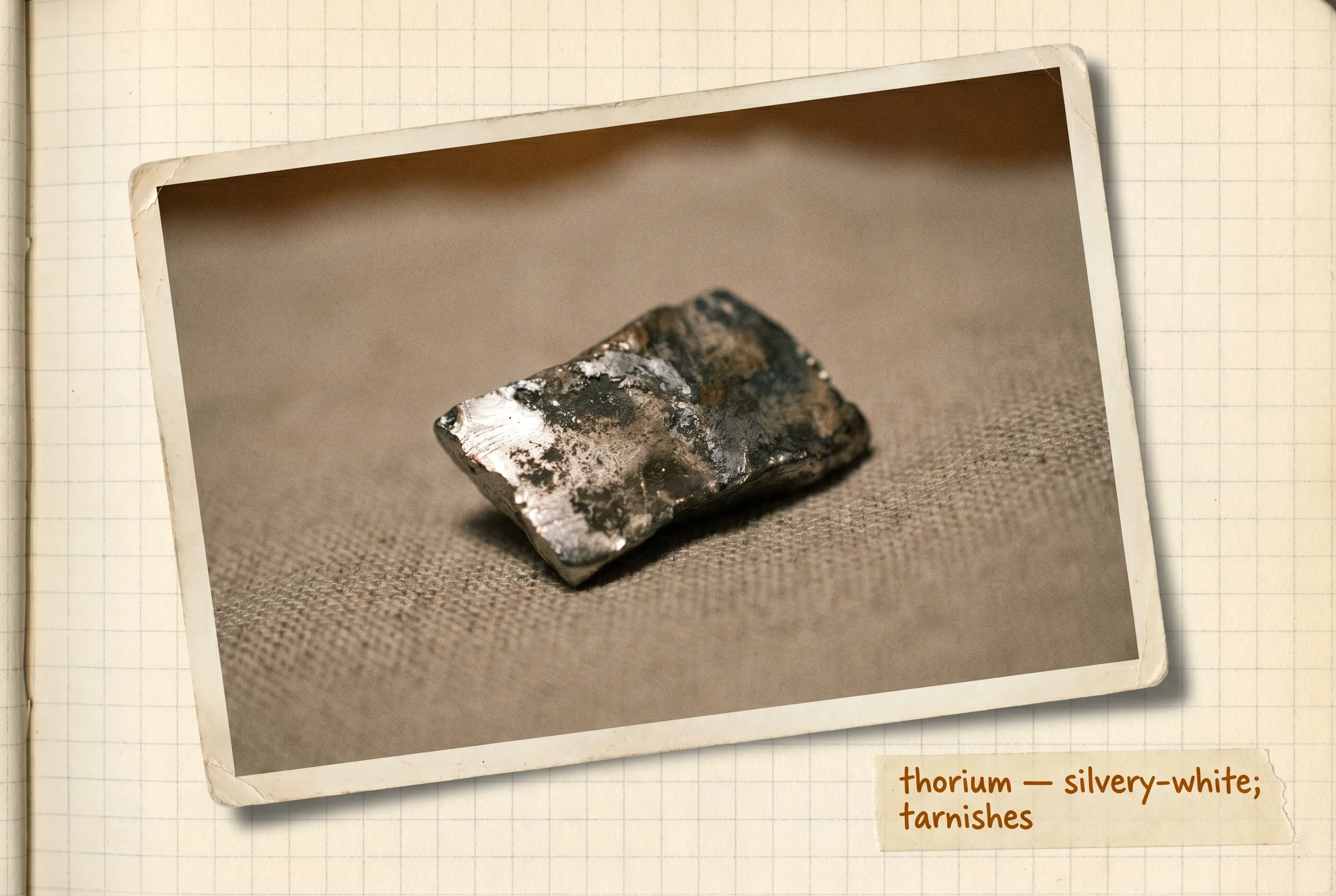
A naturally occurring metal that gives off radiation very slowly, so the main worry is breathing in its dust, not standing near it.
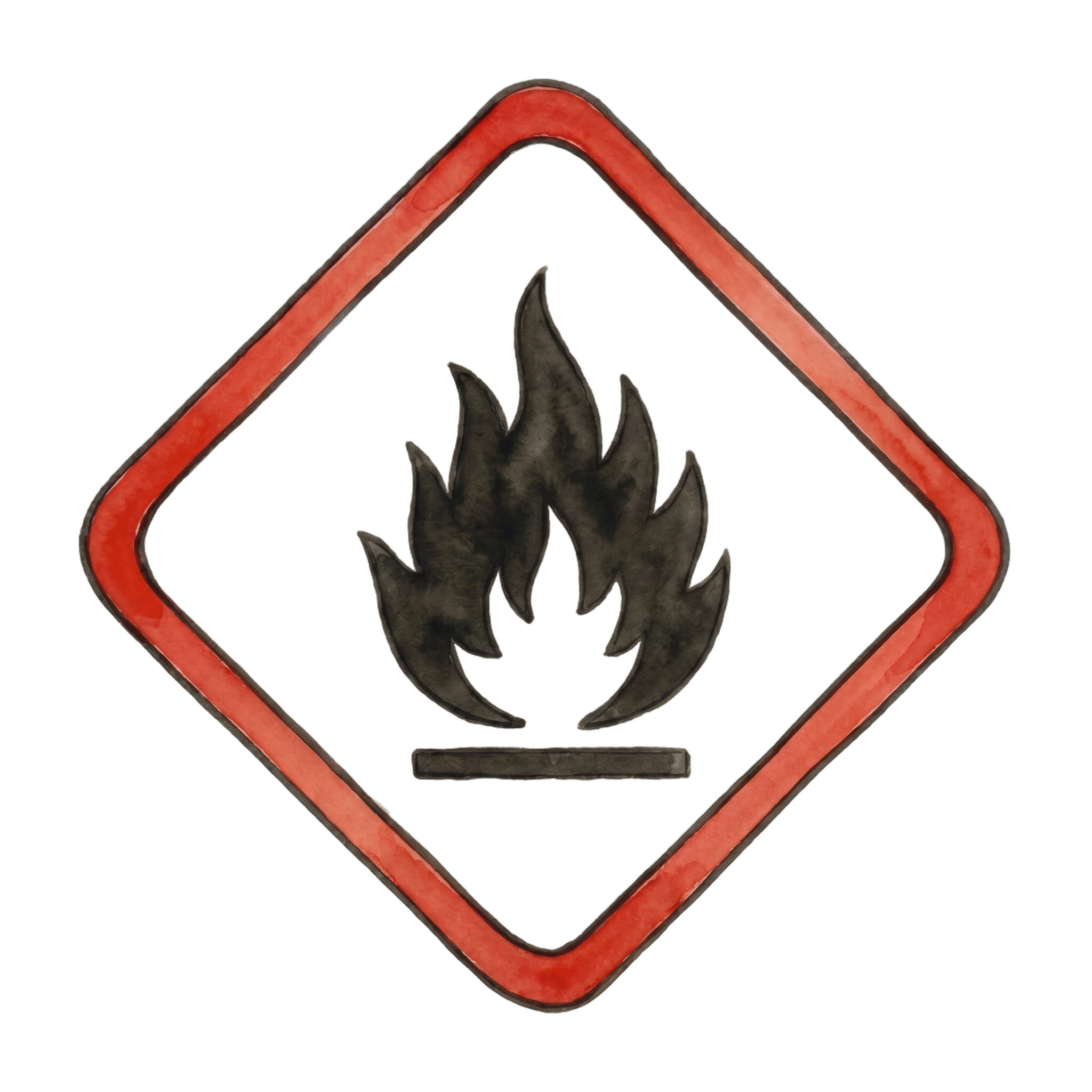
- FlammableImmediate
Ground into a fine powder the metal can catch fire on its own in air. (as a fine powder, where it becomes pyrophoric)
The powder is kept away from air and sparks and handled under inert cover.
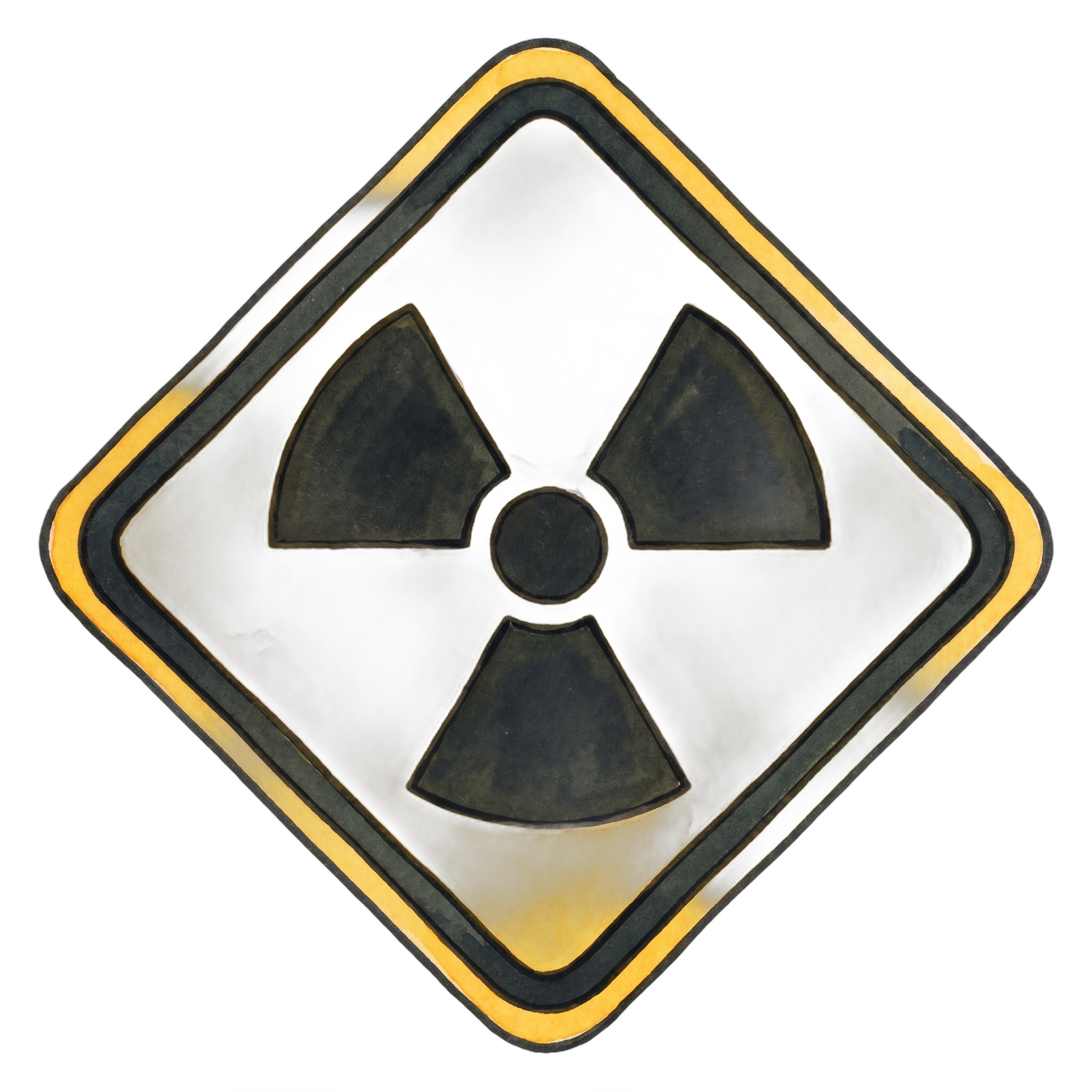
- RadioactiveBuilds up over time
It is a weak alpha emitter with a very long half life, which does little from outside but can settle in the lungs if the dust is inhaled. (the breathing risk comes from fine dust or powder, not a solid lump)
Kept as solid metal and worked with dust control and a respirator in proper labs.
- ToxicBuilds up over time
As a heavy metal it can poison the kidneys and bones if enough gets inside the body over time.
Avoid swallowing or breathing it and wash up carefully after any handling.

How it bonds· family overview
Thorium (Th) is an actinide. Like the lanthanides it tends toward a +3 oxidation state, but the early actinides (Th–Am) routinely access +4, +5, +6, even +7 because the 5f electrons are easier to ionize. Most actinides are radioactive; their "bonding" in school is read off the periodic table, not measured in lab.