Atomic number 17
Chlorine
Halogen
In the real world
Quick facts
- Atomic mass
- 35.450
- Group
- 17
- Period
- 3
- State (STP)
- gas
- Electronegativity
- 3.16
- Common ox. states
- -1, +1, +3, +5, +7
Properties
[Ne] 3s² 3p⁵
- Ionization energy
- 1251.2 kJ/mol
- Electron affinity
- 349.0 kJ/mol
- Melting point
- 171.65 K (-101.5 °C)
- Boiling point
- 239.11 K (-34.0 °C)
How dangerous is it?
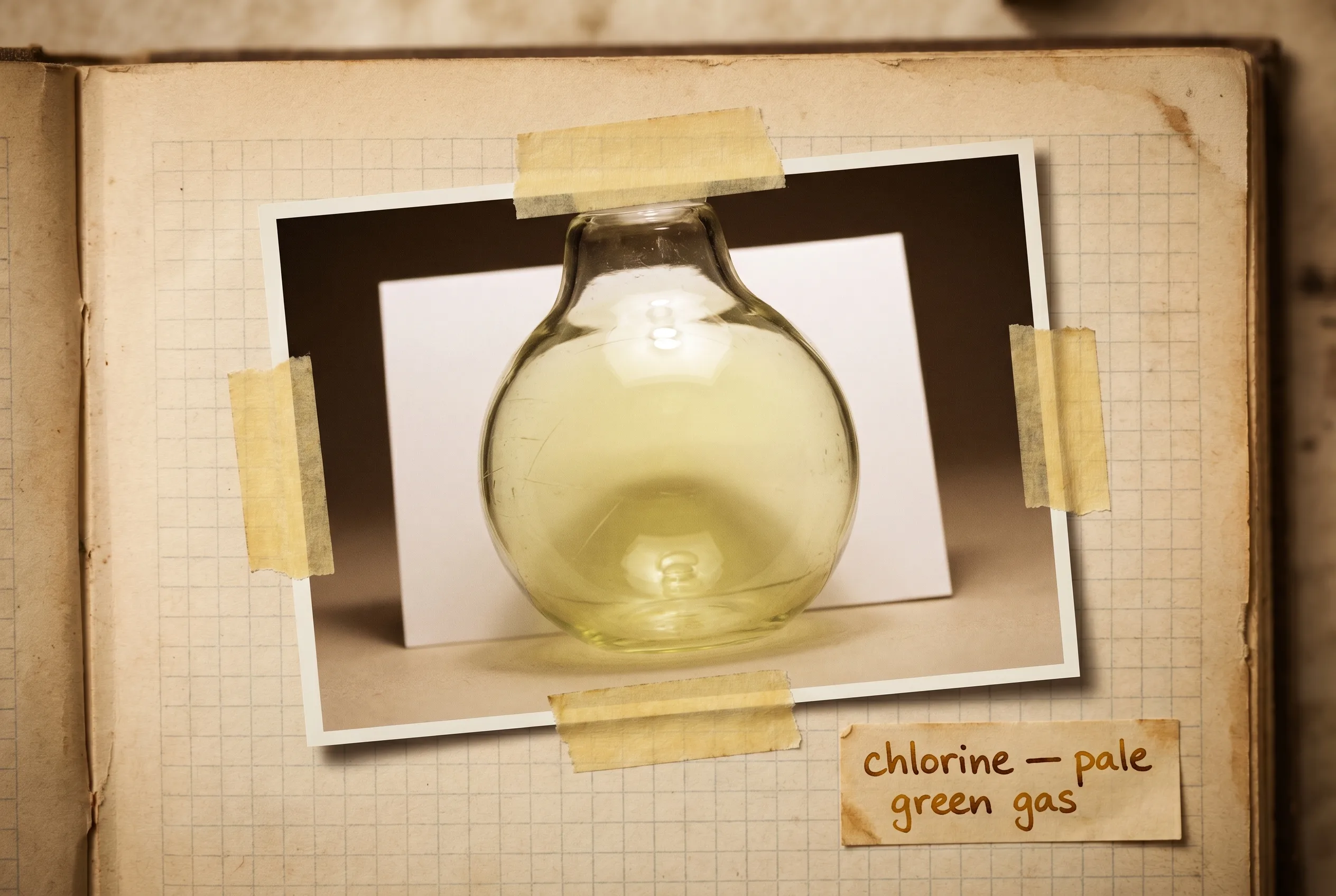
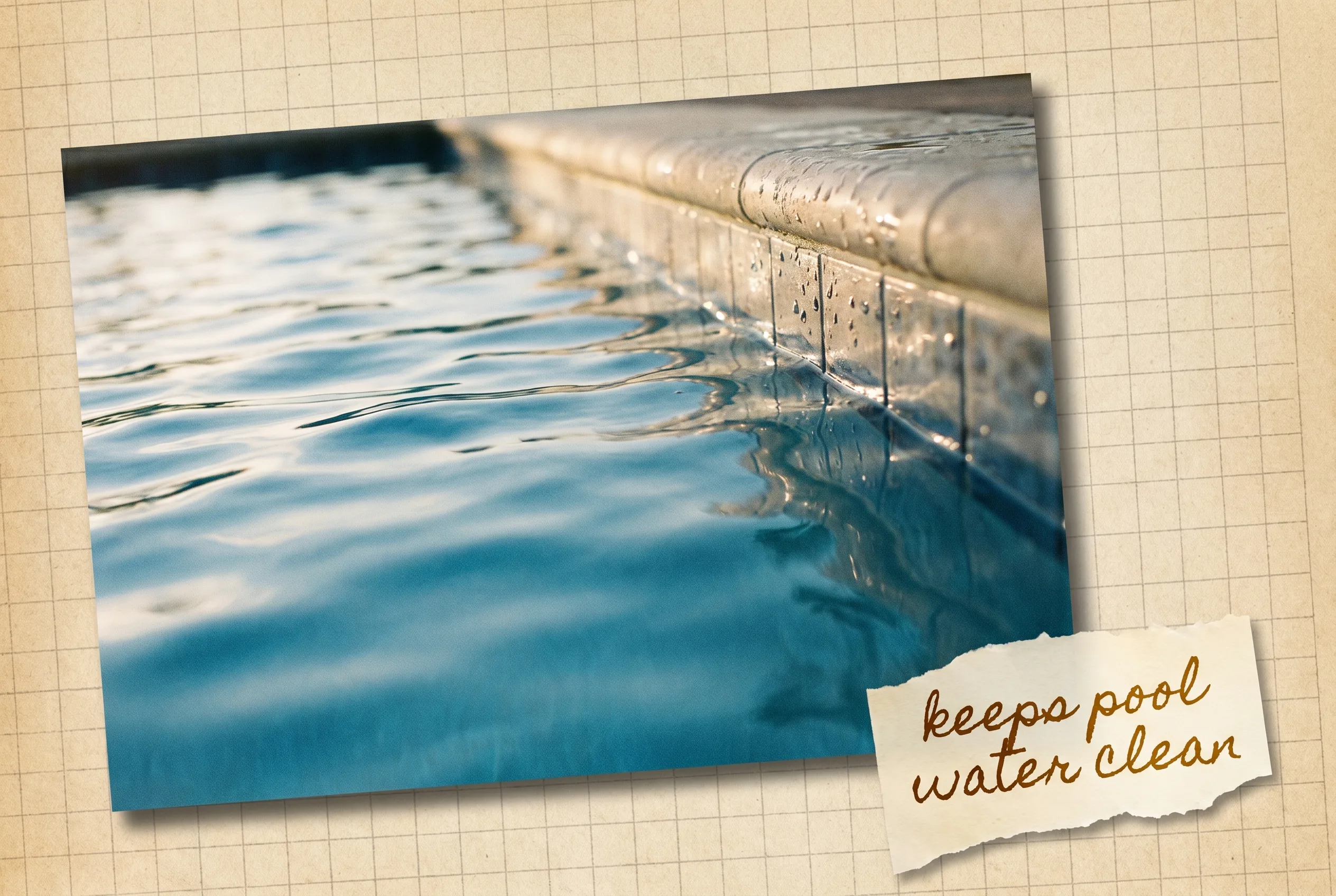
A yellow-green gas that keeps swimming pools clean in tiny amounts, but in concentrated form it was one of the first chemical weapons. It attacks the lungs.
- CorrosiveImmediate
The gas burns the eyes, throat, and lungs on contact.
Piped through sealed systems and used in a fume hood; leaks are caught by gas scrubbers.
- ToxicImmediate
Breathing it makes the airways swell and fill with fluid.
Used only with strong ventilation and gas detectors.
How it bonds
Chlorine forms one bond by gaining or sharing one electron - Cl⁻ in NaCl, single-bonded to almost anything in HCl, CCl₄, ClO⁻. Three lone pairs. With more-electronegative oxygen, chlorine can swing positive (+1, +3, +5, +7 in chlorate, perchlorate, etc.) - the only halogen besides bromine and iodine that does this routinely.